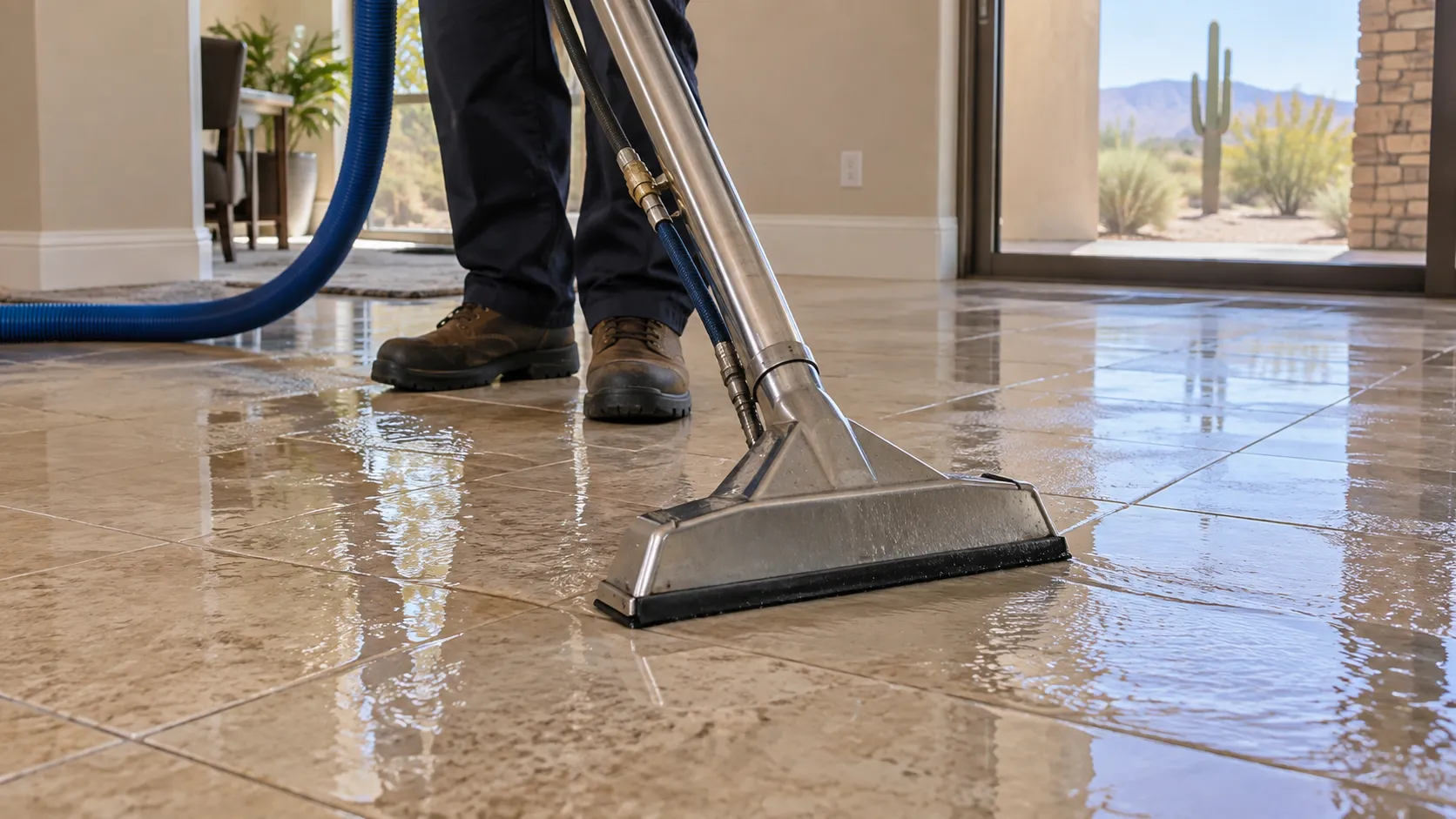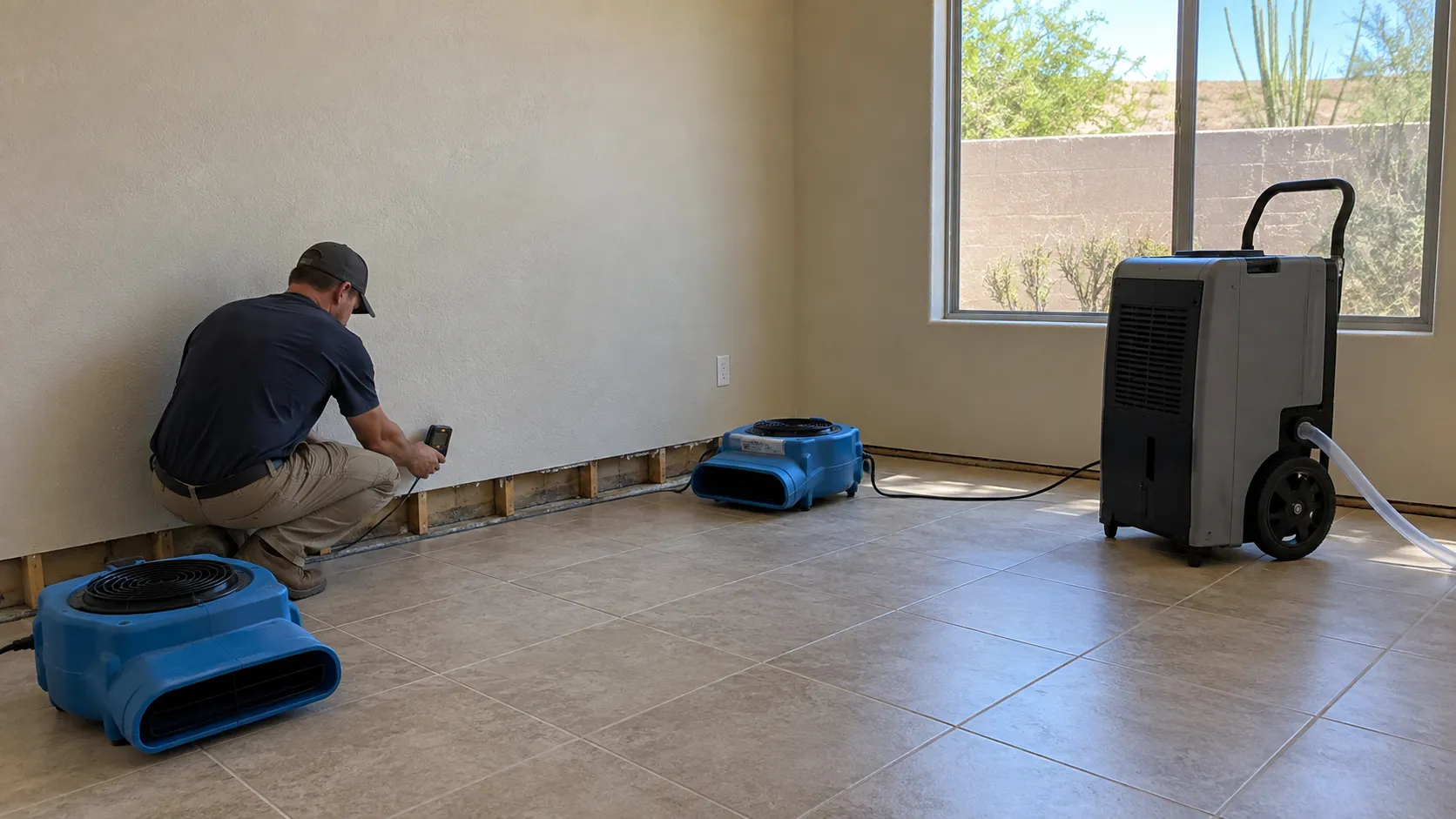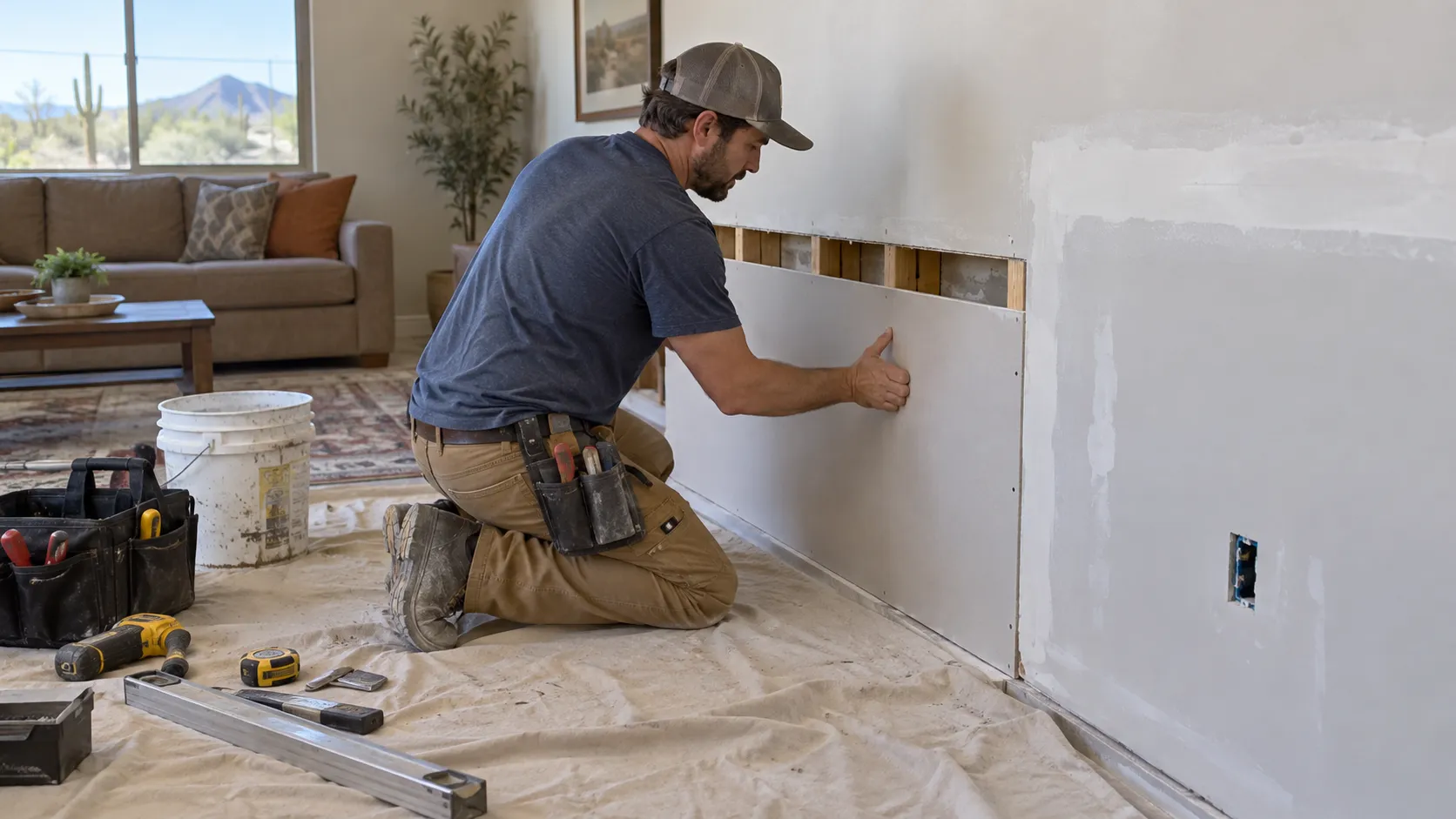
Standing floodwater
Water extraction removes accumulated water so cleanup and drying can begin. Prompt removal helps limit further exposure of your home's building materials.
24/7 flood restoration in Buckeye
Flooding can leave residue and wet materials after accumulated water is removed. Residential flood restoration in Buckeye addresses those remaining needs and the physical damage that calls for repairs.
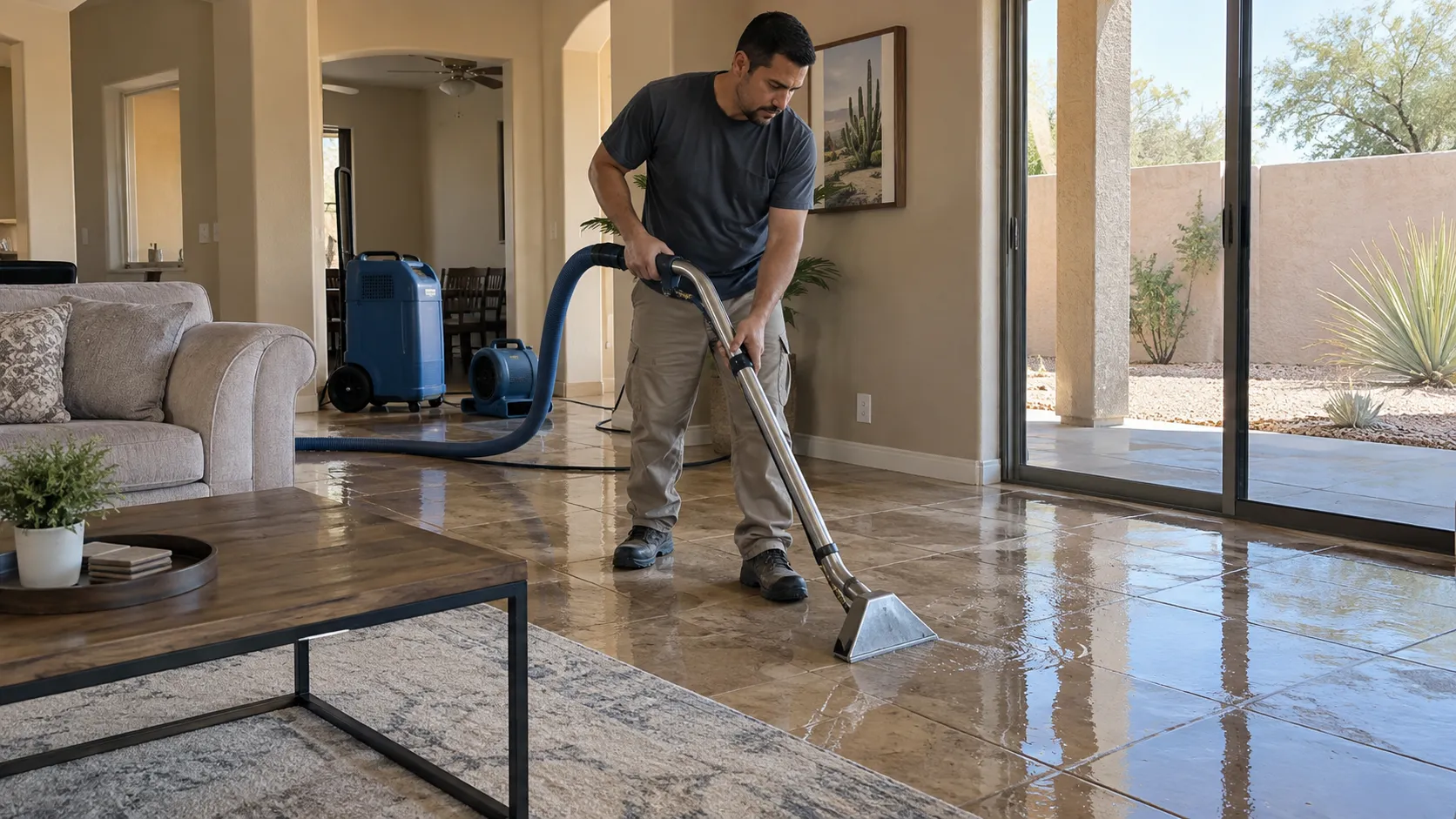
An unresolved source can wet materials again. Plumbing, roofing, or drainage repairs may require an appropriate specialist alongside restoration of the damage.
Removing standing water is the first part of restoration. Moisture, flood residue, and damaged materials also need attention before your home can be restored.
Water extraction removes accumulated water so cleanup and drying can begin. Prompt removal helps limit further exposure of your home's building materials.
Drywall, flooring, and framing can remain wet after visible water is gone. Moisture checks help identify where drying is still needed.
Cleanup depends on the water source and what it has affected. Flood residue must be removed, and exposed materials assessed for cleaning or replacement.
Drying does not reverse every type of damage. Swollen, separated, or deteriorated materials may need repair or replacement as part of the restoration.
The initial conversation covers your Buckeye address, the flooding, and the help you need. Emergency service is available 24/7 with a 25-minute on-site response.
On site, the water source, affected materials, and accessible moisture are checked. These findings establish the work needed and whether further water entry is still a concern.
Standing water is extracted and flood residue is addressed. Materials that cannot reasonably be cleaned or dried are identified for removal as needed.
Air movement and dehumidification address moisture in materials suitable for drying. Follow-up measurements track progress and help determine when additional drying is needed.
Once the affected materials are ready, restoration addresses the repairs and replacement work still needed. Drying and reconstruction are separate steps, not interchangeable treatments.
Pumping and extraction equipment remove water from affected areas. The approach depends on how much water is present and where it can be safely accessed.
Cleaning removes flood residue from suitable surfaces. Treatment and material-removal decisions take the water source and level of exposure into account.
Drying equipment helps remove moisture from recoverable building materials. Measurements guide the work instead of relying on how dry a surface looks or feels.
Damaged building materials are repaired or replaced where cleanup and drying are not enough. The repair scope reflects the damage found at your property.
Assessment findings establish which accessible areas and materials have been affected. This gives you a clearer understanding of why particular work is needed.
The scope connects the damage found to extraction, cleanup, drying, and repairs. It distinguishes the immediate cleanup from work needed later in the restoration.
Moisture readings help show whether drying is progressing. Materials that need more attention can be identified before the work moves on to repairs.
The end of drying does not necessarily mean the end of the job. Remaining physical damage determines which finishes or building materials still need repair or replacement.
An unresolved water source can wet materials again. Restoration work needs to account for that source; plumbing, roofing, or drainage repairs may require the appropriate specialist.
Building restoration and contents recovery involve different work. Affected belongings need their own assessment based on material, exposure, and condition.
Replacing finishes too early can conceal moisture that still needs attention. Moisture checks help establish when retained materials are ready for the next stage.
Flash flooding in the Buckeye area can occur away from a storm and after rain has ended. Continued water entry needs attention, while materials already exposed may require cleaning, drying, or replacement.
Residential Flood Restoration is available throughout Buckeye, including Verrado and Sundance. Emergency service is available 24/7 with a 25-minute on-site response.
Serving Buckeye from our Phoenix office: 2840 S. 36th Street, Suite E-1, Phoenix, AZ 85034.
Residential Flood Restoration is available in these Buckeye-area ZIP codes. Postal areas can extend across municipal boundaries.
Phoenix Flood Restoration provides a 25-minute on-site response, with emergency service available 24/7. That timeframe refers to arrival, not the time needed to finish cleanup, drying, or repairs.
We provide residential flood restoration in Buckeye, including Verrado and Sundance. Coverage includes 85326 and 85396. Service comes from our Phoenix office; postal areas can cross municipal boundaries.
It may. Indoor residue, wet building materials, and damaged finishes can remain after outdoor flooding ends. Assessment identifies the cleanup, drying, and repairs still needed.
Yes. Residential restoration includes cleanup and recovery after monsoon-related flooding in Buckeye. Stormwater can leave sediment, moisture, and damage behind after extraction. The assessment determines the cleaning, material removal, drying, and repairs needed for the affected property.
Outdoor heat is not proof that wet building materials have dried. Moisture can remain beneath flooring or inside wall assemblies even when exposed surfaces look dry. Drying decisions need to follow the conditions and moisture readings inside your home, not the outdoor temperature alone.
There is no single completion time for every Buckeye property. The amount of water, material condition, drying progress, and repair work determine the duration. After storm-related flooding, further water entry also needs attention so materials being dried are not exposed again.
Yes. Flood damage reconstruction can address building materials that cleaning and drying cannot restore. The repair work depends on the damage remaining and the readiness of materials that will stay in place.
The work needed at your Buckeye home determines the cost, rather than a single citywide price. Water removal, contamination, drying requirements, and damaged materials all affect the scope. An on-site assessment identifies those needs; visible water alone does not show the full extent of the work.
Get help with water removal, cleanup, drying, and repairs to your flood-damaged home. Call 24/7 for a 25-minute on-site response, or request service online.