Residue on affected surfaces
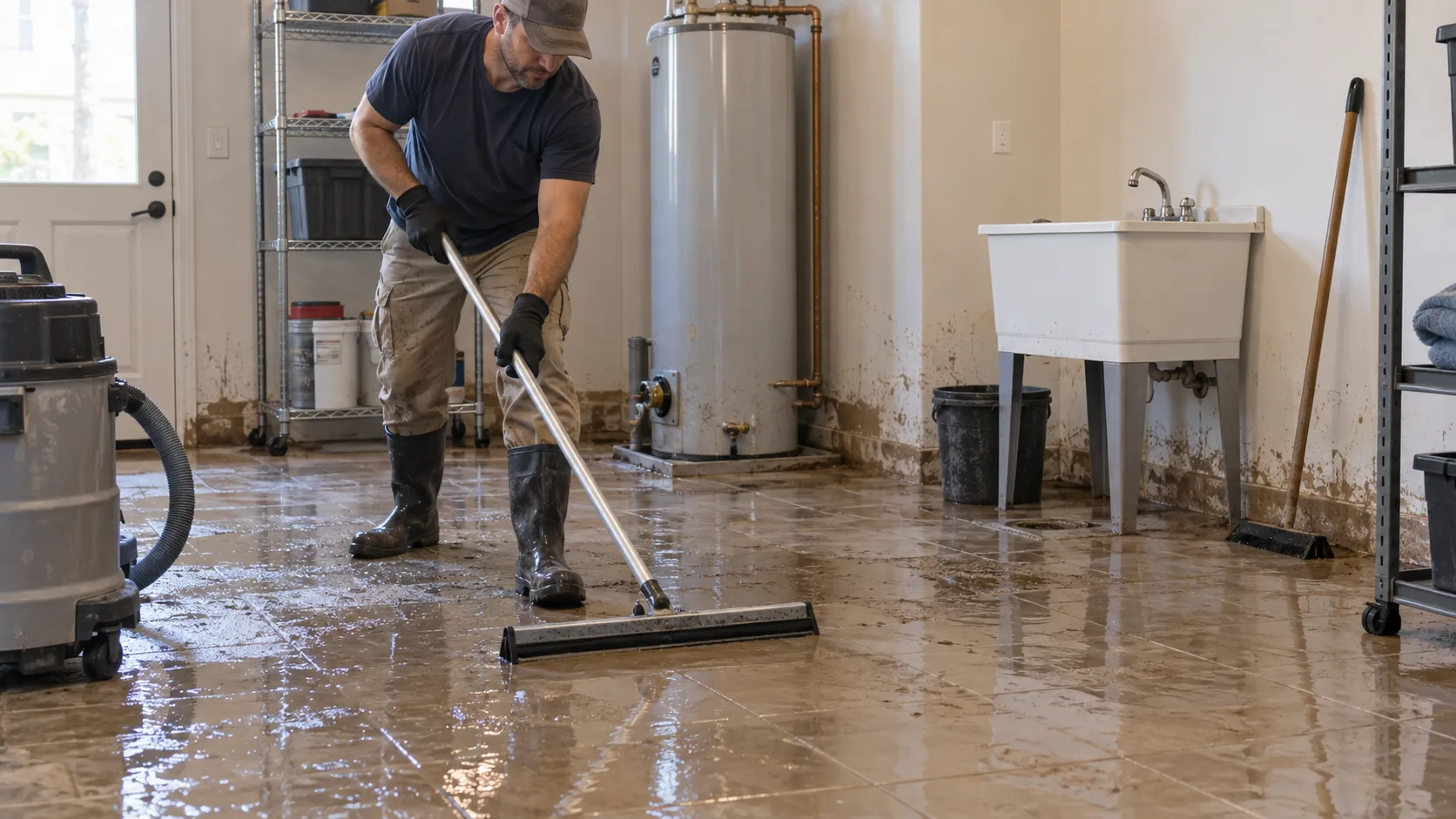
Floodwater can leave deposits after it recedes. Cleaning addresses suitable surfaces according to their exposure rather than treating water removal as the end of cleanup.
24/7 flood restoration in Phoenix
Get flood damage remediation in Phoenix for residue, deteriorated materials, and moisture left after water removal. Appropriate cleaning, removal, and drying address those conditions before remaining repairs proceed.
Material type, contamination, and physical damage determine what can remain. Some affected materials require removal and replacement rather than further surface treatment.
Floodwater can leave deposits after it recedes. Cleaning addresses suitable surfaces according to their exposure rather than treating water removal as the end of cleanup.
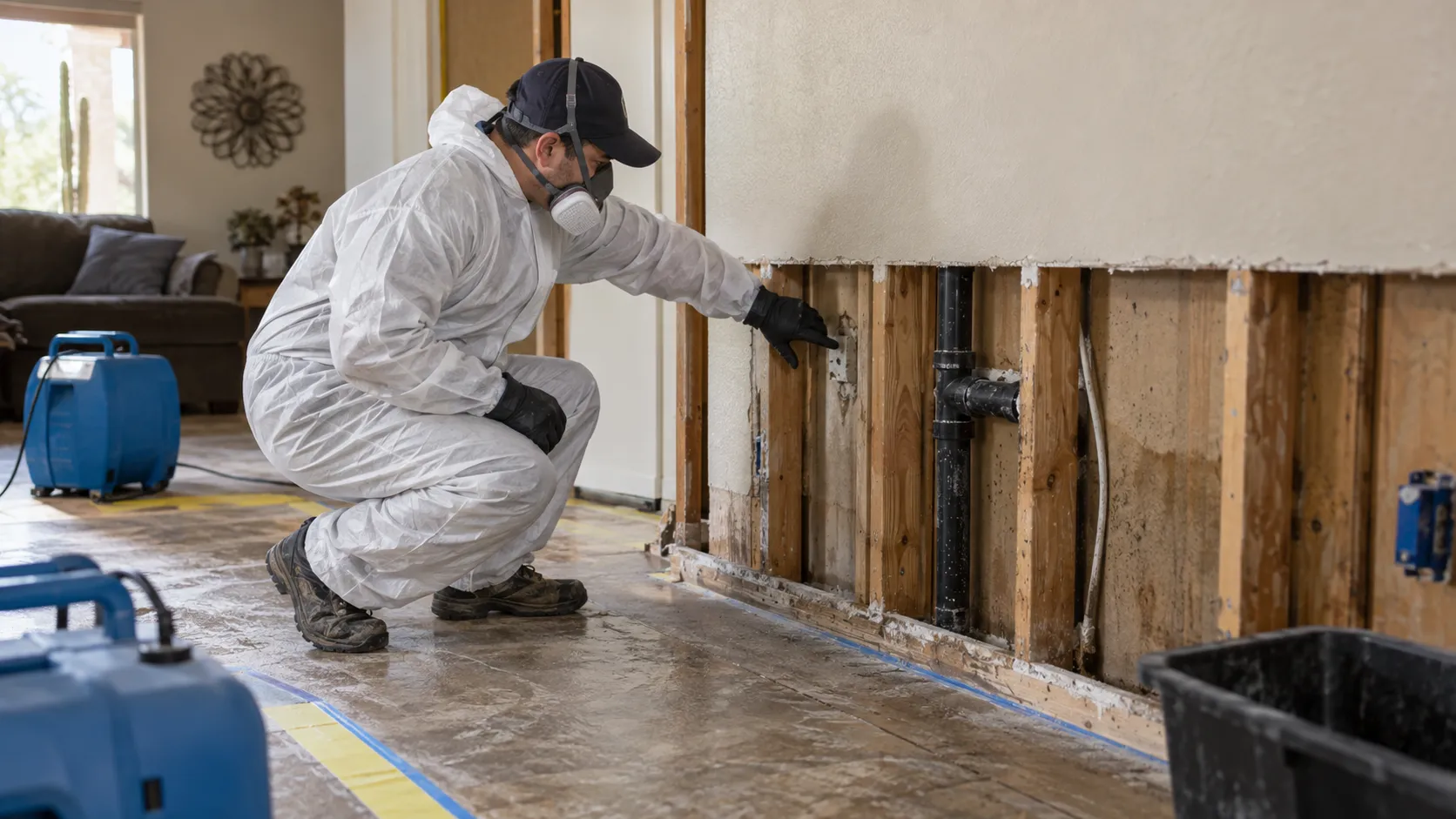
Swollen, separated, or softened materials may need removal. Further drying cannot always reverse the physical changes caused by water.
Intact finishes can limit access to affected construction. Further investigation or selective removal may be needed to understand and address the damage.
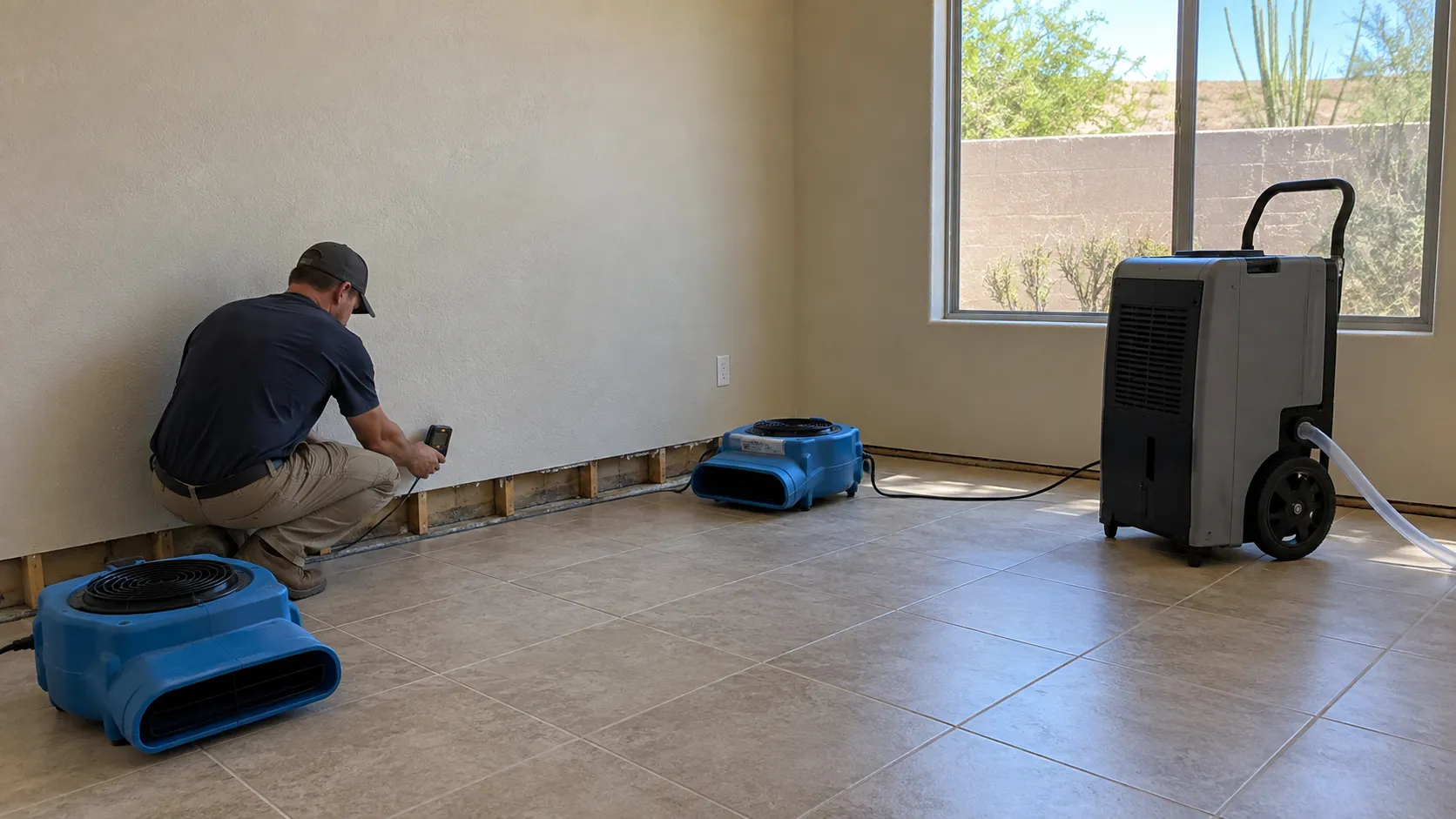
Retained materials can still require drying after surfaces are cleaned. Moisture checks identify that work before new finishes conceal the affected area.
The conversation covers your Phoenix property, water exposure, and cleanup already completed. Help is available 24/7 with a 25-minute on-site response.
Accessible surfaces and construction are checked for residue, moisture, and deterioration. The findings identify cleaning, removal, and drying needs.
Materials that cannot reasonably be cleaned or dried are distinguished from those suitable to retain. Appropriate removal can also improve access to affected construction.
Cleaning addresses residue on materials that can remain. Treatment reflects their composition and exposure rather than applying the same approach to every surface.
Retained moisture is addressed before reconstruction. The remaining physical damage establishes which finishes still need repair or replacement.
The assessment considers what water contacted and the resulting condition. It identifies the work needed without assuming that every material has the same recovery options.
Appropriate cleaning removes flood residue from materials that can remain. Porous or deteriorated materials may require different treatment or removal.
Removal addresses materials unsuitable for recovery and can expose affected layers beneath them. The work follows the damage found, not an assumption that everything must be replaced.
Suitable wet materials receive drying attention after appropriate cleanup. Measurements help identify whether further work is needed before reconstruction.
Records describe the accessible damage and residue found. These observations explain why different affected materials may need different treatment.
The proposed work distinguishes surfaces that can be cleaned from materials requiring removal. This makes the reasons for each task understandable.
Removing damaged finishes can reveal additional affected materials. New findings are considered in the work rather than ignored because they were initially concealed.
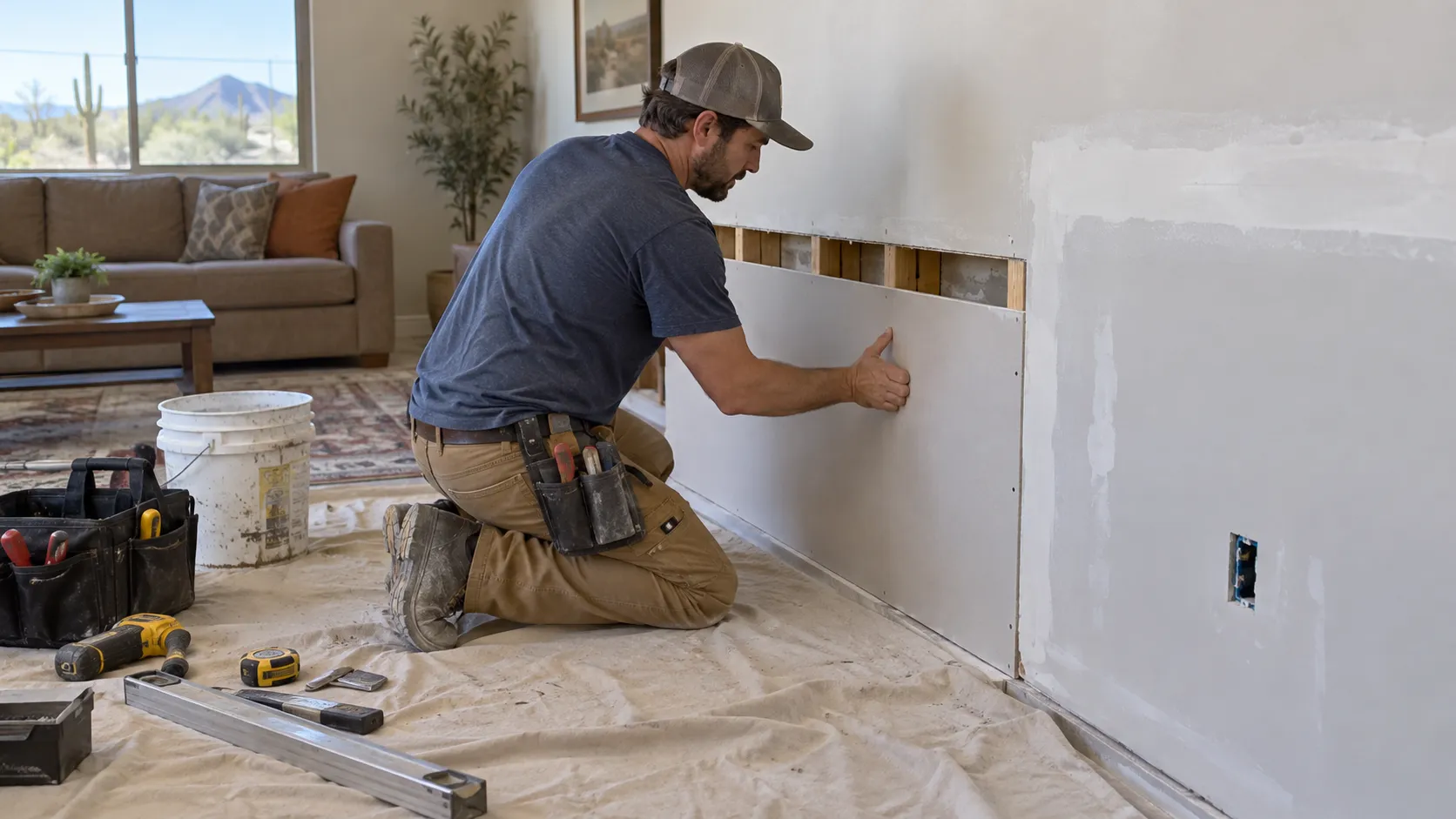
Cleaning and drying do not replace missing or damaged finishes. Remaining repair needs are identified separately from remediation already completed.
Outside water and sewage-related losses can change which materials are suitable to retain. Cleanup must reflect the exposure, not just the appearance of the affected surface.
Surface observations cannot establish every condition inside a wall or floor assembly. Further investigation may be necessary where access leaves unanswered questions.
Replacement finishes should not conceal materials that still need drying or cleanup. The retained construction must be assessed before the repair stage proceeds.
Monsoon storms can bring rapidly changing flood conditions in Phoenix. After water enters a property, sediment, absorbed moisture, and damaged materials may remain even when the visible water is gone.
Flood Damage Remediation is available throughout Phoenix, including Ahwatukee Foothills, Alhambra, Central City, Laveen, and Maryvale. Emergency service is available 24/7 with a 25-minute on-site response.
Serving Phoenix from our Phoenix office: 2840 S. 36th Street, Suite E-1, Phoenix, AZ 85034.
Flood Damage Remediation is available in these Phoenix-area ZIP codes. Postal areas can extend across municipal boundaries.
It addresses conditions left by flooding, including residue, damaged materials, and remaining moisture. The work may involve cleaning, necessary removal, and drying before repairs.
We provide flood damage remediation in Phoenix, including Ahwatukee Foothills, Alhambra, Central City, Laveen, and Maryvale. Coverage includes 85003, 85004, 85006, 85007 and the other ZIP codes listed here. Service comes from our Phoenix office; postal areas can cross municipal boundaries.
It can. Contamination, residue, and material condition influence whether cleaning and drying are suitable. Remediation may include removal where exposed materials cannot reasonably be recovered.
Service is available 24/7 with a 25-minute on-site response in Phoenix. The assessment identifies what work is needed; arrival does not mean all remediation will finish during the first visit.
Yes. Extraction removes accumulated liquid. Remediation addresses additional problems in the affected materials, so it may still be needed after standing water is gone.
Yes. Current conditions can be assessed after extraction has already occurred. Remaining cleanup, moisture, and physical damage determine what work is still necessary.
No. Appearance alone does not establish the cause of a stain. Any concern needs appropriate assessment rather than an unsupported diagnosis based only on discoloration.
The affected materials, exposure, access, and drying needs determine the duration. Newly accessible damage can also affect the work required; there is no single completion time for every property.
Get help with the affected materials and cleanup needs left after flooding. Call 24/7 for a 25-minute on-site response, or request remediation service online.