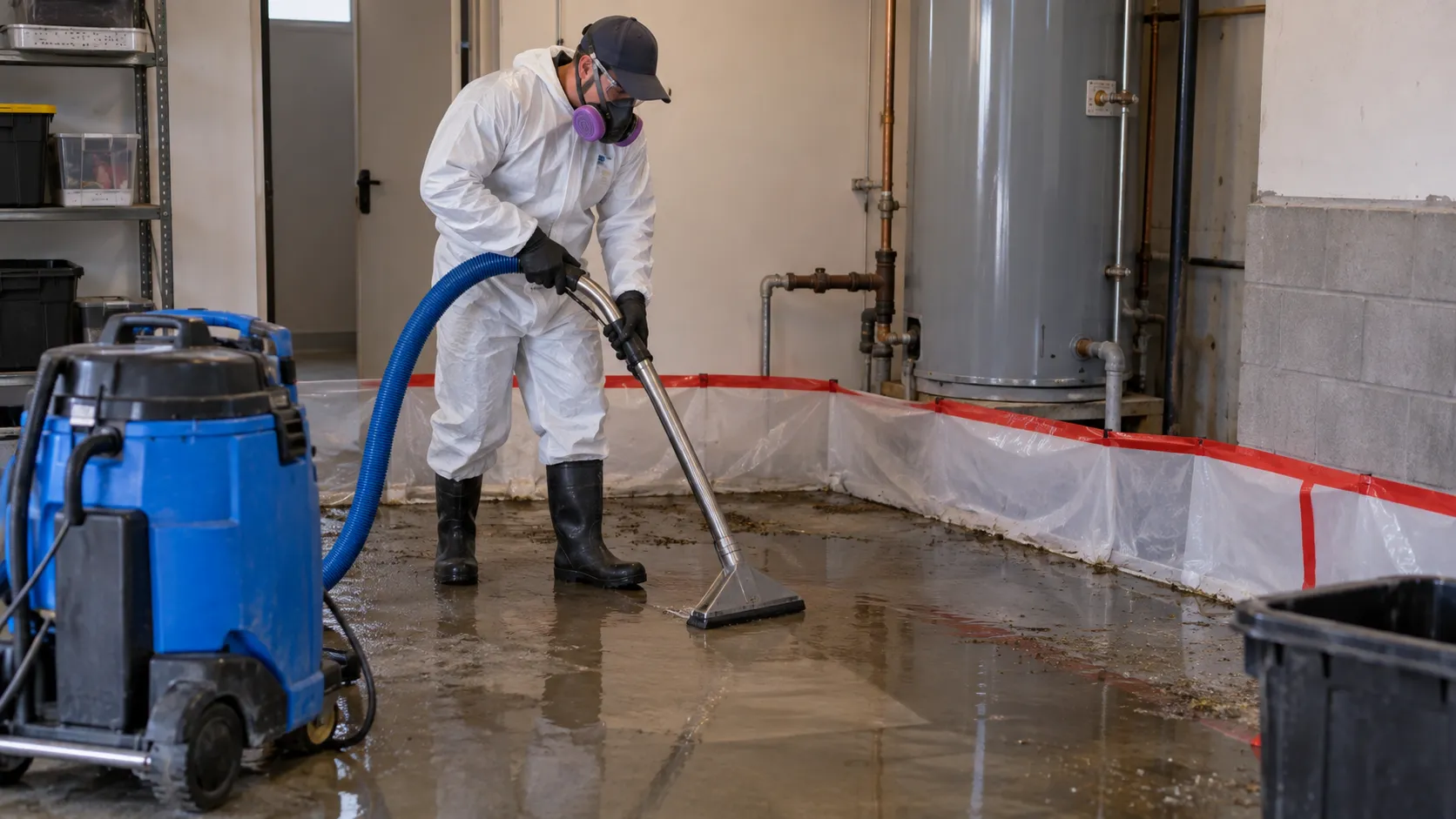
Get help restoring property affected by floodwater, from extraction through drying and repairs. The assessment identifies wet materials, cleanup needs, and damage that cannot be resolved by water removal alone.
Treat the property damage separately from outdoor drainage
Restoration after outdoor runoff recedes
Stormwater in Surprise moves through streets, channels, and drainage structures. When water has entered a property, improving outdoor drainage does not remove moisture already absorbed into affected materials.
Cleanup matched to exposure
The source of the water and what it contacted influence cleaning and removal decisions. Treating visible residue alone may not address all affected materials.
Progress before repairs
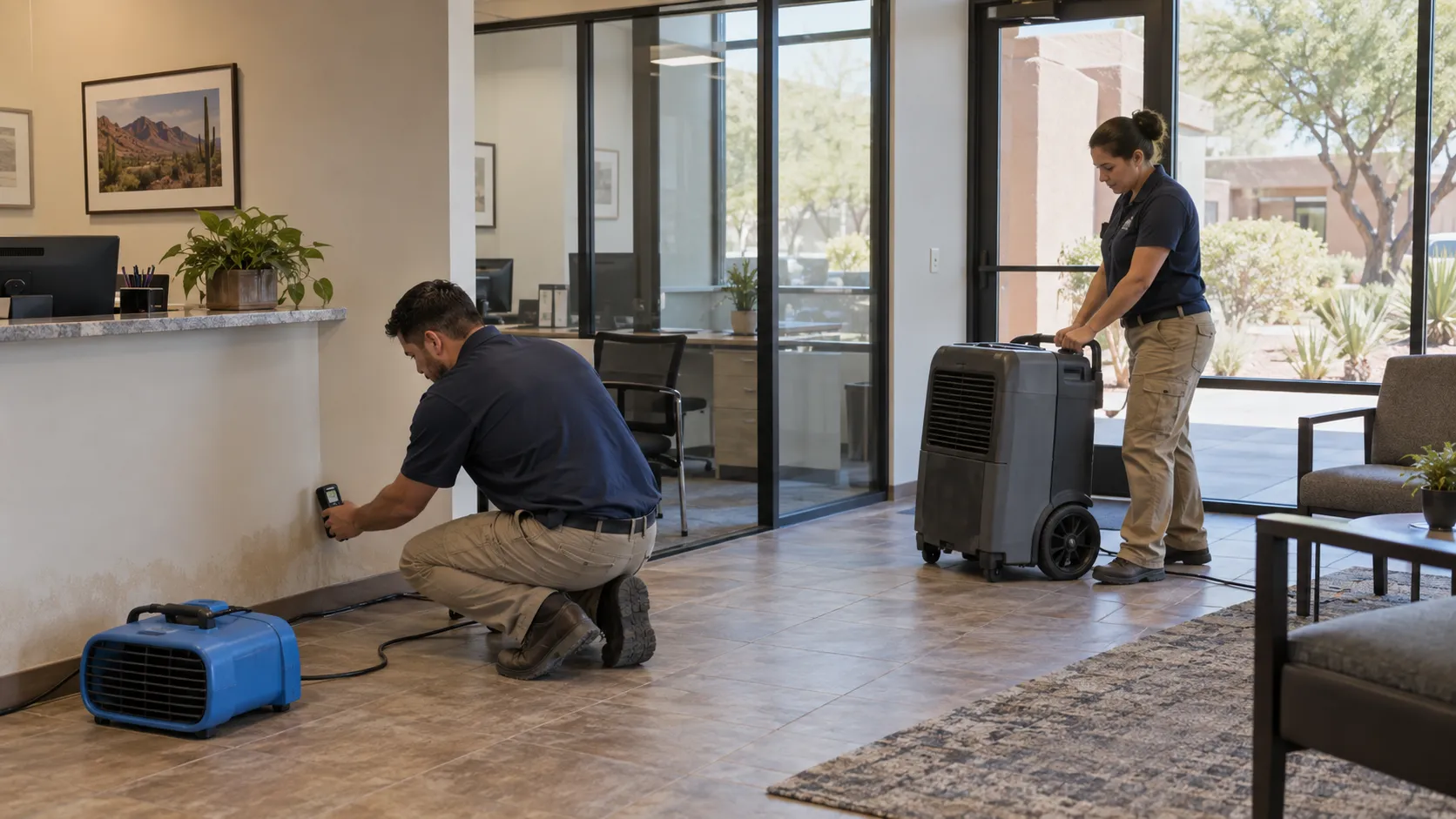
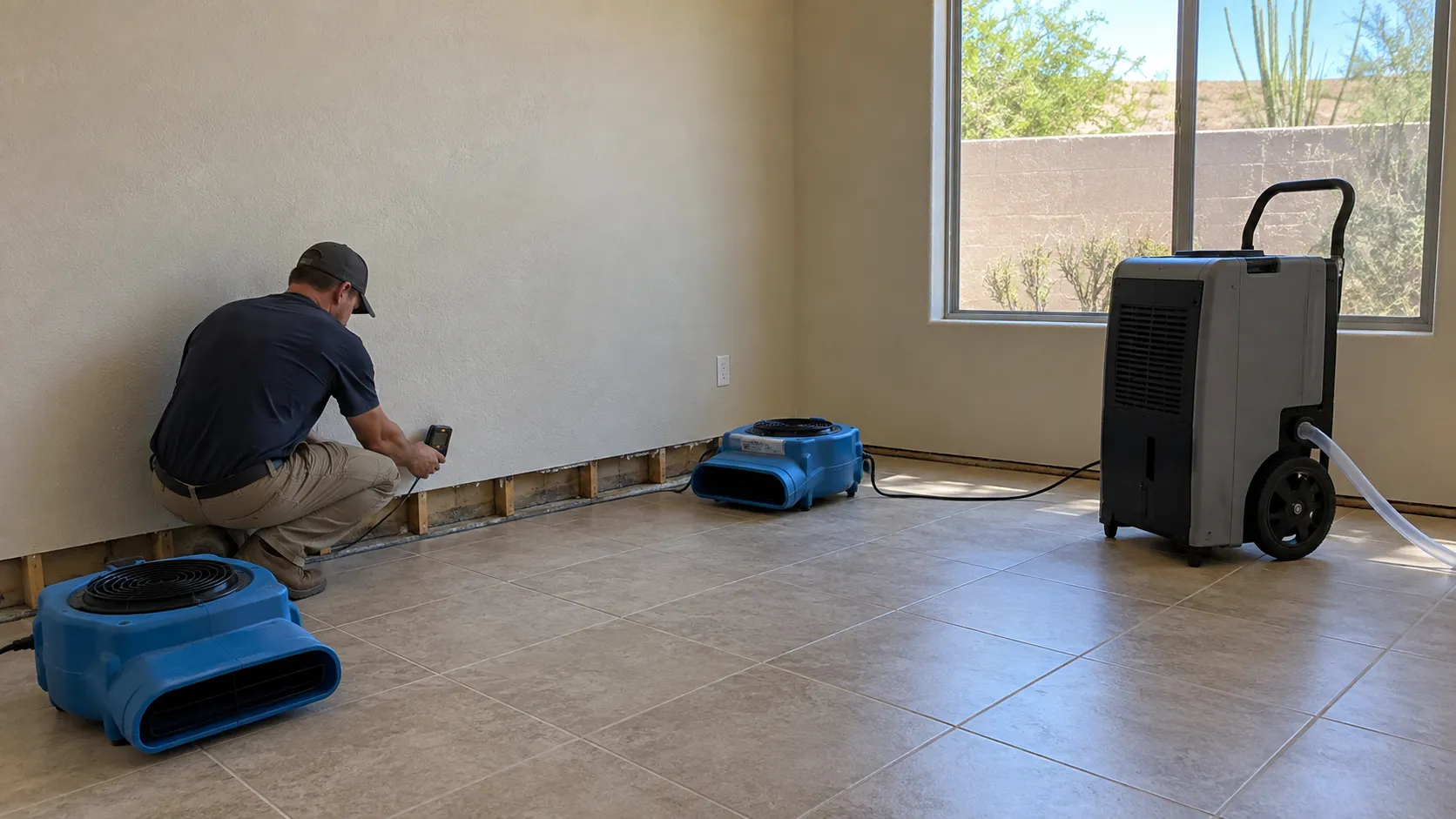
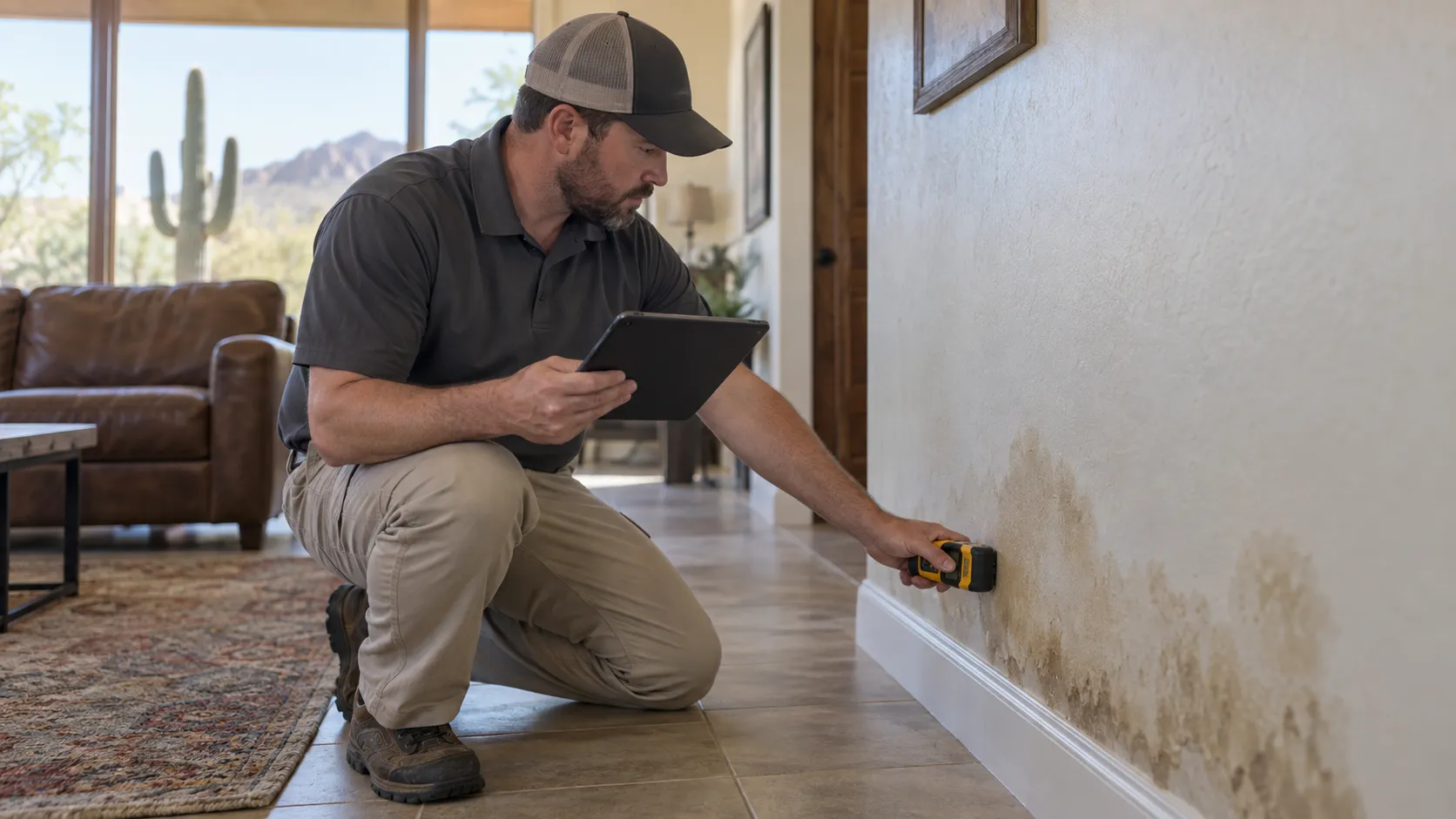
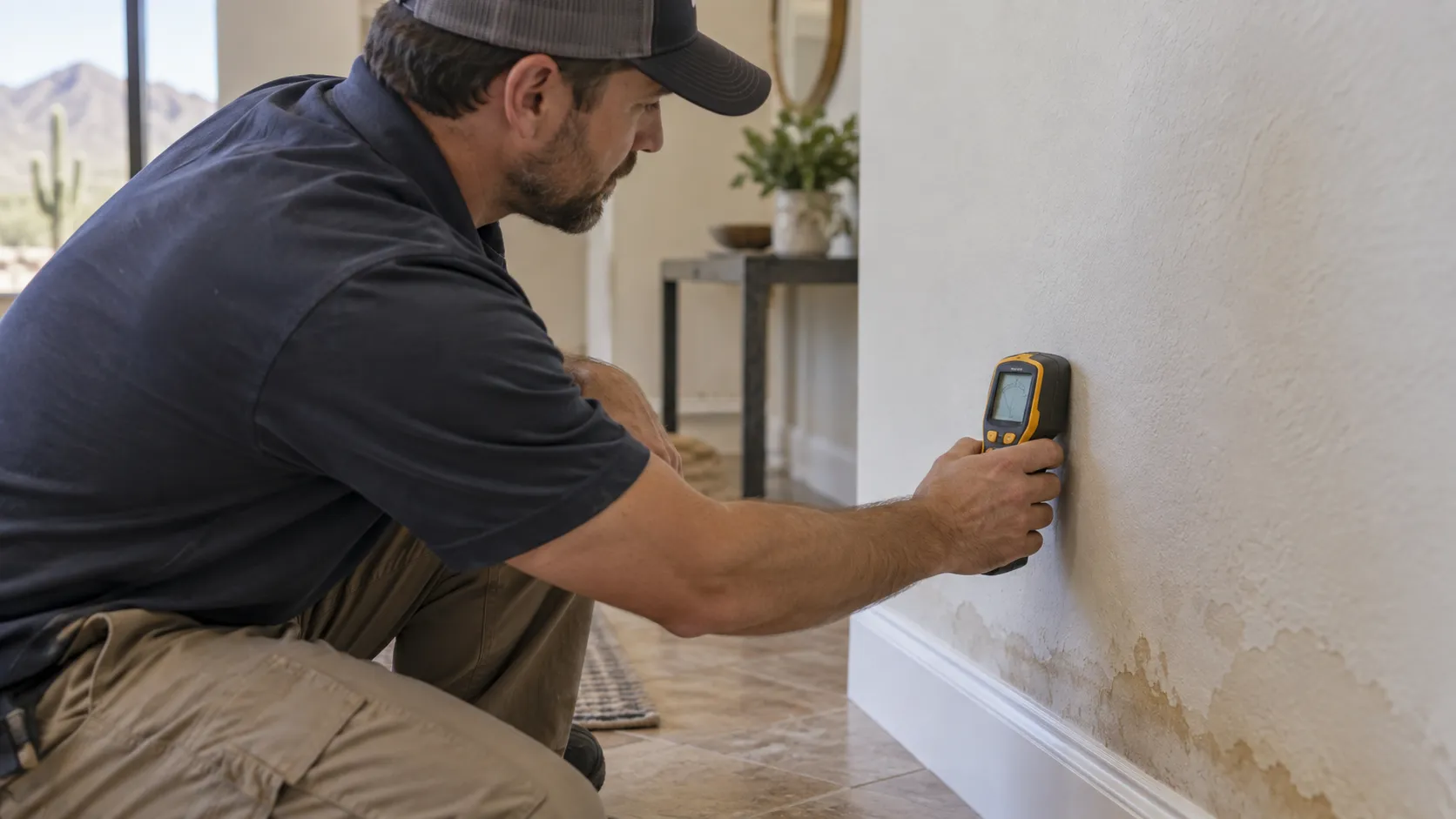
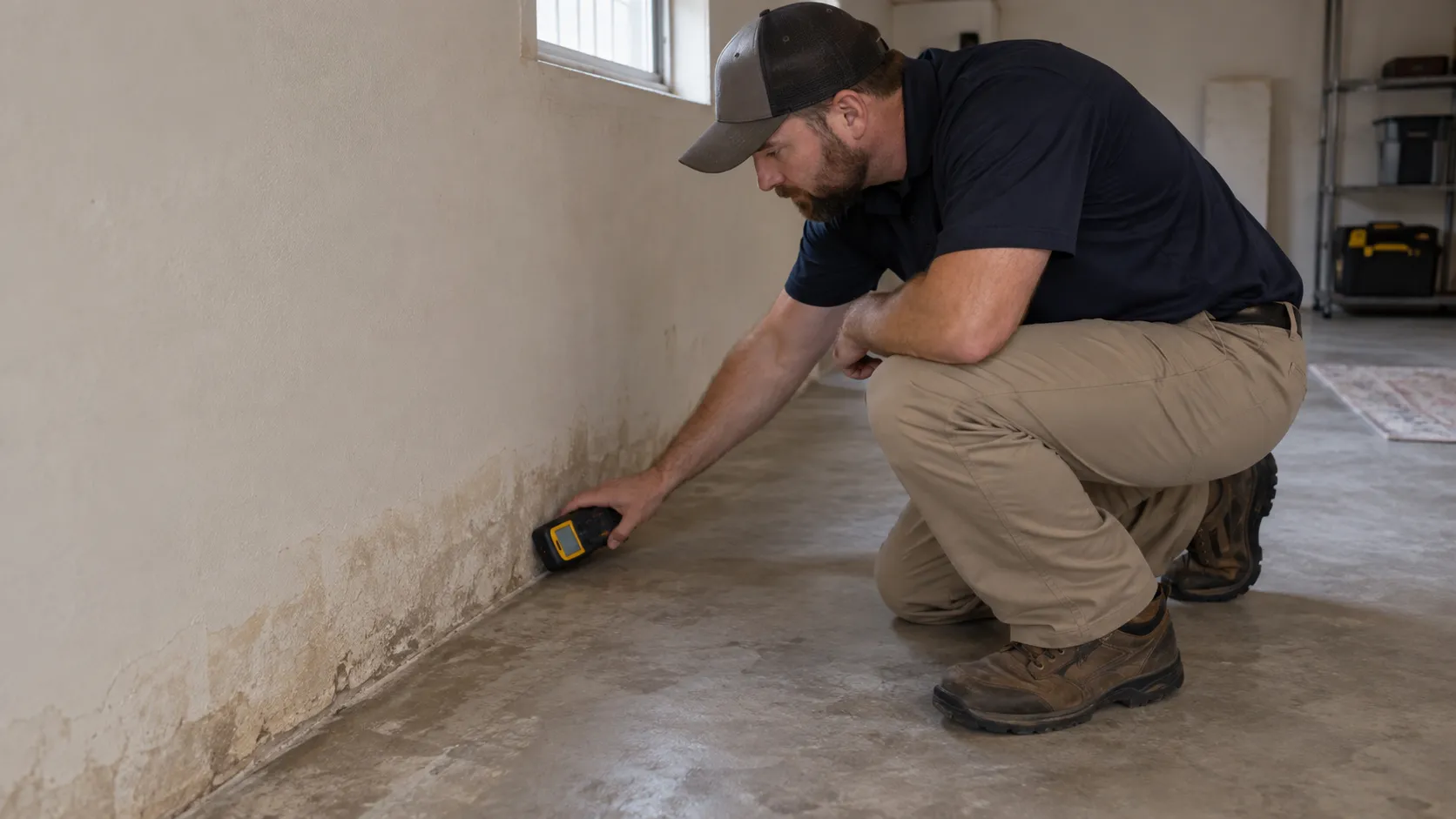
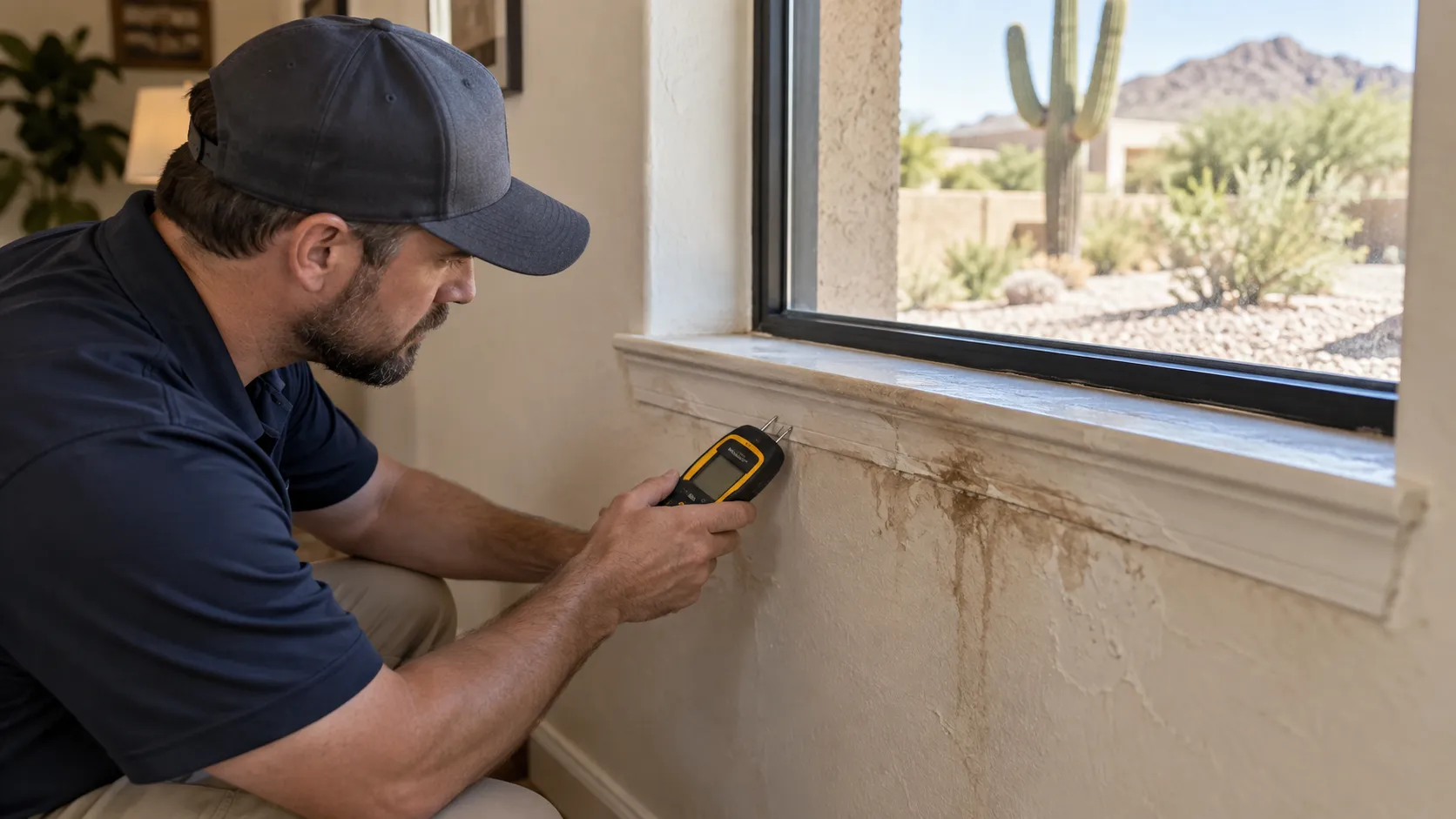
Moisture readings help show which materials are drying and which need further attention. Physical condition is then assessed for the repair work that remains.
What happens after you call
Step 1
Your call establishes the help needed
The conversation covers the property address, the water problem, and your immediate concerns. Emergency help is available 24/7 with a 25-minute on-site response.
Step 2
The affected property is assessed
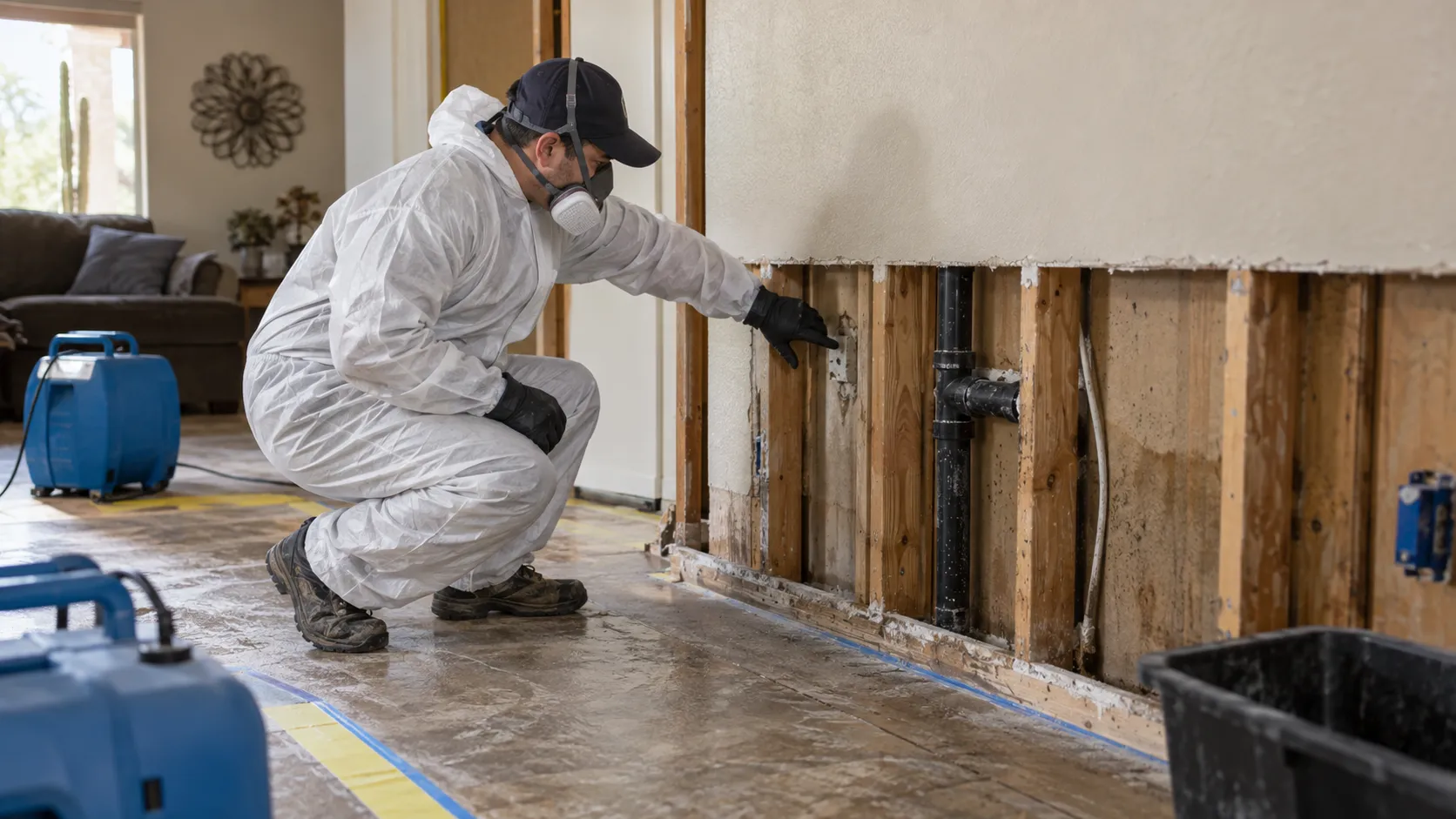
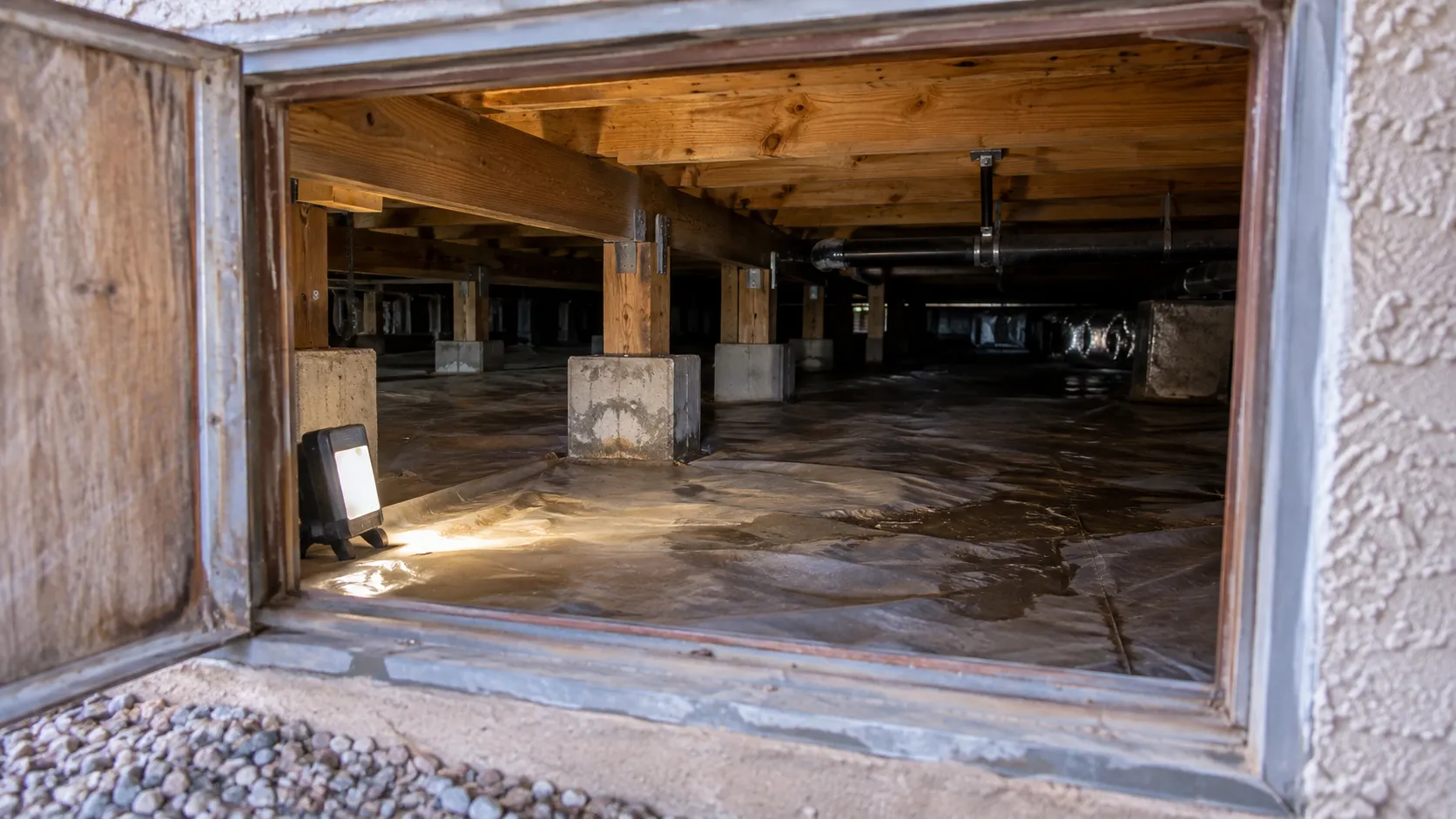
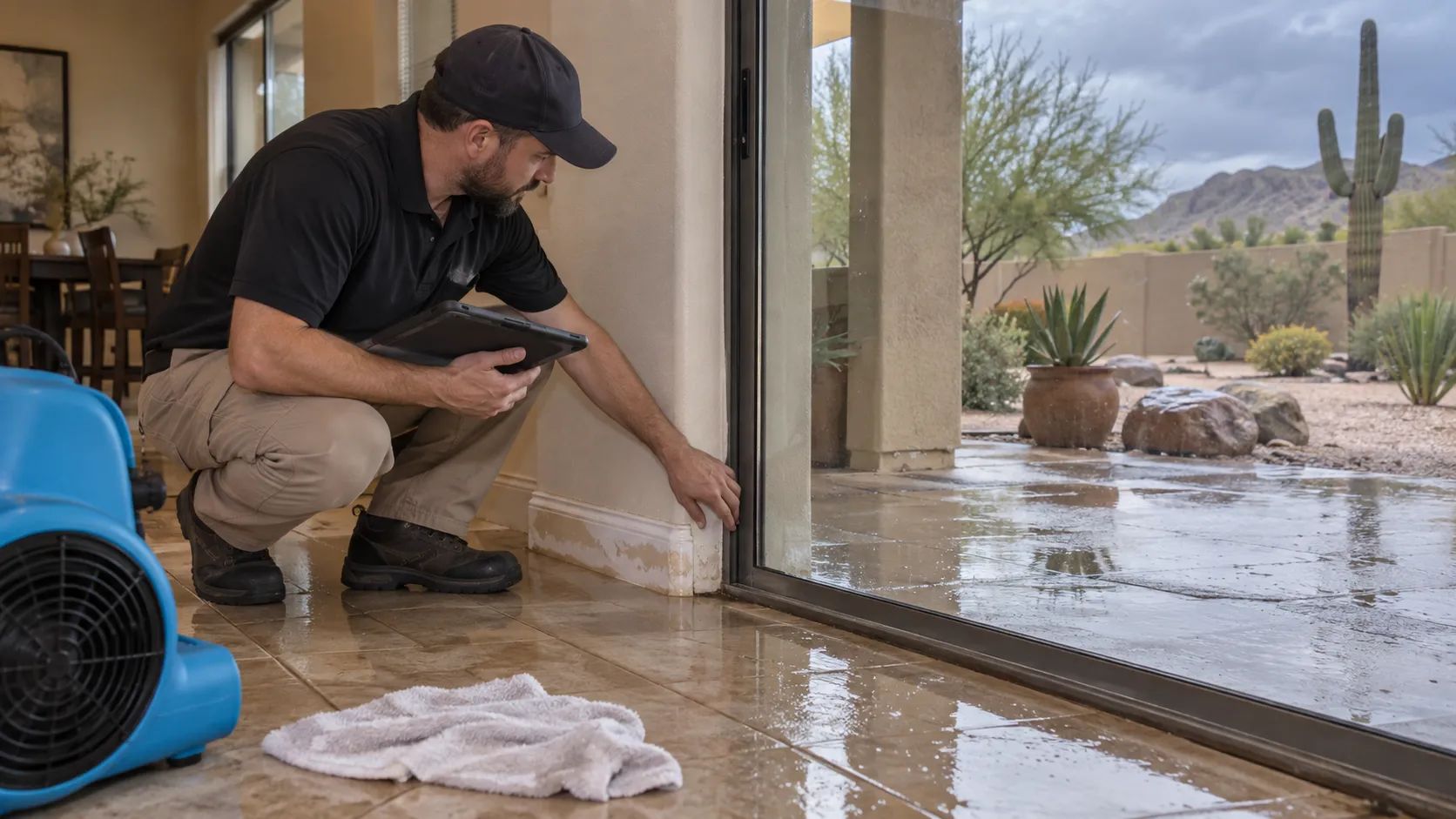
The assessment checks the water source, accessible moisture, and material damage. It identifies the necessary cleanup and whether further water entry needs attention.
Step 3
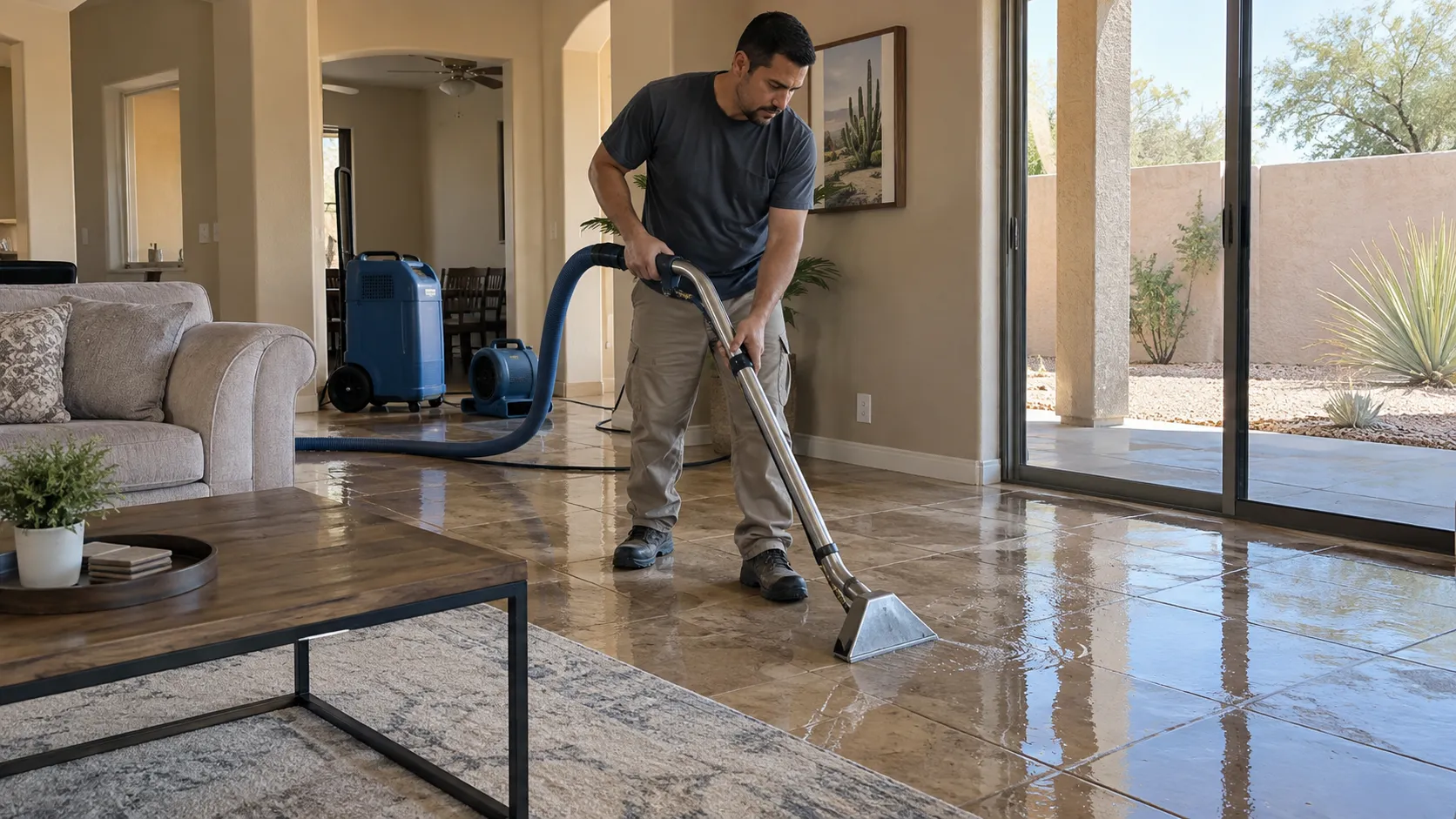
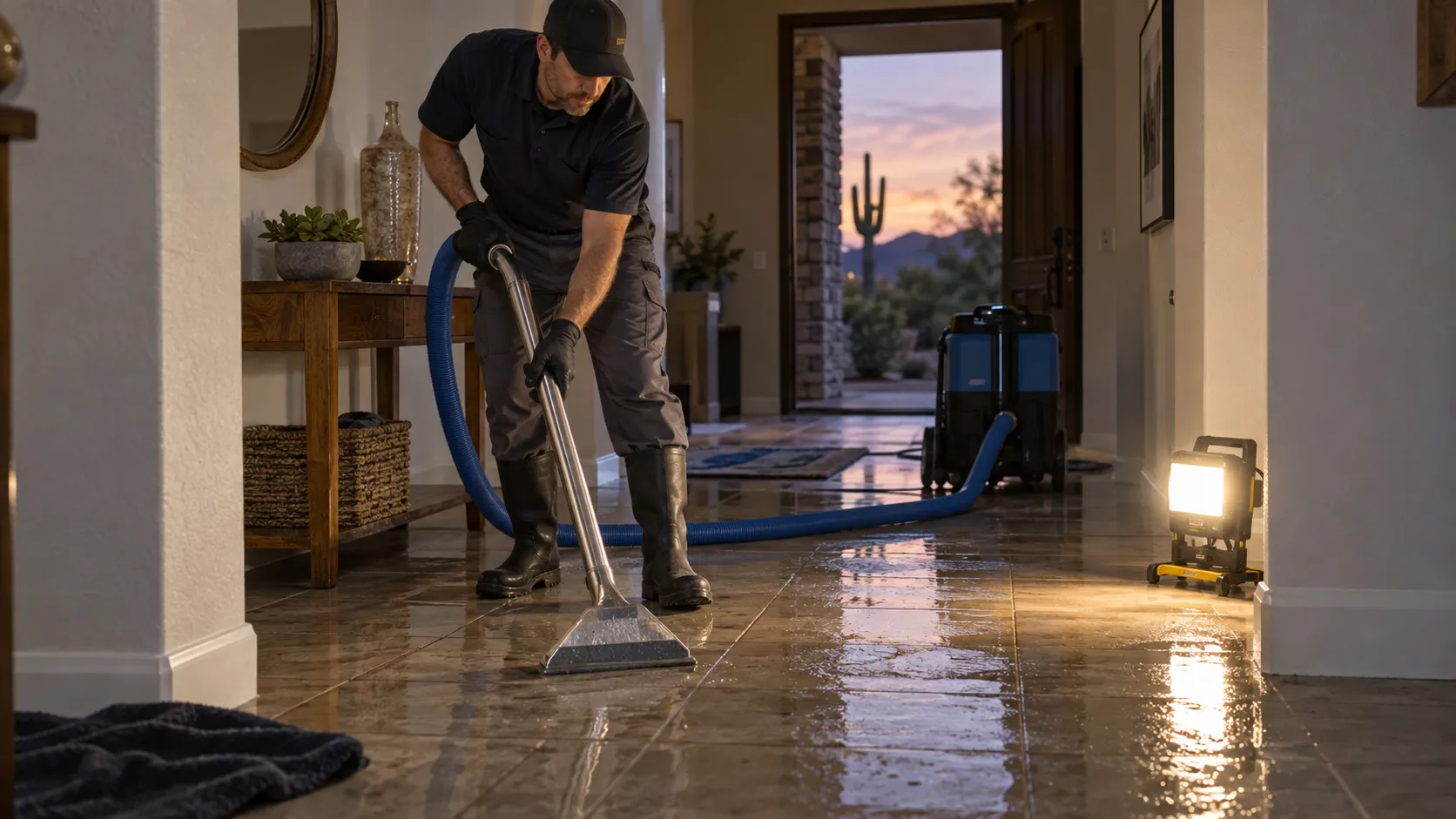
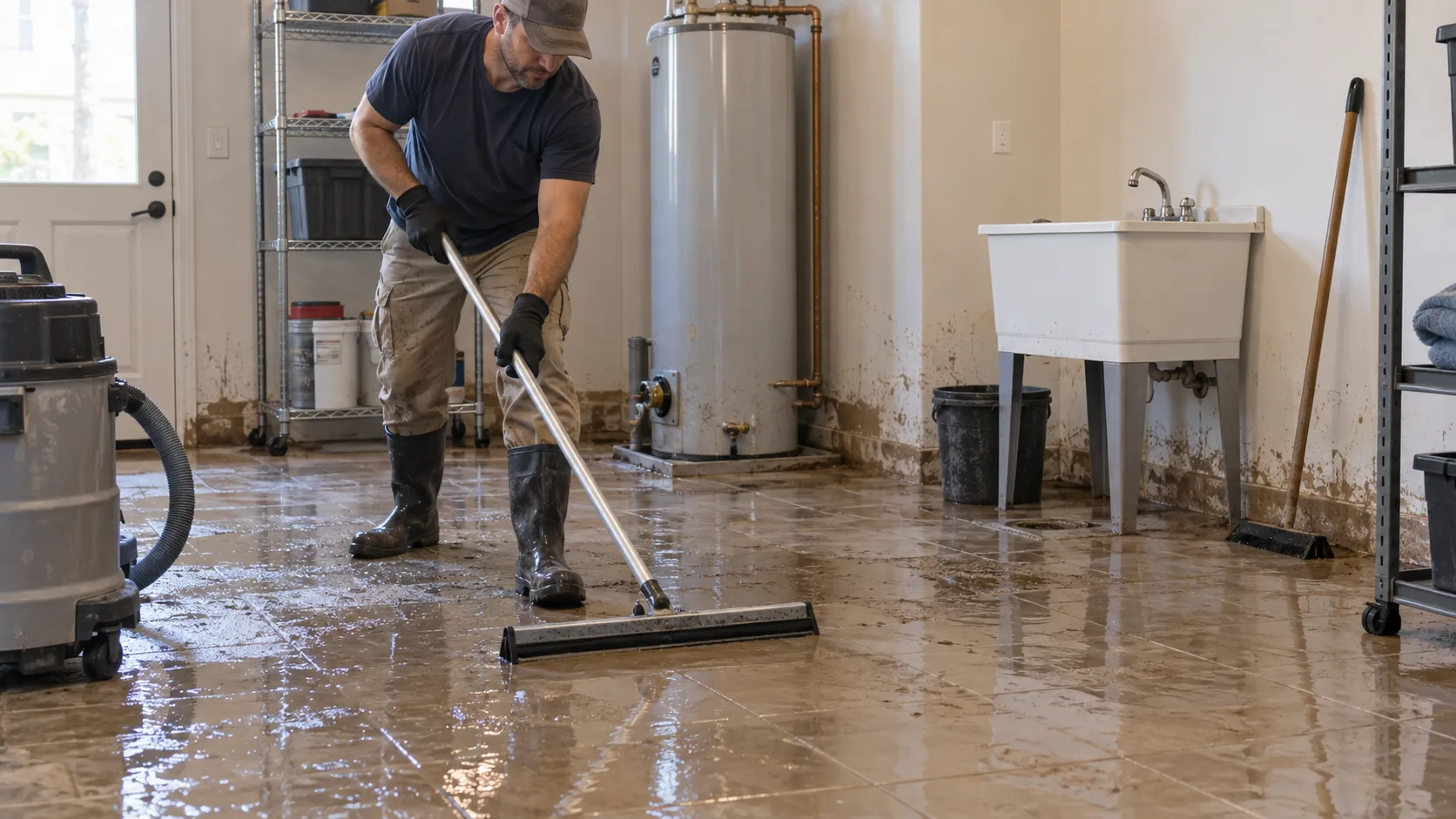
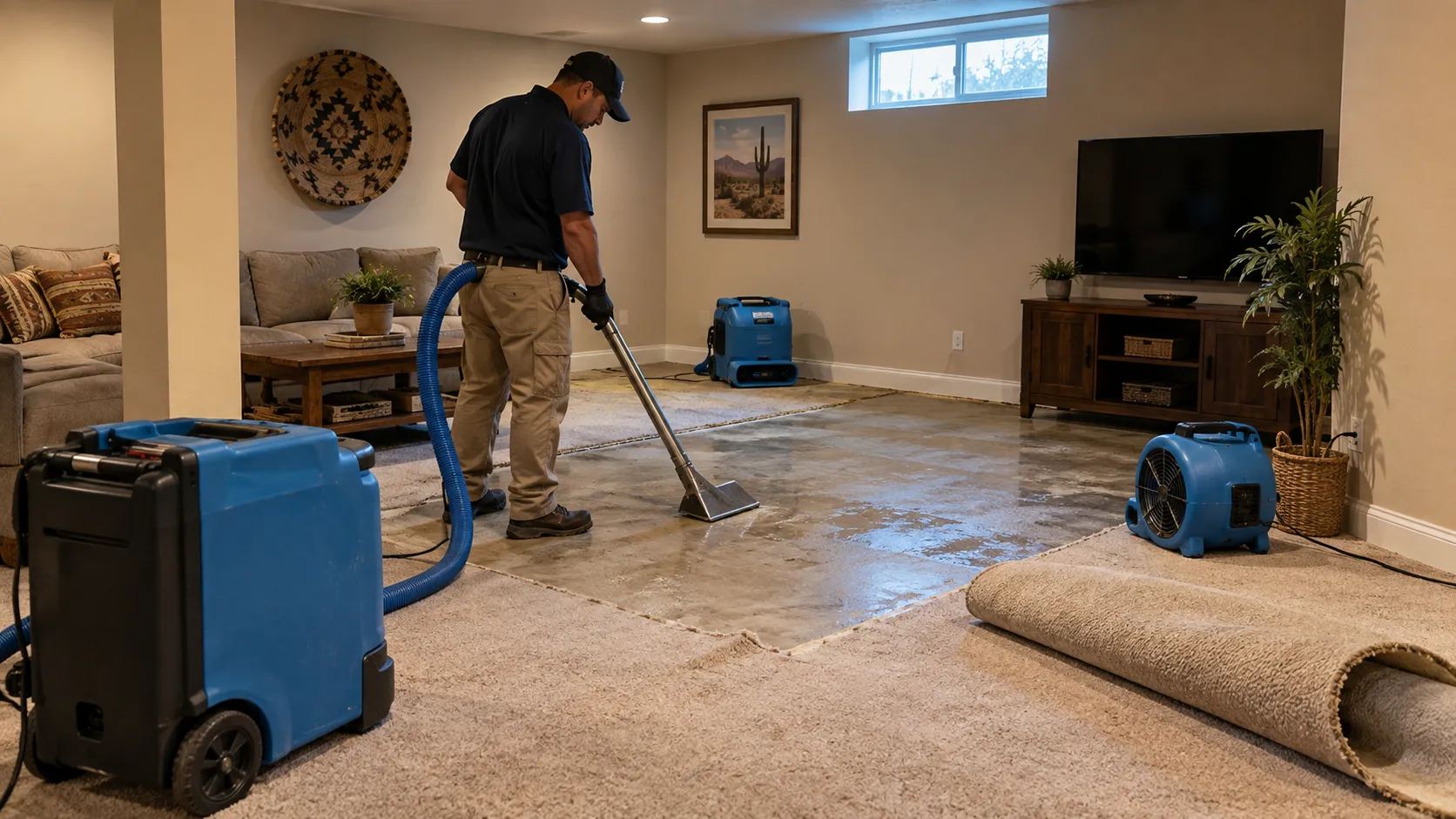
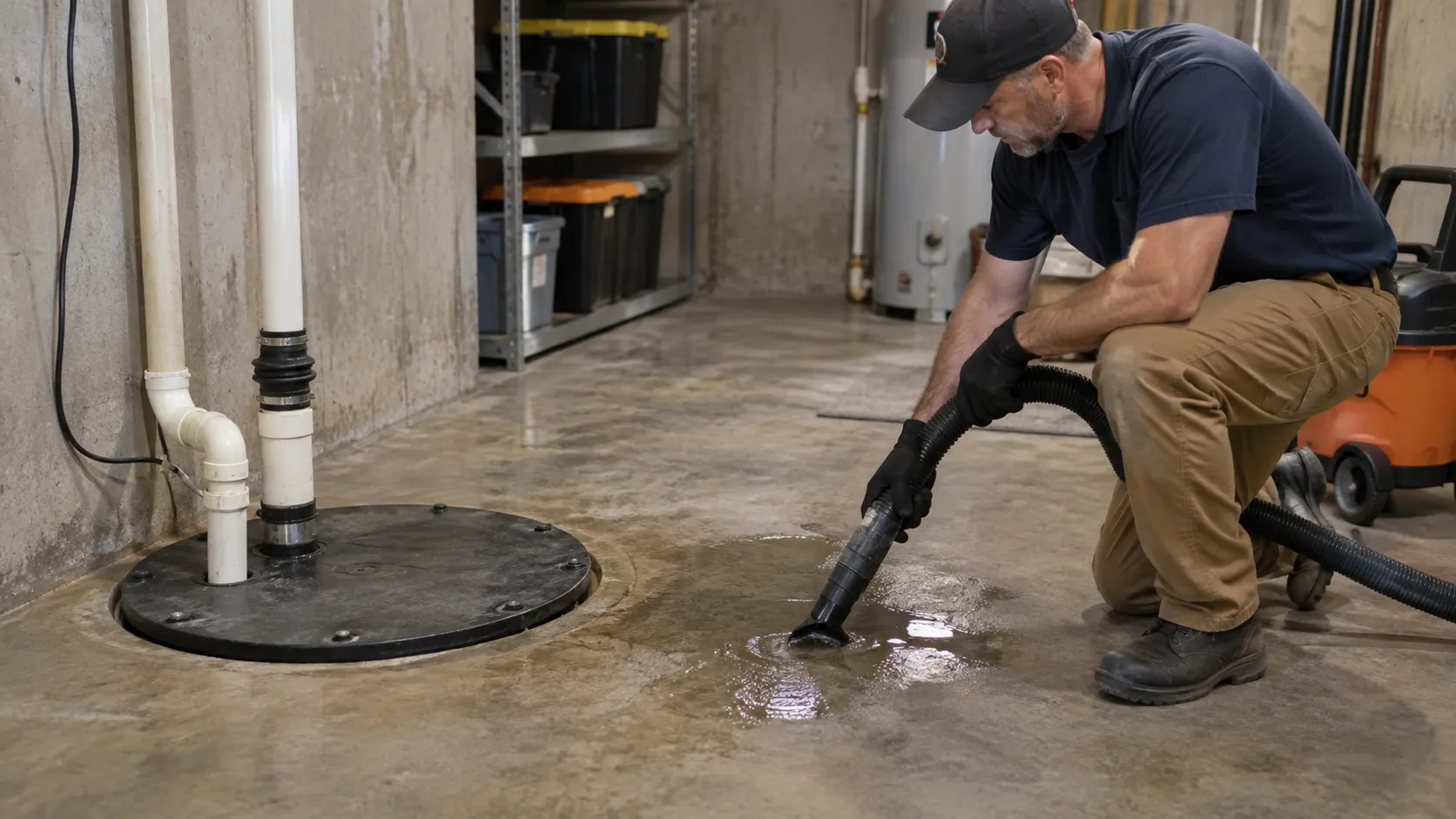
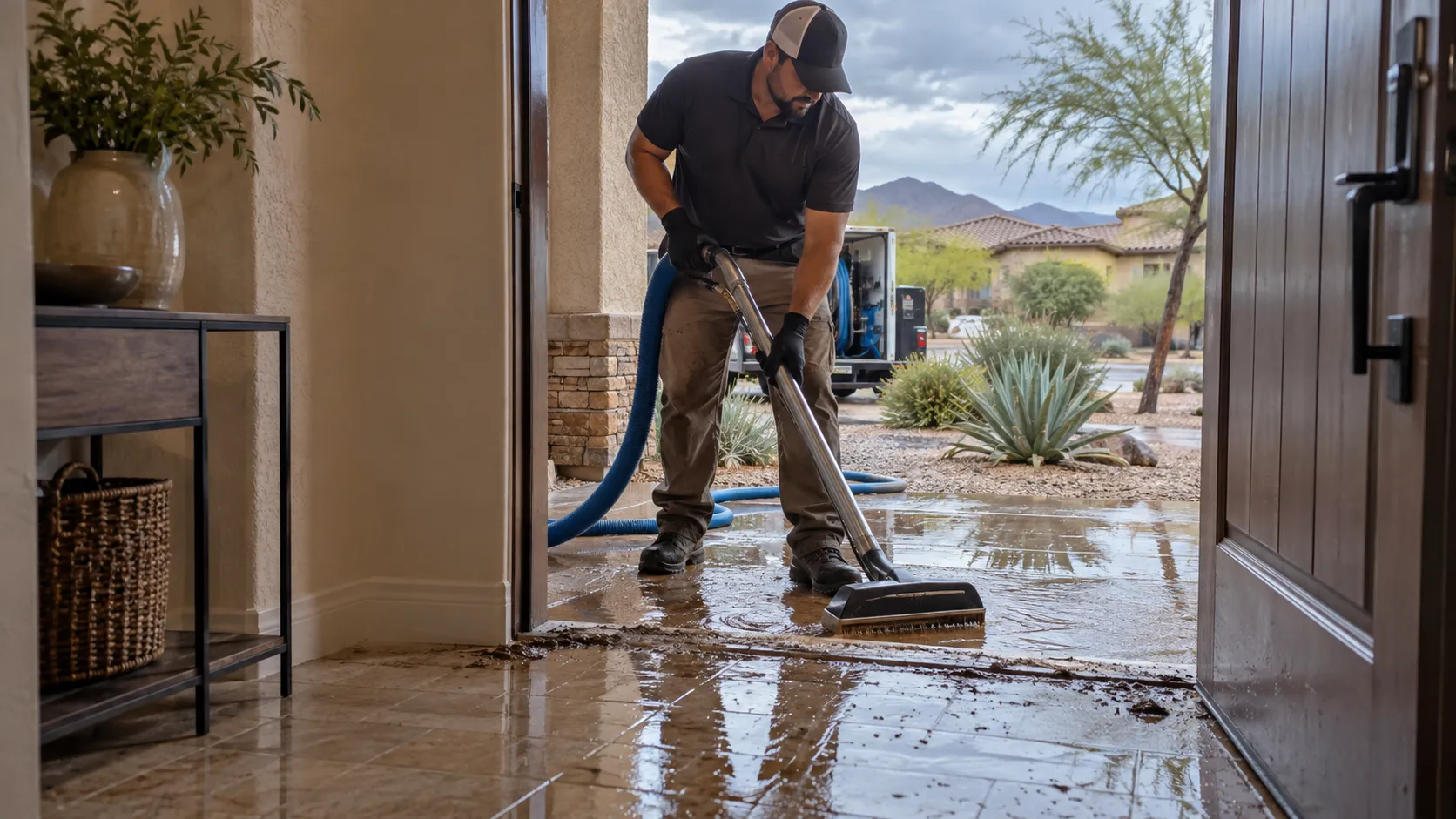
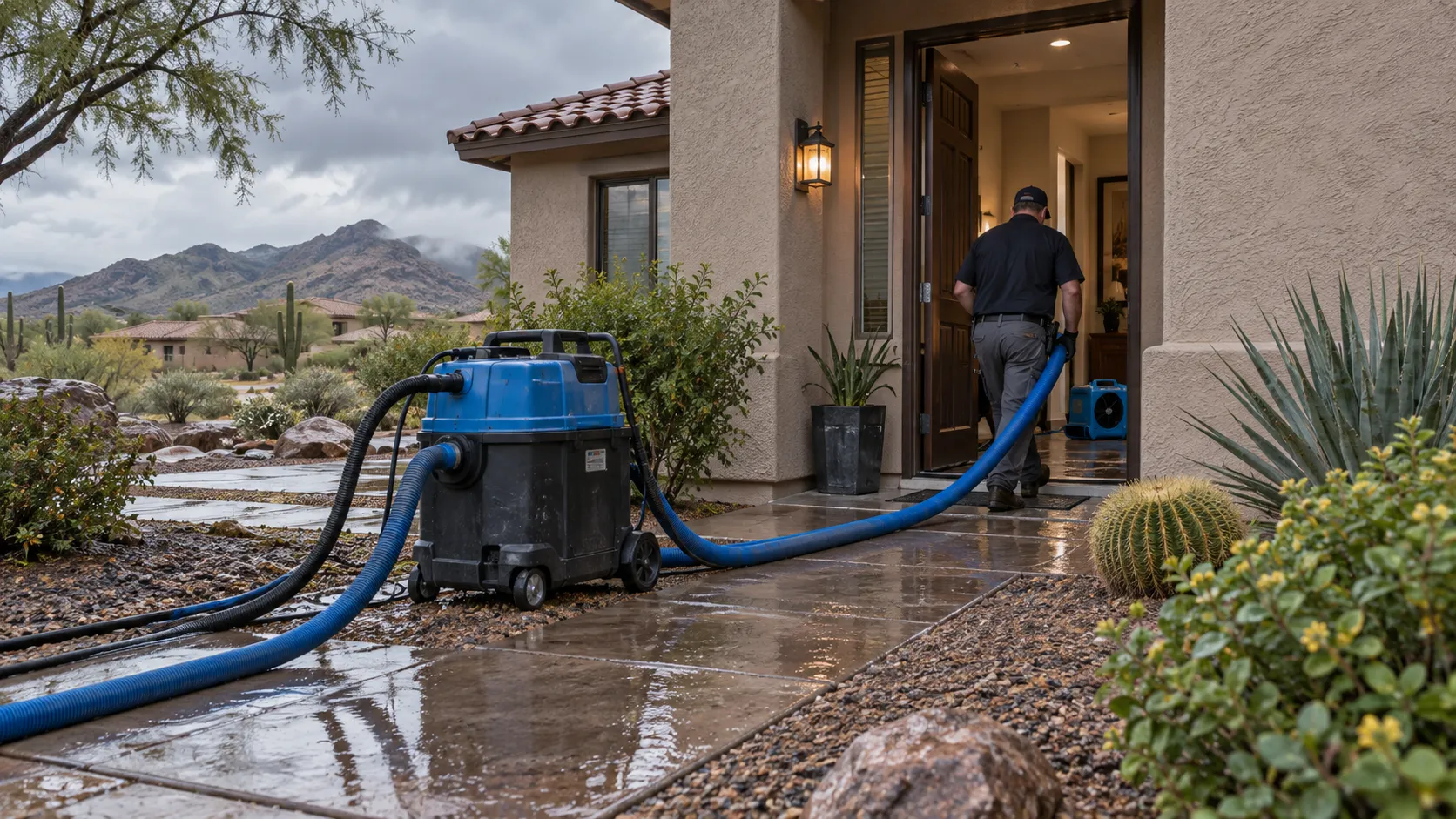
Water removal and cleanup address the initial damage
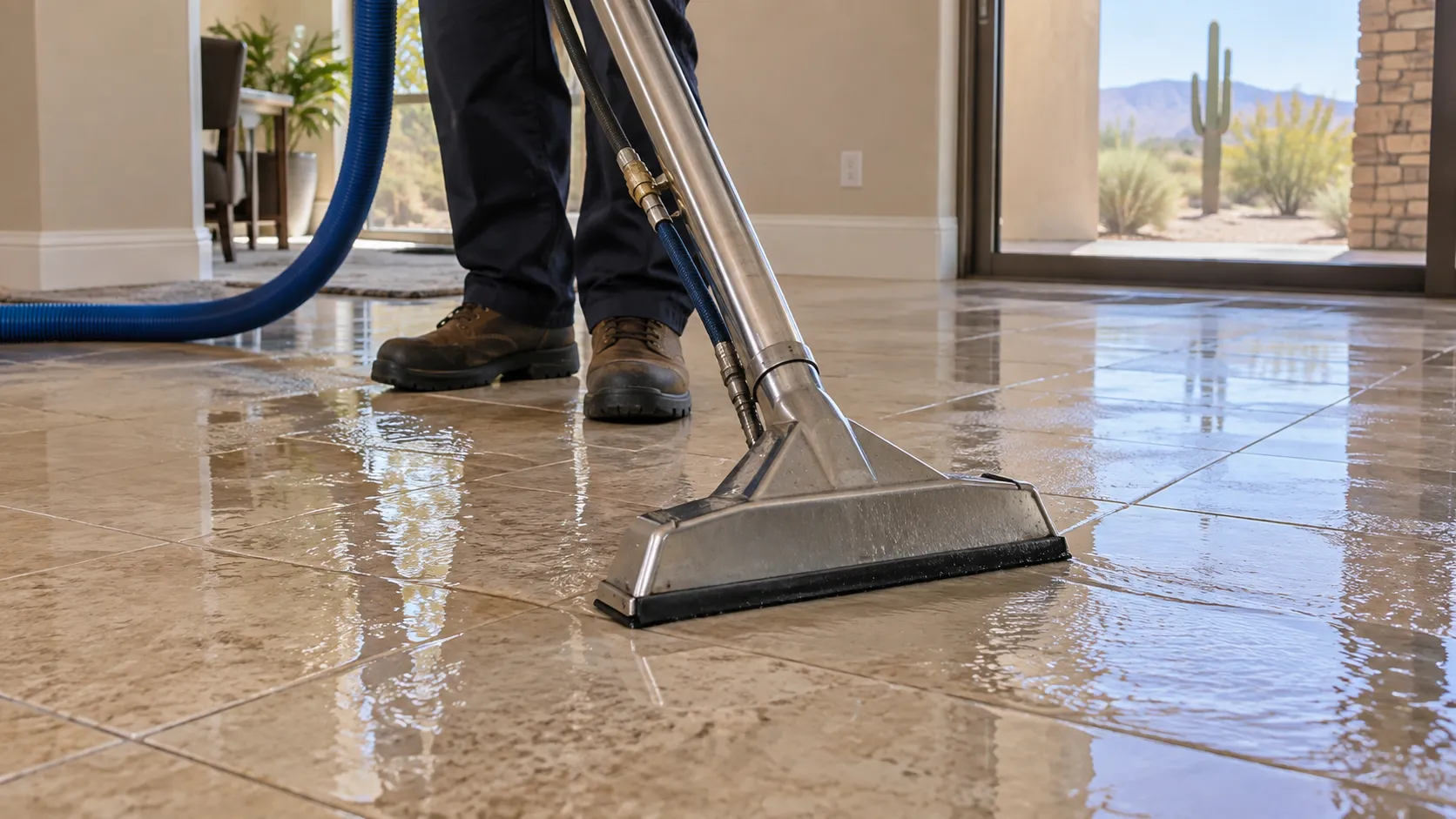
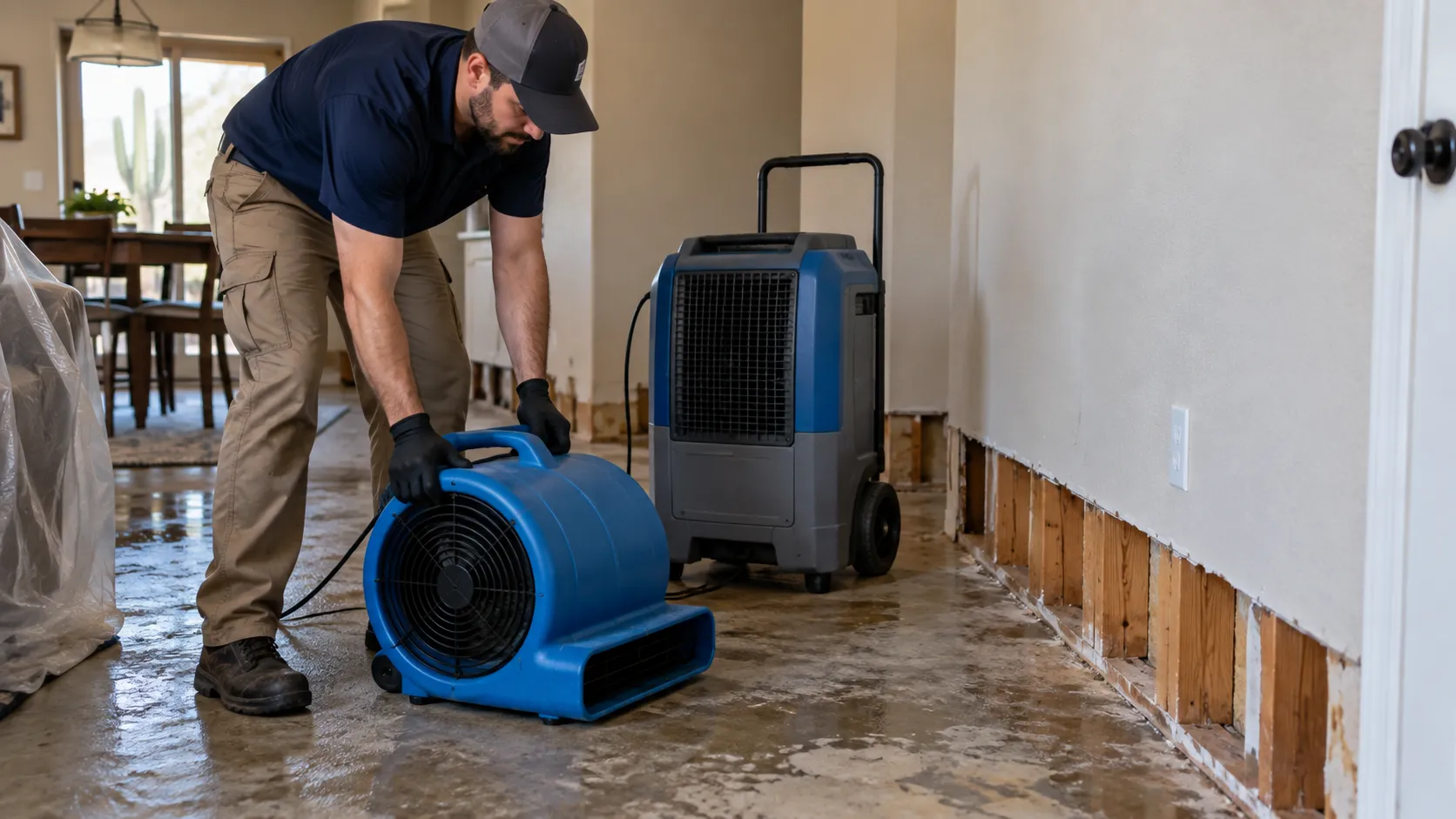
Accumulated water is extracted and suitable surfaces are cleaned. Materials that cannot reasonably be restored are identified for removal where needed.
Step 4
Drying progress is measured
Air movement and dehumidification help dry recoverable materials. Follow-up moisture readings show where drying is progressing and where further work is needed.
Step 5
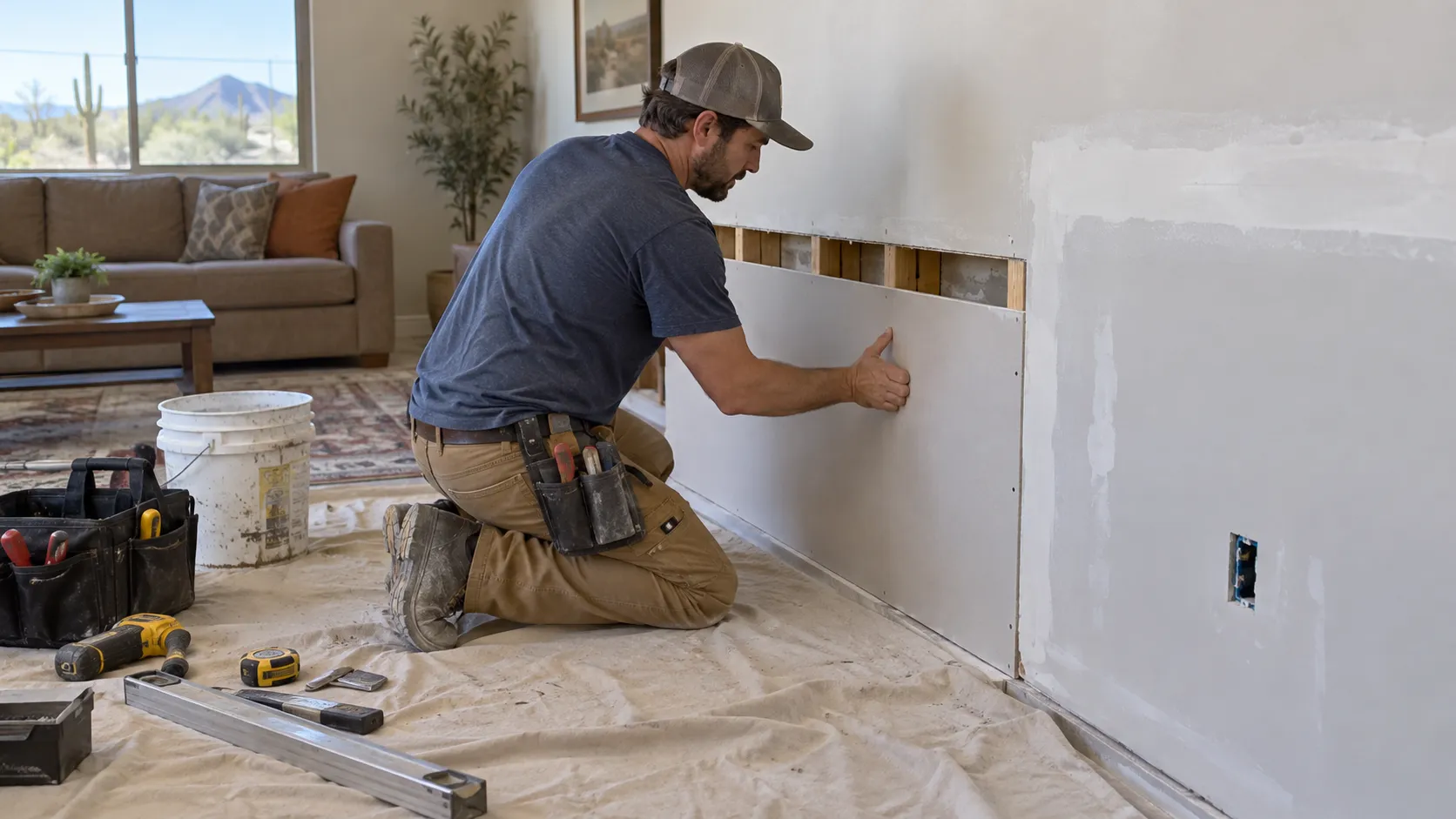
Remaining damage is repaired
Once retained materials are ready, damaged finishes and building materials are repaired or replaced as needed. Reconstruction addresses physical damage that cleanup and drying cannot correct.
Understand what your property needs
The damage found
Assessment findings identify affected materials and accessible moisture. They help explain why particular areas need cleaning, drying, removal, or repair.
The restoration work
The proposed work connects those findings to specific tasks. Immediate water removal is distinguished from the drying and repairs that follow.
Drying progress
Moisture readings help show whether recoverable materials are drying. Remaining wet areas can receive further attention before repairs cover them.
Repairs still needed
Material condition determines what remains after cleanup and drying. Dryness alone does not mean a swollen or deteriorated finish has been restored.
Flood restoration across Surprise
Service is available throughout Surprise, including Surprise Farms, Marley Park, Rancho Gabriela and Asante. The named communities are examples of coverage, not a limit on service within Surprise.
Surprise ZIP Codes We Serve
85374
85378
85379
85387
85388
Flood restoration is available in these Surprise-area ZIP codes. Postal areas can extend across municipal boundaries.
Surprise Flood Restoration FAQs
How quickly can you arrive for flood restoration in Surprise?
Emergency service is available 24/7 with a 25-minute on-site response. That timeframe means arrival, not completion of cleanup, drying, or repairs.
Which Surprise ZIP codes and areas do you serve?
Coverage includes Surprise Farms, Marley Park, Rancho Gabriela and Asante and the Surprise-area postal codes listed on this page. These include 85374, 85379, 85388. Service comes from our Phoenix office.
Will receding street water mean the property is dry?
No. Surprise's stormwater structures manage outdoor runoff, but building materials can retain absorbed moisture. Their condition needs to be checked separately.
What happens if water is still entering during restoration?
The entry problem needs attention so cleaned or drying materials are not exposed again. Stopping that source may require separate plumbing, roofing, or drainage work.
What makes contaminated-water cleanup different?
Water exposure can affect whether materials are suitable for cleaning or need removal. The assessment considers the source and condition before treating the affected property.
Is drying equipment needed after every flood?
Not necessarily. The need depends on moisture in the affected materials and whether those materials can be recovered. Measurements help establish the appropriate drying work.
How can I tell whether repairs are still needed?
An assessment of the materials after cleanup and drying identifies remaining physical damage. Swelling, separation, or deterioration can require replacement even when moisture has been removed.
Can flood restoration help with both building damage and contents?
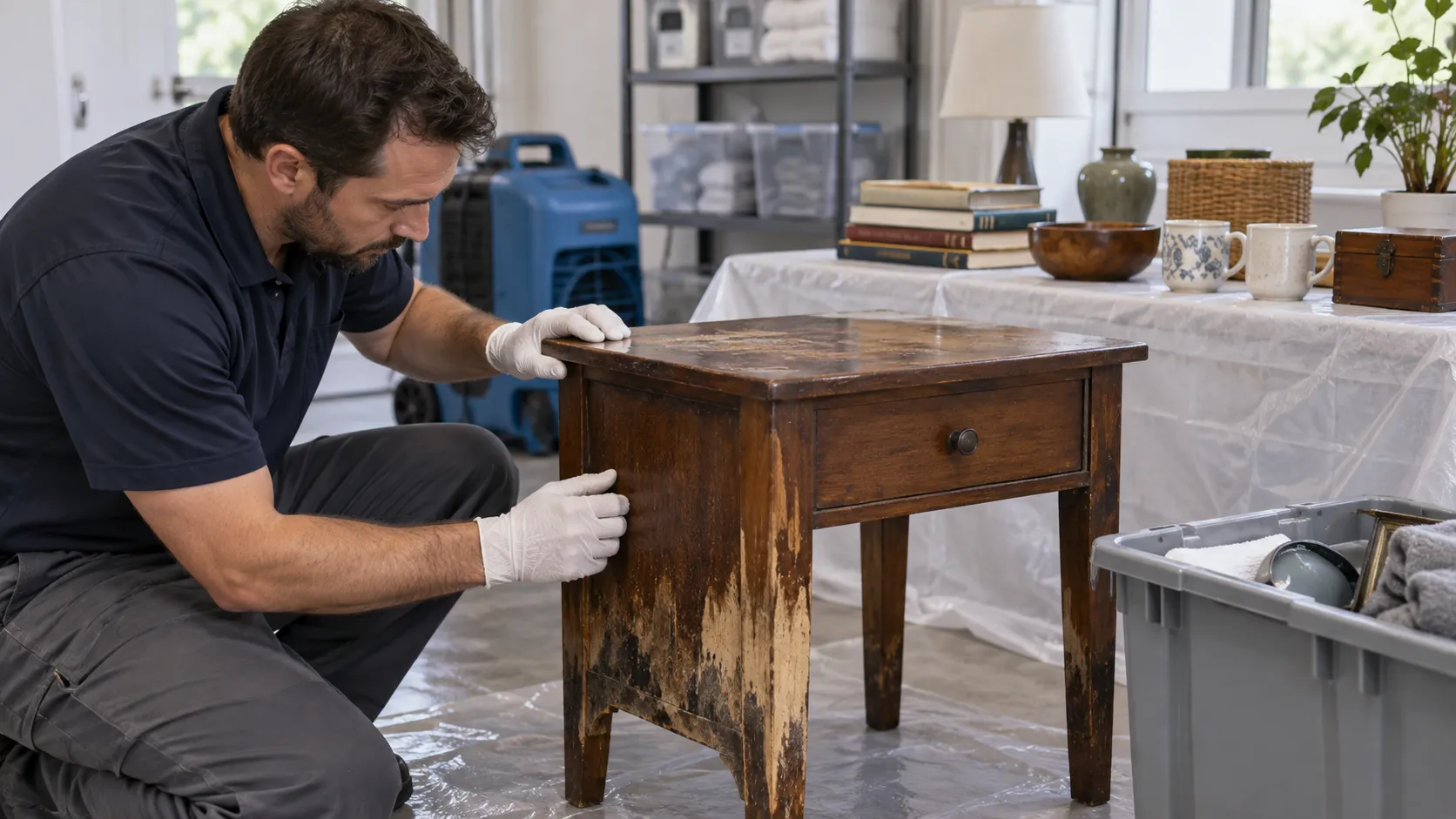
Yes. Building restoration and contents recovery are available but involve separate assessments. The work needed for belongings depends on each item's material and exposure.
Need flood restoration in Surprise?
Get the immediate cleanup and remaining damage addressed together. Request help with extraction, moisture checks, drying, and the repairs needed afterward.