Unclear extent of damage
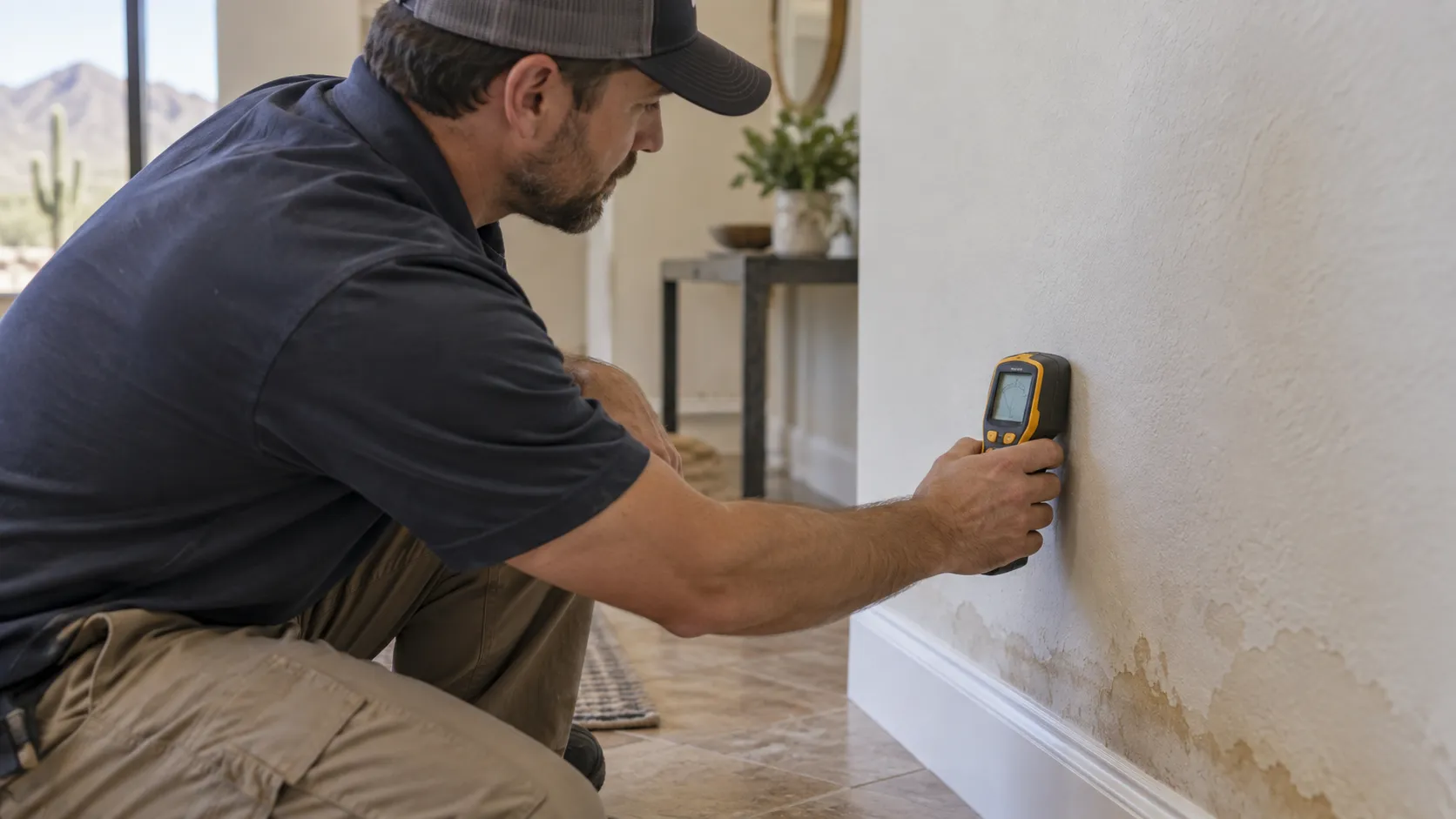
The visible wet area may not show all affected materials. Relevant accessible surfaces are checked to establish the extent of restoration needed.
24/7 flood restoration in Chandler
Assess flood damage at your Chandler property before new finishes are installed. Material condition and moisture findings help establish whether further restoration is needed before repairs conceal the area.
Restoration findings describe property conditions and proposed work. The insurer determines policy coverage; inaccessible or concealed conditions may require further investigation.
The visible wet area may not show all affected materials. Relevant accessible surfaces are checked to establish the extent of restoration needed.
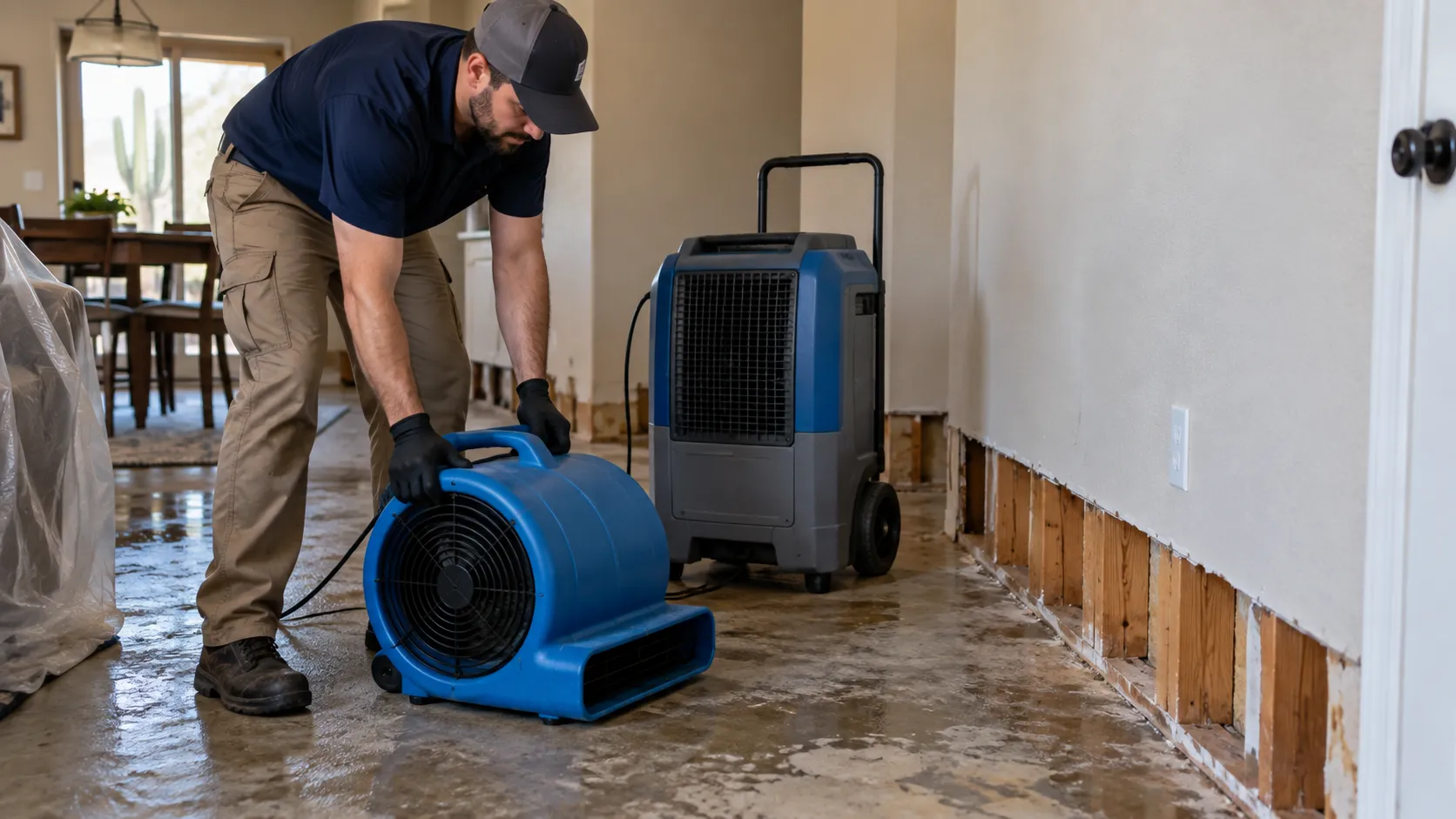
Extraction does not establish that building materials are dry. Moisture checks help identify what still needs drying or further investigation.
Physical damage and wetness require different decisions. Assessment distinguishes materials that may be dried from those needing repair or replacement.
Visible damage does not always establish its cause. The assessment separates observed conditions from source questions requiring further investigation.
The conversation covers your Chandler address, the flooding, and any work already completed. Service is available 24/7 with a 25-minute on-site response.
Affected materials are reviewed for visible water damage and deterioration. Access limitations are noted rather than assuming every concealed area has been examined.
Measurements help identify retained moisture in accessible materials. Findings are considered with construction and exposure, not interpreted as complete visibility through every assembly.
The assessment connects the findings to extraction, cleaning, drying, or repairs as appropriate. Unresolved questions are identified separately from confirmed damage.
Improved access can reveal conditions not visible at the first visit. The restoration plan is updated where those findings establish additional needs.
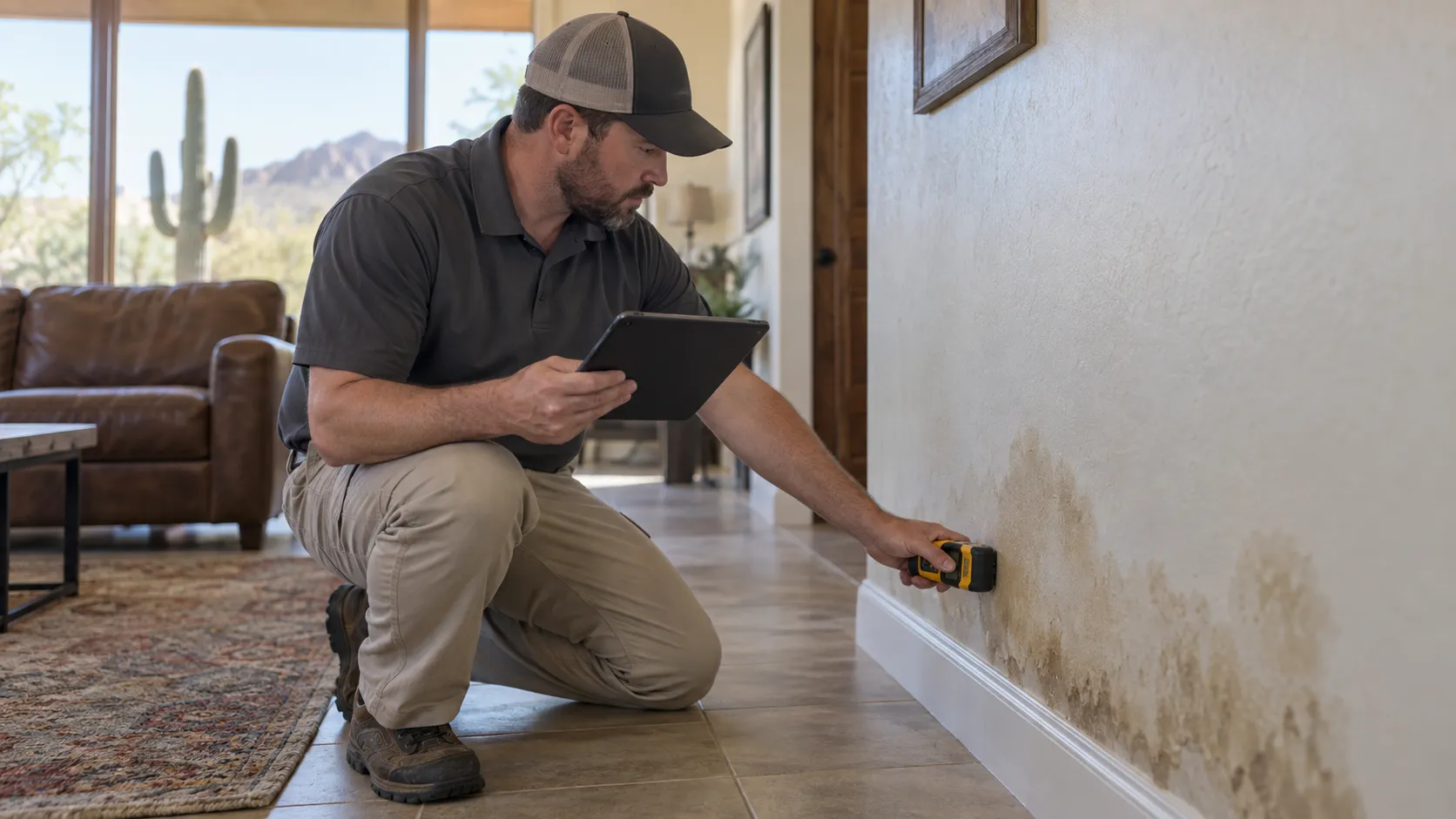
Staining, swelling, separation, and deterioration help identify affected materials. The review provides a starting point without claiming every concealed condition can be seen.
Relevant measurements help establish remaining drying needs. Material type, location, and tool limitations are considered when interpreting the results.
Enclosed construction can prevent complete assessment. Areas needing additional access or specialist investigation are identified rather than given an unsupported all-clear.
The findings define appropriate cleanup, drying, and repair tasks. Insurance coverage and source-system repairs remain separate from assessment of the resulting damage.
Records describe the accessible affected materials and their condition. They distinguish observed evidence from assumptions about concealed construction.
The location of moisture findings provides context for drying needs. A result at one surface is not presented as proof about every surrounding layer.
Access limits and uncertain source information are kept explicit. Further investigation can then address what the first assessment could not establish.
The work is connected to the damage found. This explains why extraction, cleanup, drying, or reconstruction is recommended without implying an insurance approval.
Plumbing and exterior-entry problems can produce similar visible symptoms. A separate specialist may be needed to confirm and repair the cause.
A restoration assessment is not an engineering certification. Suspected structural problems may require evaluation by an appropriately qualified professional.
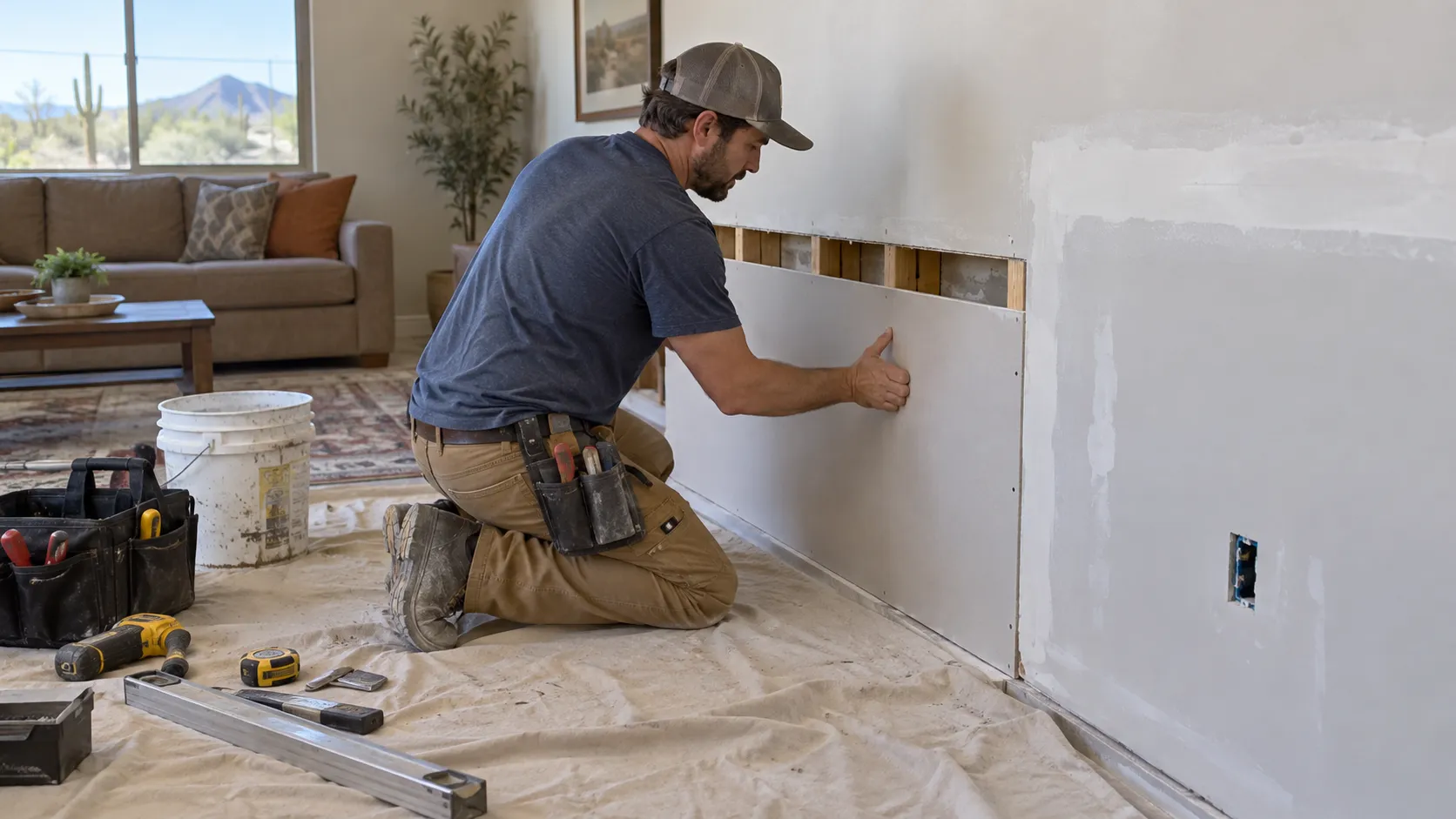
New finishes can conceal areas still needing attention. Reviewing moisture and physical condition first helps establish the work required before repairs proceed.
Stormwater in Chandler can pick up oil, dirt, and debris as it moves across outdoor surfaces. The source and path of water matter when assessing affected materials for cleaning, drying, or replacement.
Flood Damage Assessment is available throughout Chandler, including downtown Chandler, Ocotillo, and Fulton Ranch. Emergency service is available 24/7 with a 25-minute on-site response.
Serving Chandler from our Phoenix office: 2840 S. 36th Street, Suite E-1, Phoenix, AZ 85034.
Flood Damage Assessment is available in these Chandler-area ZIP codes. Postal areas can extend across municipal boundaries.
Help is available 24/7 with a 25-minute on-site response in Chandler. The time needed to assess the loss depends on access and the conditions found.
We provide flood damage assessment in Chandler, including downtown Chandler, Ocotillo, and Fulton Ranch. Coverage includes 85224, 85225, 85226, 85248 and the other ZIP codes listed here. Service comes from our Phoenix office; postal areas can cross municipal boundaries.
It considers the water source, exposed materials, visible residue, and accessible moisture. Those findings identify the cleanup and restoration needs; a clear-looking surface does not establish the full condition.
No. Tools and accessible observations have limits. Some concealed construction requires further access or investigation before its condition can be understood.
Not always. The damage can be assessed while source questions remain unresolved. Plumbing, roofing, or other specialist investigation may be needed to confirm the cause.
Yes. Building materials can remain wet or damaged afterward. Assessment identifies the cleanup, drying, or repairs still needed beyond removal of accumulated water.
Yes. Improved access can reveal additional damage. Newly observed conditions may change the required work and should be explained as part of the updated findings.
No. It describes property conditions and restoration needs. The insurer determines what the policy covers and any applicable payment decisions.
Get help understanding the affected materials and the work needed to restore your property. Call 24/7 for a 25-minute on-site response, or request an assessment online.