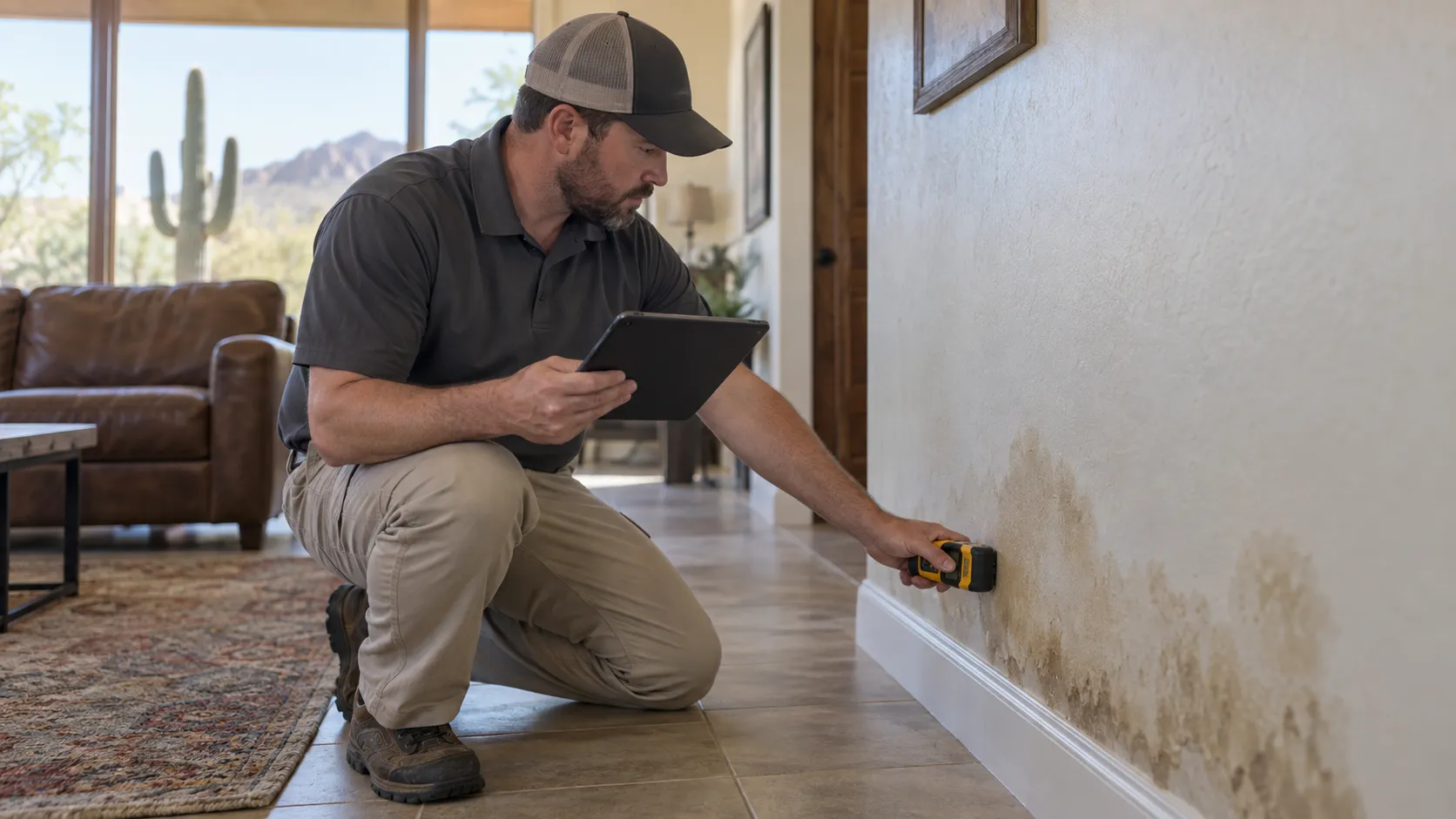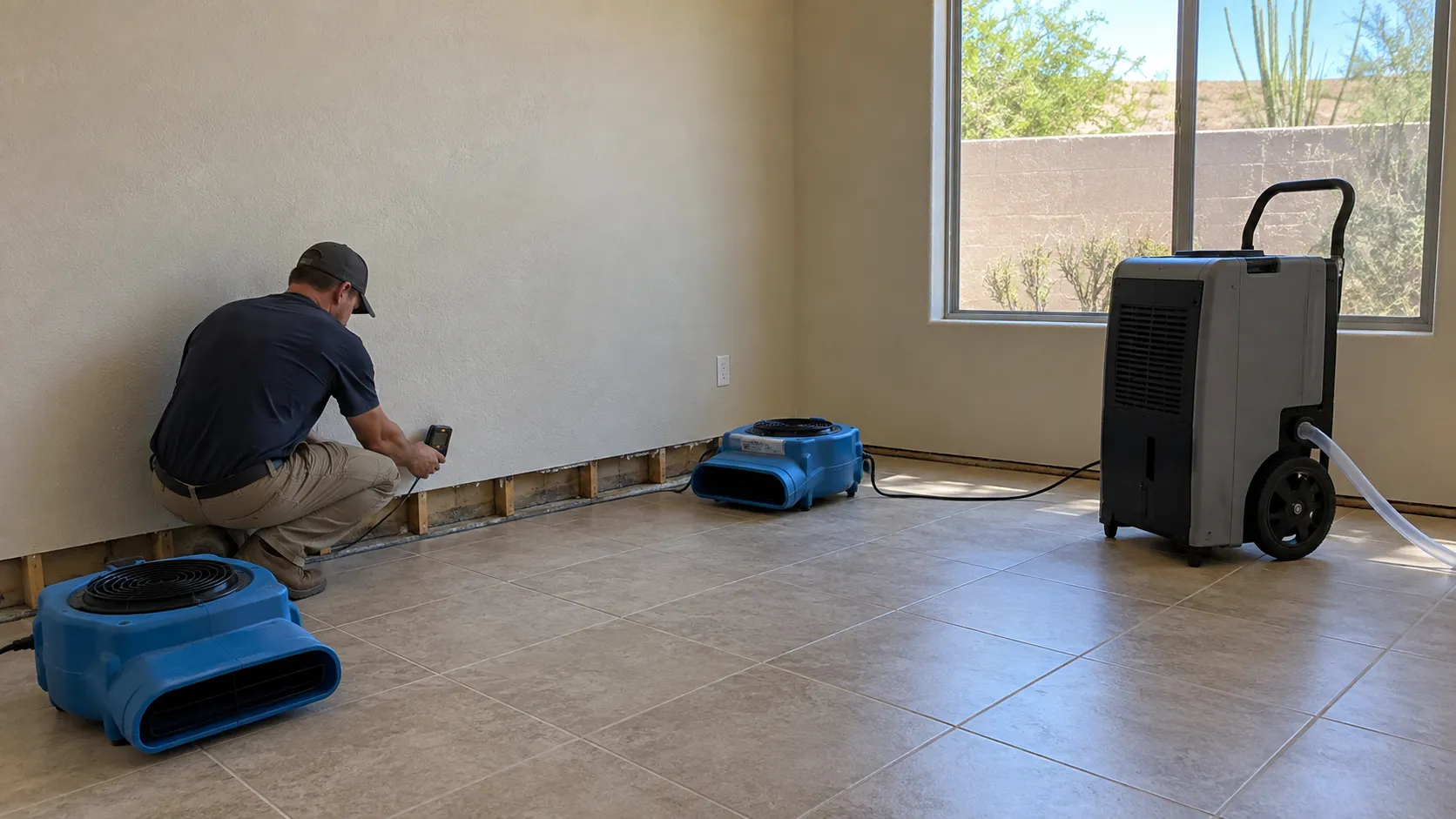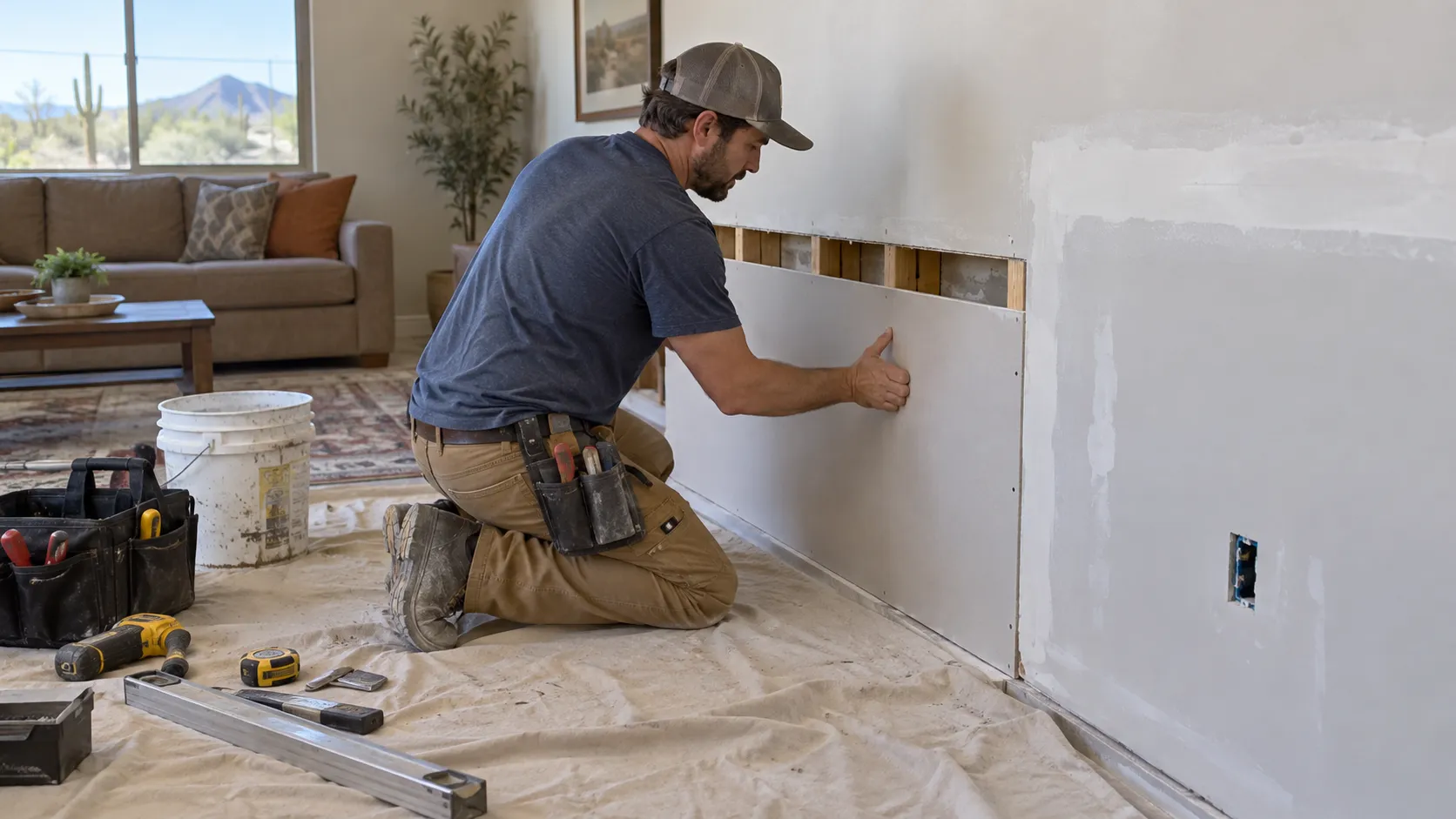
Hidden moisture
Water can remain beneath finishes or inside building materials after extraction. Appropriate moisture checks help identify accessible areas that still need attention.
24/7 flood restoration in Glendale
Get help establishing how far moisture extends through accessible materials in Glendale. Checks beyond the visible damage help avoid overlooking areas that need drying.
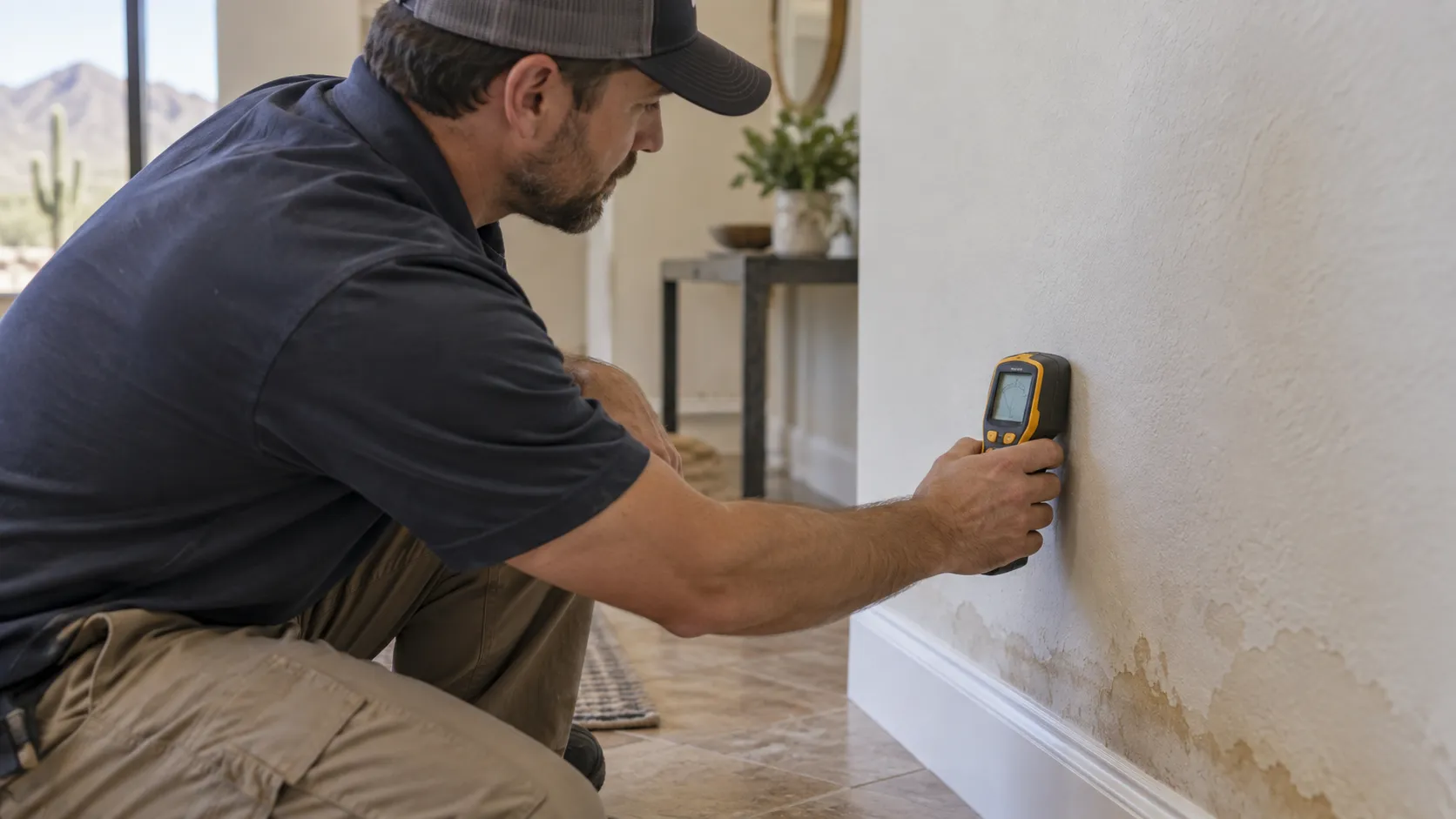
Readings help assess moisture, not electrical hazards or a building's structural condition. Suspected hazards require the appropriate qualified assessment before access or restoration work.
Water can remain beneath finishes or inside building materials after extraction. Appropriate moisture checks help identify accessible areas that still need attention.
A stain does not always show how far water traveled. Checking adjoining materials helps establish where drying is needed.
Different materials can dry at different rates. Repeat measurements help identify areas that are improving and those needing further work.
New finishes can conceal damp materials. Moisture findings help determine whether more drying is needed before affected areas are closed.
The conversation covers your Glendale address, the known water damage and why moisture checks are needed. Service is available 24/7 with a 25-minute on-site response.
Visible damage, reported water entry and accessible construction help establish where measurements will be useful.
Suitable instruments check relevant materials. Results are interpreted with the material type and surrounding conditions, not treated as isolated numbers.
Recording affected locations makes follow-up checks more useful. Where drying is underway, comparable readings help show its progress.
The findings help determine whether further drying, additional access or a separate damage assessment is needed before repairs proceed.
Measurements assess relevant building materials where access permits. This helps locate damp areas beyond the most obvious surface damage.
Recording where elevated moisture is found helps define the area requiring attention and supports consistent follow-up checks.
Repeat measurements help show whether affected materials are drying. Areas that are not improving may need changes to drying or access.
Checking retained materials before rebuilding helps avoid covering moisture that still needs treatment. Physical damage also needs its own assessment.
A record of measurement locations makes clear which areas were assessed and which were inaccessible.
Readings are considered alongside material type and condition. This helps explain why one surface may need attention while another does not.
Comparable measurements show trends over time rather than relying on a single favorable reading.
Access restrictions and unresolved findings remain part of the assessment. Further investigation may be needed where moisture cannot be checked adequately.
Moisture readings can support an investigation, but they do not automatically identify a leaking pipe or exterior defect. Source repair may require another specialist.
Detection identifies moisture; drying removes it from suitable materials. The two services work together but are not interchangeable.
A material can dry and still be swollen, separated or weakened. Repair decisions must consider its physical condition as well as moisture.
Glendale stormwater runoff is separate from the sanitary sewer system, but untreated runoff can still carry contaminants. Water exposure needs assessment before affected building materials or contents are treated.
Moisture Detection & Mapping is available throughout Glendale, including Arrowhead Ranch, Catlin Court, and central Glendale. Emergency service is available 24/7 with a 25-minute on-site response.
Serving Glendale from our Phoenix office: 2840 S. 36th Street, Suite E-1, Phoenix, AZ 85034.
Moisture Detection & Mapping is available in these Glendale-area ZIP codes. Postal areas can extend across municipal boundaries.
It shows where relevant moisture readings were found in accessible materials. The findings help define drying needs and provide locations for follow-up checks.
We provide moisture detection & mapping in Glendale, including Arrowhead Ranch, Catlin Court, and central Glendale. Coverage includes 85301, 85302, 85303, 85304 and the other ZIP codes listed here. Service comes from our Phoenix office; postal areas can cross municipal boundaries.
No. Mapping records relevant moisture measurements in accessible materials, not the water's contamination. The source and exposure need separate assessment when planning cleanup.
Yes. Extraction clears accumulated water, but building materials can retain absorbed moisture. Measurements help identify whether additional drying is needed.
No. Thermal imaging shows temperature differences, which can help direct further investigation. Appropriate moisture measurements are needed to assess suspected wet materials.
Not always. Construction and access can limit what can be measured. Findings may indicate that additional access or investigation is necessary.
Repeat readings help show whether the affected materials are improving. One measurement cannot establish the entire course of drying or represent every material.
Not by itself. The material, measurement location, remaining damage and overall drying findings matter. Repair readiness requires more than one favorable number.
Get help identifying affected materials and checking drying progress. Call for service or request moisture detection and mapping online.