Moisture retained in materials
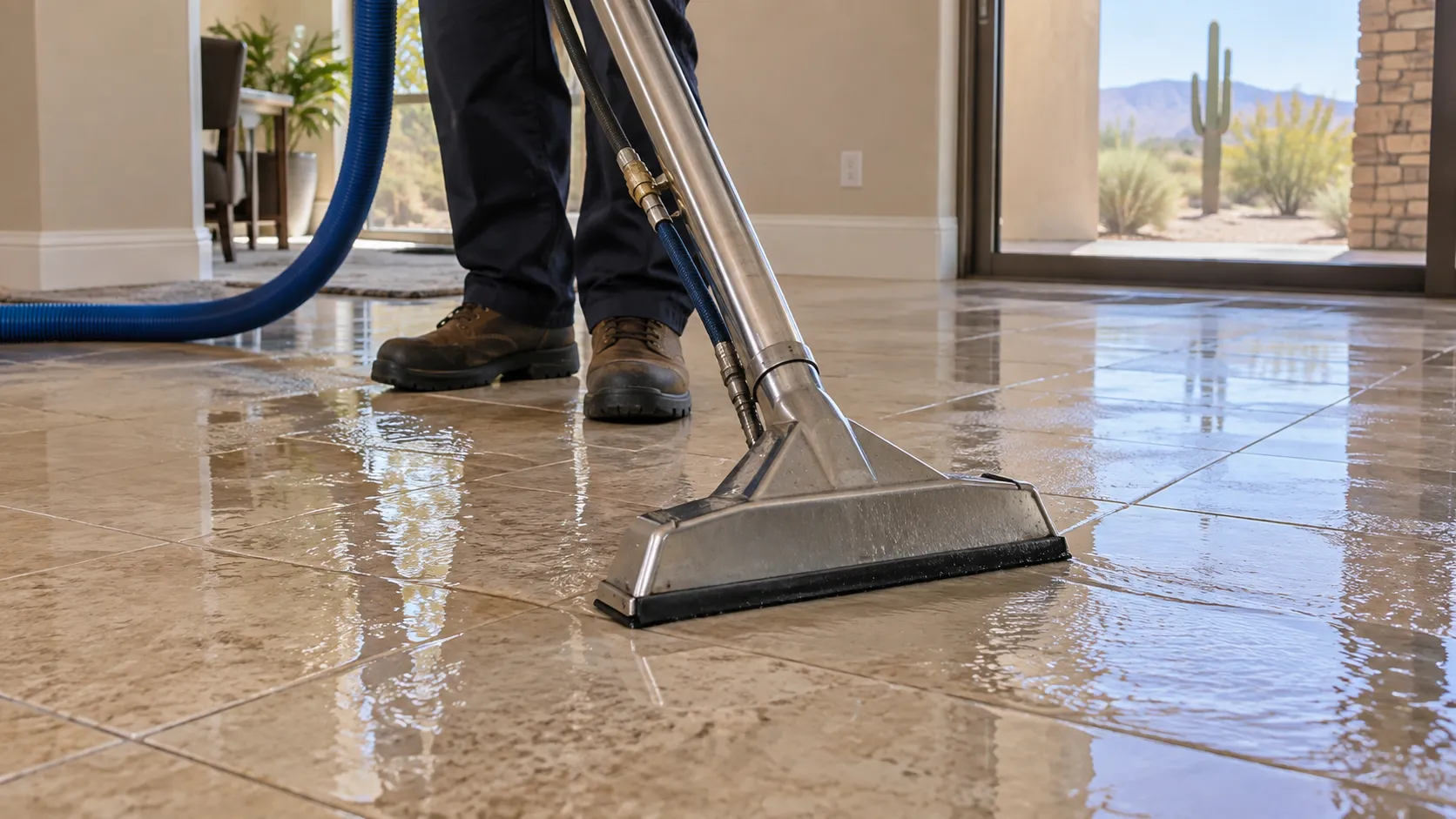
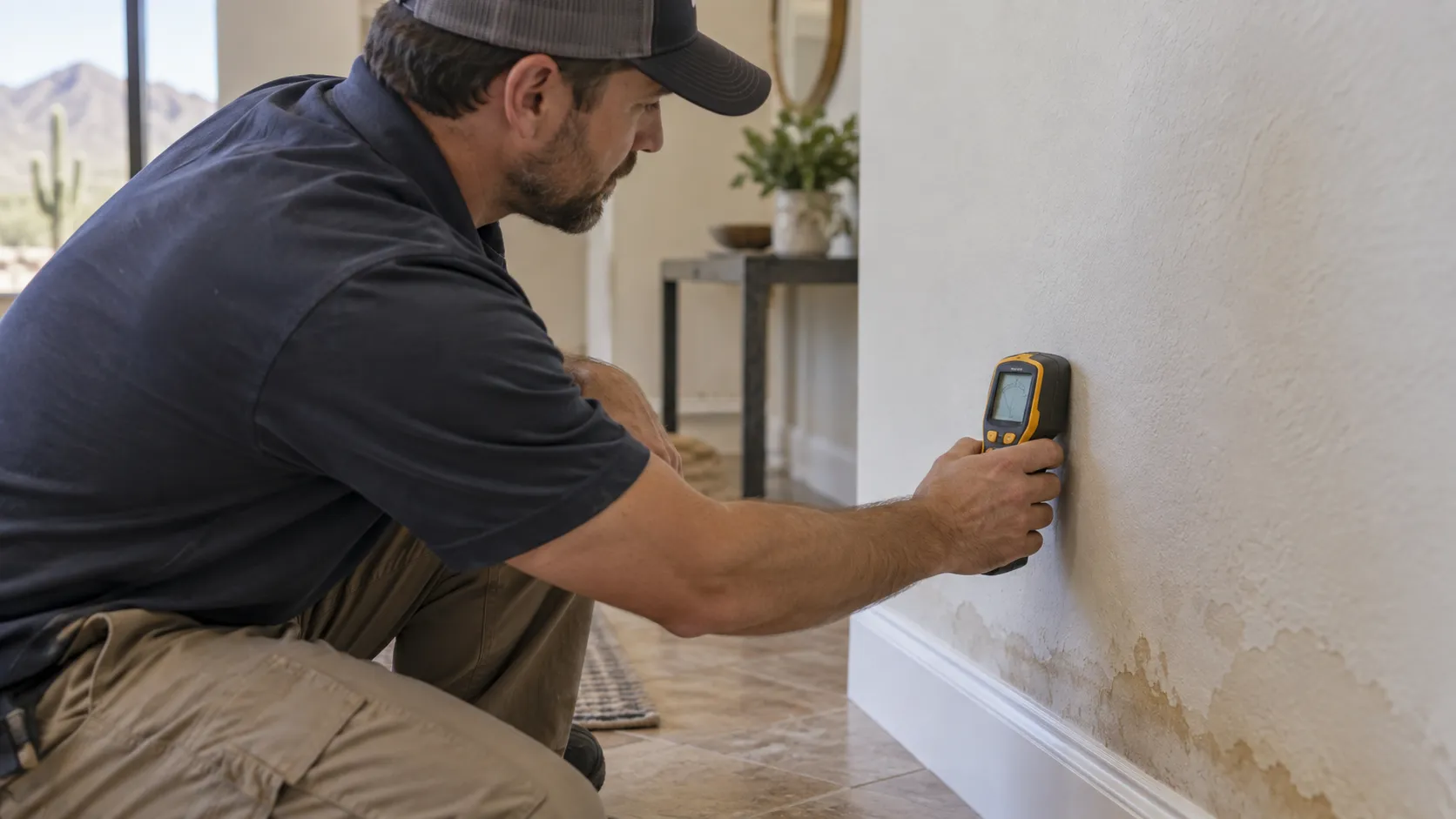
Drywall, flooring, and framing can remain wet after standing water is removed. Moisture checks identify the retained materials that need drying.
24/7 flood restoration in Goodyear
Get structural drying and dehumidification for wet building materials in Goodyear. Recorded measurements help show whether more drying is required rather than treating equipment runtime as proof of completion.
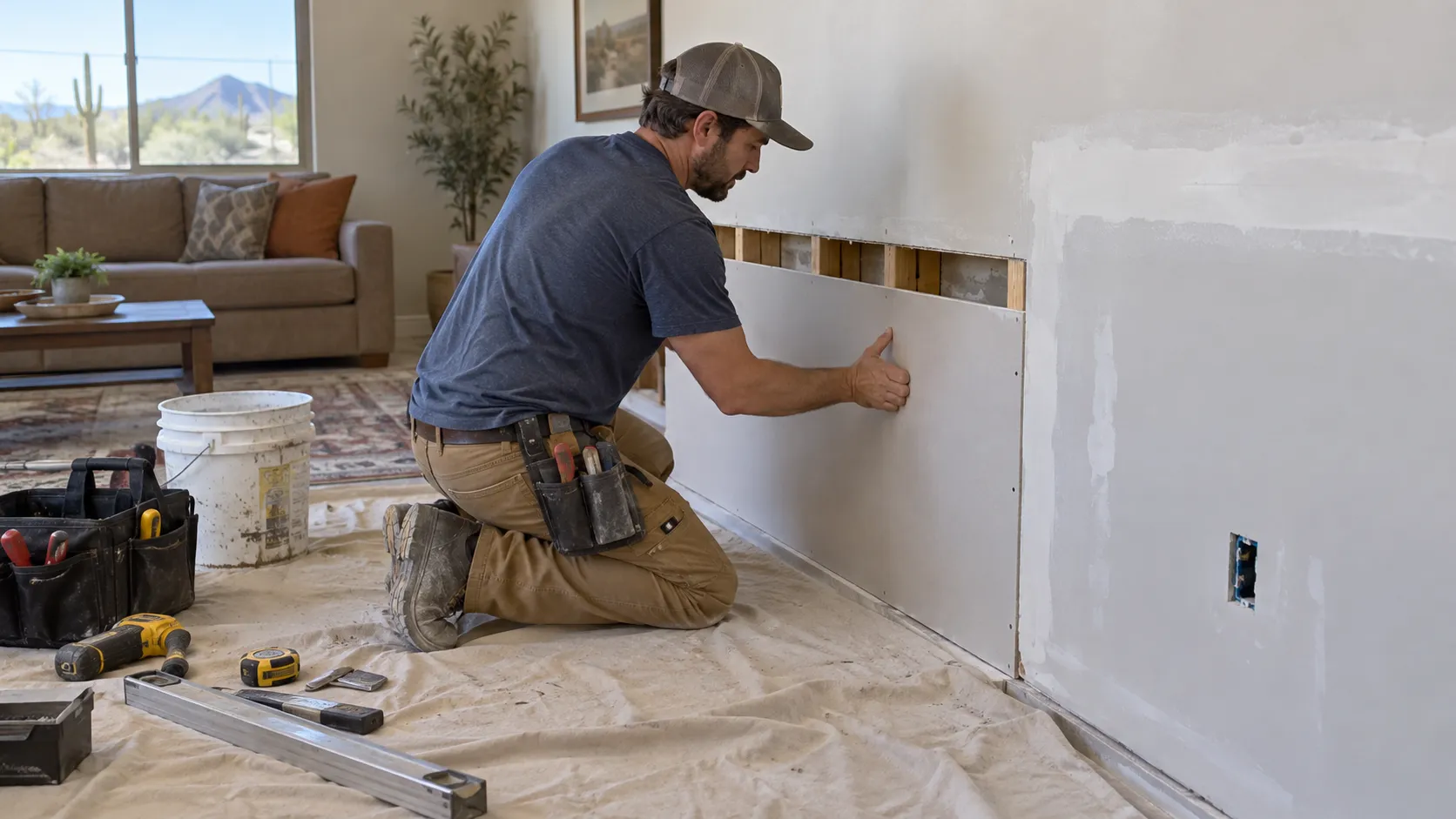
Contamination and physical deterioration can make removal necessary. The assessment determines what can reasonably be dried and what requires different treatment.
Drywall, flooring, and framing can remain wet after standing water is removed. Moisture checks identify the retained materials that need drying.
Enclosed construction can restrict assessment and drying. Further access or selective removal may be needed to address affected materials adequately.
Wet materials release moisture into the air as they dry. Dehumidification removes that moisture and supports the drying environment.
A dry-looking surface does not establish that underlying materials are ready. Measurements help guide the transition from drying to replacement finishes.
The initial conversation covers your Goodyear property, the water damage, and any extraction already completed. Service is available 24/7 with a 25-minute on-site response.
Accessible moisture, construction, and physical damage are reviewed. These findings identify what can be dried and whether further cleanup or access is needed.
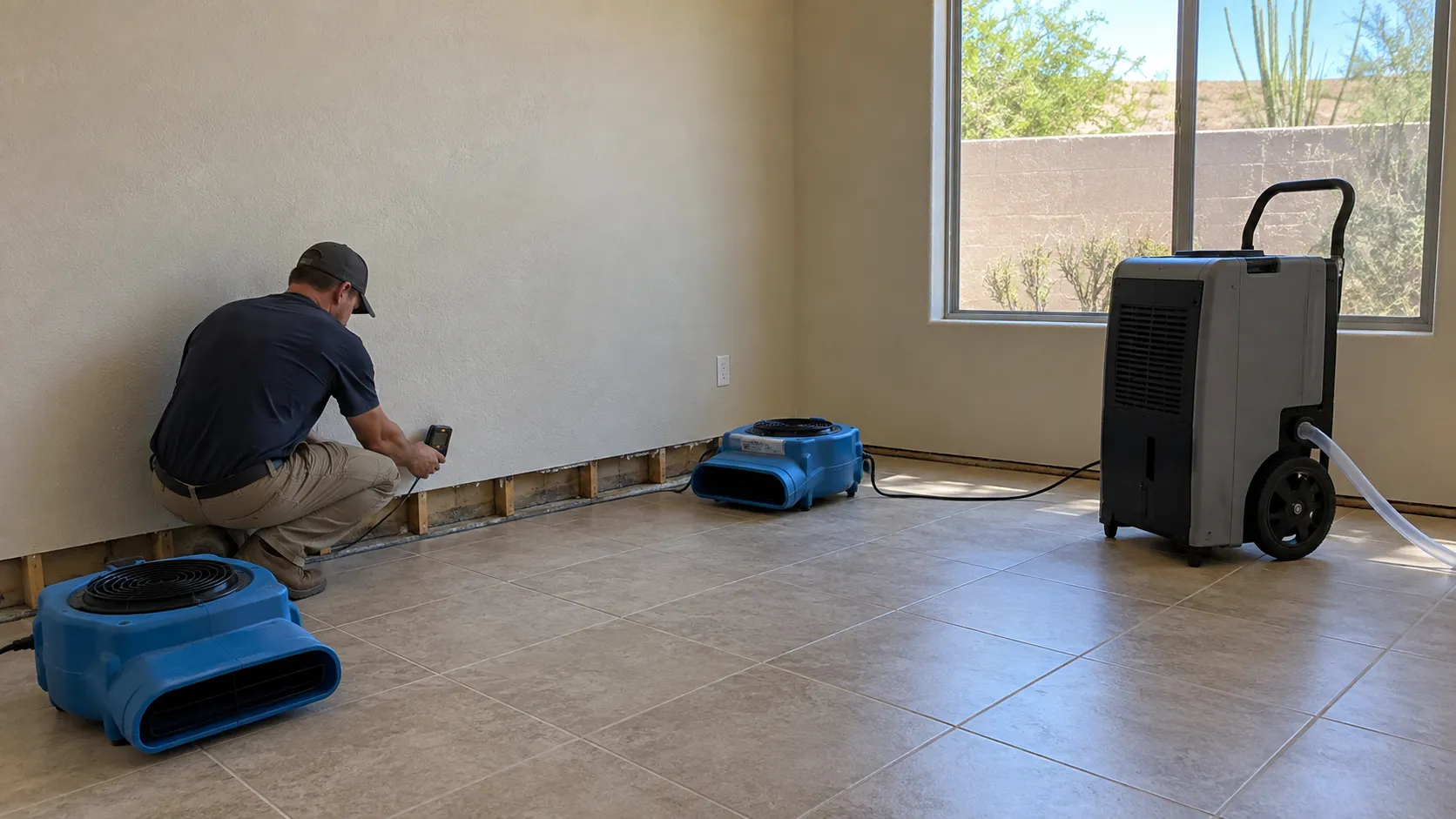
Air movers and dehumidifiers are selected for the affected materials and available access. They support evaporation and remove moisture from the air.
Repeat moisture readings help show how retained materials respond. Areas that remain wet are reassessed rather than treated as complete after a fixed equipment runtime.
Drying findings help establish readiness for the next stage. Materials with lasting physical damage may still require repair or replacement.
Checks identify accessible materials affected by water. The findings help target drying beyond what can be established by sight or touch alone.
Air movers support evaporation from suitable materials. Placement accounts for the affected construction and the access available to wet surfaces.
Dehumidifiers remove moisture from indoor air as materials release it. This supports drying without relying on outdoor heat as proof of progress.
Repeated measurements help determine whether more drying or a different approach is needed. They also inform readiness for the intended repairs.
Initial findings establish the accessible drying needs. They also identify limitations where concealed construction requires further attention.
The plan connects equipment and access needs to the affected materials. Cleanup or removal required before drying is kept distinct.
Recorded readings show progress at relevant locations. They help distinguish improvement from persistent moisture requiring reassessment.
Swelling, separation, and deterioration can remain after moisture is removed. These findings identify the repairs or replacement work still needed.
An unresolved source can add water while drying is underway. Appropriate source repairs may need to accompany restoration so the work is not repeatedly undone.
Readings at accessible surfaces do not reveal every concealed condition. Further investigation may be needed where construction or access leaves unanswered moisture questions.
New finishes should not hide retained materials that still need attention. Readiness depends on moisture findings and material condition, not appearance alone.
Goodyear monsoon conditions can include strong winds, heavy rain, and flooding. A water-entry problem may require separate repair, while the materials already affected need assessment for cleanup and drying.
Structural Drying & Dehumidification is available throughout Goodyear, including Palm Valley and Estrella. Emergency service is available 24/7 with a 25-minute on-site response.
Serving Goodyear from our Phoenix office: 2840 S. 36th Street, Suite E-1, Phoenix, AZ 85034.
Structural Drying & Dehumidification is available in these Goodyear-area ZIP codes. Postal areas can extend across municipal boundaries.
Possibly. Extraction removes accumulated water, but building materials can retain moisture. Assessment establishes which materials need drying or removal after visible water is gone.
We provide structural drying & dehumidification in Goodyear, including Palm Valley and Estrella. Coverage includes 85338, 85340, and 85395. Service comes from our Phoenix office; postal areas can cross municipal boundaries.
New water can offset drying progress or wet materials again. The entry problem needs attention while moisture readings guide the drying work; equipment alone does not correct the source.
Service is available 24/7 with a 25-minute on-site response in Goodyear. The drying process takes the time required by the materials and conditions; the arrival timeframe is not a drying completion promise.
Air movement supports evaporation from wet materials. Dehumidification removes moisture from the air as evaporation occurs. The equipment works together as part of the drying plan.
Outdoor heat does not establish whether moisture remains in enclosed construction. Drying decisions need to follow relevant material checks and conditions inside the property rather than outdoor temperature alone.
Sometimes. Exposure, physical condition, insulation, and available access determine whether drying in place is appropriate. Some affected assemblies require selective removal or further access.
Material thickness, moisture levels, access, and measured progress affect the duration. There is no reliable single timeframe for every property, and equipment runtime alone does not prove materials are ready.
Get help drying recoverable materials and checking progress before damaged finishes are repaired. Call 24/7 for a 25-minute on-site response, or request drying service online.