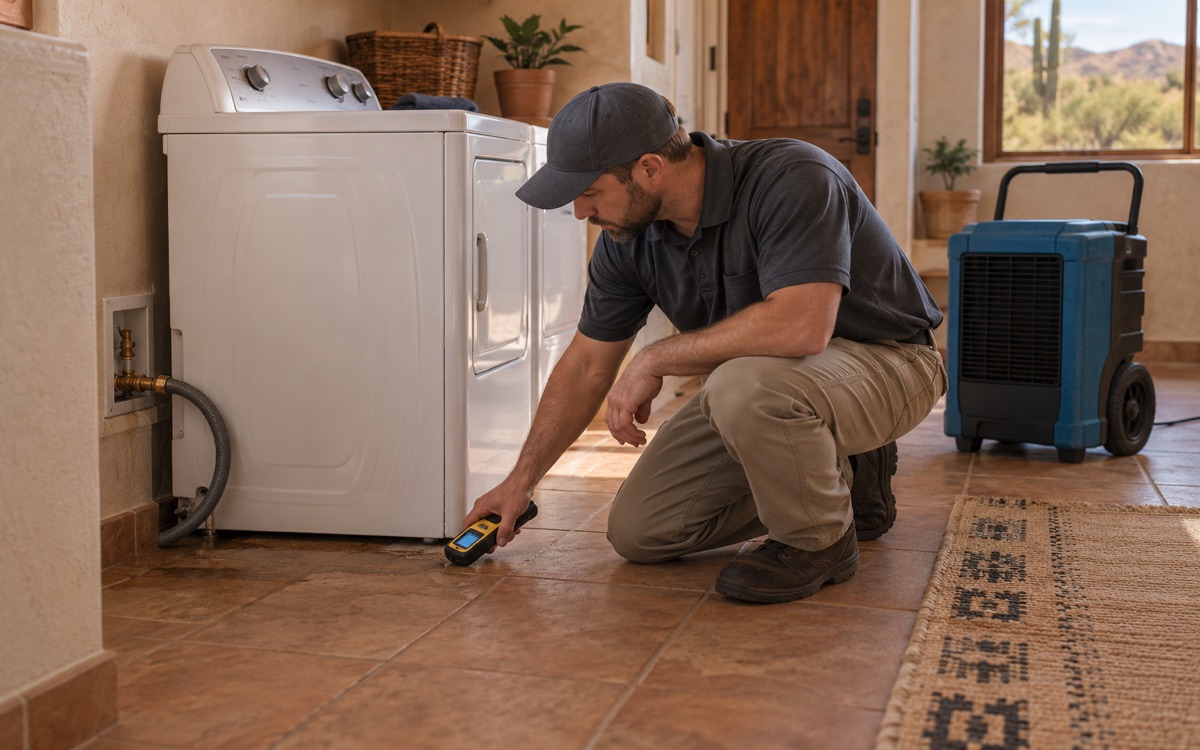
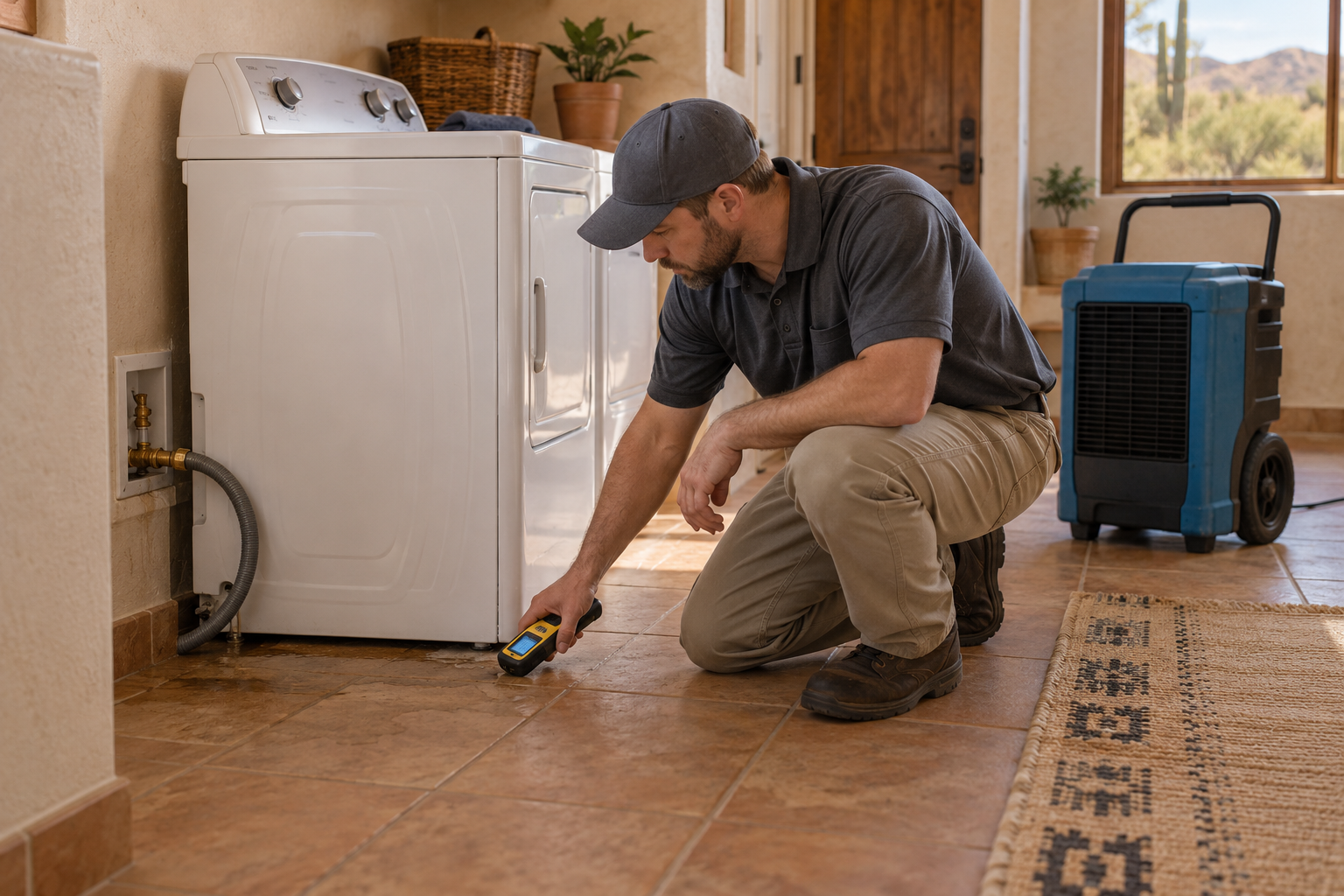
Finding a Plumbing Leak After a Trip: A Recovery Plan for an Unattended Home
Coming home from a trip to find a wet floor is different from watching a pipe begin to leak. You may not know when the release started, how long water remained in contact with materials, or whether the source is still active. The room can look quieter than the problem actually is. A stopped appliance cycle, for example, does not establish that its plumbing connections are intact or that the surrounding floor is dry.
An unattended plumbing loss needs a careful assessment of uncertainty. The aim is to keep people safe, establish the source, and make decisions about the property using evidence rather than the date you last remember seeing it dry. This guide explains how owners and property managers can respond when a leak is discovered after a period away.
Do not treat the discovery date as the start date
Begin with the facts you can establish. Record when the property was last checked, when the problem was discovered, and whether any monitoring alerts were received. Those observations create a useful timeline without claiming to know exactly when the leak began. A photograph from a recent visit may show a room's condition at that moment, but it does not explain everything that happened afterward.
Tell the responding professionals that the property was unattended and that the duration is uncertain. That information can affect how they approach the source investigation and material assessment. Avoid deciding that water must be recent because a surface is only slightly damp, or old because a stain looks dark. The building needs assessment of its present condition.
Keep notes from anyone who discovered the problem, including a caretaker, neighbor, or tenant. Ask them to describe what they saw and any action taken. Record whether a valve was closed or an appliance stopped. This prevents an important detail from disappearing when the owner returns and a new person begins coordinating the response.
Make the first inspection a safety assessment
Before entering affected rooms, look for conditions that require professional help. Standing water around electrical equipment, a sagging ceiling, sewage, strong contamination concerns, or signs of instability can make an area unsafe. Keep people and pets away. If there is immediate danger or a suspected gas leak, leave and contact emergency services or the relevant utility from a safe place.
Do not walk through water to unplug an appliance or reach an electrical panel. Electrical isolation may require a qualified electrician or the utility. If a known water isolation valve is reachable from a safe, dry location, an authorized person may be able to limit further release. Do not force a valve or disconnect plumbing to investigate an unfamiliar problem.
If you are still away, do not ask a neighbor to carry out work beyond their knowledge or enter a hazardous room. Their safest role may be to keep people out, describe conditions from a safe location, and help a qualified professional gain authorized access. Give clear instructions about the limits of that role rather than assuming a well-meaning visit can solve the emergency.
Arrange authorized access when the owner is absent
An emergency response can stall if the plumber arrives without a way into the property or a person authorized to approve work. Establish one owner or manager contact who can coordinate access and decisions. Give the service provider the address, safe entry arrangements, and a description of known hazards before attendance.
Share only the access information needed for the appointment, through an appropriate private channel. Do not circulate door codes in public posts or include them in an incident photograph. If someone is meeting the team on your behalf, make their role clear. They may be able to open the door without having authority to approve a replacement or expanded scope.
Ask how the property will be secured after each visit and who will hold responsibility for any temporary access arrangement. A house may need several visits for assessment, monitoring, and repair. Reliable access supports that work; a clear closing procedure helps the owner avoid turning a water incident into a separate security concern.
Have the plumbing source investigated before restoring normal use
The visible water may come from a supply connection, fixture, appliance, drain, or another building system. A plumber should identify the source within their scope and explain the repair. Do not restart a water-using appliance repeatedly to see whether it leaks again. Testing should be planned by the appropriate professional so it does not add uncontrolled water to the loss.
Building a contact plan before a trip is useful. The service information offered by a 24/7 emergency plumber illustrates the questions to ask about after-hours response. Confirm each provider's actual service area, qualifications, availability, and ability to handle the particular system before relying on that contact for your property.
Ask whether the immediate measure is a temporary stabilization or a completed repair. Establish which fixtures or supply sections must remain out of use, what testing is needed, and who will perform it. Keep those instructions available to any caretaker or other trade visiting the property. A returning owner should not unknowingly reverse an isolation arrangement that remains necessary.
Assess the whole plausible water path
Water can travel beyond the appliance or fixture beside the puddle. It may reach cabinet bases, wall cavities, adjoining flooring, closets, or a ceiling below. When the property was empty, there may be no reliable observation of the release at its largest point. The restoration assessment should consider the possible route through the actual room layout.
Provide the team with information about neighboring rooms and existing concerns. Mention newly installed floors, built-in cabinets, storage areas, and any past leak in the same location. These details do not establish damage on their own, but they help focus inspection. Ask the team to distinguish confirmed affected areas from areas where further investigation is needed.
Do not assume that dry weather or a warm room has resolved hidden moisture. A surface condition cannot explain every layer below it. Likewise, uncertainty does not mean everything must be demolished. A targeted professional assessment can establish where drying, access, removal, or further specialist evaluation is appropriate.
Discuss contamination before moving belongings
The water's source and the surfaces it contacted influence how contents and materials should be handled. Water that looks clear is not automatically suitable for ordinary household cleanup. If sewage, drain water, or another contaminant is suspected, keep the area separated and discuss the appropriate response before moving items through the rest of the house.
The EPA's cleanup guidance calls for experienced professional help when sewage or other contaminated water is involved, and emphasizes fixing leaks and drying materials completely. In an unattended property, those principles support a careful assessment rather than a quick cosmetic clean. A surface spray does not establish the condition of a concealed floor or wall assembly.
If mold is visible or suspected, inform the responding team before opening materials or changing airflow. The CDC identifies people who should not take part in mold cleanup, including those with certain respiratory conditions or immune suppression. Seek suitable health advice where needed and arrange professional help rather than expecting a returning household to perform an unfamiliar cleanup.
Ask for monitoring that works while you remain away
If the source is controlled but restoration is still underway, ask how the property's condition will be monitored. Agree on the frequency and form of updates, the areas being assessed, and the person who will report a new concern. Photographs can support an update, but they do not replace measurements or a professional explanation of material conditions.
A drying plan should identify affected materials, equipment arrangements, access needs, and the evidence used to judge progress. Ask how readings will be interpreted in relation to the material and location. Do not accept a universal drying duration as proof that the specific house will be ready by a particular date.
Tell caretakers not to move equipment or change settings without checking with the responsible team. If an alarm, noise, or access issue arises, they need a contact who can decide the safe response. A simple written instruction sheet can prevent a well-intended visit from disrupting containment, monitoring, or drying work while the owner is not present.
Preserve records without making assumptions about coverage
Where safe, photograph the affected room, adjoining spaces, and damaged contents before removal. Keep wider views that establish location as well as close details. Store the discovery timeline, source repair information, restoration assessments, invoices, and decisions together. Keep statements factual and distinguish confirmed findings from unresolved questions.
If insurance may apply, contact the insurer and follow the actual policy's reporting instructions. Explain that the property was unattended and provide the timeline you can support. Policy terms and reporting requirements can differ; do not assume that every leak or every period away is treated the same way. Ask the insurer what evidence and approvals are required.
Discuss disposal documentation before damaged belongings or materials are removed, while continuing urgent work needed for safety and mitigation. A caretaker should know who can authorize a decision and how to preserve the record. This reduces confusion when the owner returns and tries to understand why an item was moved, removed, or replaced.
Plan the return around conditions, not travel dates
The day you return is not necessarily the day every affected room can resume normal use. Ask what conditions must be met before occupying the area, reconnecting appliances, or rebuilding finishes. Electrical concerns, contamination, source testing, and material drying may each have a different responsible professional.
Before walls, cabinets, or flooring are closed, confirm that the relevant assessment and drying decisions are complete and that the plumbing work has been tested as appropriate. If structural concerns arise, obtain suitable qualified assessment before altering the assembly. A freshly painted wall does not resolve the unanswered condition behind it.
At handover, request a list of completed work, remaining tasks, and any continuing restrictions. Confirm that isolation points are accessible and temporary measures are documented. Retain the records and report recurring dampness, staining, odour, or a new leak promptly. Describe the symptom and location rather than assuming the cause is identical to the first incident.
Prepare the house for the next period away
Use what the incident revealed to improve the property's care plan. Discuss suitable inspection, water isolation, appliance maintenance, and monitoring with qualified professionals. Follow manufacturer and system requirements instead of adopting an arbitrary online rule. The right arrangement depends on the property, its equipment, and how long it may be unoccupied.
If leak sensors or automated shutoff equipment are appropriate, decide who receives alerts and what action follows. Check the equipment according to its instructions and update contact details when circumstances change. A device that sends an alert nobody sees does not provide a useful response. Monitoring needs a person and a plan behind it.
Give the caretaker a concise contact list and clear limits on what they should do. Keep access arrangements current and review the insurer's requirements for the specific absence. The goal is early reporting and safe professional response, rather than asking a neighbor to become a plumber when something goes wrong.
Recover an unattended loss with fewer unknowns
A leak discovered after a trip calls for a response that acknowledges what is uncertain. Establish safety, identify the plumbing source, assess the possible moisture path, and arrange reliable updates until the property is ready for normal use. Evidence at each decision point is more useful than guessing the age or extent of the loss.
Phoenix Flood Restoration provides water extraction and drying services. When arranging an assessment, explain that the property was unattended, what is known about the source, and who can coordinate access. A clear plan helps an absent or returning owner move from an unexpected discovery to a documented recovery.