
Can Air Conditioning Dry Out a Flooded Phoenix Home?
Air conditioning is not a reliable substitute for a flood-restoration drying plan. It may influence indoor conditions, but it does not remove standing water, assess contamination, or verify concealed materials. A flood-exposed or potentially contaminated HVAC system should be evaluated before operation, and drying decisions should follow the actual damage.
In Phoenix, air conditioning is an everyday necessity, which makes it tempting to turn the system down and assume moisture will disappear. The problem is that comfortable air and recovered building materials are different outcomes. The system itself may also be part of the loss rather than a safe tool for addressing it.
First determine whether the system was affected
Water exposure can involve equipment, ducts, controls, or the electrical supply. Do not operate a system merely to see whether it still works. The CDC advises appropriate evaluation of flooded or potentially contaminated HVAC systems before use.
Tell the restoration team and relevant HVAC professional where water traveled and whether any system component was exposed. A working thermostat does not establish that the entire system is safe. If the property cannot be comfortably or safely occupied without cooling, discuss suitable arrangements rather than using uncertain equipment to avoid disruption.
Cooling does not establish the floor or wall condition
An air-conditioned space can feel normal while moisture remains beneath flooring or behind wall finishes. Bulk liquid still requires appropriate removal, and affected materials need inspection. Temperature settings do not reveal whether a layer can be cleaned, dried in place, or retained.
EPA's material guidance highlights the importance of underlying assemblies after clean-water damage. Its recommendations have source limitations and do not automatically apply to contaminated flooding. Ask how each material will be evaluated rather than assuming that comfortable indoor air confirms recovery.
Coordinate air movement with contamination control
If floodwater came from outdoors or sewage, the cleanup plan must consider potential contamination. Moving air through affected and unaffected areas without a plan can complicate that boundary. Professional assessment should determine necessary cleaning, removal, containment, and the appropriate role of building systems.
Do not add household fans or change ventilation simply to accelerate evaporation before those questions are addressed. The source, material condition, and system layout influence the approach. A restoration crew may coordinate with an HVAC specialist because the equipment and the building assembly have different assessment needs, even though both affect the indoor environment.
Use a measured drying plan rather than a colder setting
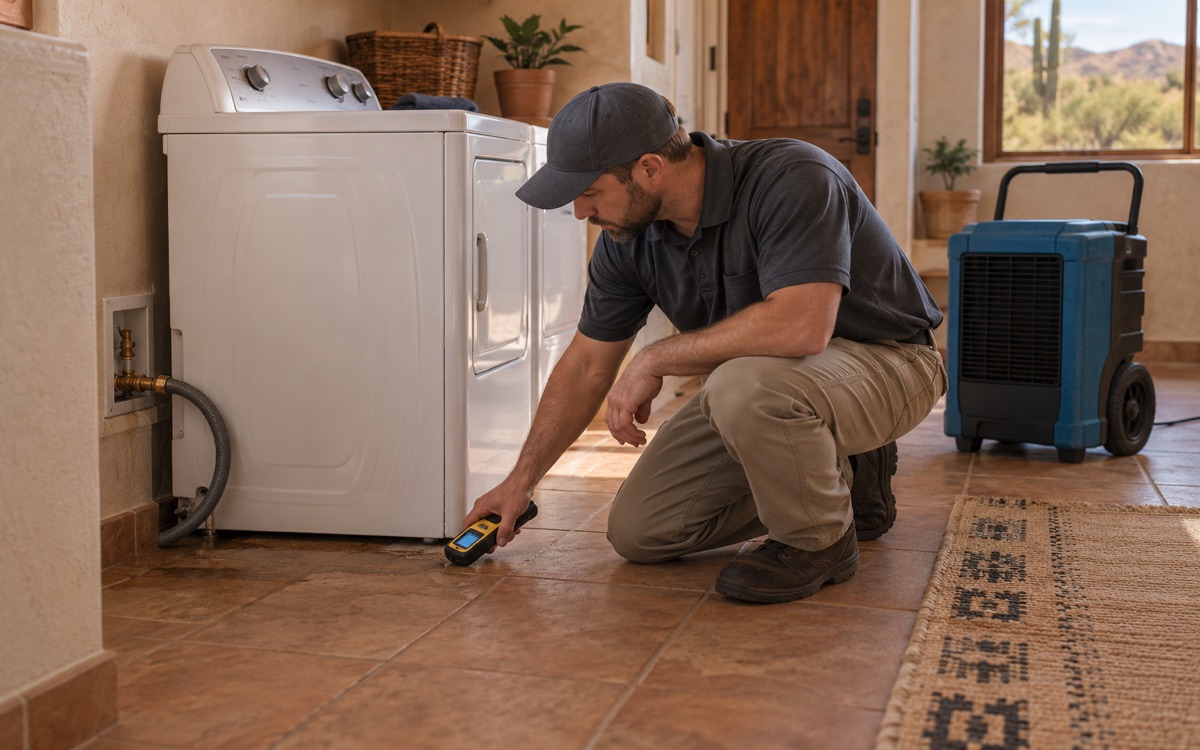
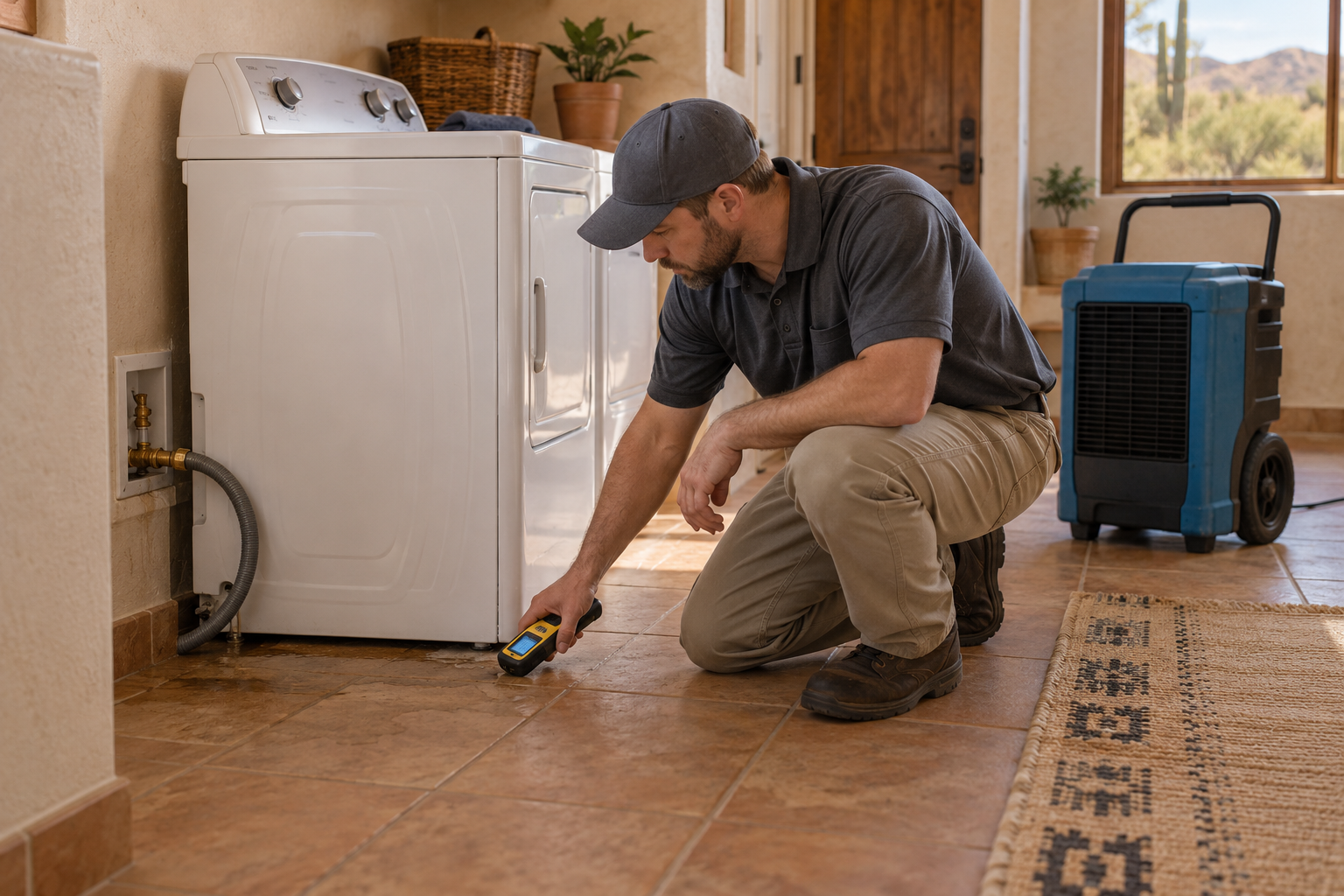
Controlled drying may involve dehumidifiers, directed air movement, selective access, and repeat readings according to the property. The aim is to remove retained moisture from recoverable materials and verify the result. A colder thermostat setting is not an acceptance test for that work.
Phoenix heat outside does not remove the need for source correction and material checks inside. If new water enters or equipment is interrupted, report it so the record remains accurate. Before repairs conceal the area, ask which readings and observations support readiness. The drying plan should explain how HVAC operation fits the project, not assume ordinary cooling can replace every part of restoration.
HVAC assessment and material drying should have separate completion records when both were affected. A system cleared for operation does not establish that wet flooring is ready for replacement. Likewise, dry flooring does not confirm that contaminated ducts or electrical components have been addressed. Identifying who signs off each part prevents a broad phrase such as 'the house is dry' from hiding a remaining system-specific question.
Questions about AC after Phoenix flooding
Can I run AC if only the flooring was visibly wet?
Visible flooring damage does not establish the condition of connected systems. Report the water path and have potentially affected equipment evaluated before assuming it is safe.
Will a very low thermostat setting dry materials faster?
Do not use a thermostat setting as a substitute for an assessed drying plan. Material condition, humidity control, access, and equipment coordination determine the approach.
Does professional drying always require shutting down HVAC?
Not universally. The decision depends on system exposure, contamination, and the restoration plan. Ask the responsible professionals how it should be operated during the work.
Coordinate cooling and flood drying safely in Phoenix
Tell us whether HVAC components or their electrical supply may have been exposed so the assessment can address both the system and wet building materials.
Structural Drying & Dehumidification and Moisture Detection & Mapping address wet assemblies while HVAC questions receive separate evaluation. Request Service or call (602) 902-1375 to discuss the affected property.