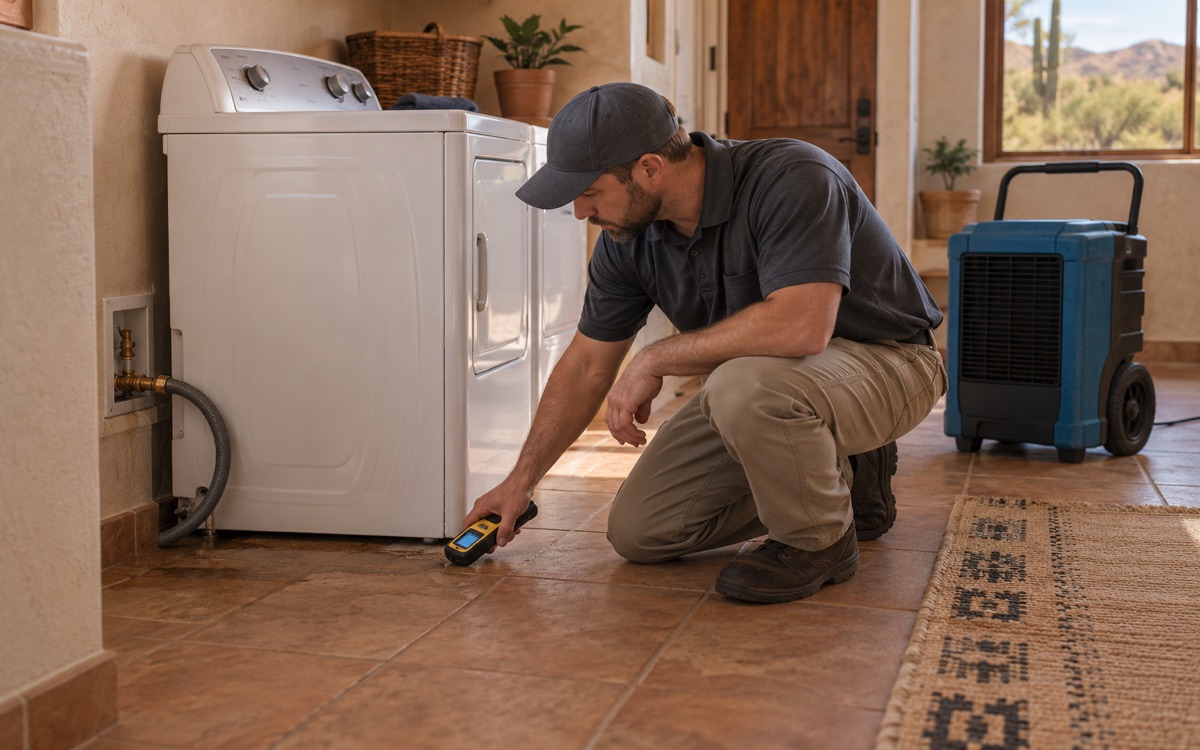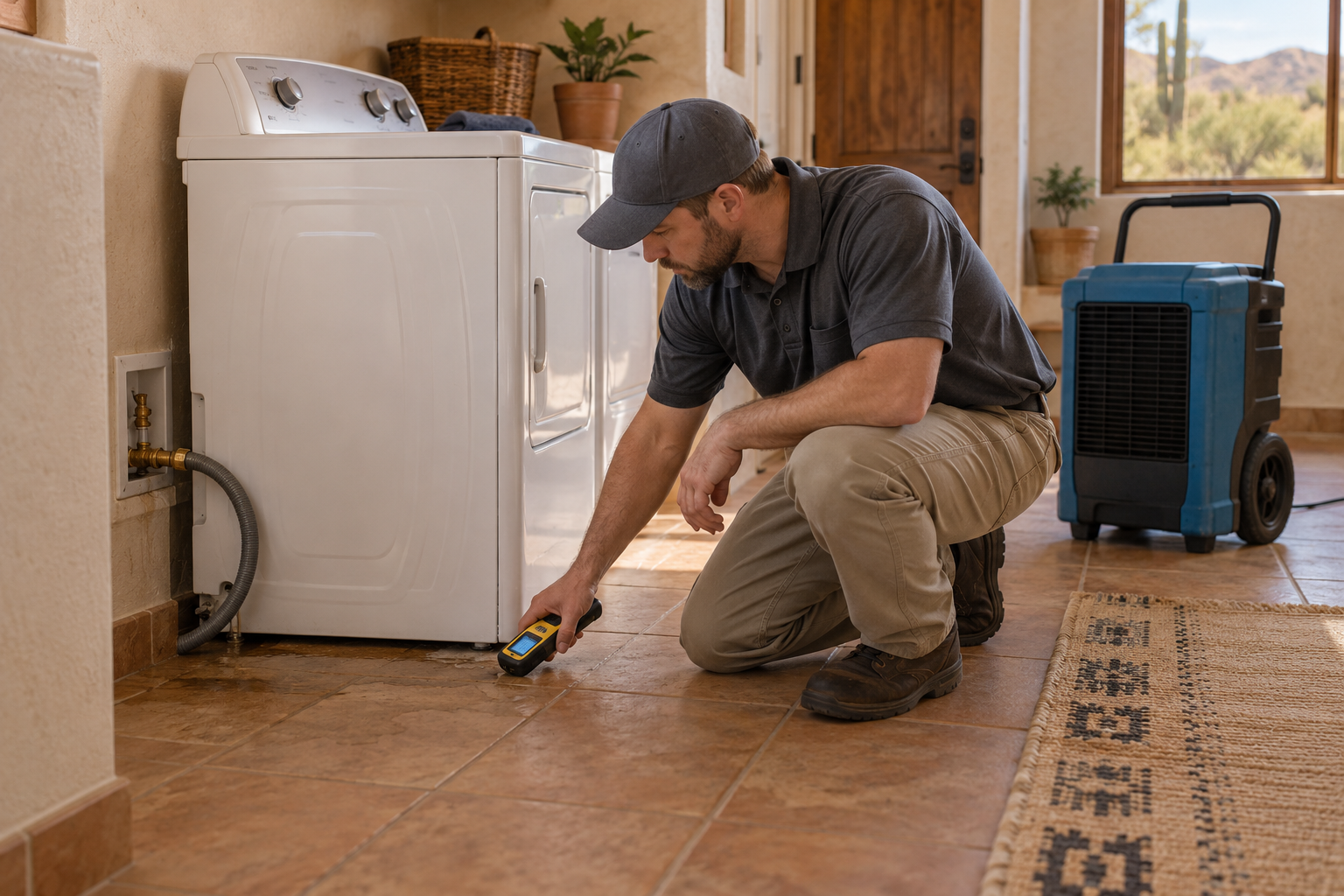

Can Flood Cleanup Begin Before an Insurance Adjuster Arrives in Phoenix?
Necessary emergency mitigation does not always have to wait for an adjuster's visit. Notify the insurer promptly, document the damage when safe, and ask about its requirements while arranging work to limit further loss. Permanent repairs and coverage decisions need separate coordination with the insurer.
The difficult question is usually how to protect the property without losing evidence. Leaving water in place can allow additional damage, but removing materials without records can make the original condition harder to explain. The practical solution is timely communication and clear documentation, not a blanket rule to wait or demolish.
Separate emergency stabilization from permanent rebuilding
Extraction, necessary cleaning, protective measures, and controlled drying address the immediate loss. Replacing finishes and rebuilding assemblies are later decisions. Ask the restoration provider to identify those phases in the scope so that the insurer and property owner can understand what was urgent and what can be coordinated separately.
Coverage depends on the actual policy and cause of loss. A contractor cannot promise that every emergency invoice will be reimbursed. Likewise, a pending coverage discussion is not a safety clearance to occupy or enter a damaged building. Make hazard decisions with the appropriate professionals and keep the insurer informed about the circumstances.
Report the claim and record the insurer's instructions
Contact the insurer or agent promptly with the discovery time, known source, and affected property. Ask what photographs, item details, receipts, or samples it requires. Write down the date, contact name, and instructions. If the source is uncertain, report it as uncertain rather than choosing a coverage label.
The NFIP claim guidance emphasizes prompt reporting and damage documentation. NFIP requirements concern those policies; another insurer or private flood policy may have different terms. Use general guidance to prepare questions, not as a substitute for reading your policy or obtaining instructions from the claim representative.
Document removal without retaining unsafe material
Before necessary removal, photographs should show the overall location and the condition of affected materials when it is safe to obtain them. Contents records can include identifying details and existing proof of ownership. A restoration team can document the work area and explain why material removal was necessary.
Do not keep a health hazard in the building simply because an adjuster has not visited. FloodSmart notes that hazardous items need not be retained after appropriate documentation, with safe samples preserved when suitable and insurer instructions followed. Avoid handling contaminated material yourself just to collect evidence. Safety and useful records should be planned together.
Keep a decision trail through the emergency phase
Retain the initial scope, work authorization, photographs, moisture records, invoices, and communications. If the scope changes because hidden damage is found, ask for the finding and reason to be documented. A clear sequence shows what was known initially and what became apparent after access or extraction.
In Phoenix, a monsoon event may involve both storm damage and surface-water entry. Those descriptions are not interchangeable for insurance purposes. The NFIP explains that most standard property policies do not cover flood damage. Ask the insurer to determine coverage while the restoration team documents the physical conditions, rather than assuming one decision settles the other.
Emergency records are strongest when they distinguish authorization from coverage. A signed work authorization explains the agreed contractor scope; an insurer's claim acknowledgment confirms receipt of the claim. Neither document automatically does the other's job. Keep both, along with any written instruction about samples or disposal. If you receive conflicting instructions, ask the parties to clarify the specific item rather than relying on a general verbal assurance.
Questions about mitigation before the adjuster's visit
Does direct insurer billing mean the work is covered?
No. Billing arrangements do not establish coverage, waive a deductible, or replace policy conditions. Confirm responsibilities in the work agreement and with your insurer.
Should I discard damaged belongings immediately?
Record condition and identifying details first when safe, then follow appropriate disposal and insurer guidance. Do not retain hazardous items simply to wait for an inspection.
Can permanent repairs begin at the same time as drying?
Closing wet assemblies is not appropriate. Permanent repairs should follow the relevant assessment, drying verification, and coordination with the insurer and any required authorities.
Coordinate urgent Phoenix flood mitigation with useful records
We can discuss the immediate damage, document restoration findings, and explain which work addresses the emergency versus later repairs. Your insurer remains responsible for coverage decisions.
Flood Damage Mitigation and Moisture Detection & Mapping document urgent work and its supporting moisture findings. Request Service or call (602) 902-1375 to discuss the affected property.