
Can Floodwater Get Under Tile in a Phoenix Home?
Floodwater can reach parts of a tile floor assembly through edges, joints, openings, or connected wet materials. An intact tile surface does not prove the layers below are unaffected. Assessment should consider the installation, water source, material condition, and access before deciding whether drying in place or removal is appropriate.
Tile can hide the evidence that would be obvious on a swollen finish. After extraction, the surface may look usable while moisture remains below or at adjoining wall bases. Phoenix's dry climate does not settle that question. The recovery decision needs to follow the assembly rather than appearance alone.
Understand which layers may have been exposed
A tile floor is more than its visible surface. The installation may include setting materials, a substrate, transitions, and adjoining components with different moisture responses. Water entering at an edge or connected opening may affect some of those layers without creating immediate tile damage.
Tell the assessor where water first appeared and how far it spread. Existing installation information can help, but do not invent details about the substrate if they are unknown. The inspection should identify what can be observed and where uncertainty remains. That is more reliable than assuming every tiled property has the same construction.
Use measurements in the context of the material
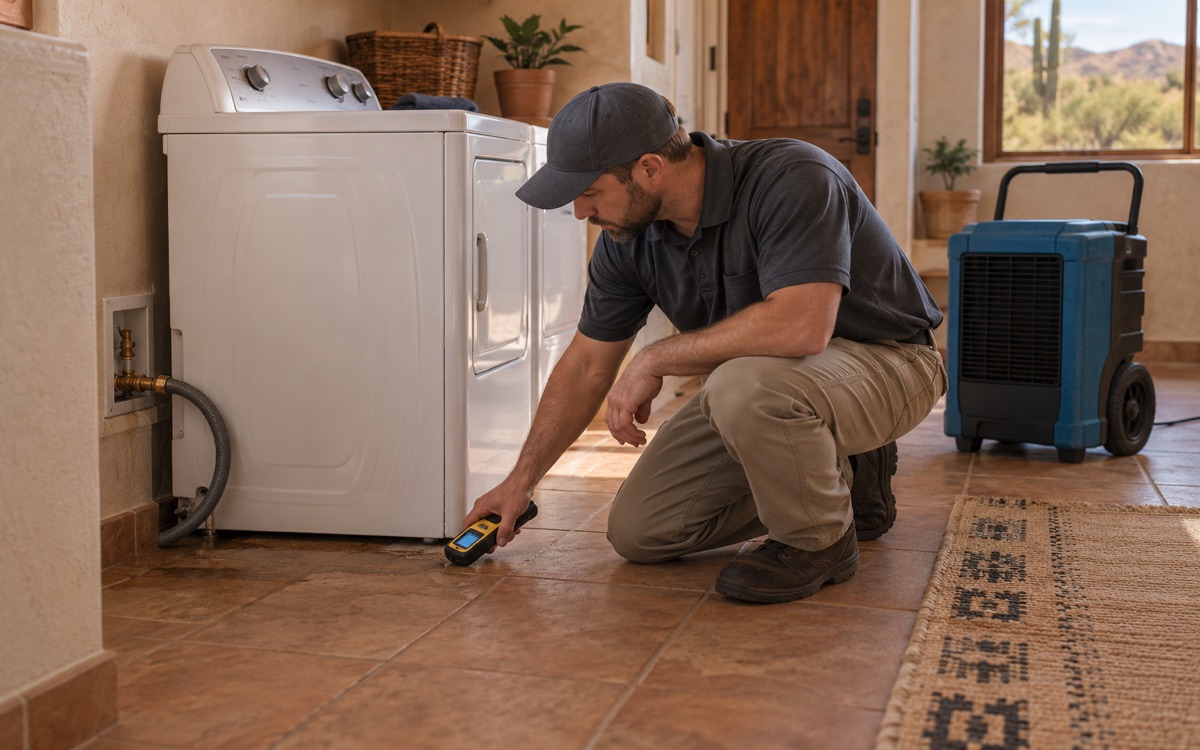
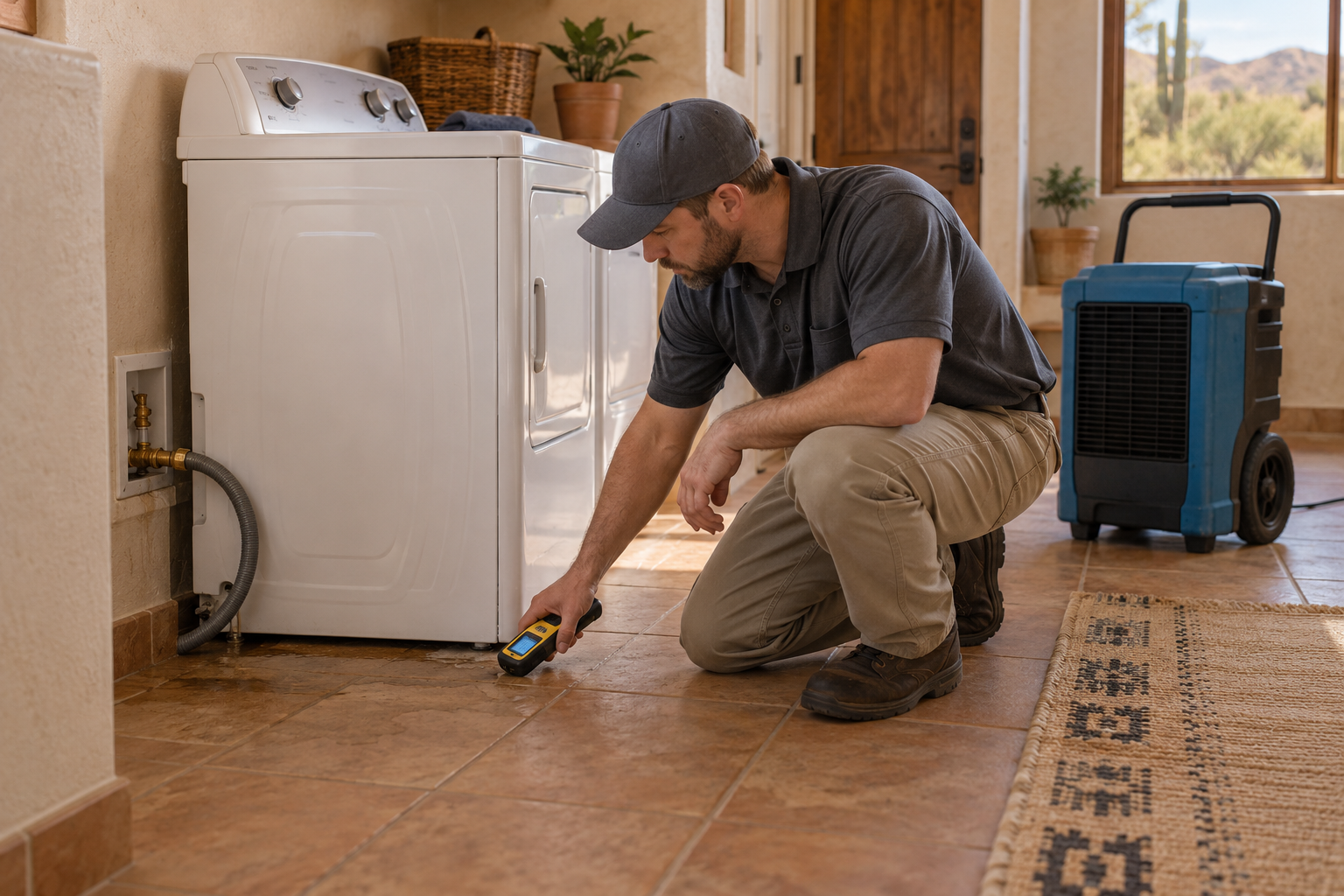
Moisture testing helps investigate the floor and adjacent assemblies, but readings require appropriate interpretation. A single device reading on a finished surface does not automatically describe every layer below. The technician may need comparisons, other observations, or selective access to resolve a question.
EPA's water-damage table highlights the importance of checking underflooring. Its recommendations concern clean-water damage and should not be generalized to outdoor floodwater or sewage. Ask how source, test method, and observed condition support the proposed plan for your floor.
Separate salvage decisions from cosmetic condition
Tiles that remain intact may still cover a problem that cannot be cleaned or dried adequately in place. Conversely, water exposure does not automatically mean every tile must be removed. The assessment should consider contamination, material damage, trapped moisture, and practical access.
A useful scope explains the reason for selective removal if it is proposed. It should also explain how retained layers will be monitored. Avoid choosing preservation solely because matching replacement tile is difficult, or choosing demolition solely because water was present. Those practical concerns matter, but they do not replace evidence about the affected assembly.
Check transitions and nearby walls before closing the loss
Water can travel from a tiled area into adjoining finishes or wall bases. The assessment should follow that continuity instead of stopping at the tile boundary. Trim, cabinets, and transitions can conceal moisture and may need targeted inspection even when the center of the floor looks normal.
The EPA emphasizes correcting moisture conditions to reduce further problems. Before new materials cover an opened area, ask how the underlying condition was verified and whether the source is resolved. In Phoenix, a period of hot weather is not a substitute for the measurements and material evaluation needed to support that decision.
Installation history can change the inspection questions. A known waterproofing layer, a previous floor repair, or an added finish over an older surface may affect where water is retained and which layers can be accessed. Provide plans or invoices if they exist, but do not delay assessment to locate them. The technician should distinguish documented construction from assumptions and explain where further evidence is needed.
Questions about Phoenix tile floors after flooding
Does waterproof tile mean a waterproof floor assembly?
No. The visible tile and the complete installation are different things. A clean top surface does not confirm the condition underneath it. Edges, joints, substrates, and adjoining materials need consideration after water exposure.
Must all tile be removed after a flood?
Not automatically. Source, contamination, damage, drying access, and actual findings determine the scope. Ask for the reason behind any proposed removal.
Can I replace grout before moisture checks are complete?
Coordinate finish work with the restoration plan. Cosmetic repair should not obscure an unresolved moisture condition or prevent needed access to the affected assembly.
Check beneath the appearance of your Phoenix tile floor
Describe the source and water path so the assessment can address the tile assembly, transitions, and nearby materials rather than the surface alone.
Moisture Detection & Mapping and Structural Drying & Dehumidification evaluate the floor assembly before choosing finish repairs. Request Service or call (602) 902-1375 to discuss the affected property.