
Can Groundwater Cause Flood Damage in a Phoenix Property?
Subsurface water can contribute to flooding or seepage at a Phoenix property, but the source needs investigation. Moisture along a low wall or slab edge could also relate to surface runoff, plumbing, or another pathway. A restoration plan should distinguish confirmed findings from a suspected groundwater cause.
Calling every recurring low-level wet area “groundwater” can lead to the wrong repair. The important questions are when water appears, where it enters, whether it persists after rainfall, and what other systems or drainage features are nearby. Those observations guide assessment; they do not replace it.
Separate the Possible Sources
Surface runoff reaches the building across the ground. Subsurface seepage reaches it through or around below-grade conditions. A plumbing loss can produce similar visible moisture without either mechanism. More than one source may also affect the same area during a storm.
Record the timing and visible entry locations, along with relevant plumbing or drainage repairs. If water appears during dry weather, report that detail. If it appears only after rain, note the delay and duration without assuming those facts conclusively identify the cause.
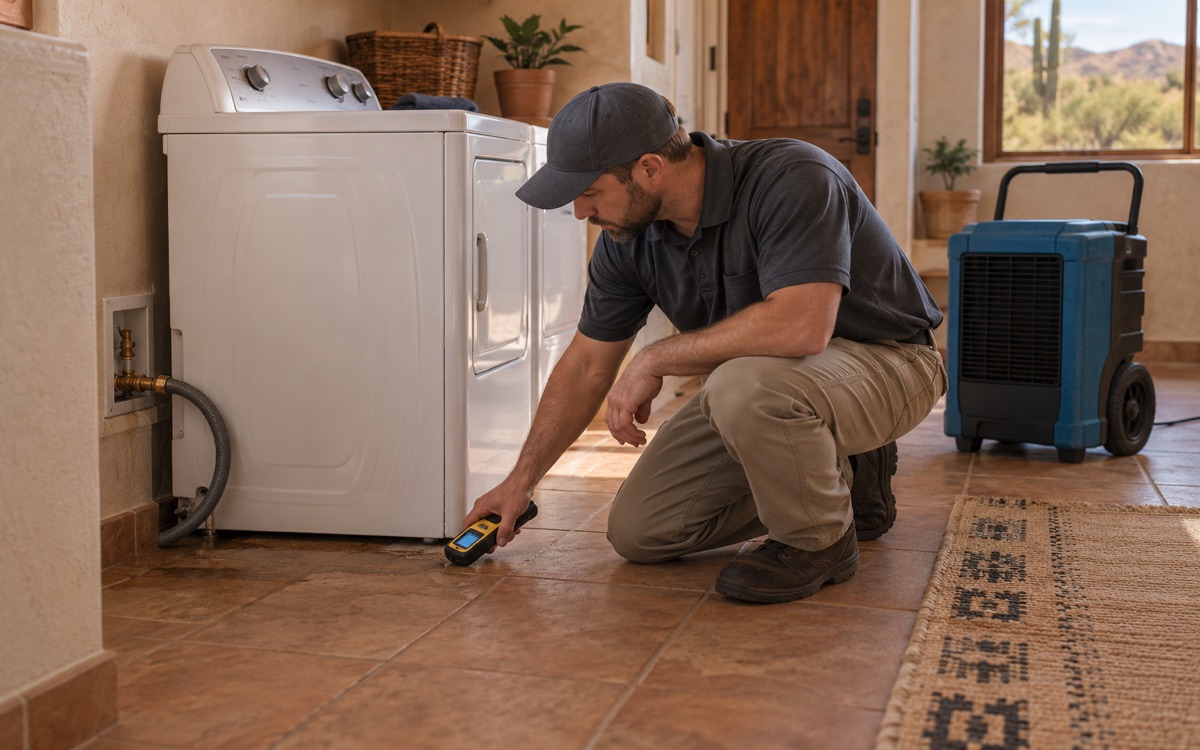
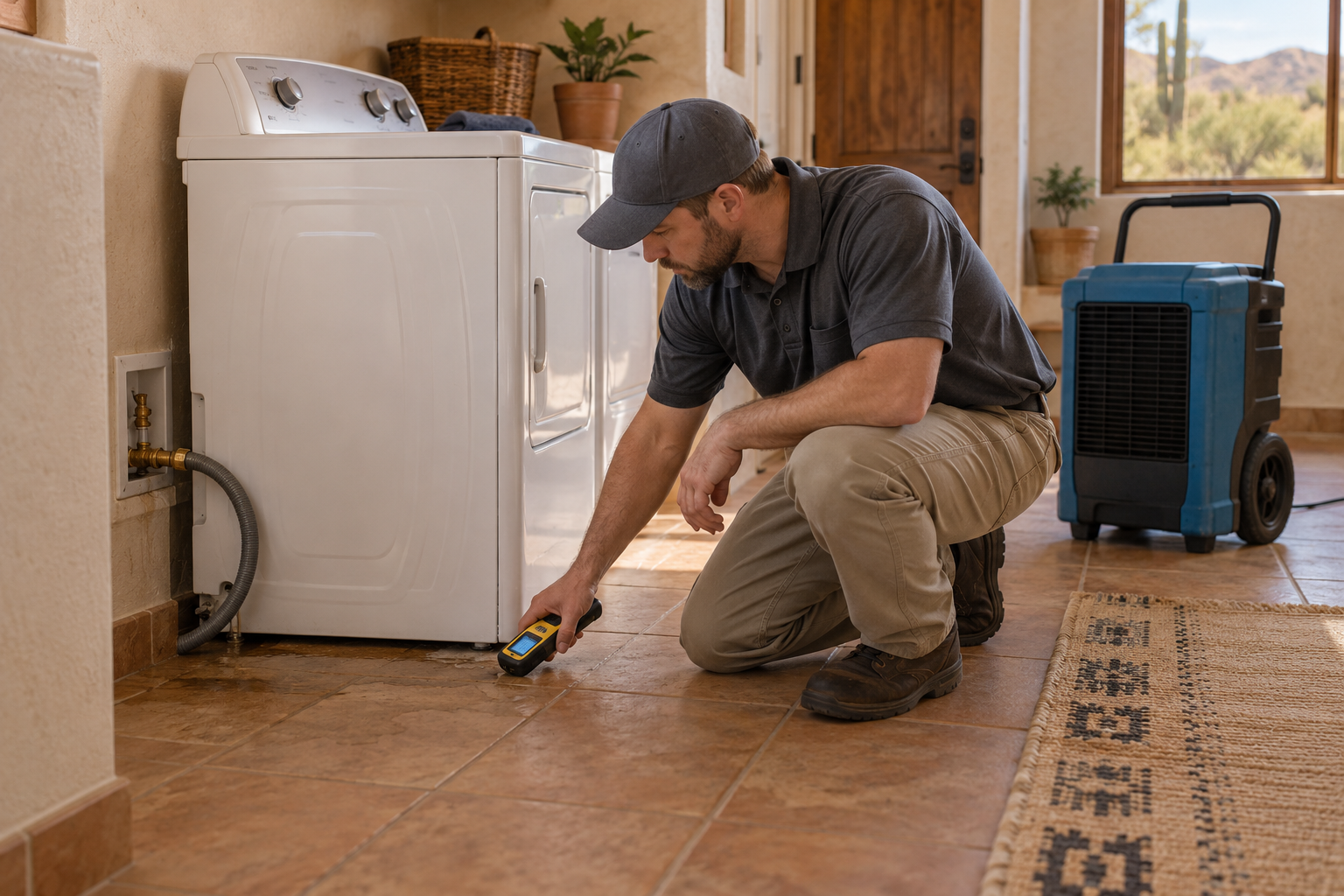
A flood damage assessment documents affected materials and observed conditions. Determining the source may require a plumber, drainage professional, engineer, or other specialist depending on what the initial inspection reveals.
Do Not Assume Seepage Is Clean or Harmless
Water's appearance does not establish its condition. Consider what it may have contacted and whether sewage, chemicals, sediment, or other contaminants are possible. The CDC warns that floodwater can contain multiple hazards, including electrical risks and sharp debris.
Keep people out of standing water and do not operate affected electrical equipment. Low depth is not a reliable safety test. If access to the suspected entry point is hazardous, tell the assessment team rather than entering to obtain a sample or photograph.
- Describe visible water and material damage from safe areas.
- Record any known contamination concerns.
- Identify utilities or equipment near the affected space.
- Preserve prior source-investigation reports.
- Ask which specialist is needed to confirm the pathway.
Plan Recovery Around Continued Water Entry
If water is still entering, extraction alone may not hold the area dry. The team needs to understand the active condition and coordinate source-control work. Repeatedly removing water without investigating the pathway can leave the same materials exposed.
Groundwater-related restoration may involve extraction, appropriate cleaning, removal of unsalvageable material, and drying of retained assemblies. The exact scope depends on contamination, access, and material condition rather than a standard treatment for every below-grade space.
EPA's moisture guidance emphasizes correcting the water problem as well as addressing affected materials. A source correction and a drying plan answer different parts of the recovery problem, and both need to be tracked.
Verify the Cause Before Approving Permanent Repairs
Ask the responsible professional to explain the evidence behind the diagnosis and the purpose of the proposed correction. A recommendation should address the identified pathway rather than rely solely on the fact that the wet area is low in the building.
Keep any drainage or below-grade repair scope separate from interior reconstruction. Before finishes conceal the area, confirm the source-repair status, material drying findings, and any outstanding limitations. If the cause remains uncertain, discuss how that uncertainty affects the decision to close the assembly.
For an insurance claim, report the facts accurately and let the insurer review policy terms. Groundwater, surface floodwater, and plumbing losses can raise different coverage questions. A service name on a contractor's estimate does not determine payment.
Questions About Suspected Groundwater Damage
Does moisture at the slab edge prove groundwater is entering?
No. Several pathways can produce that sign. Timing, source checks, and material assessment are needed before assigning a cause.
Can extraction start while the source is investigated?
Appropriate stabilization may be needed, but the crew must understand active entry and safety conditions. Extraction should be coordinated with source investigation rather than presented as a permanent source repair.
Will a dry week prove the problem is fixed?
Not necessarily. A condition linked to rainfall or changing subsurface water may not be visible during dry weather. Ask the responsible professional what verification or follow-up is appropriate.
Get Recurring Low-Level Water Assessed in Phoenix
For suspected groundwater-related damage, Request Service or call (602) 902-1375. Explain when water appears and provide any previous investigation records so Phoenix Flood Restoration can assess the affected materials.