
Can Street Runoff Cause Flood Damage Inside a Phoenix Home?
Street runoff can enter a home if water reaches an opening and the property's drainage conditions allow it to move indoors. The specific route requires assessment. Document safe observations, arrange cleanup for affected materials, and use appropriate local or qualified professional channels for drainage concerns rather than assuming who is responsible.
A water mark at the front entrance does not explain the entire route. Flow may have crossed a driveway, collected near a threshold, or arrived through another low point. In Phoenix, understanding that path helps the restoration team assess the loss and helps the owner ask more precise questions about recurrence.
Separate the observed route from an unproven cause
You may have seen water moving from the street toward the building, but that does not by itself establish a drainage defect or liability. Record what was observed: the direction of flow, approximate timing, entry location, and whether debris or a blocked opening was visible. Keep conclusions distinct from those facts.
Do not walk into the street flow to inspect a drain or remove a blockage. The National Weather Service warns against entering floodwater. A useful record can be made from a safe location or later through remaining water marks. Safety takes priority over obtaining a complete video of the event.
Treat runoff as outdoor water, not a clean spill
Water moving across roads and outdoor surfaces can collect contaminants. Its appearance may change after it enters, but clear-looking water is not proof of safe handling. The CDC identifies contaminants and debris among floodwater hazards.
The restoration assessment should consider all areas reached by the water, not just muddy sections. Contents moved through the path can also complicate cleanup. Keep people away and avoid using household fans before contamination and electrical conditions are assessed. Necessary cleaning, material removal, and drying should be explained as separate parts of the recovery plan.
Look for moisture beyond the entry threshold
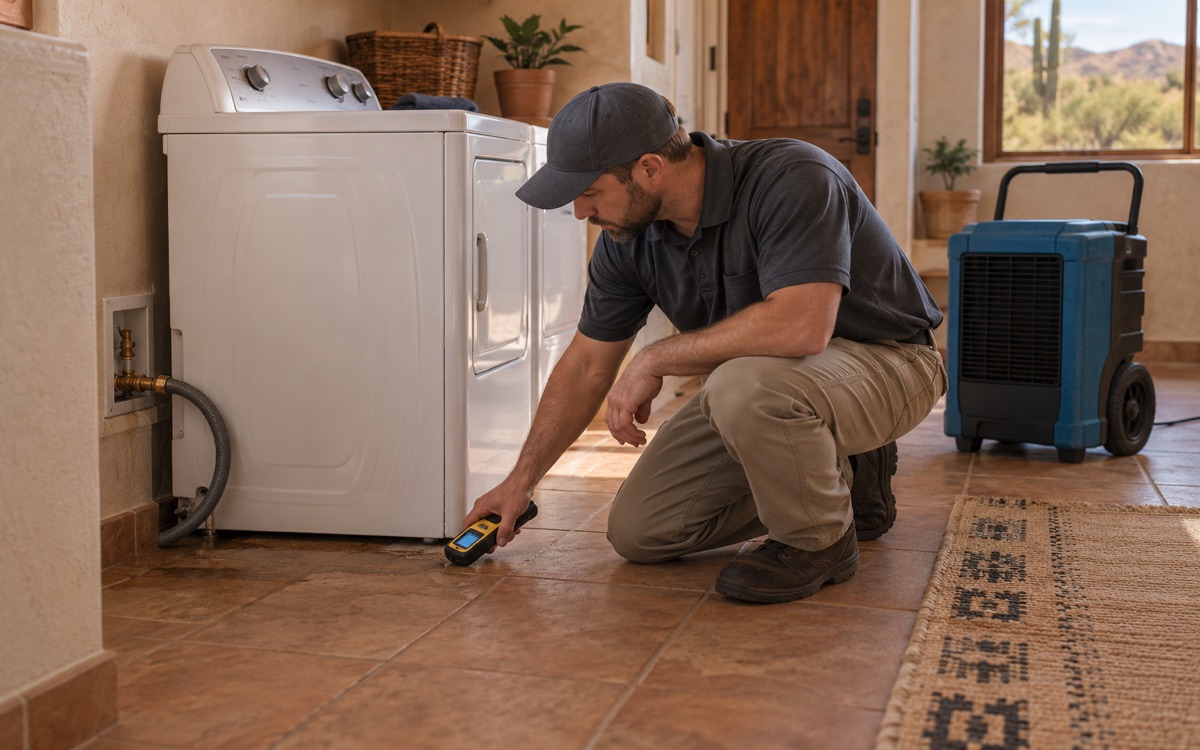
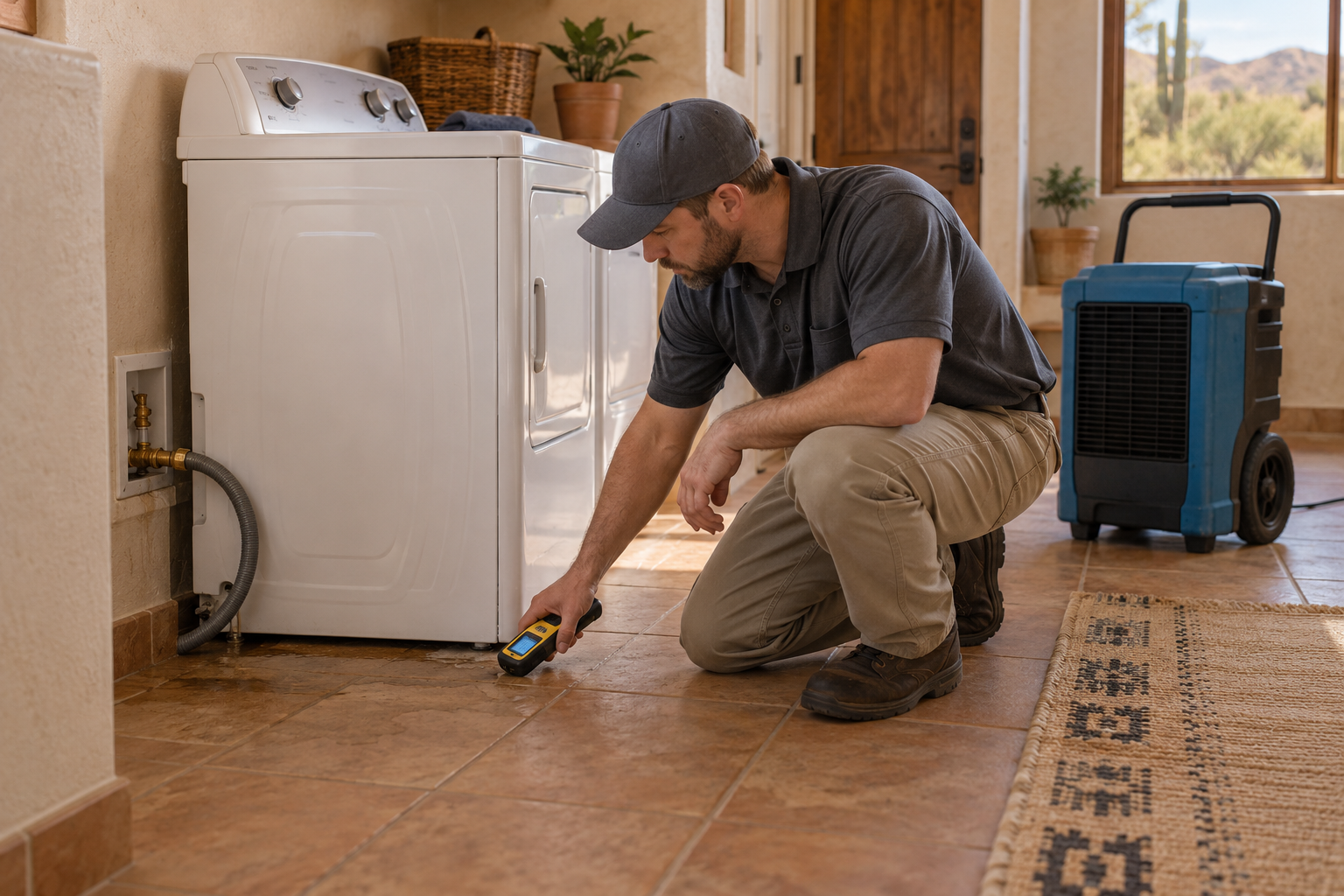
Runoff entering at one opening can migrate beneath flooring or along wall bases. The amount visible near the door may understate the affected assembly. Moisture mapping and material inspection help determine where extraction alone is insufficient and where concealed layers require further access.
Ask how the crew will distinguish an intact-looking surface from a dry assembly. Tile, trim, or paint can conceal conditions behind them. A reliable assessment documents the boundary and identifies unknown areas instead of assuming the water stopped where the visible dirt ended. Those details also make later repair decisions easier to understand.
Use the right channel for lasting drainage questions
Interior restoration addresses damage; permanent drainage correction may require a different professional or local authority. Phoenix maintains a floodplain management program that provides relevant property and development information. The appropriate contact depends on the specific issue and jurisdiction.
Do not redirect runoff toward neighboring land or alter public drainage based on a general blog. Preserve photographs and ask a qualified professional to evaluate the site. The goal is to identify a workable, permitted correction where needed, not to assume that a temporary barrier or a single threshold repair guarantees protection during another storm.
A record of the indoor entry point and an outdoor flow observation should remain separate. For example, water seen along the street establishes an observation outside; a wet threshold establishes an observation at the building. Linking them requires evidence about the route between them. This discipline makes later drainage discussions more useful and avoids attributing a cause or assigning responsibility simply because the two conditions occurred during the same storm.
Questions about street runoff damage in Phoenix
Does runoff from the road prove the city caused the damage?
No. Responsibility requires facts beyond the visible flow path and may involve legal or engineering questions. Document observations and consult the appropriate authority or professional.
Will a new door seal solve the problem?
It may not. Site drainage, water depth, openings, and building details can all matter. Confirm the actual route before choosing a permanent correction.
Should I keep photos of outdoor water marks?
Yes, when safely obtained. They can help explain the route and timing alongside indoor damage records, but they do not independently determine insurance coverage or fault.
Address street-runoff damage inside your Phoenix property
Tell us which opening was affected and what you observed from a safe position. We can assess the indoor loss while drainage questions are directed to the appropriate specialists.
Storm Flood Restoration and Moisture Detection & Mapping focus on damage inside while drainage questions receive separate review. Request Service or call (602) 902-1375 to discuss the affected property.