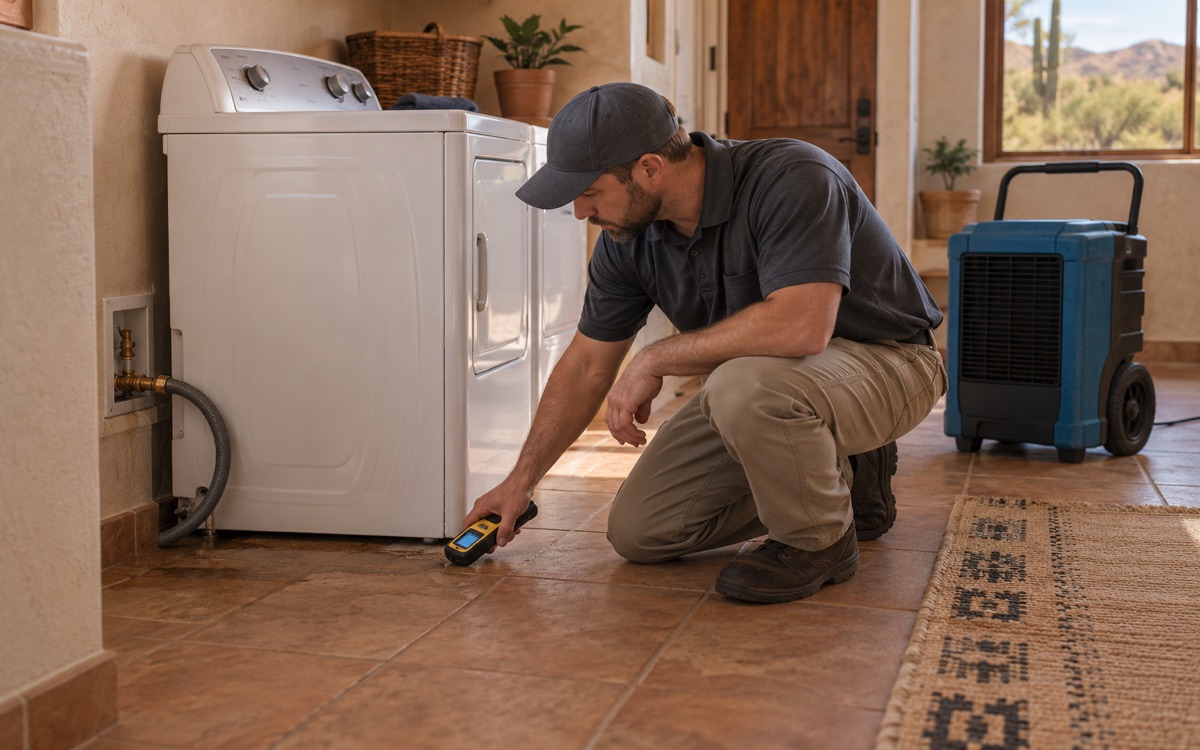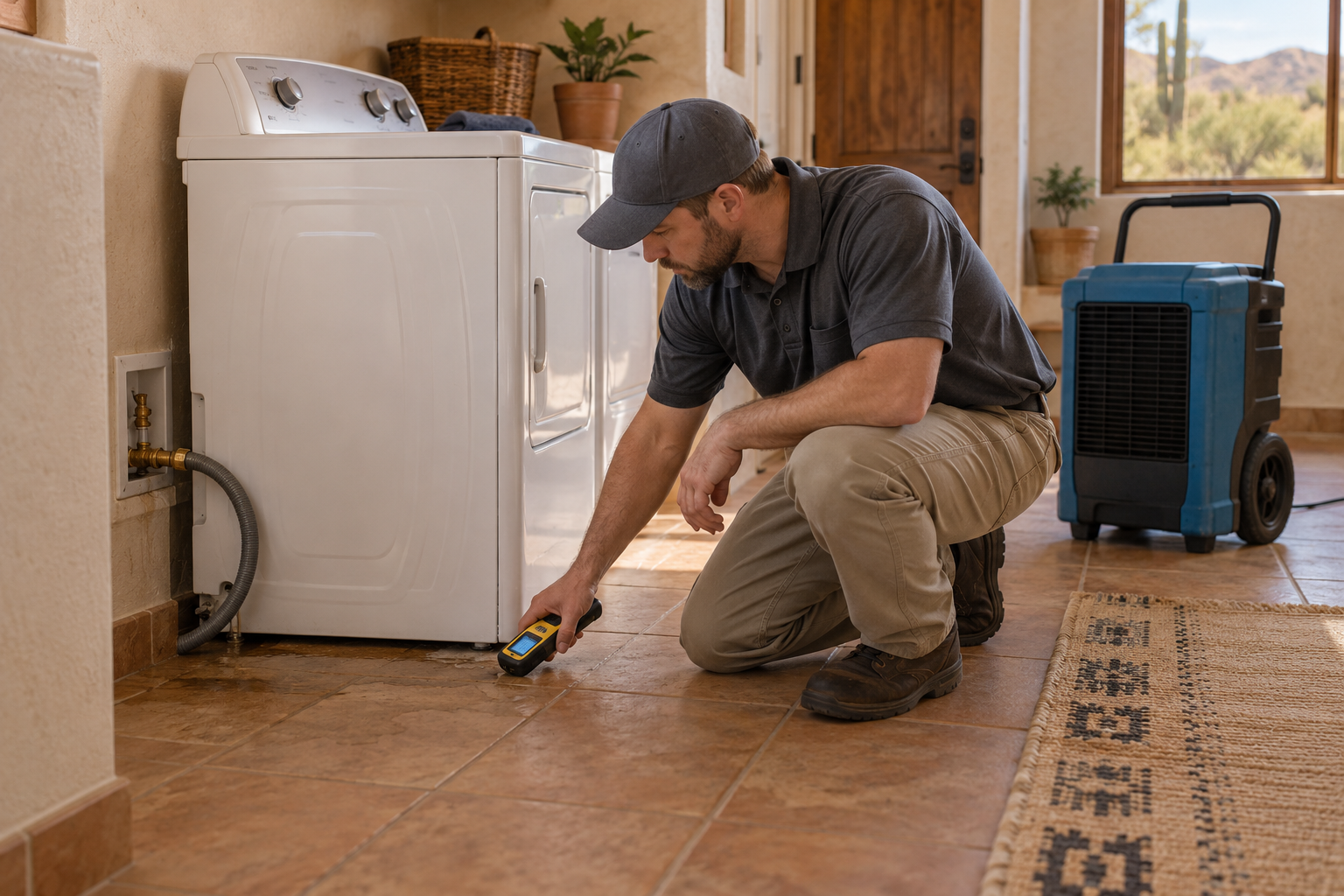

Can Thermal Cameras Find Hidden Flood Damage in Phoenix?
Thermal cameras can help locate temperature patterns that deserve closer investigation after a Phoenix flood, but they do not see water through walls. Technicians interpret the image alongside the building's construction, recent conditions, and suitable moisture measurements. A suspicious pattern is a reason to check an area, not proof that the area is wet or mold-contaminated.
What a thermal image actually shows
A thermal camera presents differences in surface temperature, rather than an image of water inside the wall. FLIR explains that suspected moisture patterns need confirmation with a moisture meter. Those differences can sometimes help an assessor notice an area affected by moisture, but other conditions can produce patterns too. Air movement, sunlight, insulation differences, and nearby building components may influence what appears on the screen.
That distinction matters in Phoenix, where an exterior wall can receive strong sun exposure. A temperature difference near a window or across a wall should not be labeled flood damage simply because it looks dramatic in a colored image. The image needs the context of the inspection.
Ask the technician what the pattern suggests and how it will be checked. A clear explanation separates the observation from the conclusion. The useful result is a better-targeted inspection, not a photograph presented as an infallible answer.
How the finding is checked against moisture evidence
When a pattern raises a question, the assessor can compare it with visible evidence, the reported water path, and readings appropriate to the material. Access may also need consideration if the affected layer is concealed. Different tools contribute different information; none should be treated as a substitute for the whole assessment.
For example, a wall surface and the assembly behind it are not necessarily in the same condition. The inspection needs to identify what was actually measured and what remains uncertain. A moisture map can record those distinctions and make follow-up checks more consistent.
EPA's water-damaged material guidance emphasizes checking underlying flooring and considering material condition. The practical lesson is that an attractive image of a surface does not resolve the condition of every layer beneath it.
When imaging helps narrow the investigation
Thermal imaging can be useful as part of a broader flood damage assessment, particularly when the visible water path does not explain the full area of concern. It may help identify where additional checks should be concentrated without assuming every part of a building is equally affected.
The same inspection should consider timing. Equipment operation, changes in indoor conditions, and the interval since the loss can affect what an assessor observes. Tell the crew about recent water entry, changes to windows or doors, and any interrupted drying equipment. These details help interpret the findings.
The decision to open an assembly should rest on the combined evidence and the need for access, not on a color alone. If an opening is proposed, ask what question it is intended to answer and how the result could change the scope.
Why a clear image is not a completion certificate
An image that no longer shows a striking pattern is not, by itself, evidence that all affected materials meet the drying goal. Temperature and moisture are different measurements. Drying completion should be supported by the methods appropriate to the materials and any requirements for the next finish system.
Similarly, thermal imaging cannot establish whether mold is present or whether a surface is sanitary. EPA's mold and moisture guidance focuses on fixing moisture problems and addressing affected materials. A camera does not replace that work.
Before structural drying ends, ask which locations were checked, what evidence supports completion, and whether any area remains inaccessible. Keeping images with the written findings is more useful than relying on a thermal picture without explanation.
Related questions
Can a thermal camera see mold behind drywall?
No. A thermal image does not identify mold. It may reveal a temperature pattern that warrants investigation, but moisture assessment and any appropriate remediation evaluation are separate steps.
Does every dark patch on a thermal image mean water?
No. Image colors represent a temperature display and depend on the camera's settings. Construction and environmental conditions can create patterns unrelated to a flood. The finding needs confirmation.
Can I use a phone attachment to declare my wall dry?
A consumer image should not be treated as a drying certificate. An assessment must account for the material, measurement method, affected layers, and relevant reference conditions before repairs conceal the area.
Get hidden damage checked, not guessed at
Phoenix Flood Restoration can assess flood-affected materials and explain which findings are confirmed, which require further checks, and how they affect the work plan. If a dry-looking area still concerns you, request an assessment before covering it with new finishes.
Request Service or call (602) 902-1375.