
Does Flood-Damaged Laminate Flooring Need Replacement in Phoenix?
Flood-damaged laminate often needs replacement when its core, edges, or joints have swollen or lost integrity. Drying does not necessarily reverse that damage. Even if the surface looks intact, the underlayment and supporting floor need assessment. The decision should reflect the specific product, exposure, contamination, and installation requirements rather than a blanket claim that laminate is waterproof.
Check what the product actually promises
Water-resistant wording is not a promise that an installed floor can tolerate every flood. Product limits, installation details, exposure duration, and the condition of joints all matter. A spill on the surface and water reaching beneath a large area are different situations.
If you have product packaging, warranty information, or installation records, provide them to the assessor. That information helps distinguish the manufacturer's requirements from assumptions based on appearance. When the product is unknown, the assessment should acknowledge that limitation.
After a Phoenix flood, the useful question is not only whether the decorative surface still looks good. The floor must remain serviceable as a complete installation, including its connections and supporting layers.
Swollen edges and damaged joints may not recover
Raised seams, distorted edges, separation, or a soft underlying condition can affect how the floor fits and performs. A panel that becomes dry may still have permanent physical damage. A cosmetic improvement does not establish that damaged joints can be reused.
Avoid forcing swollen boards flat or covering unevenness with a new finish. The repair needs to address the affected components rather than hide the symptoms. A material assessment can help define whether damage is localized or extends beyond the obvious area.
Ask how the proposed replacement boundary will work with adjoining flooring and whether matching material is available. Those practical details belong in the repair discussion before removal or ordering, not after a partially repaired floor reveals an unexpected mismatch.
The underlayment and supporting floor need their own checks
Water may remain beneath laminate after the exposed surface is wiped dry. The underlayment, seams, and substrate can change the drying and cleanup requirements. Access to those layers may be necessary even where visible panels appear relatively unaffected.
EPA's water-damage guidance emphasizes checking and drying underflooring. Its clean-water recommendations should not be treated as a universal salvage rule for outdoor floodwater or sewage.
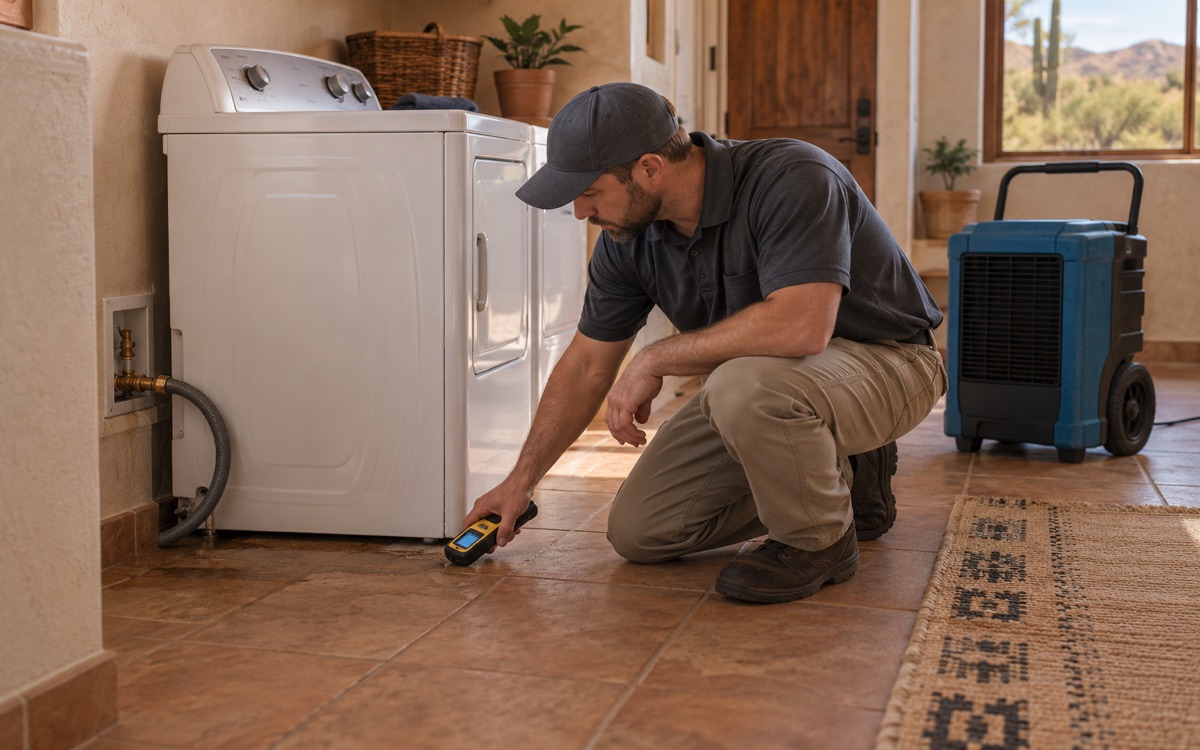
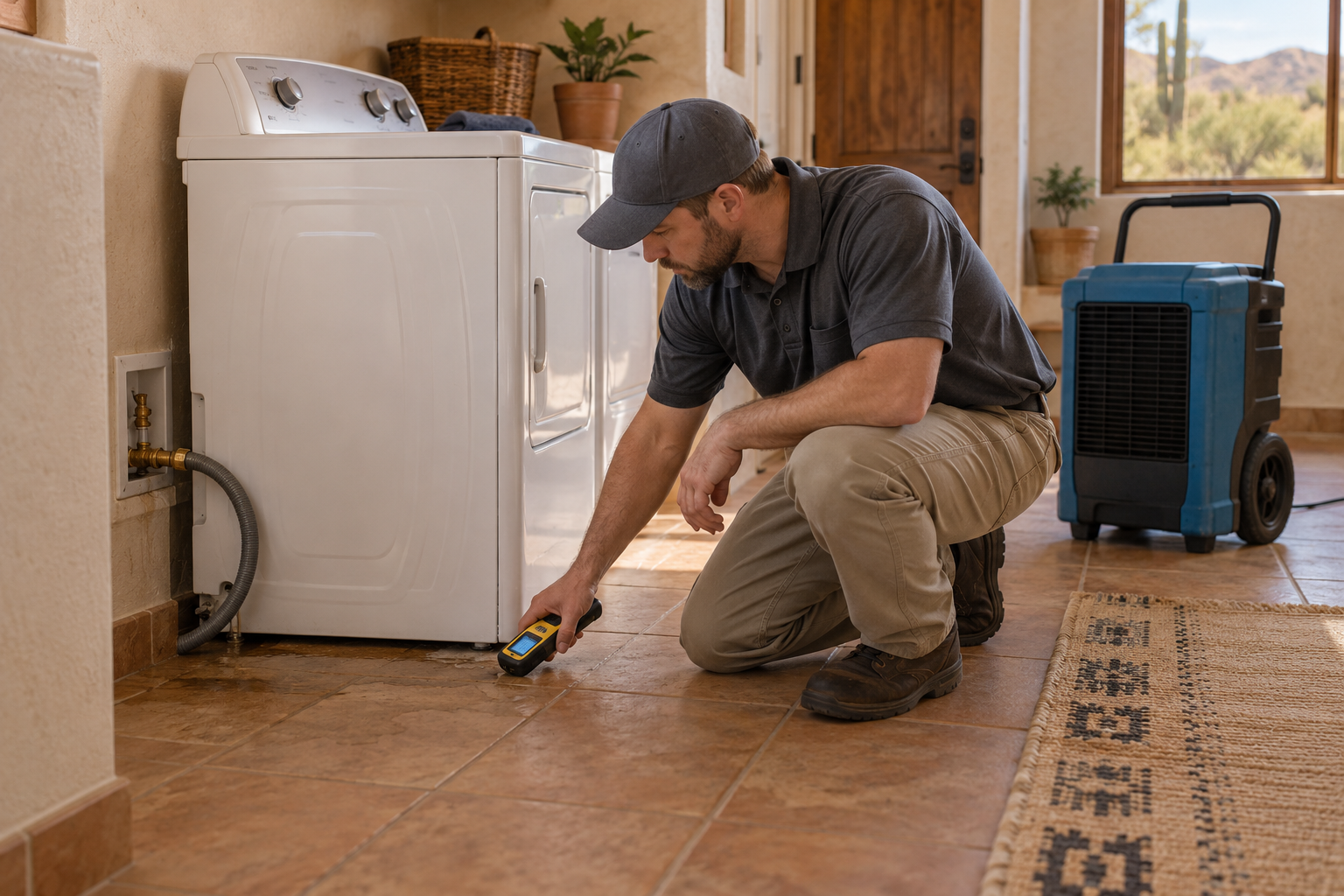
Moisture detection can help identify where the assembly needs attention and what remains uncertain. Phoenix heat outside does not demonstrate that a layer trapped beneath a floor has dried. Ask which components were measured and which required access before the scope was decided.
A replacement floor needs a verified starting condition
Removing damaged laminate is not the same as preparing the property for a new floor. The water source must be addressed, affected materials cleaned or removed as appropriate, and the remaining assembly assessed for drying. Product-specific installation requirements still apply.
Ask the installer what substrate tests are required and who will provide the results. A general statement that the restoration equipment has been removed may not answer the new flooring manufacturer's requirements. Clear coordination avoids one trade assuming another has completed a necessary check.
Flood damage reconstruction should also state what is included: underlayment, trim, transitions, disposal, and any related repairs. Keeping those details in the written scope makes the final result easier to evaluate and reduces surprises during the installation.
Related questions
Can swollen laminate shrink back to normal?
Drying may change its appearance, but permanent damage to the core or joints can remain. The product's condition must be assessed; do not assume that a flatter surface means the panel is suitable to keep.
Can I install new laminate over the old flooded floor?
Do not cover an unresolved wet or damaged assembly. The existing floor, substrate, contamination, and new product requirements need assessment before deciding on any installation method.
Will only the visibly damaged boards need replacement?
Not always. Water can extend beneath apparently intact areas, and the installation or matching material may affect the repair boundary. Ask for the reasons behind the proposed scope.
Plan a sound replacement after laminate flood damage
Phoenix Flood Restoration can assess affected flooring and explain what needs removal, drying, and preparation before reconstruction. If your laminate has swollen or separated after flooding, get the layers below it considered before a new floor is installed.
Request Service or call (602) 902-1375.