
How Do Property Managers Coordinate Flood Cleanup Across Phoenix Apartments?
Property managers coordinate apartment flood cleanup by establishing one project contact, documenting each affected unit, arranging authorized access, and tracking shared-system issues alongside individual repairs. A common incident does not mean every apartment has the same damage, drying needs, or completion date.
In a Phoenix apartment property, one report may reveal damage in adjoining or lower areas. The manager's job is to keep the information connected without turning a building-wide project into a single undifferentiated work order. Clear records also help residents understand why access is needed and what remains unresolved.
Build a Unit-by-Unit Status Record
Start with the initial reports and record the time, unit, observed condition, and resident contact. Add assessment status, access arrangements, active work, and outstanding issues for each affected space. Separate reported damage from inspected findings so unvisited units are not described as cleared.
Use a consistent identifier for photographs, moisture records, and work orders. If a crew discovers a possible connection to another unit or shared assembly, record the follow-up rather than relying on a verbal message that may be lost between shifts.
Commercial-scale restoration coordination can help organize the overall project, while each unit still needs an appropriate assessment. Prioritization should reflect hazards and material conditions, not simply the order in which residents called.
Coordinate Access Without Creating Conflicting Instructions
Explain who will attend, the purpose of the visit, expected access needs, and how schedule changes will be communicated. Follow the property's applicable access requirements and obtain qualified advice for legal questions. A restoration contractor should not be asked to resolve a dispute over entry rights.
Give residents a single reporting route for new water, equipment problems, or work-zone concerns. Keep private information limited to the people who need it. Building-wide updates can describe the project without disclosing individual residents' circumstances or possessions.
- Identify the person authorized to approve work.
- Provide the crew with current access instructions.
- Record missed access and the next planned attempt.
- Keep resident belongings and building materials distinct.
- Confirm who sends daily or milestone updates.
Assess Shared Systems and Connected Materials
Water can affect common electrical, plumbing, HVAC, and building assemblies. A unit that looks unaffected may still depend on a system under evaluation. CDC guidance calls for appropriate professional attention to flood-exposed electrical and HVAC systems before normal use.
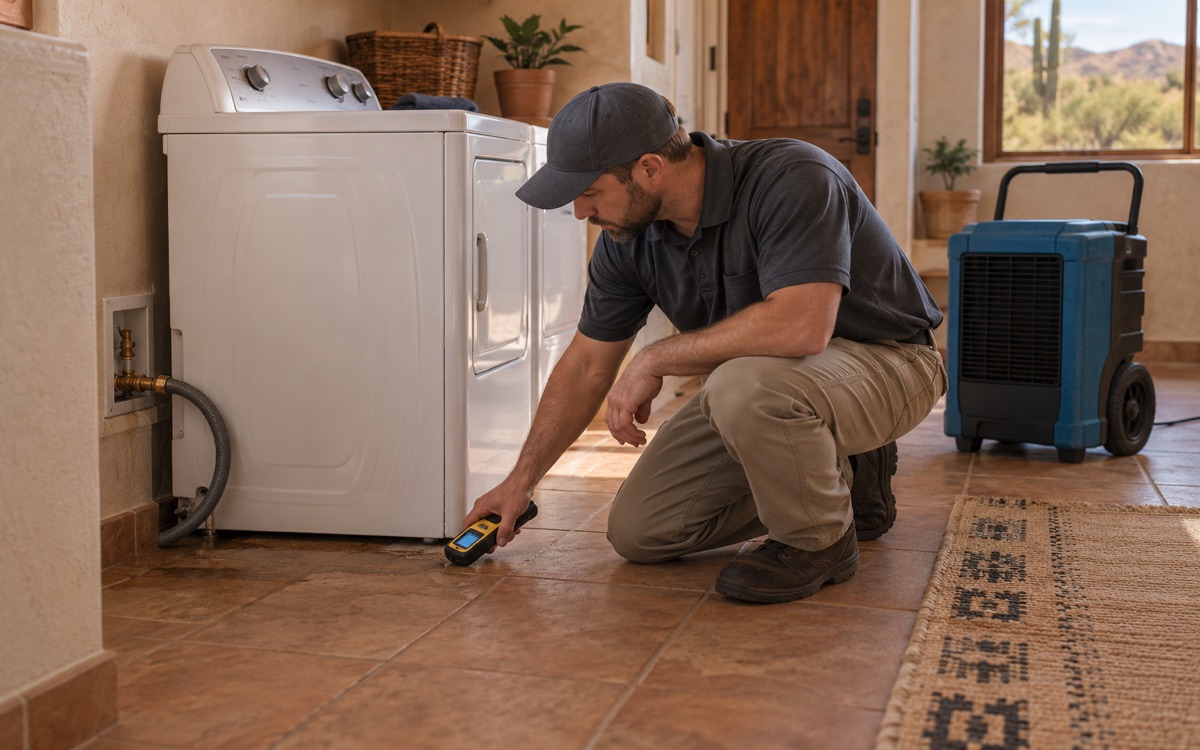
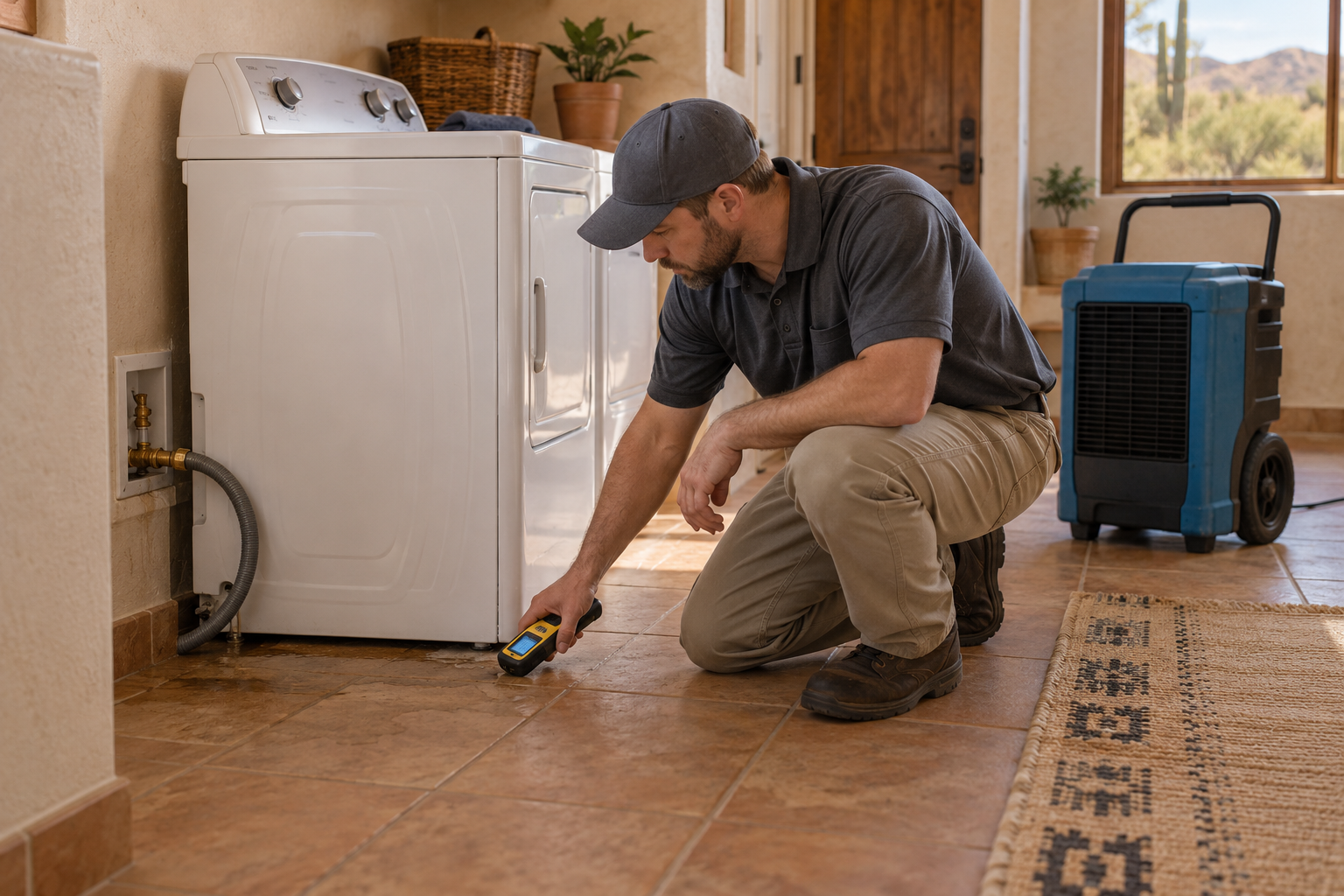
Moisture mapping helps identify affected boundaries across connected spaces. The record should explain inspection limitations and any need for selective access. Do not assume the water stopped at a lease boundary or at the edge of visible staining.
For Phoenix monsoon intrusion, source correction may involve an exterior area serving several units. Coordinate that work with interior cleanup so repairs in one apartment are not completed while an unresolved shared entry pathway remains active.
Track Recovery Phases Instead of One Completion Date
Each unit may reach extraction, drying, cleaning, and reconstruction milestones at different times. Explain which phase is complete when updating residents. Removal of equipment is not necessarily the end of repairs, and a repaired finish is not proof that an unrelated system has been approved for use.
EPA's recovery guidance emphasizes prompt drying and appropriate handling of materials that cannot be cleaned and dried. Administrative delays should be escalated clearly so important work does not stall unnoticed between a manager, owner, insurer, and trade contractor.
At closeout, reconcile the unit list with completed work and outstanding exceptions. Keep the shared-area record alongside the unit files. This allows a later report to be compared with the original findings without assuming it is automatically the same problem.
Questions About Multi-Unit Flood Cleanup
Should every apartment receive the same restoration work?
No. The source may be shared, but exposure, materials, and moisture conditions can differ. Use consistent assessment and documentation rather than identical scopes without evidence.
Can the manager provide one update for the whole property?
A general update can explain overall progress, but affected residents also need information relevant to their access and unit status. Avoid sharing private details in broad communications.
What if a resident reports damage after the crew leaves?
Record the new report and arrange appropriate assessment. The original inspection may have had access limits, or conditions may have changed. Do not dismiss the report solely because other units are complete.
Organize Apartment Flood Recovery in Phoenix
Property managers can Request Service or call (602) 902-1375 with the affected unit list, shared-system concerns, and access contacts. Phoenix Flood Restoration can then discuss a coordinated assessment and recovery sequence.