
How Do Restoration Crews Find the Full Extent of Flood Damage in Phoenix?
Restoration crews combine the incident history, visible water paths, material inspection, and moisture measurements to define the affected area. Concealed layers may require further access. The boundary is established through evidence, not simply where staining stops, and it may be updated when new conditions are exposed.
A flood loss can extend farther than the most obvious mark. Water may travel beneath a finish or along an assembly before showing at the surface. In Phoenix, fast surface drying can make that distinction especially important: an improved appearance does not establish that every connected material is unaffected.
Trace outward from the reported water path
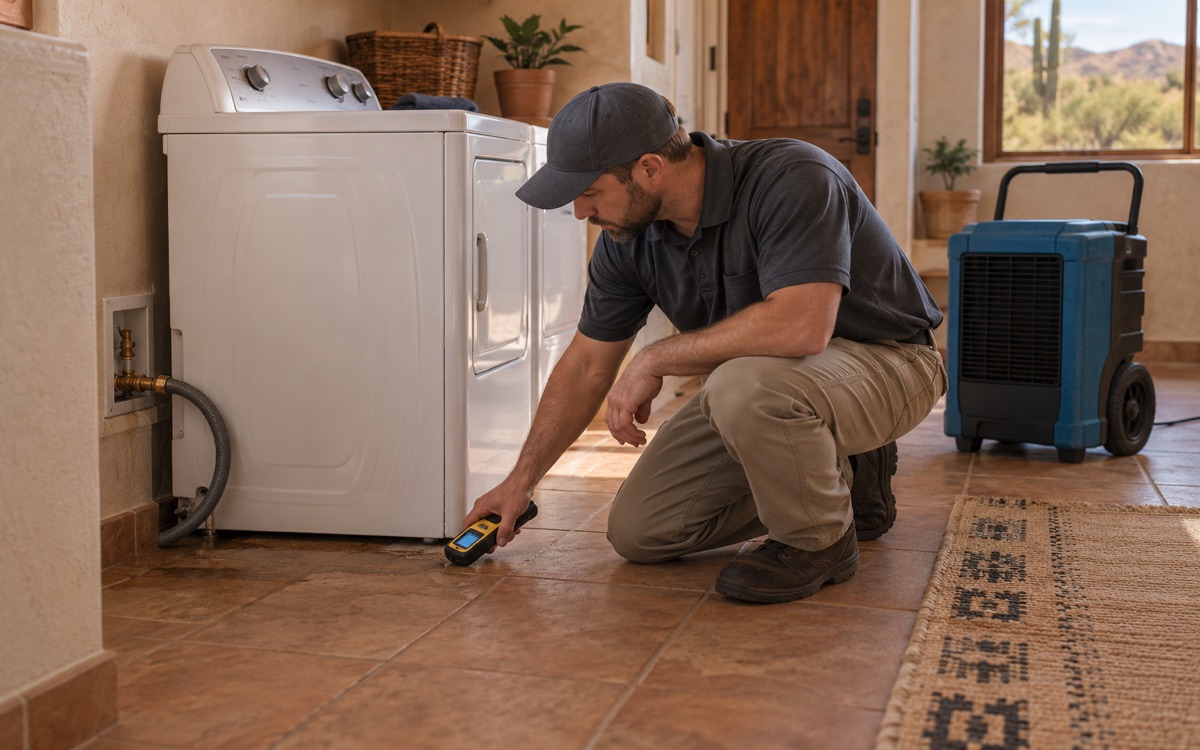
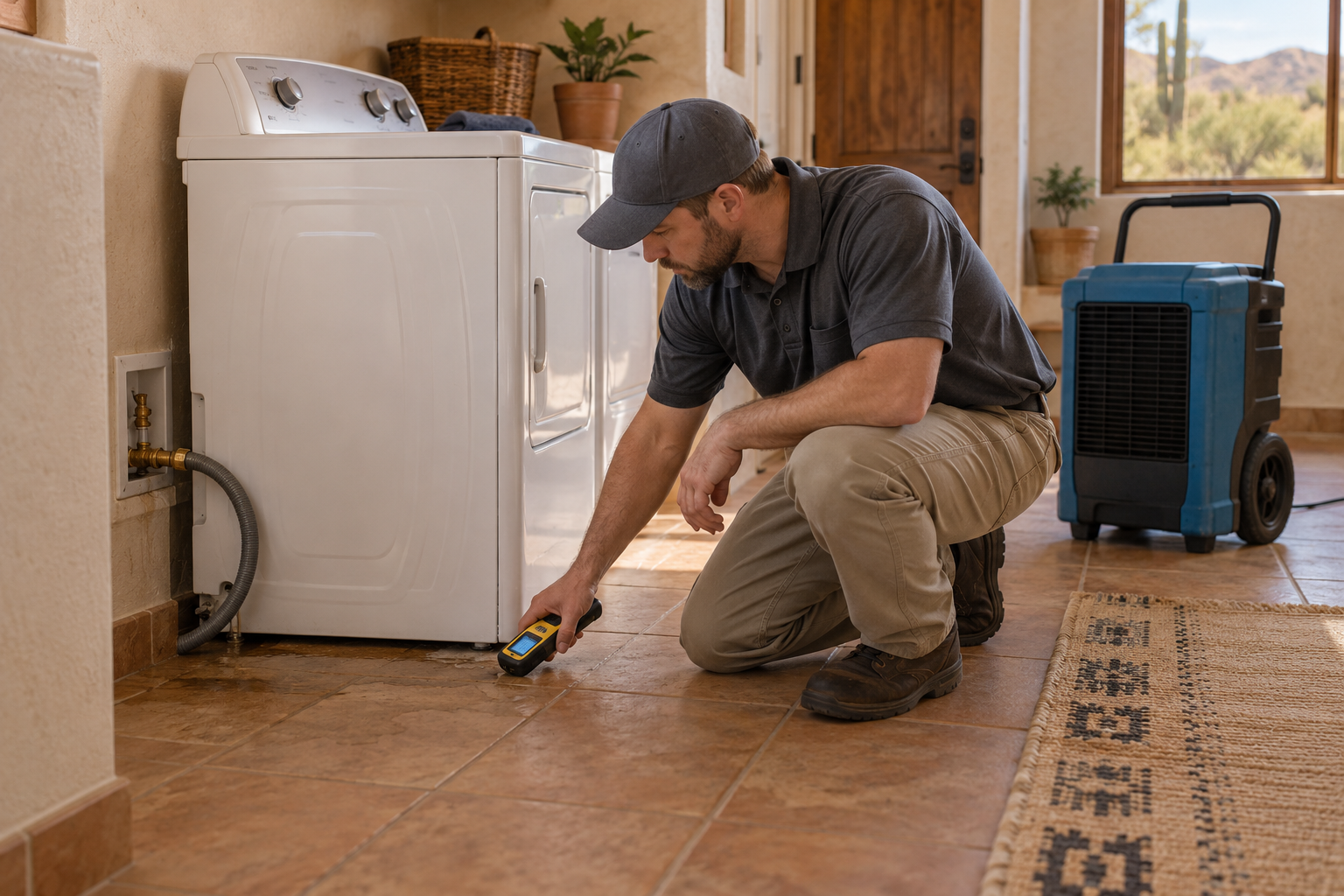
The visible entry point gives the inspection a starting location, not its endpoint. The assessor follows connected surfaces and assemblies: a wet floor edge may lead toward an adjoining wall base, transition, or fixed installation. Each connection raises a specific question about whether water crossed into another material or layer, even where there is no obvious stain.
Earlier extraction or material removal can change those visible clues. Existing photographs and the incident timeline help interpret the pattern, but the map should record current findings separately from reported history. An observed wet area, a measured comparison area, and an inaccessible space should not all receive the same label. Their different evidence status determines what needs testing or access next.
Compare visible signs with moisture findings
Stains, swelling, deposits, and finish changes are useful observations, but they are not the entire assessment. Moisture testing can identify affected materials beyond those visible signs. Readings need to be interpreted for the material, test method, and comparison conditions rather than treated as isolated numbers.
Ask whether adjoining areas were checked and how the boundary was recorded. A floor plan, photographs, and location notes can help make repeat readings meaningful. EPA's material guidance highlights underlying assemblies as an important consideration after water damage, within the limits of its clean-water recommendations.
Identify the places ordinary inspection cannot answer
Fixed cabinets, layered flooring, wall cavities, and other concealed spaces may limit the initial view. The assessor should distinguish an area found dry from an area that remains inaccessible. Those are not the same conclusion. Selective access may be justified to resolve a specific question about moisture, contamination, or condition.
Do not open those areas yourself to speed the process. Utilities, contaminants, and material handling can affect the method. A useful scope explains what access is proposed, why it is needed, and how findings will change the next step. That preserves the link between evidence and work instead of allowing demolition to become an unexplained default.
Update the map as extraction and drying progress
Conditions can become clearer after water removal or controlled opening. A revised boundary is not automatically a contradiction; it may reflect new evidence. Ask that additional findings and scope changes be documented. This helps the owner understand which areas were known initially and which were confirmed later.
The EPA emphasizes moisture control and source correction. If water is still entering, the affected boundary can continue changing. Final decisions should therefore account for both measured progress and source status. Before repairs cover materials, ask whether any unconfirmed area or renewed intrusion remains outside the completed assessment.
A useful moisture map labels the material and location for each reading, not just the general room. For example, a wall-base point and the adjoining floor edge should remain distinguishable in later checks. Consistent location references allow the technician to compare like with like, mark newly discovered spread, and separate an inaccessible area from one actually tested. The map is a spatial record of evidence, not merely a collection of numbers.
Questions about hidden flood extent in Phoenix
Does a dry surface prove the wall behind it is dry?
No. Concealed materials can retain moisture. The assessment should use appropriate methods and identify any areas that cannot yet be confirmed.
Why would the scope grow after extraction?
Removal of water or selective access may reveal previously hidden conditions. The team should explain the new evidence and how it affects the proposed work.
Can one meter reading define the whole loss?
No. A useful assessment connects readings to locations, materials, comparison conditions, and the known water path. The pattern matters more than an unexplained number.
Find the affected boundary of your Phoenix flood loss
Share the incident history and any cleanup already attempted so the assessment can trace the water accurately and identify what still needs investigation.
Moisture Detection & Mapping and Structural Drying & Dehumidification use mapped findings to focus the drying plan. Request Service or call (602) 902-1375 to discuss the affected property.