
How Do Technicians Know Flood-Damaged Materials Are Dry in Phoenix?
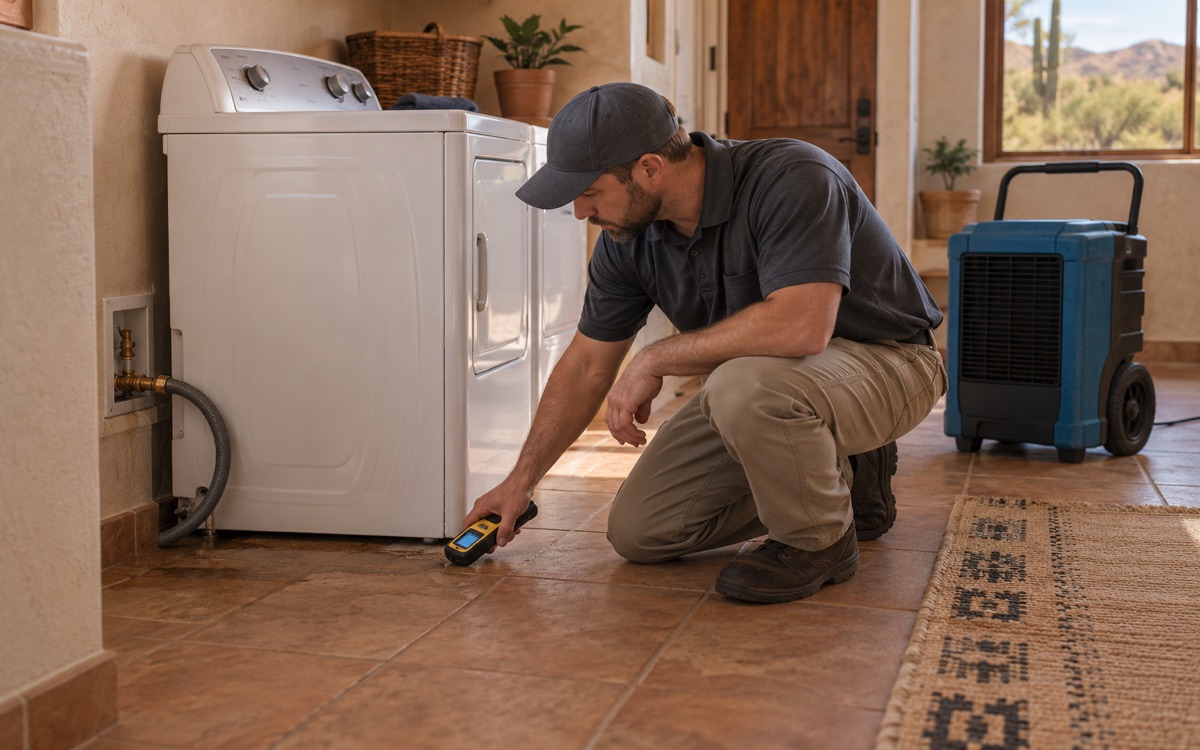
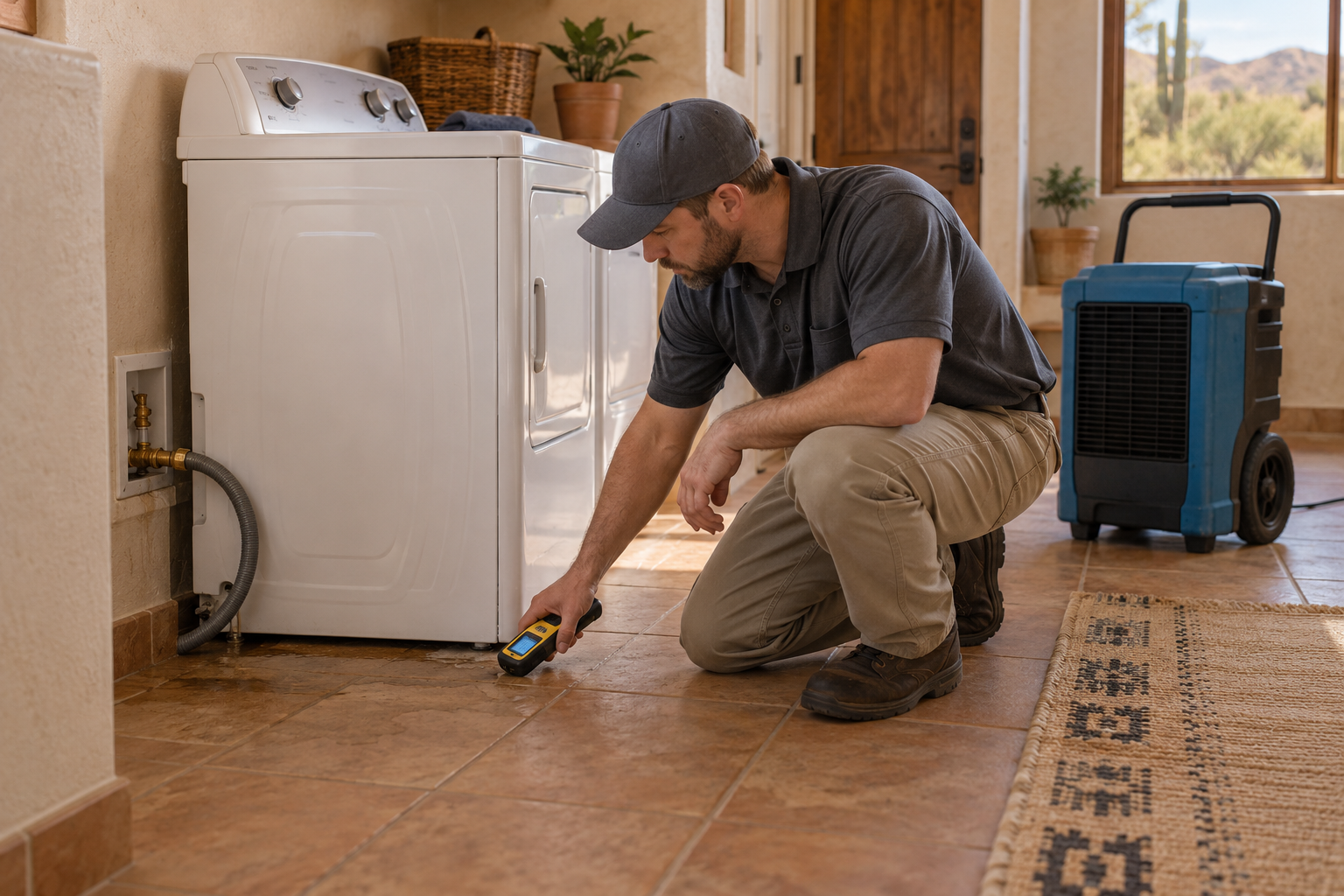
Technicians assess dryness with material-appropriate moisture measurements, comparisons to suitable unaffected references, and repeated checks of the areas that were wet. Surface appearance or touch alone cannot confirm that concealed layers are ready for repairs. The useful question is whether the documented condition meets the drying goal for that material and its next use.
The reading must match the material
A measurement is meaningful only when the instrument and method fit what is being tested. Wood, wall finishes, concrete, and layered flooring do not all behave alike. A number shown by one instrument should not be compared casually with a number from a different mode, substrate, or test method.
The technician should know whether the reading represents a surface screening result or a more specific measurement. Metal, construction details, and access limitations can complicate interpretation. That is one reason a single isolated number is weaker evidence than a mapped set of checks combined with an understanding of the assembly.
Ask what material was measured and what the result means in plain language. A useful explanation identifies the affected area, the basis for comparison, and any part of the assembly that could not yet be assessed.
Why reference areas and trends matter
An appropriate unaffected area can help establish a comparison for similar materials in the same building. The point is not to force every surface to reach one universal number. The crew needs a defensible way to judge the affected material in the conditions where it will remain.
Repeated checks also reveal direction. Falling readings can show progress; readings that stop changing can prompt a closer look at access, continued intrusion, or the drying arrangement. Moisture mapping helps keep those locations consistent so that each visit does not compare unrelated spots.
In Phoenix, a hot day outside does not replace this process. A dry-looking finish can sit over another damp layer. The relevant evidence comes from the actual building materials, not an assumption that desert weather has finished the work.
Concealed layers can change the answer
Floor coverings, cabinet bases, wall cavities, and other assemblies can limit what a surface inspection reveals. A surface may be improving while moisture remains below or behind it. Whether additional access is needed depends on the water source, construction, contamination concerns, and the findings already available.
EPA's water-damage material guidance specifically notes the need to check and dry underflooring. Its salvage recommendations concern clean water; outdoor floodwater and sewage require a different contamination assessment.
Where the condition is uncertain, a flood damage assessment should make that uncertainty visible. An inaccessible area should not silently become an area certified dry. Ask what has been checked, what has been opened if necessary, and what remains outside the current scope.
What a useful drying record should explain
A useful record connects readings with locations, dates, materials, and the decisions they support. It should let you understand why equipment was adjusted or removed and whether any exceptions remain. A page full of numbers without locations is difficult to use later.
Drying records also help separate completed work from the requirements for new finishes. A flooring installer may need a particular product-specific test before installation. Completion of emergency drying does not automatically satisfy every adhesive, coating, or flooring manufacturer's requirement.
Before rebuilding, ask for the available documentation and a clear handoff. Structural drying should leave you with an explanation of the remaining condition, not just an empty space where the machines used to be. If the source of water has not been corrected, that issue needs its own resolution.
Related questions
Is there one moisture percentage for every Phoenix home?
No universal percentage applies to every material and instrument. Ask which method, comparison, and material-specific requirements are being used instead of relying on a number copied from an unrelated project.
Does a dry wall surface mean the insulation is dry?
Not necessarily. A surface check may not describe insulation or other concealed layers. The assembly, exposure, and available access determine whether additional investigation is appropriate.
Can repairs begin as soon as the equipment is removed?
Equipment removal is one milestone, not blanket approval for every repair. Confirm the affected materials, any remaining hazards, source correction, and the requirements of the new finish system before work closes them in.
Get evidence that your Phoenix property is ready
If you are unsure whether flood-affected materials are ready for repairs, Phoenix Flood Restoration can assess the affected areas and explain the drying findings. Request a clear plan for moisture checks, remaining work, and the handoff to reconstruction.
Request Service or call (602) 902-1375.