
How Do You Dry Concrete After Flooding in Phoenix?
Drying concrete after flooding involves removing standing water, addressing contamination, creating suitable drying conditions, and checking the slab with methods appropriate to its next use. A dry-looking surface does not establish that a floor covering or coating can be installed. The restoration and flooring teams should coordinate the required moisture assessment before the slab is covered again.
Start with the water and materials above the slab
Standing water and affected coverings can prevent a useful assessment of the concrete. The work plan first needs to account for the source, safe access, contamination, and any flooring or underlayment that must be removed. Drying concrete is not a reason to leave contaminated residue beneath a new finish.
EPA's clean-water material guidance describes extraction and assisted drying for concrete or block surfaces. It also emphasizes checking beneath floor coverings. Those suggestions are not a substitute for an appropriate contaminated-water cleanup plan.
Ask which layers are being assessed and whether water may still be entering. If the original source continues, equipment can be addressing incoming water instead of bringing the existing slab toward the intended condition.
Surface appearance does not describe the whole slab
Concrete can look dry at the surface while its moisture condition remains unsuitable for a planned covering. The concern is not whether the slab feels damp to a hand; it is whether the tested condition is appropriate for the system that will be applied.
The installation method, adhesive, coating, and flooring product can have specific requirements. A generic moisture number found online should not be used as the acceptance criterion for every slab and every product. The responsible installer should identify the appropriate tests and limits.
A Phoenix property's hot outdoor conditions do not settle that question. Indoor airflow, the assembly, access, and the actual test results matter. Moisture assessment should explain the scope of the checks and any limitation rather than turn a surface observation into a blanket approval.
Drying equipment needs a measured purpose
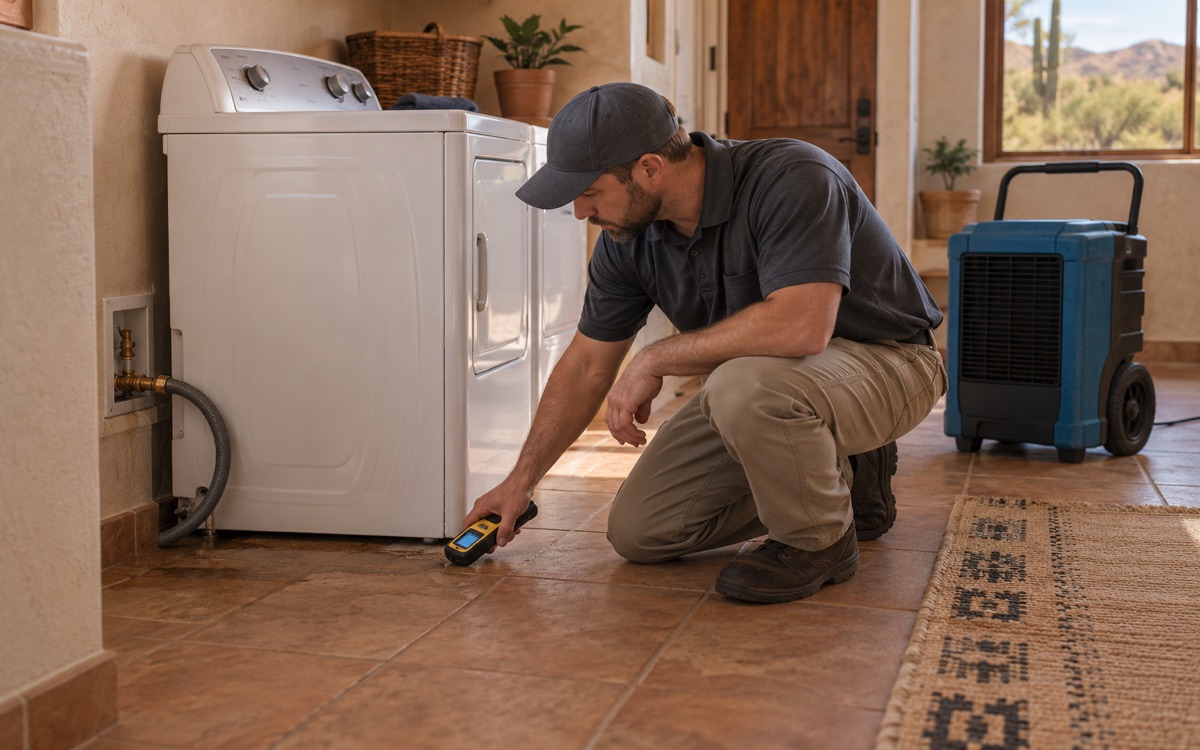
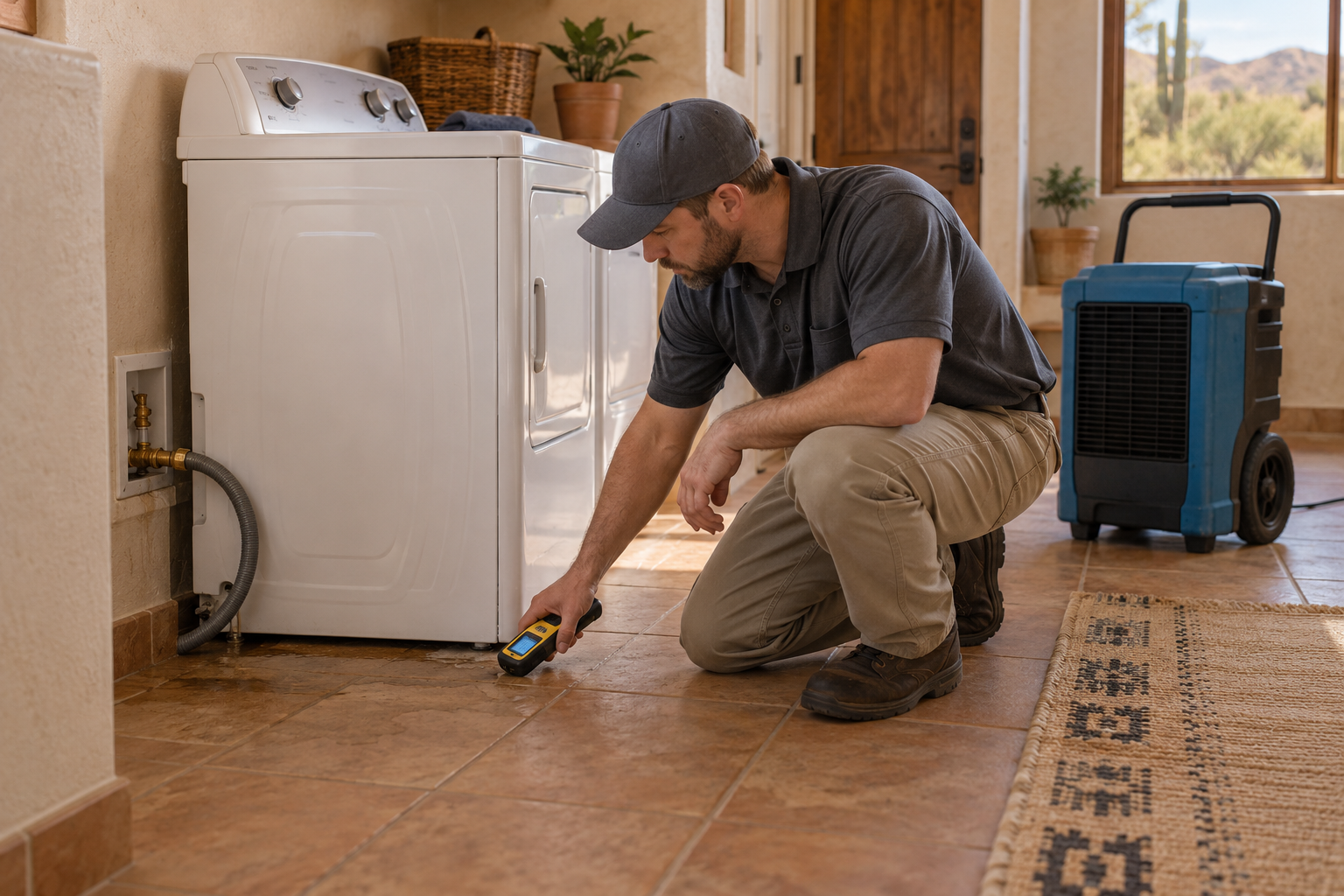
Once cleanup and safety requirements are addressed, structural drying can support moisture removal from affected materials. Equipment placement and operating conditions should follow the project, not a promise that every slab needs the same machines for the same number of days.
Progress checks help determine whether the approach is producing a useful change. If findings are not improving, the team may need to review continued intrusion, coverings, access, or the assessment method. Merely leaving equipment longer without understanding the result is not a complete explanation.
Ask what the current goal is: emergency moisture reduction, preparation for a particular finish, or both. Those objectives should be clear so that equipment removal is not mistaken for confirmation that every future installation requirement has already been met.
Coordinate the handoff before buying replacement finishes
The restoration crew and flooring installer should agree on who checks the substrate and what documentation is needed. Product requirements may call for a different test from a screening measurement used during the initial damage assessment. That distinction should be resolved before installation day.
Flood damage reconstruction may also involve surface preparation and repair beyond drying. Ask whether the estimate includes removing residual materials, addressing damaged finishes, and confirming the condition needed for the selected product.
Keep the relevant records with the project documents. If installation must wait, ask which condition remains unresolved and how it will be reassessed. A clear readiness criterion is more useful than a calendar date that ignores the actual slab.
Related questions
Can I tell whether concrete is dry by its color?
Color can provide a visual clue but does not replace the appropriate moisture assessment. Different surface conditions can affect appearance, and a new flooring system may have specific testing requirements.
Will Phoenix heat dry a flooded slab without equipment?
Do not assume that. Conditions inside the building, coverings, ongoing moisture, and the intended finish all matter. The assessment should establish whether the current approach is adequate.
Does a dry slab mean the water source is fixed?
No. The condition of the slab and correction of the source are separate issues. Confirm the cause has been addressed so that the new floor is not exposed to renewed intrusion.
Prepare your Phoenix slab for the next stage
Phoenix Flood Restoration can assess flood-affected flooring assemblies and coordinate the drying findings with the repair plan. Before new material covers the concrete, get clarity on the remaining moisture checks and the requirements for the finish you intend to install.
Request Service or call (602) 902-1375.