
How Is Flash Flood Damage Cleaned Up in Phoenix?
Flash flood cleanup begins only when access is safe. The work typically involves documenting the affected area, removing bulk water and debris, evaluating contamination and damaged materials, cleaning, and monitoring drying. Fast-moving outdoor water can leave concealed damage and sediment that a simple mop-up will not address.
The speed of the water matters during the event, but the recovery plan depends on what it left behind. In Phoenix, runoff can travel through washes, streets, and developed areas before entering a building. That history makes both physical damage and contamination important parts of the first assessment.
Safe access is the first project condition
Receding water does not automatically make a building or its approach safe. Damaged surfaces, debris, electrical exposure, and unstable materials may remain. Follow official access instructions and do not bypass barriers to reach the property. The National Weather Service's monsoon safety guidance applies to the route as well as the building.
Tell the restoration team whether roads, gates, or utilities are affected. If a specialist must evaluate structural or electrical conditions first, that assessment becomes part of the sequence. No response target should be interpreted as a reason to cross active floodwater or work inside a building that has not met the relevant safety requirements.
Record the water path and remove bulk deposits
Once conditions allow assessment, photographs and observations help identify water levels, entry points, debris, and affected contents. Extraction equipment must suit the volume and the debris present. Muddy water and heavy sediment are different from an uncomplicated indoor spill; removing them may require several coordinated steps.
Deposits can remain along edges, beneath fixed items, and within accessible cavities after visible water is gone. Ask how the crew will define and inspect those areas. The purpose is to avoid cleaning only the most obvious surface while leaving contaminated material or moisture concealed beneath it. Records should explain what was removed and why.
Make material decisions based on exposure and condition
Outdoor floodwater can carry sewage, chemicals, and sharp debris, as described by the CDC's floodwater guidance. Porous materials and layered assemblies may not be recoverable in the same way as an accessible hard surface. The assessment should consider cleanability, physical damage, and drying access.
Avoid a blanket promise that all flooring or all belongings can be saved. Equally, removal should have a documented reason rather than being presented as automatic for every component. Source, duration, material construction, and observed damage shape the decision. Those findings also help distinguish the emergency cleanup scope from later reconstruction.
Verify remaining moisture before closing the project
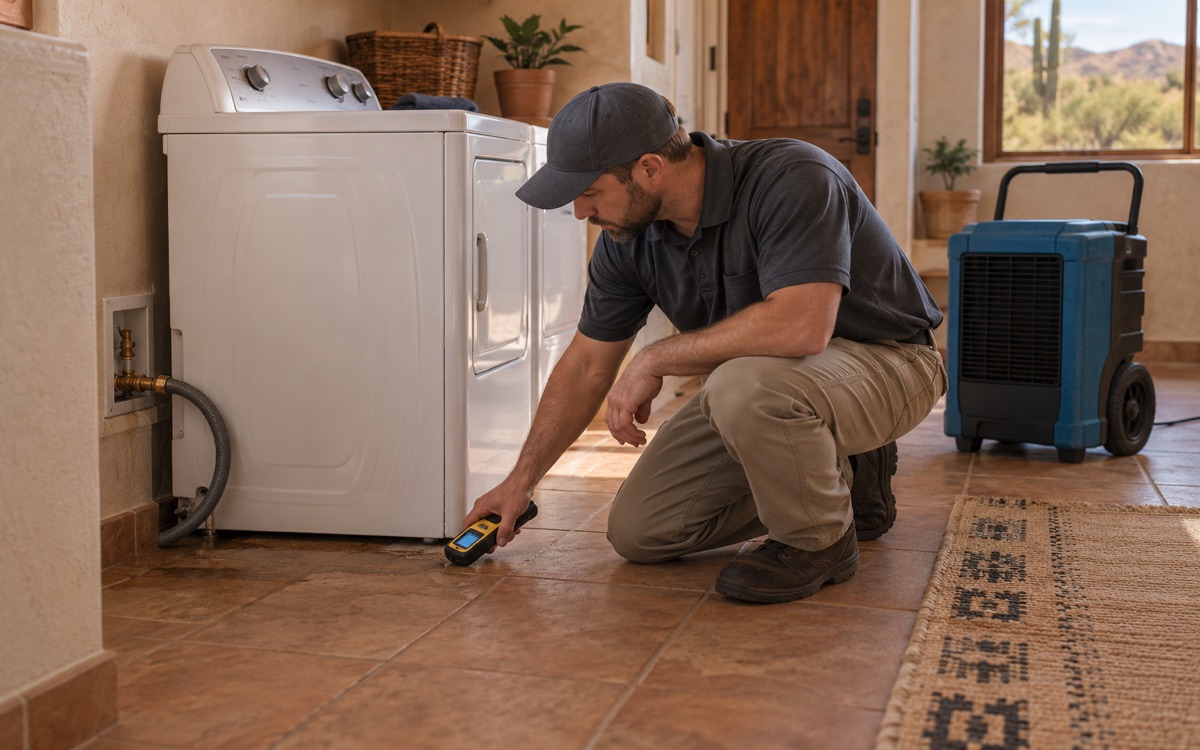
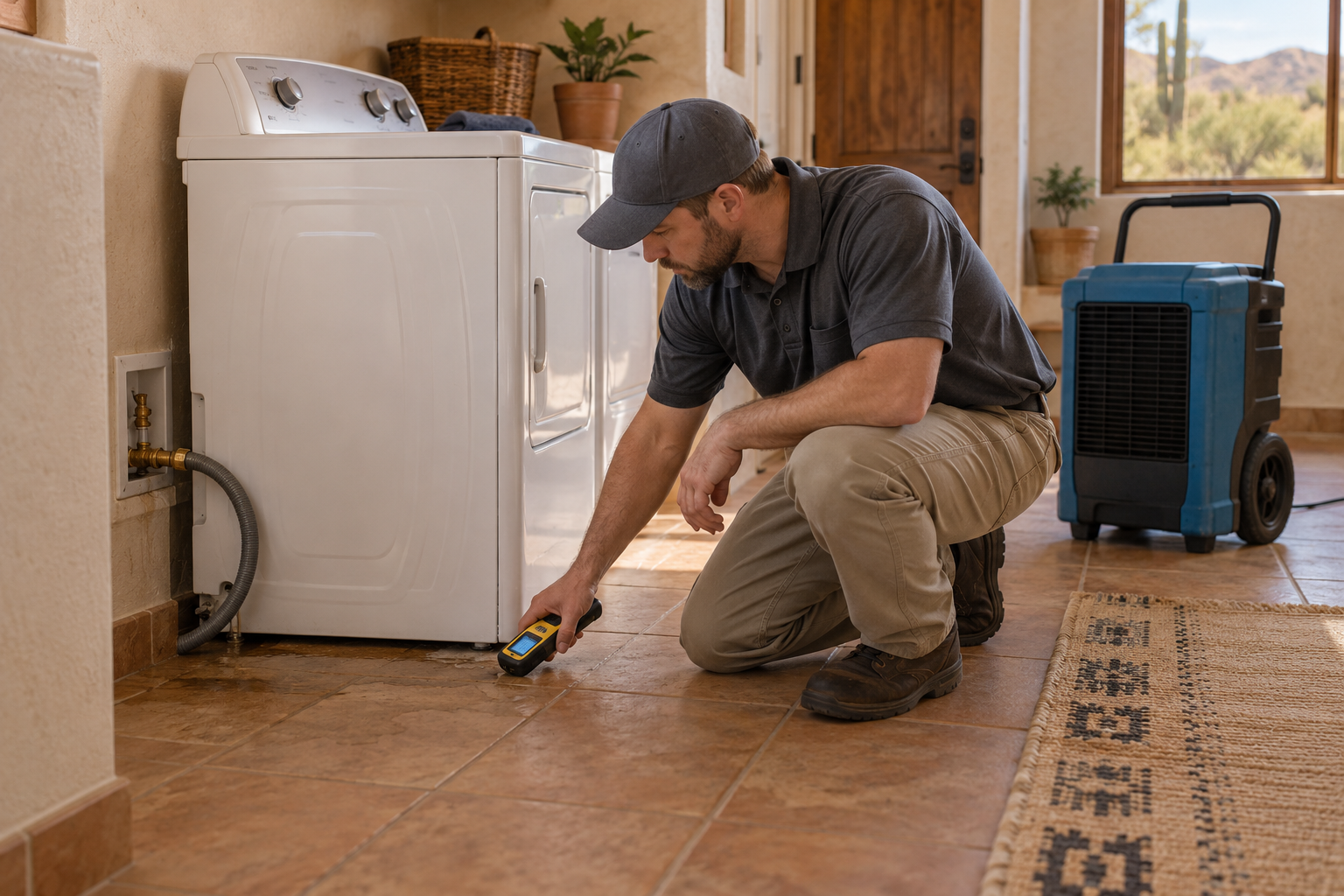
After necessary removal and cleaning, controlled drying addresses moisture retained in recoverable materials. Measurements and progress checks help establish whether the plan is working. A surface cleared of mud can look substantially improved while concealed layers remain affected. Arizona heat does not replace those checks.
Source correction and recurrence planning may also remain outstanding. If water entered through a damaged opening or a drainage problem, identify who will address that issue. Cleanup is not a guarantee against the next storm. A useful closeout record separates completed extraction and drying from repairs, specialist recommendations, and any unresolved access or source questions.
Flash flooding may leave physical displacement as well as moisture. A shifted component, impact mark, or damaged opening should be reported separately from staining so the appropriate professional can evaluate it. Water removal does not establish structural soundness. Keeping the observed impact damage in the assessment record helps prevent an extraction-and-drying scope from being mistaken for clearance of every condition created by the moving water.
Questions about Phoenix flash flood recovery
Can cleanup start while water is still moving outside?
Only where safe access and work conditions are established. Active flooding, official restrictions, and electrical or structural concerns can prevent entry regardless of the need for cleanup.
Is dried mud safe to sweep away?
Do not assume so. Sediment may contain contamination, and disturbing it can spread debris. Ask the cleanup team how deposited material should be handled.
Does flash flood cleanup include rebuilding?
Reconstruction may be a later phase, but it should be identified separately. Drying verification, source repair, and any required approvals come before affected assemblies are closed.
Arrange a measured recovery after Phoenix flash flooding
Share the access conditions, visible sediment, and known entry points so the cleanup plan addresses what the flood left behind.
Flash Flood Restoration and Moisture Detection & Mapping address the water, contamination, and moisture left by rapid runoff. Request Service or call (602) 902-1375 to discuss the affected property.