
How Is Flood Damage Below Raised Floors Assessed in Phoenix?
Flood damage beneath a raised floor is assessed by first addressing electrical and access hazards, then examining the concealed void, support components, underlying surfaces, and any exposed services. Qualified personnel should determine how access panels can be opened safely and how moisture or contamination will be documented.
A raised-floor surface may look dry while the space below still contains water or residue. In a Phoenix commercial building, that void may also contain cabling or other services that require specialist attention. It should not be treated as an ordinary wet floor that staff can inspect by lifting panels at random.
Establish Safe Access Before Opening the Floor
Tell building management and the assessment team that a raised-floor system is present. Provide available plans and information about services below it. If flooding may have reached electrical components, the appropriate qualified professional needs to address that risk before investigation proceeds.
CDC guidance warns against operating electrical equipment while standing in water and calls for evaluation of affected electrical systems. A dry walking surface does not prove that hidden services are unaffected.
Openings also create fall and access hazards. The inspection plan needs controlled work boundaries and appropriate handling of panels. Do not remove components yourself simply to check whether the void smells damp or to photograph the water.
Map the Concealed Water Path
The team should identify where water entered, where it collected, and how it may have traveled beneath the floor. Visible damage above the panels may not show the full affected area. Changes in floor level, penetrations, and fixed obstructions can influence where water remains.
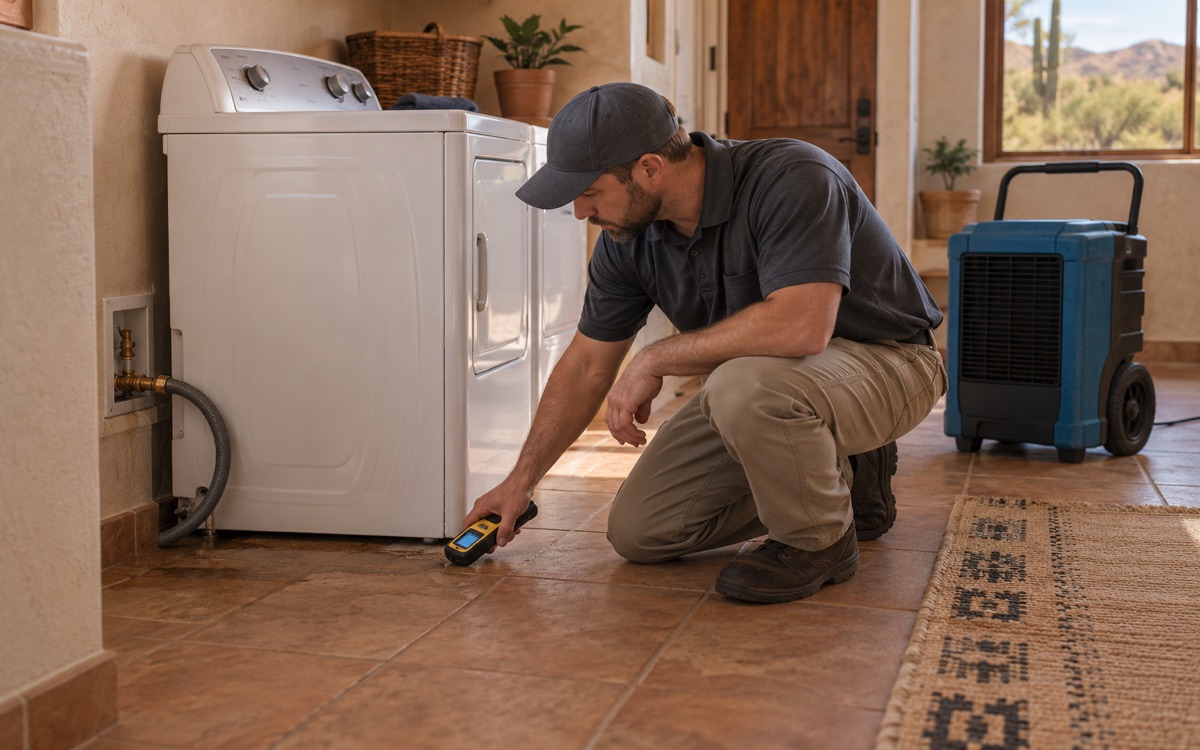
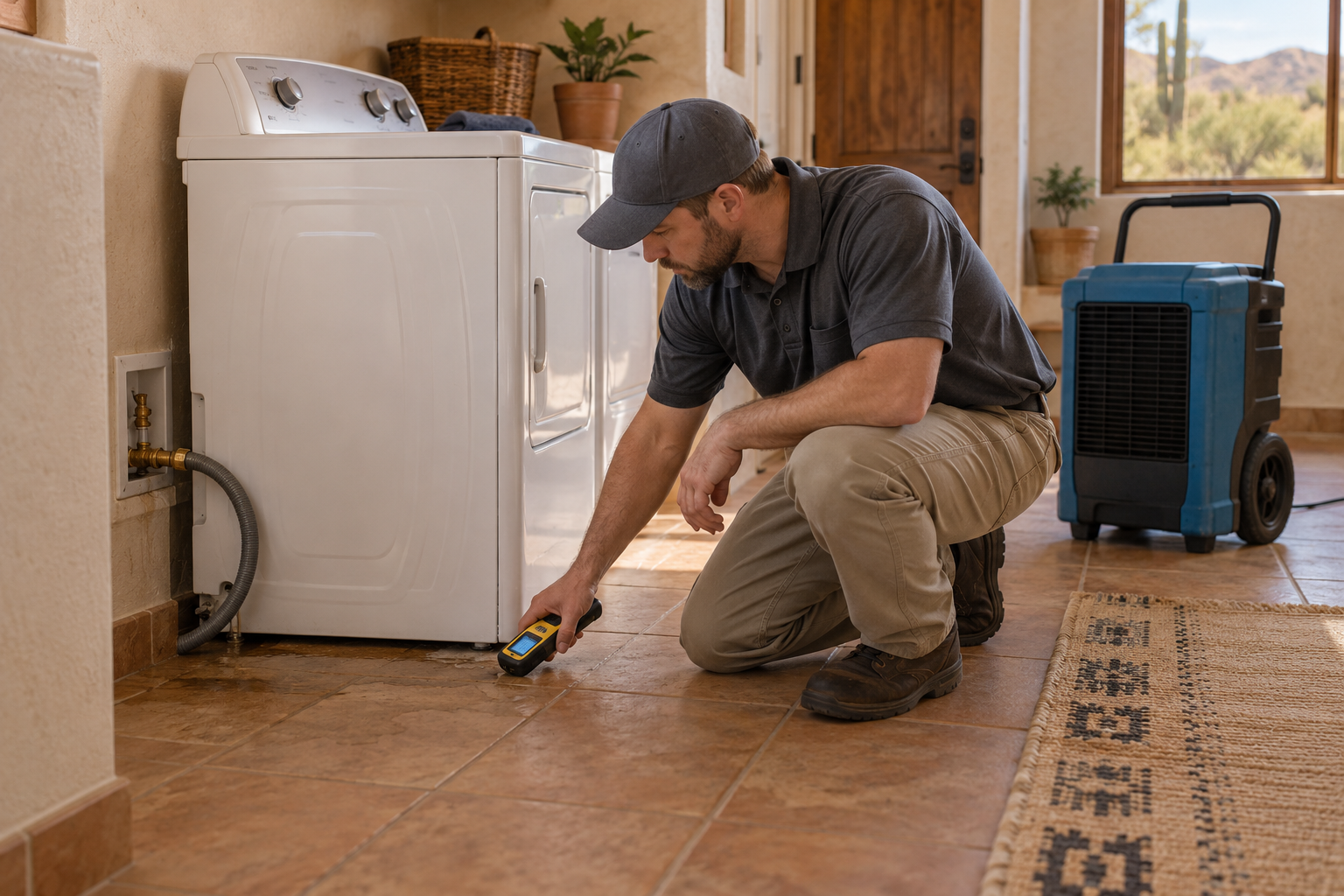
Moisture detection and mapping helps connect observations to specific locations. Ask how accessible and inaccessible sections will be recorded. A limited inspection opening should not be represented as direct verification of the entire void.
- Record standing water and visible residue locations.
- Identify affected panel materials and supports.
- Note exposed services requiring specialist review.
- Track inspection boundaries and inaccessible areas.
- Keep photographs connected to a plan or location reference.
Assess Materials and Services Separately
Panel construction, surface finishes, insulation, and underlying materials can respond differently to water. Condition and contamination influence whether a component can remain. Electrical or data service decisions belong with the appropriate specialists, not solely with the building drying crew.
EPA's clean-water material guidance highlights the importance of assessing underflooring and individual material conditions. Its recommendations cannot be applied automatically to outdoor floodwater or sewage exposure.
For Phoenix storm runoff, explain the observed source and any sediment. Do not conclude that an enclosed void stayed clean because the surface above it looks unaffected. The commercial restoration plan should address both moisture and the cleanup needs identified by assessment.
Verify the Void Before Restoring Normal Access
Water removal from accessible openings may leave moisture or residue farther along the system. The plan should describe how the affected area will be reached and how retained materials will be checked. Equipment placement and air movement need to account for the assembly, not merely the occupied space above it.
Before the floor is returned to normal service, clarify the status of material drying, cleanup, panel condition, and any service evaluations. Replacing panels should not conceal an unresolved condition. A drying record does not certify electrical equipment or establish that every floor component is structurally suitable.
Keep the inspection and closeout records with building maintenance information. If a later problem appears below the floor, the documented boundaries and limitations make the earlier work easier to evaluate without relying on memory.
Questions About Raised-Floor Flood Damage
Can water remain underneath when the top surface is dry?
Yes. The concealed void and connected materials may retain water or residue independently of the visible surface. Assessment needs to address the space below, not just the walking area.
Can maintenance staff lift a panel to check?
Only within an appropriate authorized safety and access plan. Hidden electrical exposure, unstable components, and open-floor hazards need consideration before panels are handled.
Does replacing wet panels complete the restoration?
Not necessarily. The underlying surfaces, supports, remaining moisture, contamination, and exposed services may also need attention. Ask what was assessed and what remains outside the contractor's scope.
Assess Concealed Flood Damage in Phoenix
For a raised-floor commercial space, Request Service or call (602) 902-1375. Tell Phoenix Flood Restoration about the floor system and known services so safe assessment can be coordinated.