
How Is Flood Damage Handled in a Phoenix Commercial Building?
Flood damage in a Phoenix commercial building is handled through coordinated assessment, safe source control, water removal, cleaning, material drying, and repairs. The plan also needs to address shared utilities, tenant access, equipment logistics, and the business activities affected by the work.
A commercial loss is not simply a residential cleanup with more floor space. Fixed systems, large assemblies, multiple occupants, and operating schedules can change how crews gain access and sequence the recovery. The initial priority is understanding the affected property well enough to avoid leaving important areas outside the plan.
Set Up Authority, Access, and Building Information
Identify the person authorized to approve work and a contact who understands the building. Provide available floor plans, utility information, access restrictions, and details about sensitive inventory or operations. If tenants are involved, establish how they will receive notices and report additional damage.
Do not assume maintenance staff should enter flooded equipment areas to prepare for the crew. CDC guidance on flood-exposed buildings warns about electrical hazards and potentially contaminated HVAC systems. Qualified evaluation may be needed before systems are operated or areas reopened.
Phoenix storm access can also be affected by road closures or ongoing runoff. Explain those conditions during the initial call so the restoration team can plan around actual safe access, rather than an assumed arrival route.
Assess the Water Path and Connected Assemblies
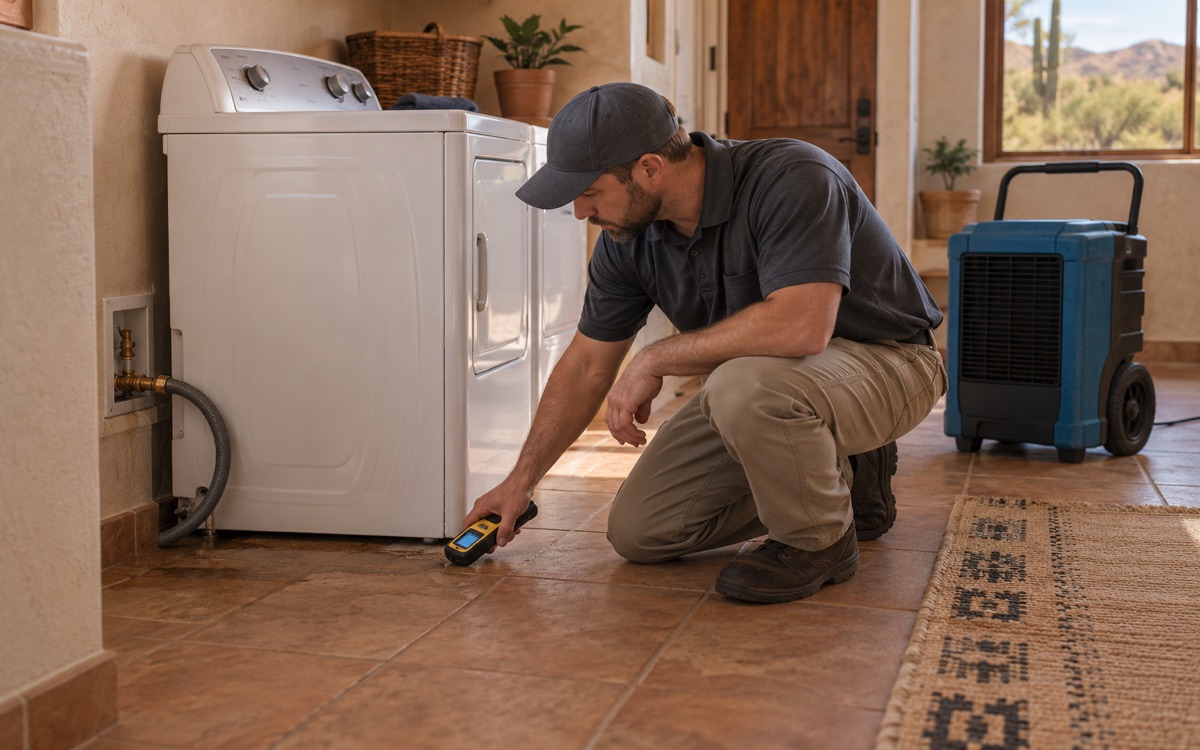
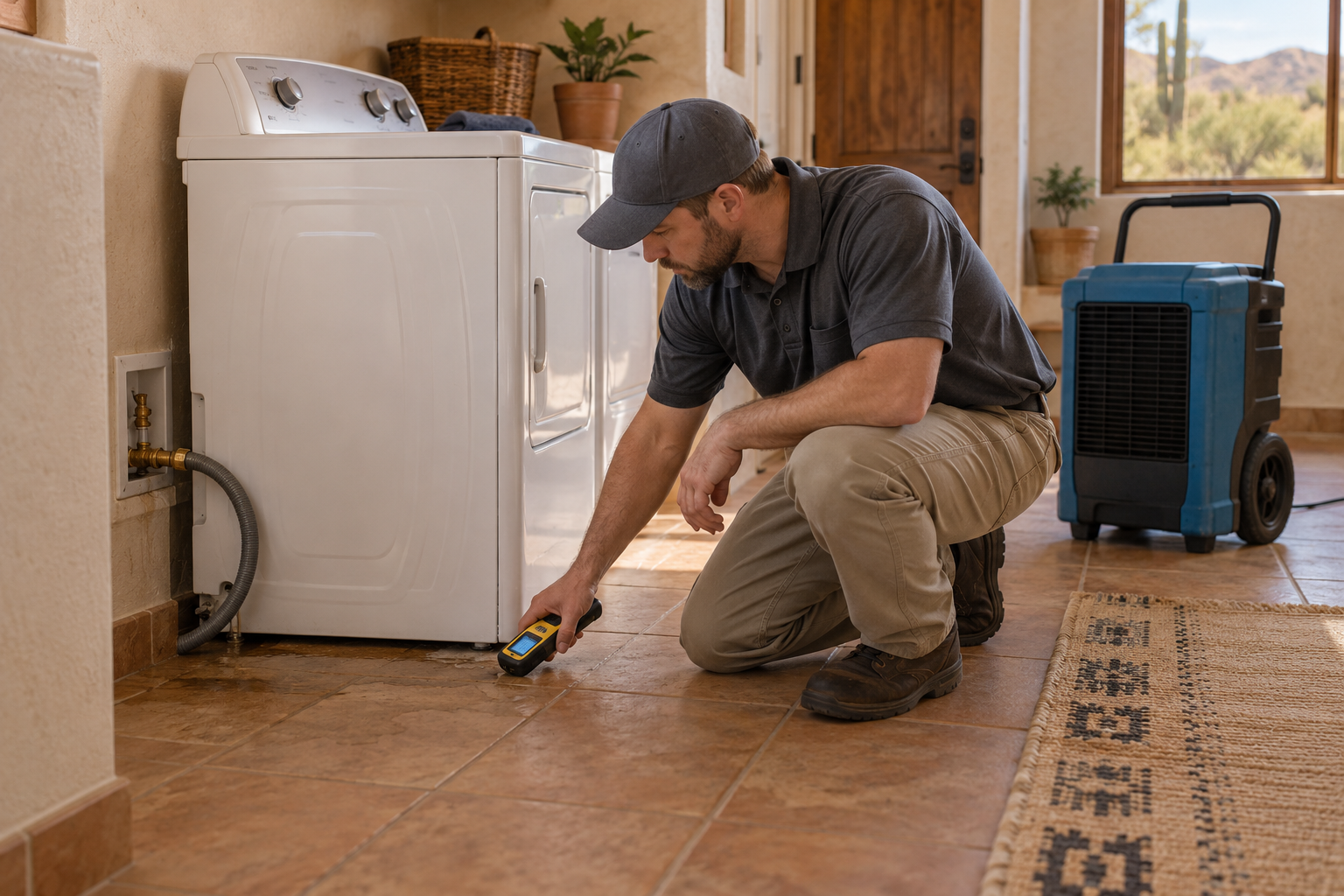
The inspection should identify the observed source, affected materials, and likely migration beyond visible standing water. Commercial buildings can have connected wall cavities, raised floors, long floor assemblies, and shared service spaces. The assessment needs to record where inspection was possible and where further access is required.
Commercial flood restoration should distinguish urgent stabilization from later investigative or reconstruction work. Source correction may involve a plumber, roofer, drainage professional, or other trade in addition to the cleanup team.
- Map affected and currently unaffected areas.
- Identify contamination considerations and restricted access.
- Document building systems that need specialist review.
- List business-critical areas without promising premature reopening.
- Set a process for revising the scope when concealed damage is found.
Sequence Extraction, Cleaning, and Drying
Bulk water removal helps reduce the amount of moisture that must subsequently be managed, but it is not the end of restoration. Debris, contaminated residues, and materials that cannot be retained need appropriate handling. Equipment selection and placement depend on the conditions rather than a standard number of machines per building.
EPA's recovery guidance emphasizes prompt drying and disposal of materials that cannot be cleaned and dried. It also highlights the need to avoid spreading contamination during cleanup. These principles are relevant to commercial work even when the affected area is not open to the public.
Moisture mapping and repeat checks help track progress through retained materials. A schedule based only on the date of equipment delivery is less useful than one tied to documented conditions and outstanding work.
Coordinate Repairs and Business Recovery Milestones
Reconstruction may depend on source correction, drying results, inspections, product availability, and tenant decisions. Keep these dependencies visible in the project schedule. If one phase is complete, say which phase; avoid describing the entire building as ready when another affected system remains unresolved.
Separate mandatory restoration work from upgrades or changes requested during rebuilding. Written change orders help clarify costs and prevent a finish selection from delaying unrelated recovery work. Where insurance is involved, the adjuster should address coverage questions independently of the contractor's physical work recommendations.
At closeout, collect the assessment, approved scope, drying records, invoices, and remaining exceptions. Commercial owners may also need records from electricians, HVAC professionals, or other trades. No single restoration document necessarily addresses every occupancy or operational requirement.
Questions About Commercial Flood Projects
Can different parts of the building be restored in phases?
Sometimes, if the affected assemblies, utilities, and access routes allow it. The team needs to evaluate whether a phased approach preserves safe separation and effective restoration rather than simply moving equipment between occupied areas.
Does the largest visible puddle define the commercial scope?
No. Water can migrate beneath finishes or through connected spaces. Assessment should identify the affected boundaries and disclose areas that were not accessible.
Will the contractor coordinate directly with an insurer?
Ask what documentation and billing support are included. Communication or direct billing does not guarantee coverage, waive a deductible, or replace the insurer's policy review.
Start With a Coordinated Commercial Assessment
For Phoenix commercial flood damage, Request Service or call (602) 902-1375. Share the building type, affected operations, access constraints, and the person authorized to approve restoration work.