
How Is Floodwater Removed From Hard-to-Reach Areas in Phoenix?
Hard-to-reach floodwater requires a planned assessment of the space, utilities, contamination, and available access. Crews may use targeted extraction methods or selective opening where justified. Do not crawl into flooded voids or remove building materials yourself to reach water that cannot be safely inspected.
Water can move into a space more easily than equipment can reach it. Beneath fixed assemblies, behind finishes, and across layered floors, the challenge is not simply choosing a longer hose. The plan must establish what is wet, what can be retained, and how the area can be accessed without creating another hazard.
Define the hidden area before opening it
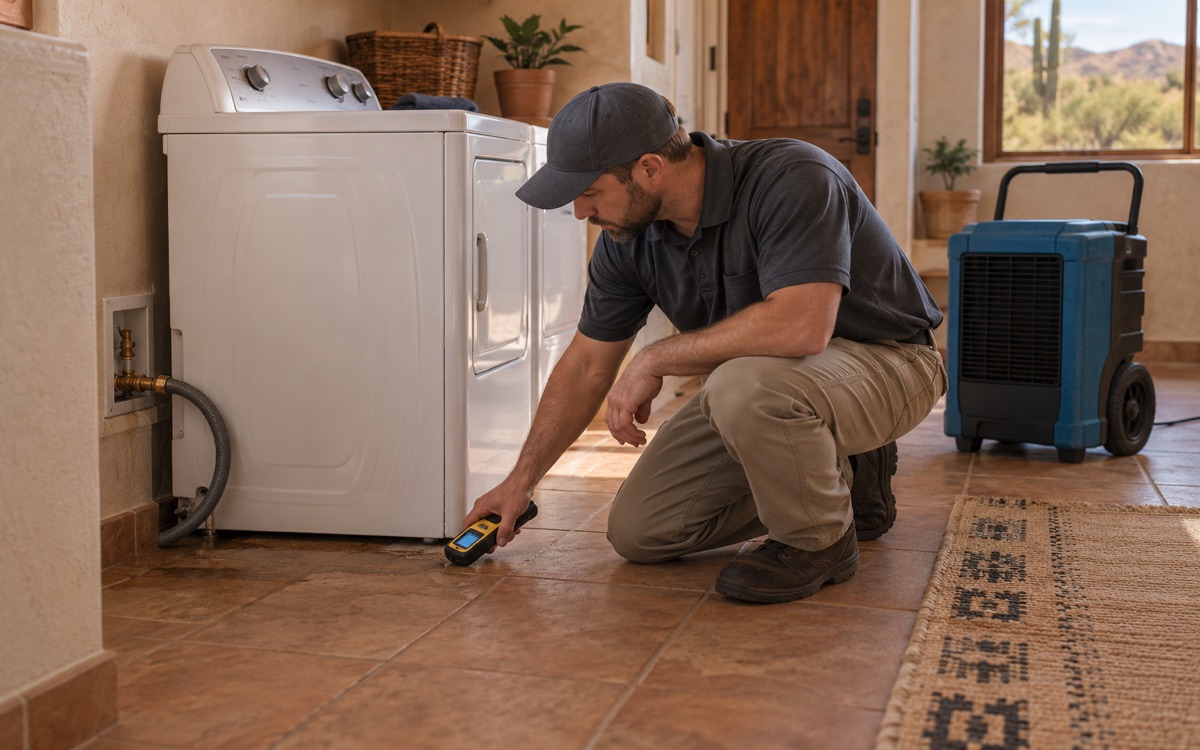
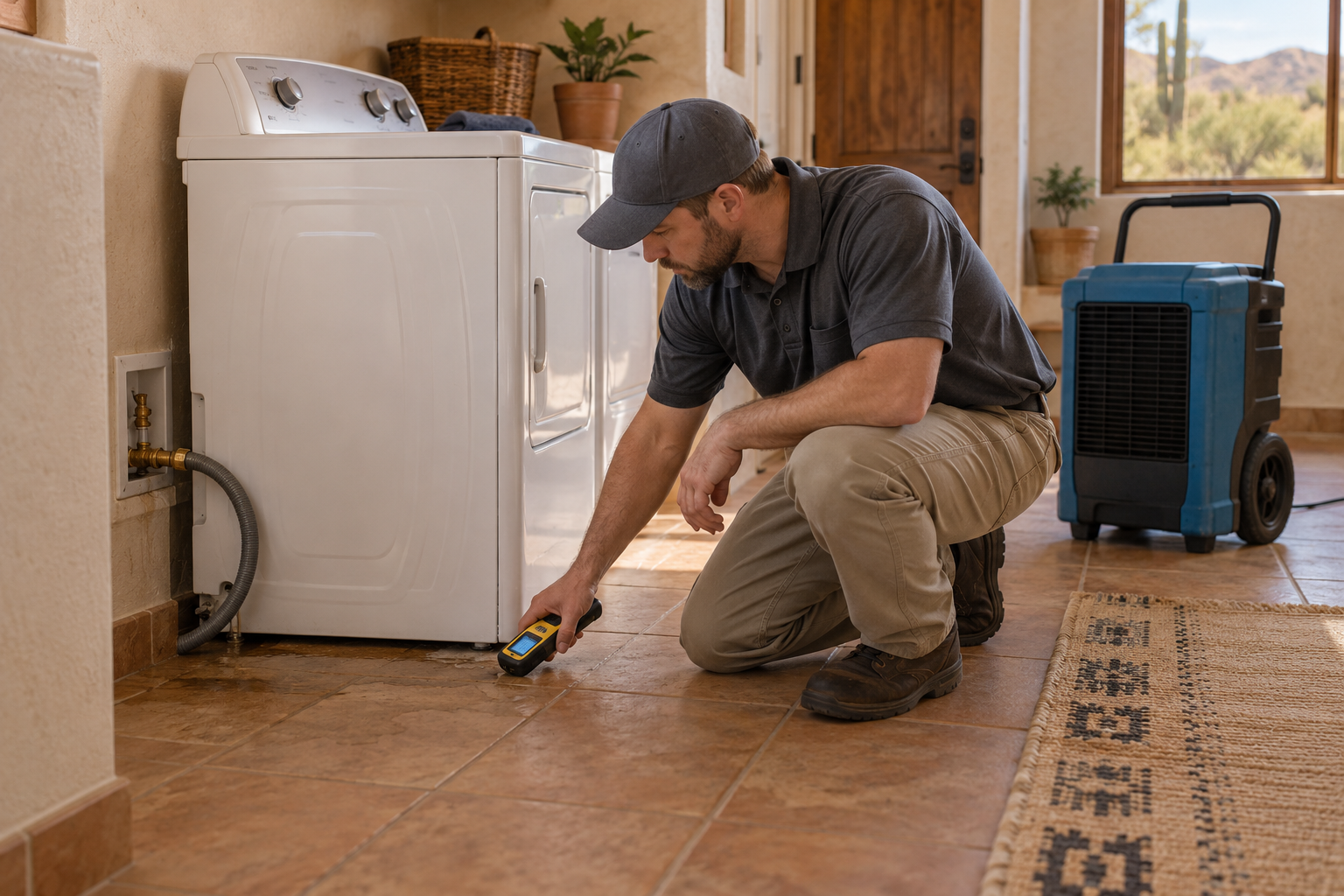
A wet edge or persistent reading may suggest concealed water, but the exact location and assembly still need investigation. The assessor should connect the finding to the known water path and explain what further access would establish. This avoids indiscriminate demolition based on a guess.
Tell the crew about known utilities, previous modifications, or access panels, but do not enter an unsafe void to confirm them. A confined or obstructed space can introduce hazards beyond ordinary flood cleanup. The appropriate specialist and access method depend on the actual conditions rather than the size of the visible opening.
Treat access as a safety and contamination decision
Water near concealed wiring or equipment requires appropriate caution. The CDC warns against operating electrical equipment in unsafe wet conditions. A narrow cavity does not become safe because the standing water appears shallow or the visible surface is dry.
Outdoor floodwater or sewage can also affect how a cavity is opened and how debris is contained. Ask how unaffected areas will be protected and which materials will be handled as part of the work. Do not pull contaminated components through clean areas to make room for equipment before that plan is established.
Use selective access to answer a specific question
Access may be needed to remove trapped liquid, inspect a layer, clean a surface, or allow drying. Those purposes are related but not identical. A useful scope explains why a particular opening or removal is proposed and what evidence will guide the next decision.
Preserving a finish is not always possible when the underlying assembly cannot be cleaned or dried reliably. Equally, difficult access does not justify removing unrelated materials. EPA's material guidance supports considering the condition of underlying components, within its clean-water limits. Source and contamination remain central to the final decision.
Verify the concealed area after extraction
Reaching and removing liquid is only one milestone. Retained moisture can remain in the surrounding assembly, and readings may need to be repeated as conditions change. Ask how the accessed area will be included in the drying record and whether any part remains unconfirmed.
Phoenix outdoor heat does not reliably dry a closed void. Air movement, dehumidification, material removal, or further specialist work may be needed according to the assessment. Before the opening is closed, confirm that the source is addressed and the relevant material condition supports reconstruction. A neat finish should be the result of completed work, not a cover for an unresolved inaccessible pocket.
Selective access should also include a closure plan. An opening made for extraction may need to remain available for cleaning or repeat readings before it can be repaired. Clarify that sequence before scheduling finish work. Otherwise, a well-intended repair can block the very inspection point needed to establish completion, creating the cost and disruption of opening the same area again for a still-unanswered moisture question.
Questions about concealed floodwater in Phoenix
Should I enter a crawl space to check for water?
Do not enter a flooded or uncertain restricted space. Report the concern and have the appropriate professionals assess access and hazards.
Does hidden water always require demolition?
No. The scope depends on access, material condition, contamination, and drying feasibility. Selective opening should have a specific documented purpose.
Can equipment outside a cavity dry everything inside it?
Not necessarily. The assembly and airflow paths matter. The team should verify the concealed material condition instead of assuming nearby equipment reaches every layer.
Reach the hidden water without guessing at your Phoenix assembly
Tell us where water seems trapped and what access is already available so the inspection can focus on the safest, most useful next step.
Floodwater Extraction and Moisture Detection & Mapping target inaccessible pockets and their surrounding wet materials. Request Service or call (602) 902-1375 to discuss the affected property.