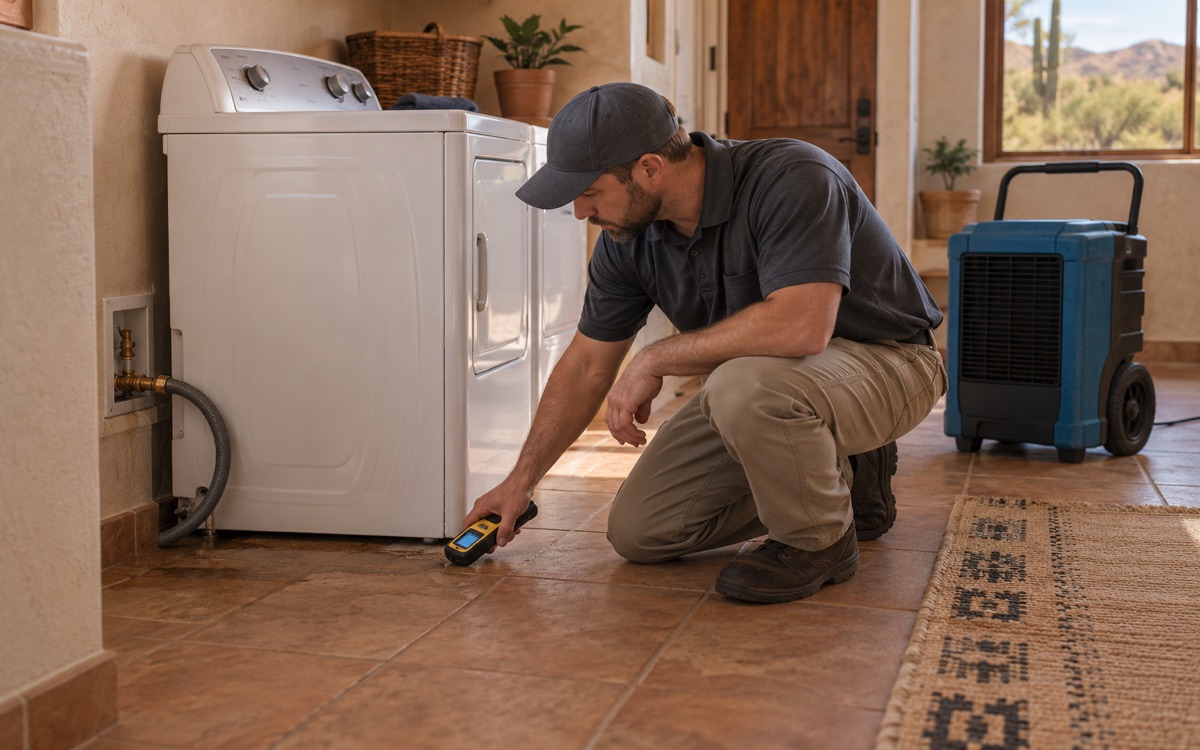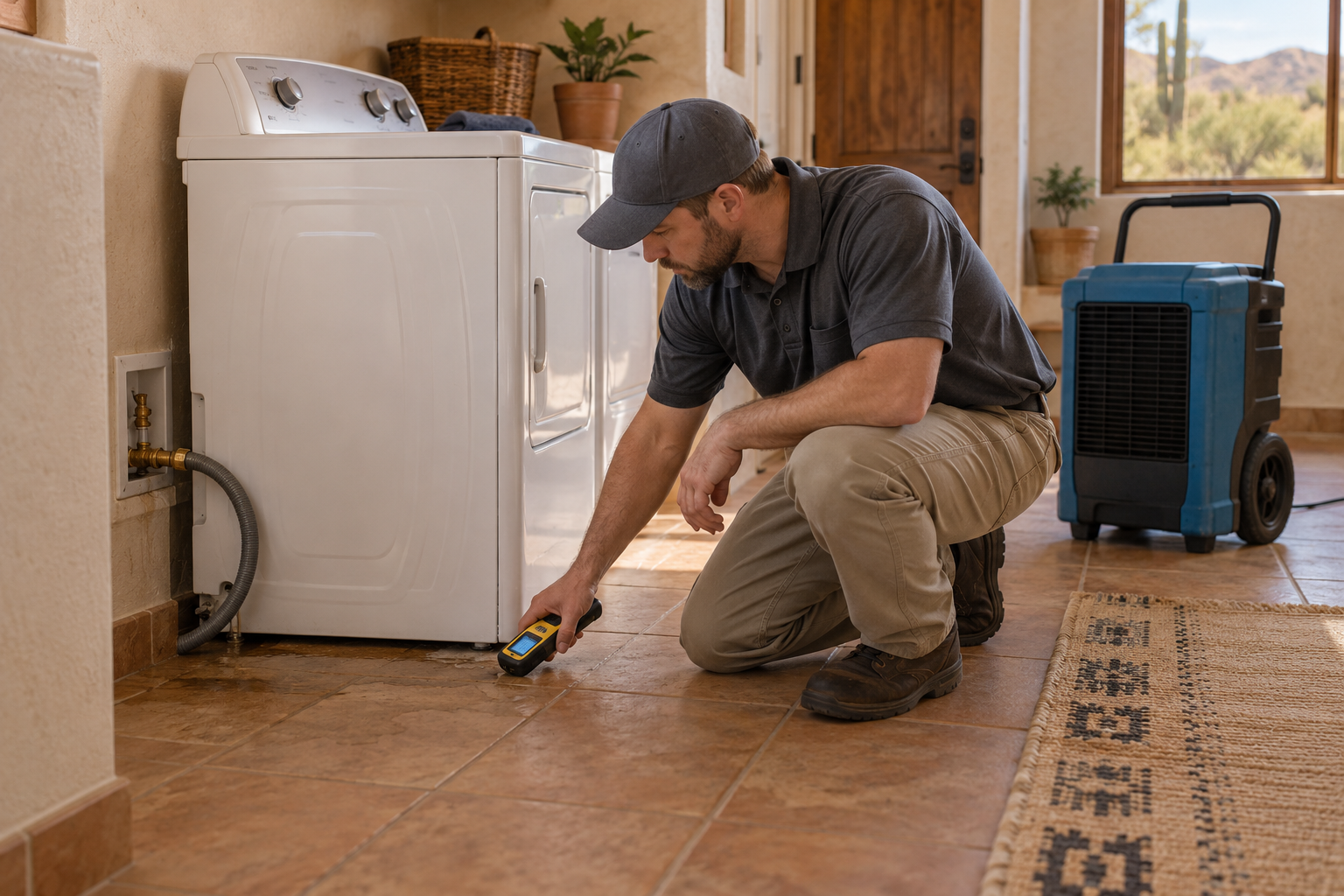

How Is Sewage-Contaminated Floodwater Cleaned Up in Phoenix?
Sewage-contaminated floodwater requires an assessed cleanup plan that controls access, addresses the source, removes water and unsuitable materials, and cleans affected areas before appropriate drying and repair. It is not a routine mop-up job. Keep people away from the affected area and avoid spreading water or residue into clean spaces while qualified help is arranged.
Establish boundaries before disturbing the affected area
The first concern is preventing additional exposure and spread. People moving through the water can track residue beyond the original area. Unplanned movement of furnishings or debris can create the same problem. Access should be controlled while the source and extent are assessed.
CDC floodwater guidance identifies sewage, chemicals, sharp objects, and electrical hazards among the possible concerns. The water's appearance or smell is not a reliable way to decide that it is safe.
Do not enter standing water to reach a breaker or begin cleanup. Immediate electrical or life-safety threats need the appropriate emergency response. Once those concerns are addressed, the restoration and source-repair work can be coordinated without asking occupants to take unnecessary risks.
Source correction and extraction have different roles
A plumber or other appropriate professional may need to address the cause of a backup. Removing water from the property does not necessarily correct that source. The plan should identify who handles the underlying problem and whether additional water could enter during the cleanup.
Professional sewage-contaminated flood cleanup then addresses the affected environment. The equipment, access route, and disposal approach need to fit the assessed conditions rather than simply move water from one location to another.
Ask the crew to explain what can start safely, what depends on another trade, and which areas remain restricted. A clear sequence is especially useful during a Phoenix storm when travel, utility conditions, and access may also be changing.
Porous materials need a separate retention decision
Some affected materials may not be practical to clean adequately. The condition of carpet, padding, insulation, wallboard, and other porous components must be considered separately from hard accessible surfaces. Retaining a material because it looks better after extraction is not a complete contamination assessment.
EPA's water-damage table explicitly limits its routine salvage guidance to clean water and distinguishes contaminated situations. It also cautions against using fans before sanitary conditions are established.
Before removal, the team should document the findings and explain the proposed scope. Cleanup and sanitization should identify what is removed, what is cleaned, and what remains to be assessed rather than promise that one treatment makes every material suitable to keep.
Drying follows the contamination work, not instead of it
Drying reduces unwanted moisture, but it does not automatically remove the contaminants that arrived with the water. Similarly, applying a cleaning product does not establish that concealed layers have dried. Both questions need attention before reconstruction.
After the appropriate cleanup stage, structural drying can address remaining materials with suitable monitoring. The crew should explain the conditions required before equipment operates and what evidence will support the handoff to repairs.
Ask about remaining restrictions, affected contents, and any unresolved source issue at each stage. A completed floor surface should not be the only measure of recovery if concealed materials or connected areas still require work. Coverage and claim requirements should be discussed separately with the insurer.
Related questions
Can I use household fans after a sewer backup?
Do not direct air across suspected contamination. EPA cautions against fan use before sanitary conditions are established. An assessed cleanup plan should determine when and how drying equipment can be used.
Will disinfectant make soaked carpet safe to keep?
Do not assume that. Contamination within a porous, layered material may not be resolved by a surface application. The carpet, backing, pad, and supporting floor need their own assessment.
Can cleanup start before the sewer cause is repaired?
Some safety and stabilization work may be possible, but the sequence depends on conditions. The restoration team and source-repair professional should coordinate so that ongoing entry does not undermine the cleanup.
Get help with contaminated floodwater in Phoenix
Phoenix Flood Restoration provides 24/7 assistance for sewage-contaminated flood damage. Tell our team about the source, ongoing entry, and any visible hazards so that access, cleanup, and the next recovery steps can be planned appropriately.
Request Service or call (602) 902-1375.