
How Is Standing Floodwater Removed From a Phoenix Property?
Floodwater is removed with extraction equipment selected for the water volume, debris, access, and site conditions. Safe power, source control, and contamination precautions come first. Bulk-water removal is followed by assessment of moisture retained in materials; extraction alone does not establish that the building is dry.
The equipment matters, but the sequence matters more. A pump or extraction wand can remove visible water while an active source continues feeding the loss or concealed layers remain wet. A Phoenix restoration plan should connect the initial removal with the condition of the materials left behind.
Establish the conditions before choosing equipment
The crew needs to know whether water is still entering, where it came from, and whether access or electricity presents a hazard. Outdoor runoff, sewage, and a recent supply leak can require different handling. Do not enter standing water to operate a breaker or plug in a vacuum.
The CDC's flooded-home guidance includes precautions for electrical systems and powered equipment. If safe power or structural access is not established, a specialist may need to address that first. Extraction urgency does not eliminate those requirements, and a crew should explain any condition delaying entry.
Match removal methods to volume, debris, and access
A deeper accumulation, a broad shallow layer, and water trapped at a floor edge present different extraction challenges. Debris can affect how water is collected, and a long route to the work area can change setup. The assessment should identify those constraints rather than treating every property as the same equipment layout.
The crew may use more than one removal approach during the project. Initial bulk extraction and detailed surface extraction serve different purposes. Ask what is being removed at each stage and how unaffected areas will be protected from hoses, traffic, and handling. Equipment should support the scope, not become a substitute for explaining it.
The CDC identifies water-transfer pumps, sump pumps, and wet-dry vacuums as standing-water removal options after an electrician establishes safe electrical conditions. A pump transfers accumulated liquid through a hose; vacuum extraction collects water through a suction tool. The tool, intake, and collection arrangements must suit the actual debris and access. These examples explain the methods, not permission to operate equipment in unassessed floodwater.
The discharge or collection route also needs planning. Moving water out of the building does not make every nearby drain an appropriate destination. Contamination and applicable disposal requirements remain relevant. Once accessible liquid is removed, a floor-edge inspection and moisture checks identify what the extraction tool could not reach. That handoff explains why the next equipment may be drying equipment rather than another water-removal pass.
Account for contamination and deposited material
Outdoor floodwater can carry pollutants and sediment. The CDC warns that floodwater may contain sewage, chemicals, and sharp debris. Removing liquid does not remove every deposit or make porous materials clean. Necessary cleaning and material decisions remain part of the plan.
Avoid walking through the area or moving wet contents into clean spaces while extraction is underway. A defined work boundary helps control spread. The provider should explain how debris and affected materials will be handled and what conditions must be met before air movement is introduced for drying.
Measure what remains after the puddle disappears
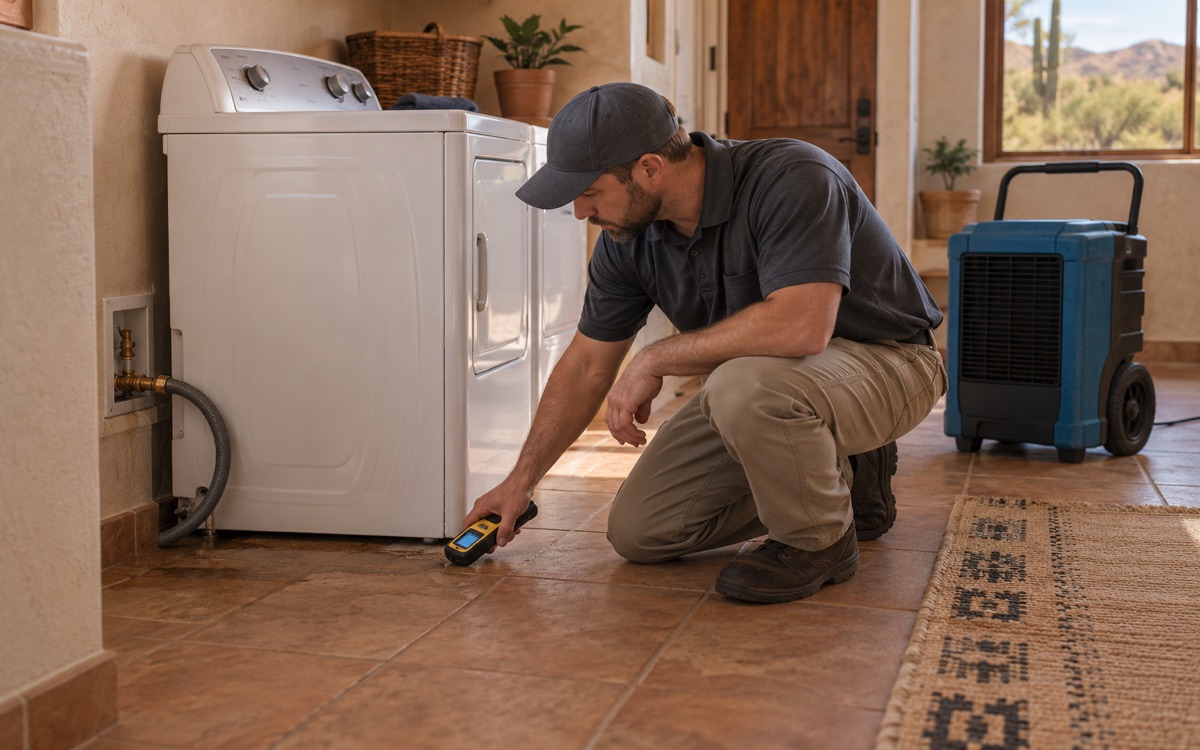
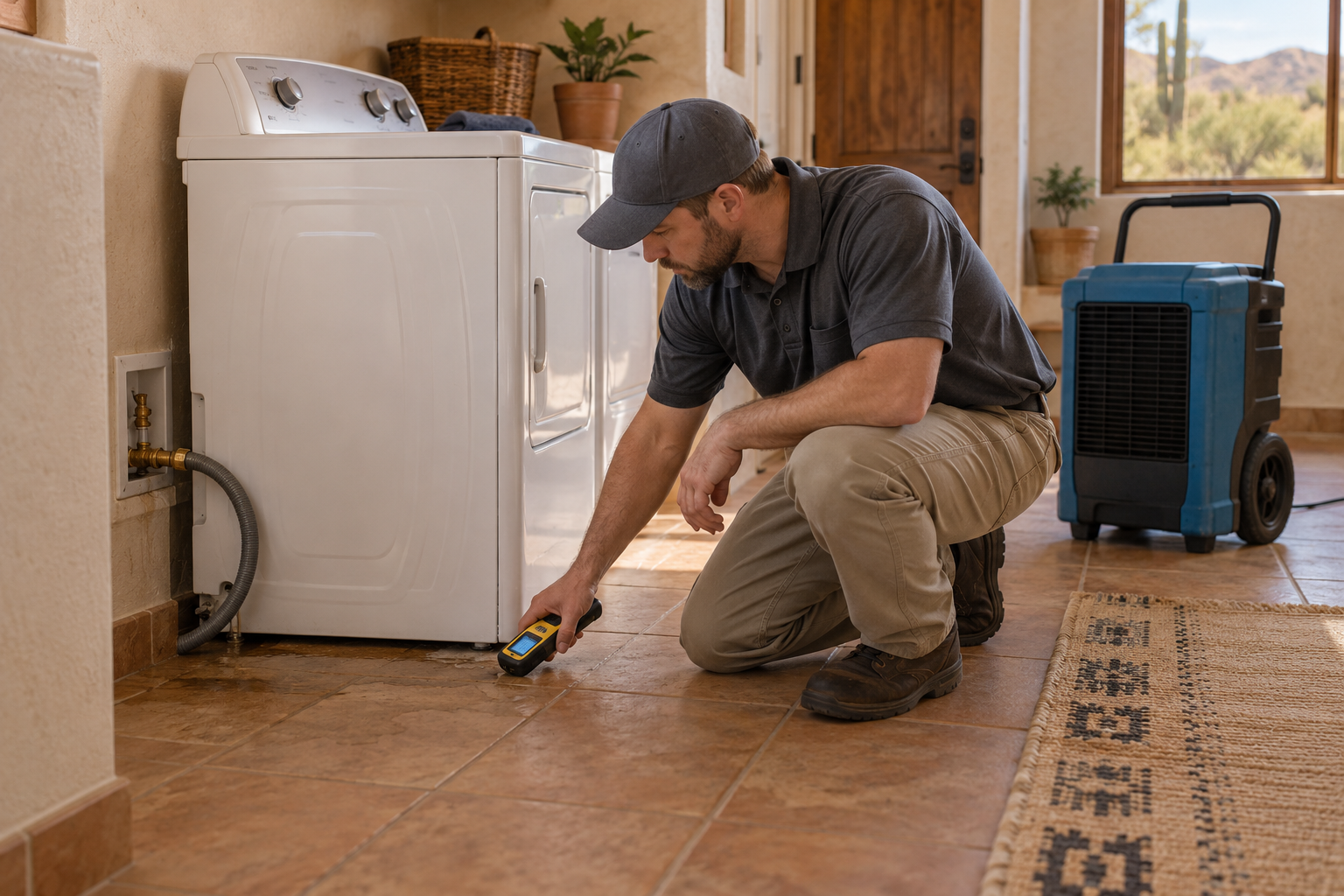
Water can remain in wall bases, underlayment, insulation, and other assemblies after exposed surfaces are extracted. Moisture checks help determine the extent and whether materials can be dried in place. Some areas may require selective access or removal because water cannot be reached or the material is not recoverable.
Phoenix's dry outdoor climate does not prove those layers are ready. The next phase may involve dehumidification, directed air movement, and repeat measurements under controlled conditions. Ask how the initial readings will be recorded and how completion will be determined. The useful outcome is a documented recovery path, not merely a floor that no longer has standing water.
Questions about Phoenix floodwater extraction
Does extraction include drying?
They are distinct steps that may be included in one project. Extraction removes bulk liquid; drying addresses moisture retained in recoverable materials and requires its own checks.
Can the same equipment handle muddy runoff and a clean leak?
Equipment and precautions depend on debris, source, volume, and conditions. Do not assume a tool suitable for one incident is appropriate for another.
Why might water remain after the first extraction pass?
It may be trapped, migrating from another area, or entering from an unresolved source. The crew should reassess the cause rather than treating repeated water as automatically normal.
Remove floodwater and identify what remains in your Phoenix property
Tell us the known source, visible depth, and access conditions so extraction can be planned together with the next assessment and drying steps.
Floodwater Extraction and Moisture Detection & Mapping connect standing-water removal with concealed-moisture checks. Request Service or call (602) 902-1375 to discuss the affected property.