
How Long Does Flood Damage Restoration Take in Phoenix?
Flood restoration has no reliable one-size-fits-all duration. The total project depends on the water source, affected materials, contamination, drying progress, repair scope, access, and any required trade work or approvals. Water removal may be only the first stage. Ask for a phased schedule with clear dependencies rather than a single completion date before the property is assessed.
Separate arrival, stabilization, drying, and repairs
A rapid response does not mean the entire loss will be repaired within the same timeframe. Arrival is the start of assessment and appropriate action, not completion of cleanup or reconstruction. Those milestones should be discussed separately.
Phoenix Flood Restoration provides 24/7 service with a 25-minute on-site response target, subject to access and conditions. That target should not be confused with a promised drying duration or a date when every finish will be restored.
Mitigation addresses the immediate damage-control stage. Later work may involve contents, retained-material drying, source correction, and reconstruction. Ask which stage the current estimate and schedule actually cover.
Drying follows material progress rather than a fixed clock
The type of assembly, the amount of moisture, access to affected layers, and operating conditions influence drying. Repeated checks help determine whether the plan is working and whether it needs adjustment. A dry-looking surface does not establish that every layer is ready.
EPA recommends drying flooded materials as quickly as possible, ideally within 24–48 hours. That is urgency guidance for wet materials, not permission to wait before seeking help or a promise that a complete restoration project will finish in that interval.
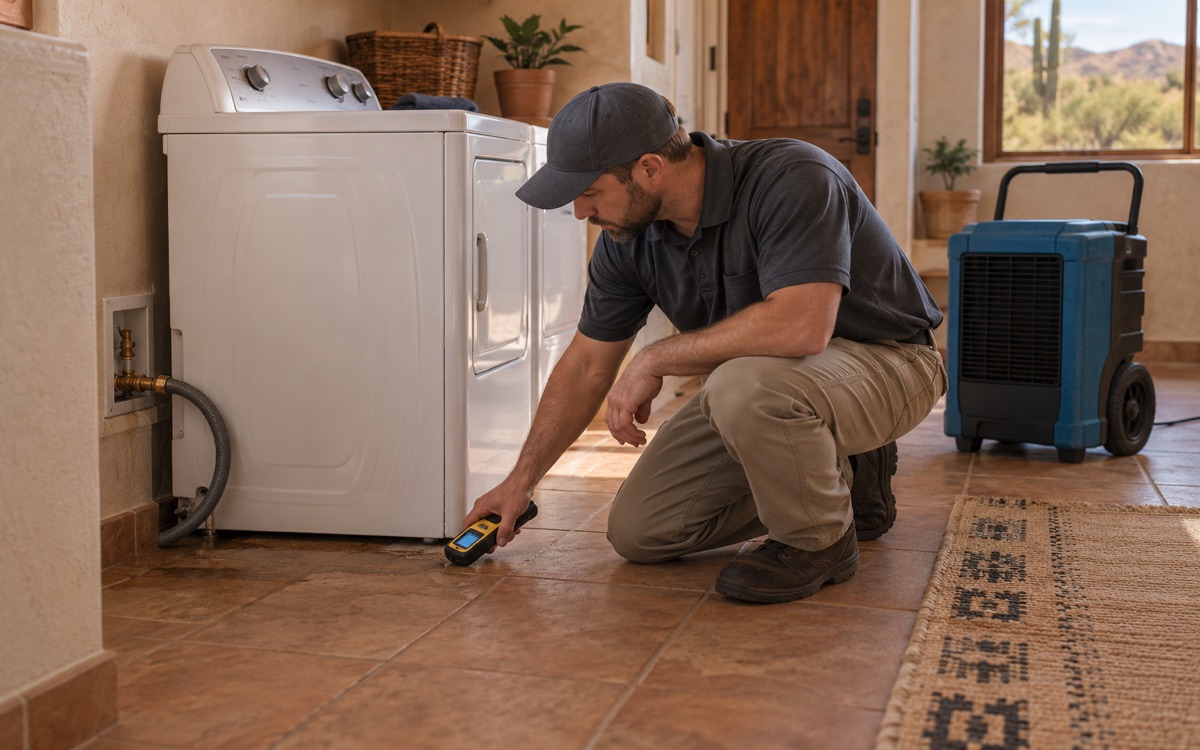
During structural drying, ask what readings are changing and what condition must be reached next. That gives a better understanding of progress than counting equipment days without knowing what remains wet.
Repair duration depends on what the assessment reveals
A small finish repair and a project involving concealed materials, utilities, and multiple trades have different schedules. Replacement product availability, matching decisions, access arrangements, and approvals can also affect the sequence.
The scope may become clearer after controlled access reveals concealed damage. That does not mean every initial estimate was wrong; it means the team should distinguish known work from unresolved conditions. Ask how new findings will be documented and how they affect cost and timing.
Reconstruction should have its own plan once the prerequisites are understood. A restoration schedule that ends at equipment removal may omit the part of the project the owner most wants completed.
Track milestones that describe a real change in condition
Useful milestones include source correction, completion of appropriate cleanup, documented drying readiness, required trade completion, and agreed repair closeout. Each should explain what is done and what remains outstanding.
If the property is affected by another storm or fresh leak, report it promptly so the schedule can reflect the new condition. Phoenix weather and access can affect logistics, but a delay should still have a clear explanation rather than a vague claim that restoration always takes time.
Keep project records and communicate with the insurer about its requirements. FloodSmart's claims guidance emphasizes documentation and coordination; a claims timeline is not identical to the physical repair timeline. Ask both parties which decisions are pending and who owns the next action.
For occupied properties, discuss access and use restrictions at each milestone as well. A stage may improve conditions without making every affected area ready for normal use, and that distinction should remain clear throughout the schedule.
Related questions
Does 25-minute response mean the water is removed in 25 minutes?
No. It is an on-site response target, not a duration for extraction, cleanup, drying, or repairs. The work plan follows assessment and the conditions at the property.
Can hot Phoenix weather guarantee faster drying?
No. Concealed layers, the building assembly, indoor conditions, and the water source still matter. Measured progress should guide the drying decision rather than outdoor temperature alone.
What should I ask if the completion date changes?
Ask which new finding or dependency changed, what work remains, who is responsible, and when it will be reassessed. A specific explanation makes an updated schedule more useful.
Get a realistic Phoenix flood recovery schedule
Phoenix Flood Restoration can assess the loss and explain the stages ahead, including the factors that remain uncertain. Request a plan that distinguishes immediate help from drying and reconstruction so you can follow meaningful progress toward completion.
Request Service or call (602) 902-1375.