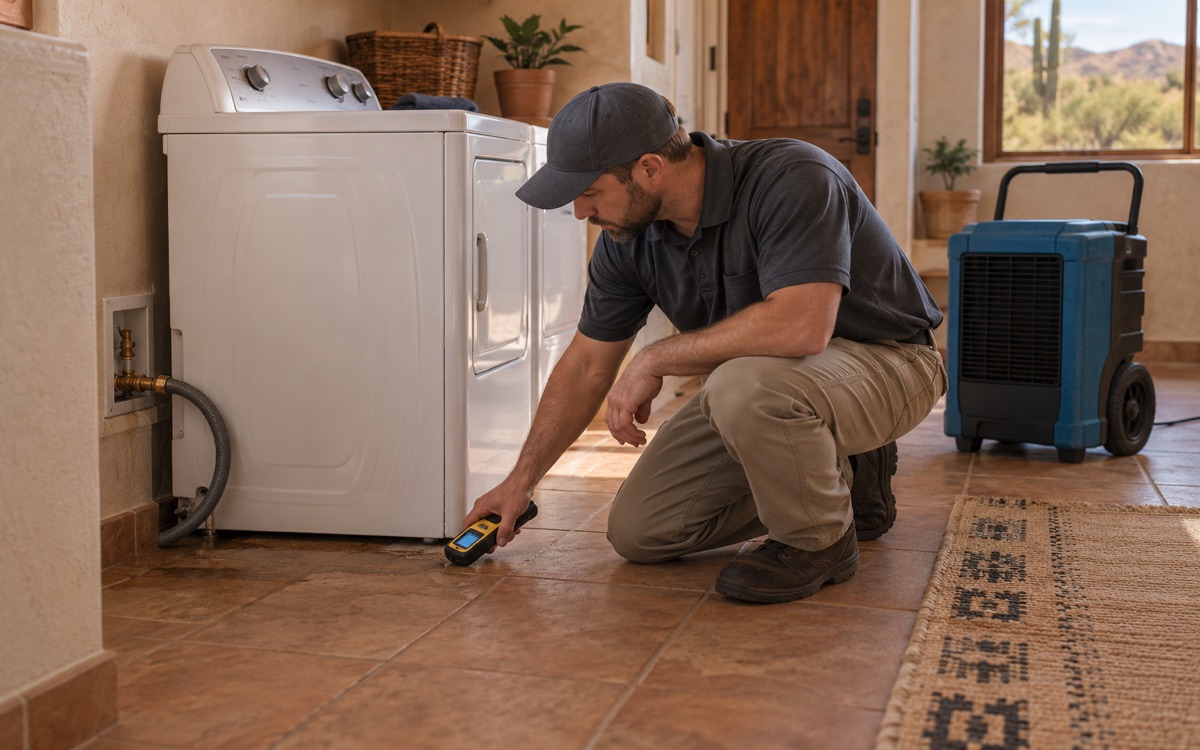

How Long Does Floodwater Extraction Take in Phoenix?
Floodwater extraction time depends on water volume, whether the source is controlled, debris, access, equipment setup, and the areas that need detailed removal. A reliable estimate follows assessment. The end of extraction is not the end of drying or reconstruction, so ask which phase any quoted timeframe describes.
A customer asking how long the water will take to remove often also wants to know when the property will be usable. Those are different milestones. Separating them makes the answer clearer and avoids treating a quick visible improvement as a promise that the entire loss is resolved.
Volume matters, but an active source can change the calculation
Removing a fixed accumulation is different from removing water that continues to enter. A failed supply component, recurring runoff, or another unresolved source can replenish the affected area. Source repair may involve a plumber, roofer, utility, or drainage specialist alongside the restoration team.
Give the crew the discovery time and any known shutoff or repair information. Do not estimate a precise volume if you do not know it; visible depth and extent are more useful observations. If water returns during extraction, the plan should identify why. Repeated removal without understanding the input may not produce a stable condition.
Setup and access are part of the work
Equipment needs safe access and appropriate power. Stairs, long hose routes, restricted parking, building security, and multiple affected levels can influence the setup. A Phoenix storm may also leave streets or driveways unsafe. The National Weather Service advises against crossing floodwater, including when reaching a damaged property.
A response target refers to arrival under workable conditions, not an extraction completion guarantee. Ask when the crew can provide a better phase estimate after seeing the site. That estimate should account for access constraints instead of assuming that every minute on the property is spent actively collecting water.
Debris and concealed pockets require additional attention
Muddy runoff can leave sediment, while fixed assemblies or floor transitions can hide water that is not reached by an initial pass. The crew may need to remove bulk water first and then address edges or newly accessible areas. Those steps should be explained so a changing work area does not look like unexplained delay.
Contamination can also affect the sequence. The CDC identifies pollutants and debris as potential floodwater hazards. Removal methods and protective measures should fit the source. A clean-looking surface after extraction may still require cleaning or material removal before drying proceeds.
Ask for the next milestone, not one total guess
Useful questions include when bulk water is expected to be removed, when the affected boundary will be confirmed, and when the drying plan will be reviewed. Each milestone has different dependencies. A new hidden condition may change one without invalidating everything already completed.
Once liquid is removed, moisture can remain in flooring layers, wall cavities, and other materials. Drying depends on material condition and measured progress rather than the duration of extraction. Phoenix heat does not establish completion. Ask how the provider will communicate updates and what findings would change the estimate, especially before making arrangements to occupy the affected space or schedule permanent repairs.
A phase estimate should specify its starting condition. An extraction estimate made before utilities are cleared may exclude the time needed to establish safe power. One made before a source is stopped may need revision if water continues entering. Asking which conditions the estimate assumes gives you a usable planning tool and makes later updates easier to evaluate than an unexplained total number of hours.
Questions about extraction timing in Phoenix
Can a crew promise removal time over the phone?
It can discuss likely factors, but a dependable estimate requires site conditions. Volume, debris, source status, and access are difficult to establish fully from a call.
Does a 25-minute response mean the water will be gone in 25 minutes?
No. Arrival targets and work duration are separate. Extraction, cleaning, drying, and repairs each depend on the assessed conditions.
Why is equipment still needed after standing water is gone?
Extraction does not remove all moisture held in materials. Controlled drying and monitoring may still be needed before the assembly is ready for repair or normal use.
Get a realistic extraction plan for your Phoenix flood loss
Describe the visible water and whether it is still entering so the first assessment can establish meaningful removal and follow-up milestones.
Floodwater Extraction and Moisture Detection & Mapping establish the removal scope before estimating later phases. Request Service or call (602) 902-1375 to discuss the affected property.