
How Soon Can Mold Become a Concern After Flooding in Phoenix?
Mold becomes a concern whenever materials remain damp after flooding, so the priority is prompt, safe assessment and drying. EPA recommends addressing water-damaged areas and items within 24–48 hours to help prevent growth. That is guidance, not a guarantee: mold can occur sooner, and it does not inevitably appear at one exact deadline in every building.
Use the timing guidance as a reason to act
Waiting for a visible patch before addressing wet materials can leave the underlying moisture problem unresolved. The practical purpose of the 24–48-hour guidance is to encourage prompt action, not to create a safe waiting period.
EPA's mold and moisture guide emphasizes correcting the water problem and drying affected materials. The appropriate first actions still depend on safe entry, electrical conditions, contamination, and access.
If the Phoenix property is unsafe to enter, do not take a risk to beat a clock. Contact the appropriate emergency or utility service for immediate hazards, then arrange restoration help. Safe, organized work is more useful than rushing into contaminated water with household equipment.
The discovery time may not be the wetting time
An owner may notice a loss after materials have already been wet for an uncertain period. A stain, damp odor, or visible water does not always reveal when the problem began. Tell the assessor what is known and what is only an estimate.
The material and assembly also matter. An exposed surface may improve while a concealed layer remains damp. Different access and drying conditions mean that one part of the property cannot automatically represent the rest.
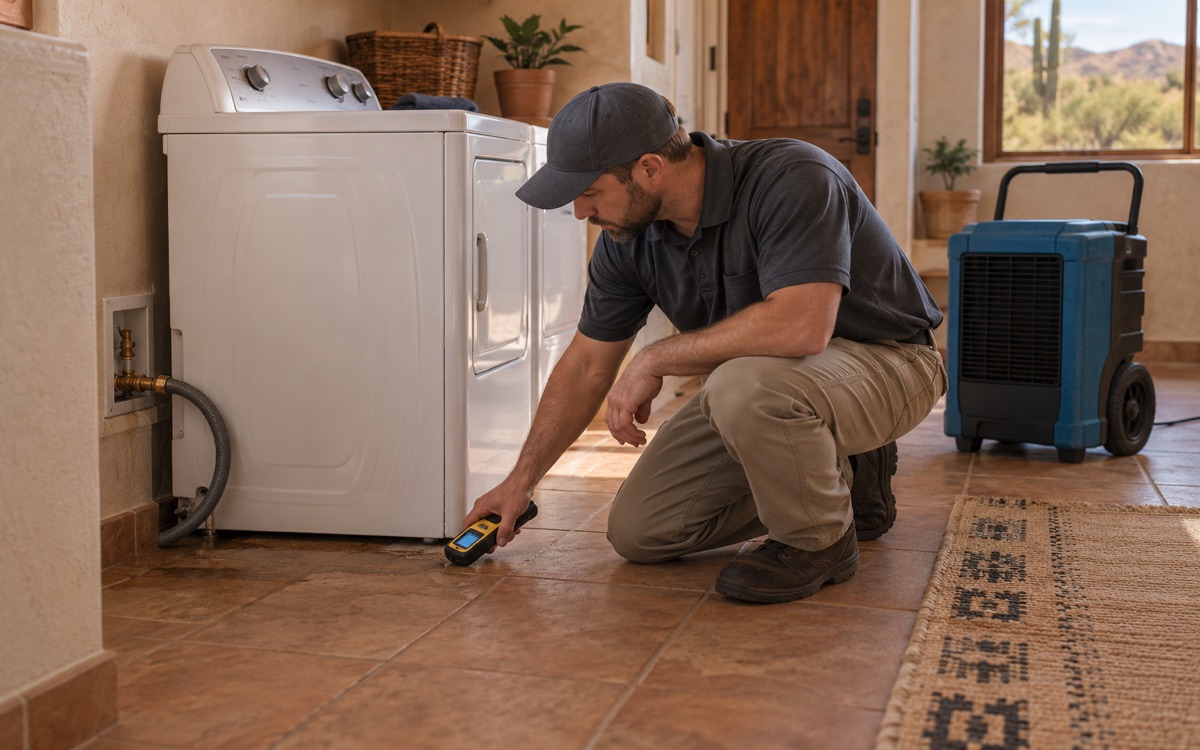
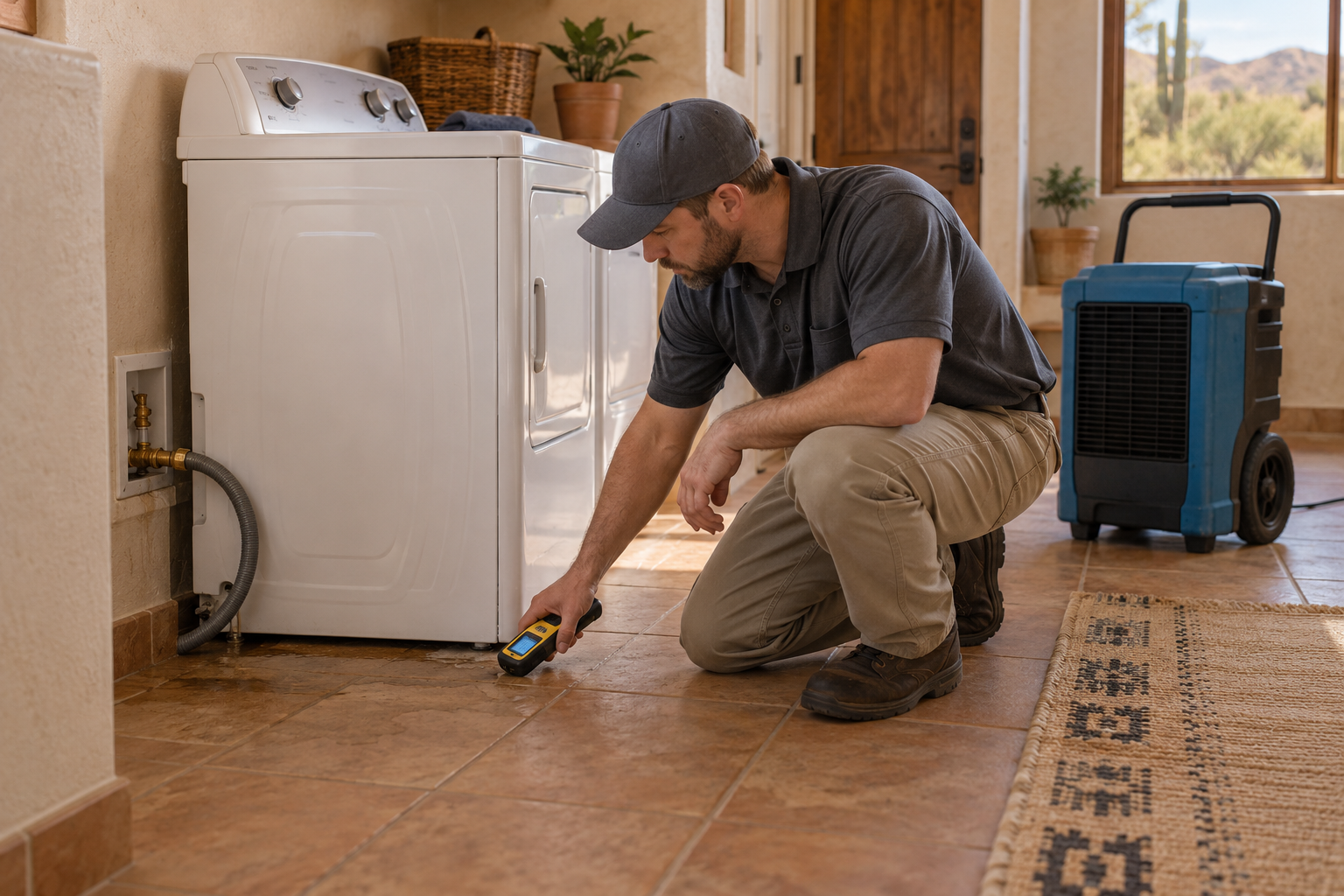
Moisture mapping helps identify where checks are needed and how the affected areas change. Phoenix's desert setting does not remove the need to verify indoor materials; outdoor heat is not proof that a cavity or underlying layer has dried.
Visible growth and odor need assessment, not guesswork
An unusual odor or mark can justify investigation, but neither should be used alone to diagnose the full problem. Avoid assuming the type, extent, or health significance of growth from color or smell. An assessment should focus on the source, affected materials, and appropriate next steps.
Do not disturb suspected growth or direct air across an uncertain contaminated area. EPA's material guidance cautions against fan use before sanitary conditions are established and distinguishes clean-water recovery from contaminated losses.
If findings indicate a remediation need, that should be explained as a specific scope. Flood damage remediation is not just an odor treatment or a promise that every surface can remain after it dries.
Document progress instead of relying on elapsed days
The record should show what materials were affected, how they were addressed, and what findings support the next decision. A project should not be considered complete simply because equipment ran for a standard number of days.
Ask about the remaining moisture, any inaccessible areas, and source correction. If a new leak or another storm affects the property during work, report it promptly; the assessment may need to change. A calendar does not distinguish old moisture from renewed entry.
Flood damage mitigation aims to limit further damage through a suitable response. It cannot guarantee that every property is mold-free. Clear findings and an appropriate follow-up plan are more useful than an absolute promise.
Related questions
Is my home mold-free if it dried within 48 hours?
That timing alone cannot prove it. EPA describes the interval as guidance, not a guarantee. The actual material condition and assessment findings determine whether further attention is needed.
Does mold always appear after 48 hours?
No. EPA's material guidance explicitly notes that growth does not always occur after that period. Do not use the threshold to diagnose a building or dismiss the need for prompt recovery.
Should I wait for a musty smell before calling?
No. Known wet materials deserve prompt attention even without odor. Describe the source, timing, and affected areas so the assessment can focus on the actual damage rather than wait for another sign.
Address Phoenix flood moisture before it remains concealed
Phoenix Flood Restoration provides 24/7 help assessing and managing flood damage. If materials are still wet or the exposure time is uncertain, request a plan for safe cleanup, drying, and any further remediation the findings support.
Request Service or call (602) 902-1375.