
Is It Safe to Stay in a Flood-Damaged Phoenix Home?
Do not assume a flood-damaged home is safe to occupy because the water is shallow or confined to one visible area. Electrical exposure, structural damage, contamination, affected ventilation, and access conditions must be considered. Follow evacuation orders and obtain appropriate professional assessments before remaining in a questionable property.
The decision is specific to the building and the people using it. A restoration company can describe the affected areas and proposed work, but a cleanup appointment is not a substitute for electrical, structural, or public-safety clearance. Phoenix heat can also make loss of safe cooling an important practical concern.
Check whether essential systems can be used safely
Water near wiring, outlets, appliances, or electrical equipment changes the occupancy decision. Do not operate a switch while standing in water or energize equipment that may have been affected. The CDC recommends an electrician check affected electrical systems before power is restored.
A safe home also requires workable access and essential services. Explain any power outage, water-service problem, or unusable exit to the relevant professional. The absence of sparks does not establish electrical safety. Avoid treating a single dry part of the building as automatically independent from wet systems serving the rest of it.
Consider contamination beyond the wet floor
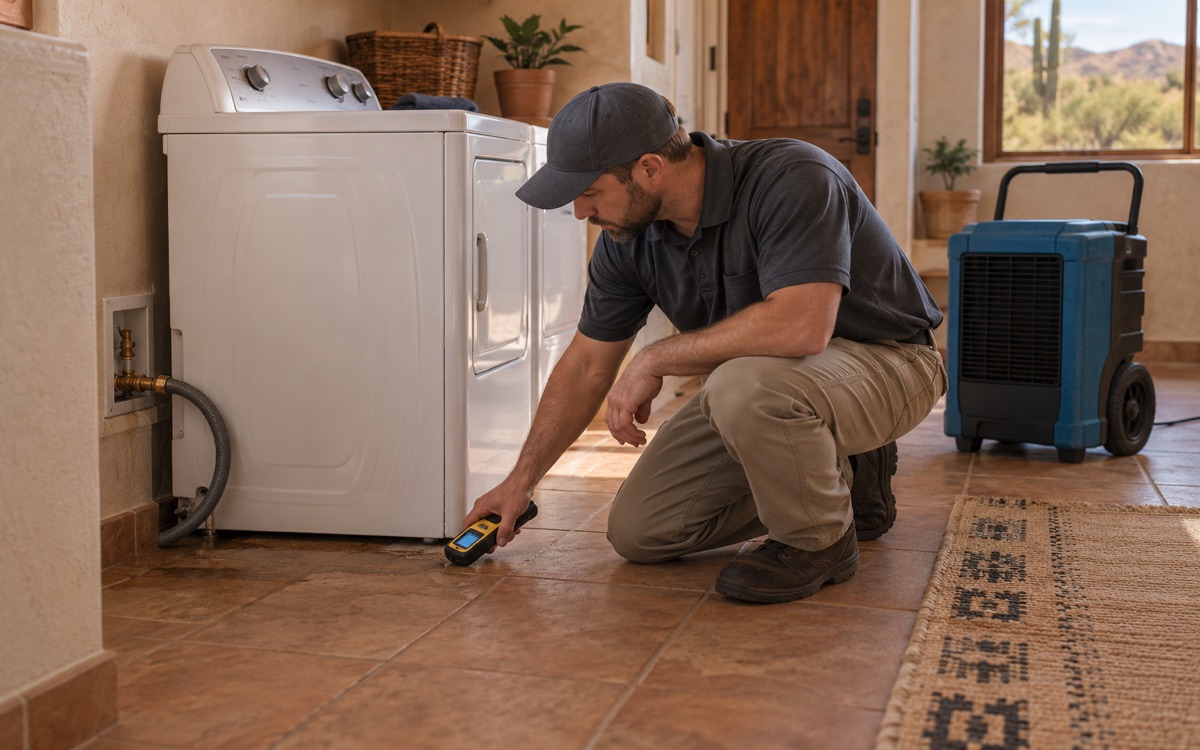
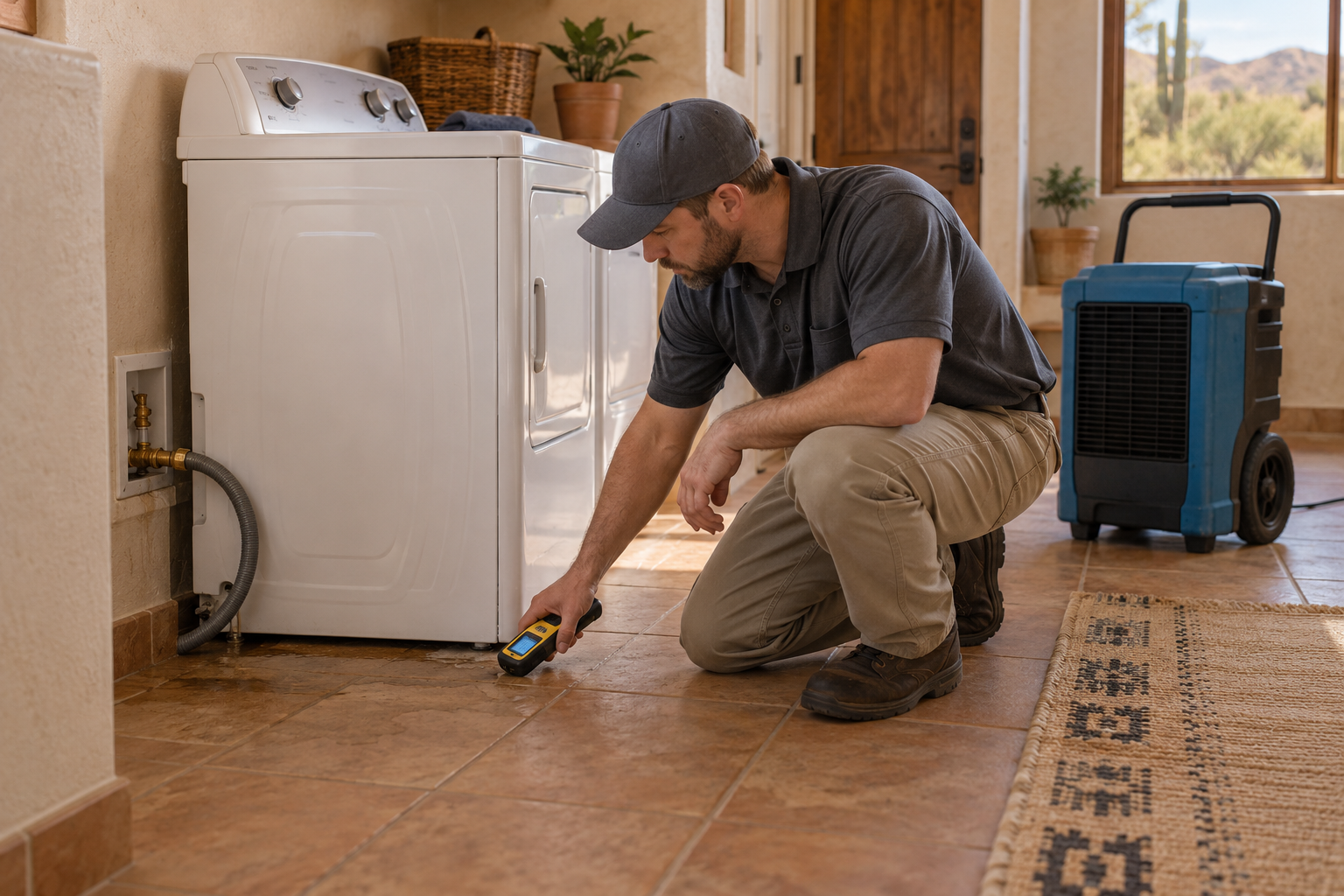
Outdoor runoff and sewage can introduce contaminants into materials and belongings. Tracking water through the building or moving wet items without a plan may spread the problem. An assessment should address where the affected boundary lies and whether occupants can remain separate from cleanup activities.
People may also have health circumstances that affect their tolerance for a disrupted environment. Discuss personal medical concerns with a healthcare professional rather than asking a restoration technician to make that judgment. The property assessment should provide useful facts about exposure, work areas, and ventilation so that occupants can make informed arrangements.
Do not use the cooling system without considering exposure
In Phoenix, staying somewhere without reliable cooling may be impractical, but switching on a flood-exposed system is not the solution. Flooded or potentially contaminated HVAC equipment needs appropriate evaluation. Ask whether the system itself, connected ducts, or its electrical supply could have been affected.
If work involves containment or material removal, discuss how air movement will be managed. A system that serves both clean and affected areas may influence the cleanup plan. Occupancy arrangements should reflect those actual connections rather than a simple statement that the damage is on the other side of a door. Temporary accommodation may be the safer practical choice.
Understand what an occupied restoration project would require
Some projects allow parts of a property to remain in use; others do not. Safe separation, accessible exits, equipment routing, noise, ongoing demolition, and the condition of essential systems all matter. Ask which areas are restricted, what work will happen next, and whether the plan changes overnight.
Get clear instructions about equipment and work-zone access. Do not move barriers or unplug drying units simply to make a space easier to use without speaking with the crew. EPA's flooded-home guidance emphasizes contamination control and prompt drying. Those goals must be considered alongside the practical needs of anyone remaining on site.
Occupancy can also change during the work. Removal of damaged materials may expose an area that was previously covered, and equipment or containment may restrict a route that was available earlier. A decision about staying should therefore be reviewed when the work phase changes. Keep sleeping arrangements, essential access, and communication needs separate from the question of whether the visible floor has been extracted.
Questions about remaining in a flooded Phoenix property
Can I stay if only the flooring looks wet?
Appearance alone cannot establish safety. Water may have reached wall bases, electrical components, or concealed layers. An assessment should define both the visible and hidden affected areas.
Does a dry odor-free area mean the home is safe?
No. Odor is not a reliable clearance test for contamination, electrical damage, or hidden moisture. The decision needs evidence about the specific hazards and building systems.
Who decides whether I need temporary accommodation?
Public authorities may require evacuation. Otherwise, decisions involve the actual property findings, relevant specialists, personal needs, and insurance arrangements. Ask your insurer about accommodation coverage; do not assume it applies.
Find out what your Phoenix property needs before you stay
Tell us whether anyone is occupying the building and which utilities or access routes may be affected so the restoration assessment addresses those concerns.
Residential Flood Restoration and Moisture Detection & Mapping help identify the affected areas and necessary work boundaries. Request Service or call (602) 902-1375 to discuss the affected property.