What to Do When Monsoon Runoff Enters Your Home
The rain can stop before the water stops moving. A homeowner might see the street drain quickly while water continues to collect against the garage, or find muddy streaks under the patio door after the yard has already drained. When runoff enters the house, the line between a landscaping problem and an indoor cleanup job can disappear in minutes.
Work through three decisions in order. First, decide whether it is safe to approach the property. Then determine where the water went and what it touched. Finally, work out how to stop the same route from carrying water indoors again. Photos and notes taken from a safe place can help all three decisions.
Keep clear of runoff, even after the rain eases
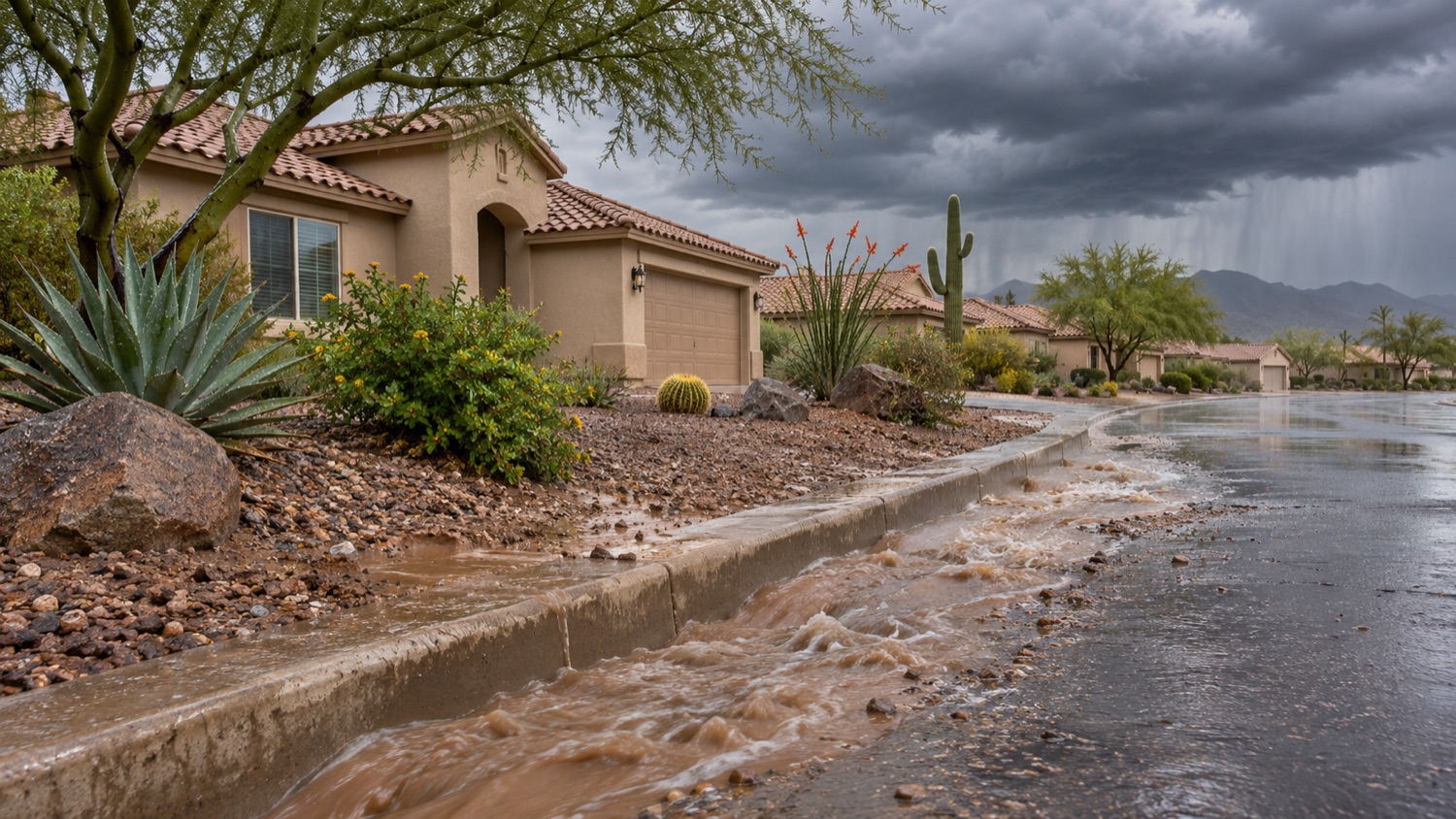
A wash, underpass or low spot may be carrying water from rain that fell somewhere else. Stay out of water running through the street, across a driveway or around the building. The road surface, grates and the edge of the pavement can be hard to see, and it takes surprisingly little depth for moving water to make a crossing unsafe. Follow closures and the instructions of local emergency officials. The National Weather Service storm summaries show how flash flooding can coincide with other hazards, including strong winds and poor visibility.
Move people and pets away from the affected area without crossing water. If an evacuation order applies, follow it. If water has reached receptacles, appliances or electrical service equipment, or if you see signs of structural damage, stay outside and arrange for qualified assessment. A dry route to the garage door does not make it safe to walk into a flooded garage. Never step into water to reach a breaker.
Create a record of the route water took
Once conditions are safe, start with wide photographs from dry vantage points. Capture the side of the house facing uphill, the driveway where it meets the street, patio thresholds and any paths of silt across hardscape. A continuous streak of mud can show where water travelled even when the deepest puddle has disappeared. Photograph any drift of leaves or small debris against a wall before anyone hoses it away.
On the interior, note where the water was first spotted and which rooms share walls with that spot. If a sliding door opens onto a sunken living room, sketch the direction the floor falls so the restoration team can check the far end as well as the doorway. Write down when the rain started, when water came in, whether flow continued after the rain ended and whether anyone moved belongings. Estimate times if you need to and label them as estimates. Keep original files and receipts for discussion with your insurer.
Avoid attributing everything to a single source too early. Wind-driven rain can enter upstairs around an opening while surface runoff enters downstairs through the garage. A ceiling stain and a muddy floor may represent two separate routes. Report both and let the inspections establish how they connect.
Treat outdoor floodwater as contaminated
Water that crosses soil, roads or a yard may carry bacteria, chemicals or sewage. Clarity and smell cannot tell you whether it is safe. Keep children and pets out of affected rooms and call a restoration professional for contaminated or extensive flooding. EPA's flood cleanup guidance covers safe re-entry, cleaning and complete drying. Electrical and structural concerns need the appropriate qualified trade before cleanup starts.
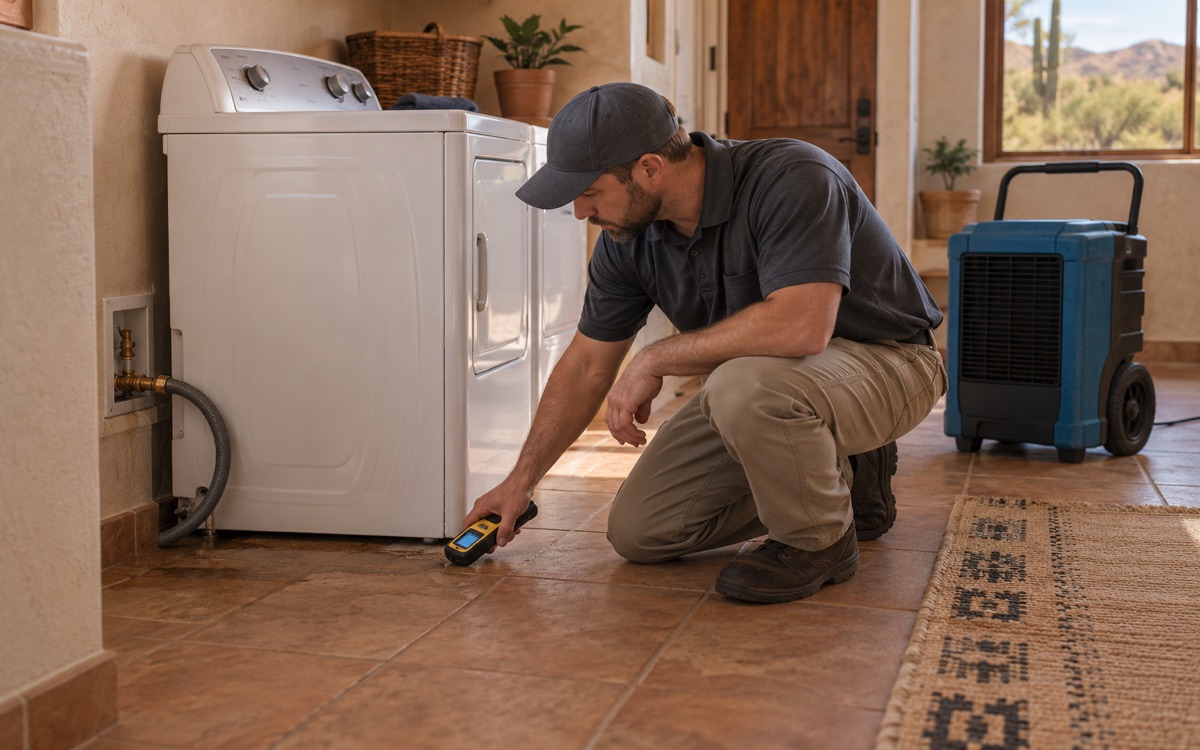
Explain to the restoration team that water came from outside and say whether a sewer backup is also suspected. This helps them plan access, what equipment can go where, which items need separate handling and how to avoid tracking silt into clean rooms. Do not carry wet boxes through the house in an effort to clear the floor. If an item is especially important, photograph it from a safe distance and flag it for the crew.
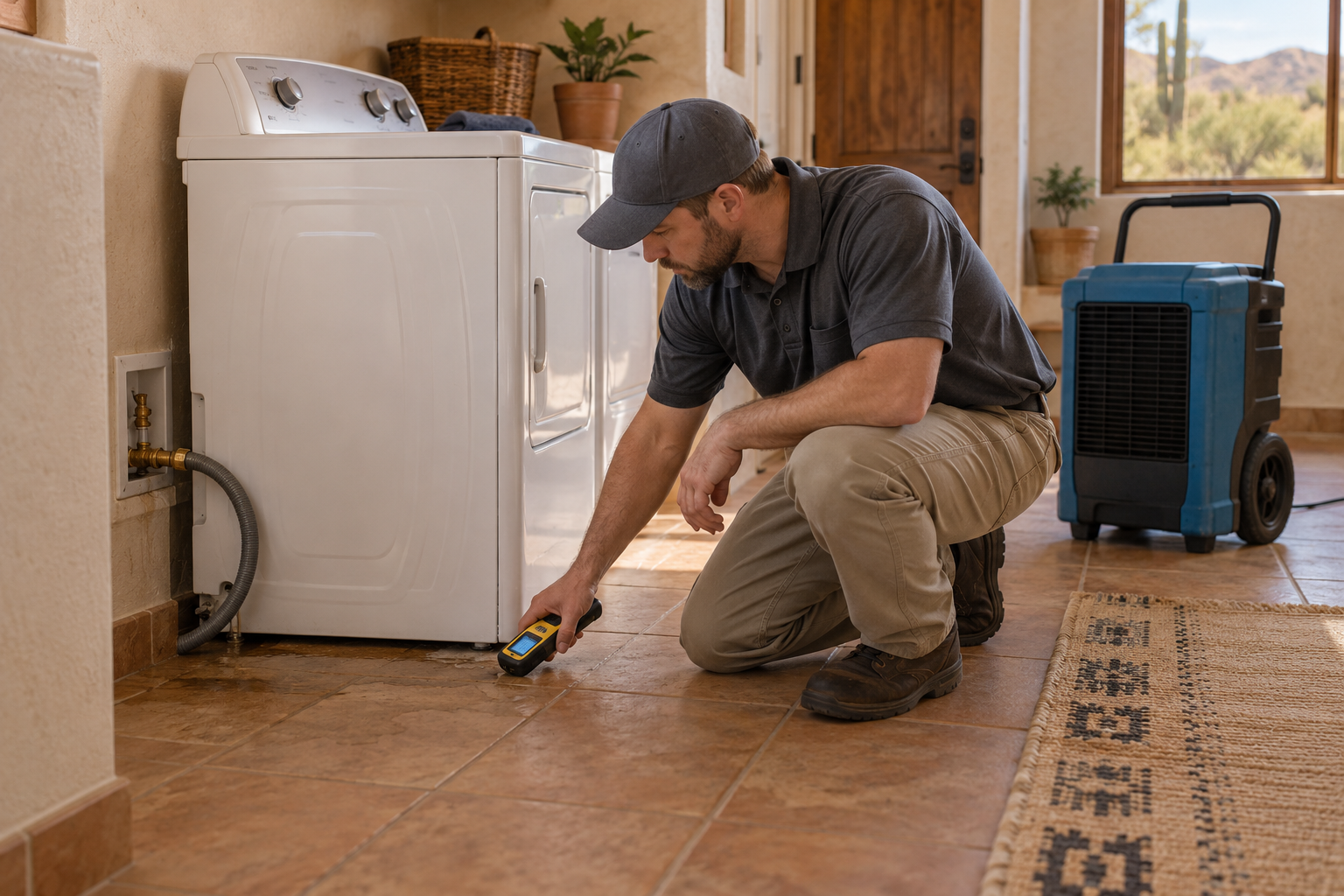
A flood damage restoration guide can help you prepare the details a crew needs before it arrives. Note where water entered, whether it picked up mud or debris, and whether it reached shared walls or electrical equipment.
Ask what the crew will inspect behind the first room
Water that filled the edge of a tiled living room can reach drywall along the baseboards, run under an interior partition and collect under cabinets. In an attached garage, look beyond the front threshold. The wall shared with the living space, the doorway into the house and the bottom of any storage cabinets can all be affected even if most of the slab is easy to see and clean.
Ask for a room-by-room record of wet materials, the route into the house and any areas pending access. A useful record might note that the patio-side wall and adjacent closet have been checked, an inaccessible vanity toe kick is pending and the adjoining bedroom floor was compared with a dry reference area. That level of detail helps avoid paying twice to reopen freshly replaced trim.
Where outdoor water has soaked porous materials, removal may be necessary. Hard surfaces that can be cleaned still need attention at seams, edges and below attached finishes. A dry tile surface does not tell you whether the wood trim or the adjoining wall is ready to close. Ask how drying progress will be measured and how the results will be shared with whoever is doing reconstruction.
Trace the outdoor drainage problem before ordering a permanent fix
When the site is safe again, locate what sent water toward the opening. Was flow coming from the street down a sloped driveway, off the roof from an overflowing gutter, or across a neighbouring grade? Water that overwhelmed a clear drain calls for a different repair from water that bypassed a drain because the grate sat uphill of the puddle.
Follow accessible drains to confirm where they discharge. A grate over a clogged line, a pipe that drains at the foundation or a channel blocked by decorative rock cannot solve the problem by accepting more water at its opening. A drainage contractor can check elevations, obstructions and the route to an appropriate outlet. If the flow arrived from a street or public channel, report what you observed to the responsible local authority before changing grade or diverting water.
Look carefully at changes made since the prior storm season. New pavers can raise the outside surface relative to a door. A raised planting bed can interrupt a previous drainage path. A replacement gate with a low solid panel can trap debris and back water up behind it. These alterations may only become apparent under heavy rainfall. If a neighbour has a photograph from before the changes, compare the routes while you have both images handy.
When talking to the drainage contractor, describe the duration as well as the apparent depth. A quick pulse carrying branches and silt can overwhelm an inlet in a different way from a steady flow fed by a downspout. If you observed repeated surges, say whether they lined up with bursts of local rain. Where a property has more than one vulnerable opening, ask for a plan showing what happens when the first route is full. Protecting a garage threshold by sending excess water toward a lower patio door only moves the point of entry. A simple drawing can help the contractor and owner agree where the water can safely go.
Keep a one-page plan for the next storm
List the routes that deserve a check when conditions are safe: for example, the outflow from the patio drain, the garage threshold and the walkway beside the side gate. Keep the notes and photos with the property records, particularly if you rent the home out or a different person will be on site during the next storm. Move susceptible possessions off garage floors and store insurance records somewhere accessible away from the affected space.
When a repair is complete, record what changed and who did the work. Keep documentation of any outlet location, drainage maintenance, and repairs to doors or stucco. For the interior, request the final drying records and confirm which finishes were removed and rebuilt. If you see fresh moisture or sediment after a later storm, compare its location with your first photos before assuming the same opening has leaked.
Storm runoff moves quickly, and the visible puddle rarely tells the whole story. A safe first response, a clear record of the water's path and a separate plan for fixing that path each solve a different part of the problem. Together they give you a way to coordinate cleanup and make better decisions about the next storm.