
What Affects the Cost of Flood Restoration in Phoenix?
Flood restoration cost depends on the work the property actually needs: water removal, contamination control, affected-material decisions, drying, access, contents handling, and repairs. The visible area alone is not enough to price the loss. Ask for a written scope with quantities, assumptions, exclusions, and a clear process for additional findings rather than rely on a generic price range.
The source changes the cleanup requirements
A known clean-water incident and contaminated outdoor flooding may require different handling and material decisions. Source, exposure, and condition can affect what can remain, what needs removal, and how the work area is managed.
EPA's material guidance distinguishes clean-water recommendations from contaminated situations. A lower quote based on the wrong exposure assumption may not describe the same work as a more complete assessment.
For Phoenix monsoon damage, the fact that the water began as rainfall does not settle its condition after crossing ground or other surfaces. Ask the estimator what source assumption is being used and how it affects the proposed cleanup.
Access and handling change how much work is required
The same visible footprint can involve different amounts of work. Accessible water on an open surface differs from water beneath fixed cabinetry or several floor layers. The second situation may require investigation, careful access, material handling, and later reinstatement as well as extraction. Those additional tasks, rather than the stain's size alone, explain part of the cost difference.
Site logistics also matter. Equipment and removed materials need a safe route. Restricted access, occupied work zones, multiple levels, or a long route from the vehicle can affect setup and handling. The assessment should identify actual constraints, not attach a standard surcharge merely because a building is commercial or a loss occurred during a storm.
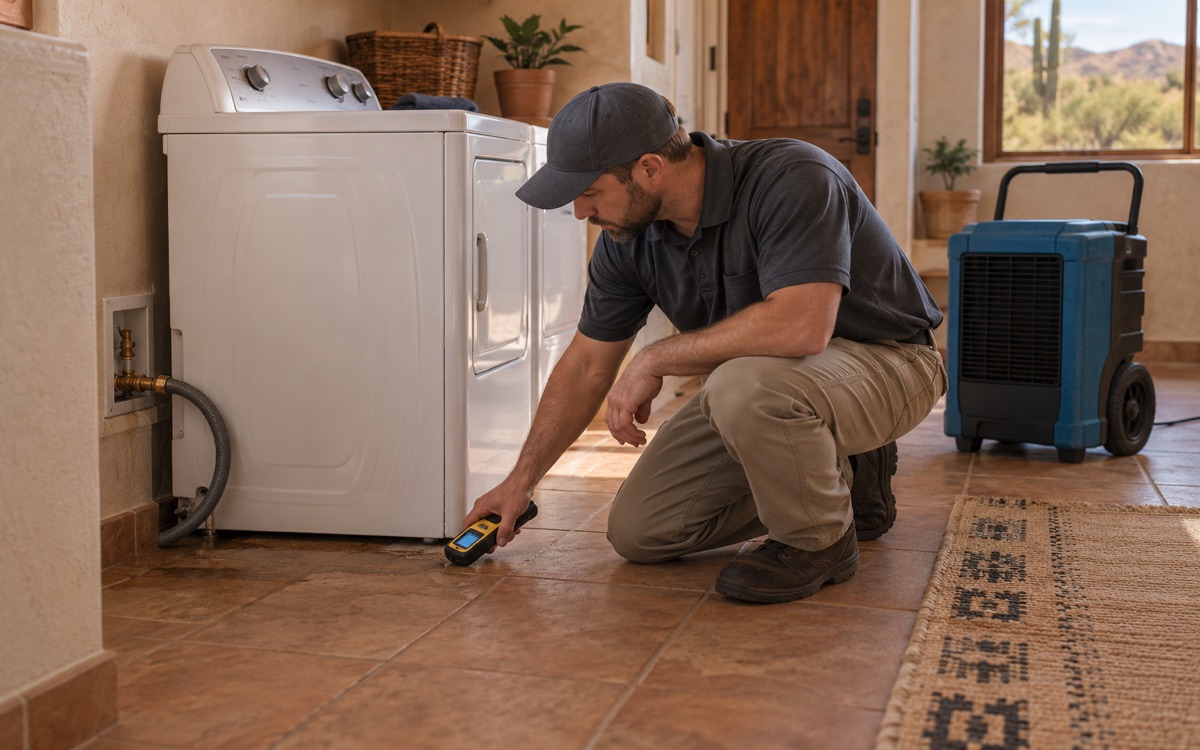
A flood damage assessment should connect each proposed task with a finding or stated uncertainty. Ask which layers were checked and whether selective access may reveal further work. That explanation is more useful than a price based only on the visible wet area.
Drying, contents, and reconstruction are separate cost components
Equipment, monitoring, contents handling, and permanent repairs may be included in one proposal or handled through separate scopes. The owner needs to know which is which before comparing totals. A mitigation-only estimate cannot fairly be compared with a price that includes finished reconstruction.
Structural drying should have a documented purpose and progress checks. Ask how duration and adjustments are handled rather than assume every property needs the same equipment for the same interval.
Repair work can also vary with products, matching, trade requirements, and approvals. Identify those items before treating a headline price as the final project cost. Clear exclusions are as important as clear inclusions.
Understand what can change the final amount
Some costs become clearer only after extraction or controlled access. New findings may expand the affected boundary, show that an attempted recovery is impractical, or identify a separate trade requirement. Ask which items are firm, which depend on an unconfirmed condition, and what finding would trigger a revision. An allowance and an agreed fixed task should not be presented as the same thing.
Timing can affect the amount of monitoring or the coordination needed, but an extended schedule deserves a specific explanation. The team should connect additional work to material progress, access, new water, or another documented dependency rather than treating every extra calendar day as equivalent work.
FloodSmart emphasizes loss documentation and insurer coordination. Keep the original and revised scope with the findings supporting each change. Direct billing does not determine coverage or erase contractual payment responsibilities. For a price comparison, compare the same recovery stages and assumptions rather than two totals that represent different projects.
Related questions
Can I get an exact price from a photo of the flood?
A photo can help with initial information, but it may not show concealed layers, contamination, access, or moisture. A reliable scope generally needs an assessment of the actual conditions.
Does a larger wet area always cost more?
Not necessarily in a simple proportional way. Material type, contamination, access, and repair needs can change the work significantly. The visible footprint is only one factor.
Will insurance pay every restoration charge?
That depends on the policy, claim, and insurer's review. A contractor's estimate describes proposed work; it does not decide coverage or guarantee reimbursement.
Understand your Phoenix flood restoration estimate
Phoenix Flood Restoration can assess the affected materials and explain the work behind the proposed cost. Request a clear scope for cleanup, drying, and repairs so you can make decisions based on the property findings rather than an unsupported price guess.
Request Service or call (602) 902-1375.