
What Happens After I Call a Phoenix Flood Restoration Company?
After your call, the restoration team gathers the property location, immediate concerns, known water source, and access information. Once safe access is possible, the crew assesses the damage, explains urgent work, and develops a plan for water removal, cleaning, drying, and any necessary repairs.
A good first conversation should leave you knowing what happens next, not just that someone is on the way. The exact work cannot be determined from a phone call alone. What can be established is the immediate priority, the information the crew needs, and how decisions will be communicated.
The intake conversation identifies urgent constraints
Expect questions about whether water is still entering, when you noticed it, and whether there are known electrical, structural, or contamination concerns. The dispatcher may also need gate details, parking information, and the name of someone authorized to provide access. Say when a fact is uncertain rather than making an estimate sound definite.
During a Phoenix storm, road closures and unsafe crossings may affect travel. The National Weather Service's monsoon guidance takes priority over any property-service timetable. A response target is not permission to cross floodwater. If someone is in immediate danger, the first call is to emergency services.
Arrival begins with conditions, not automatic equipment placement
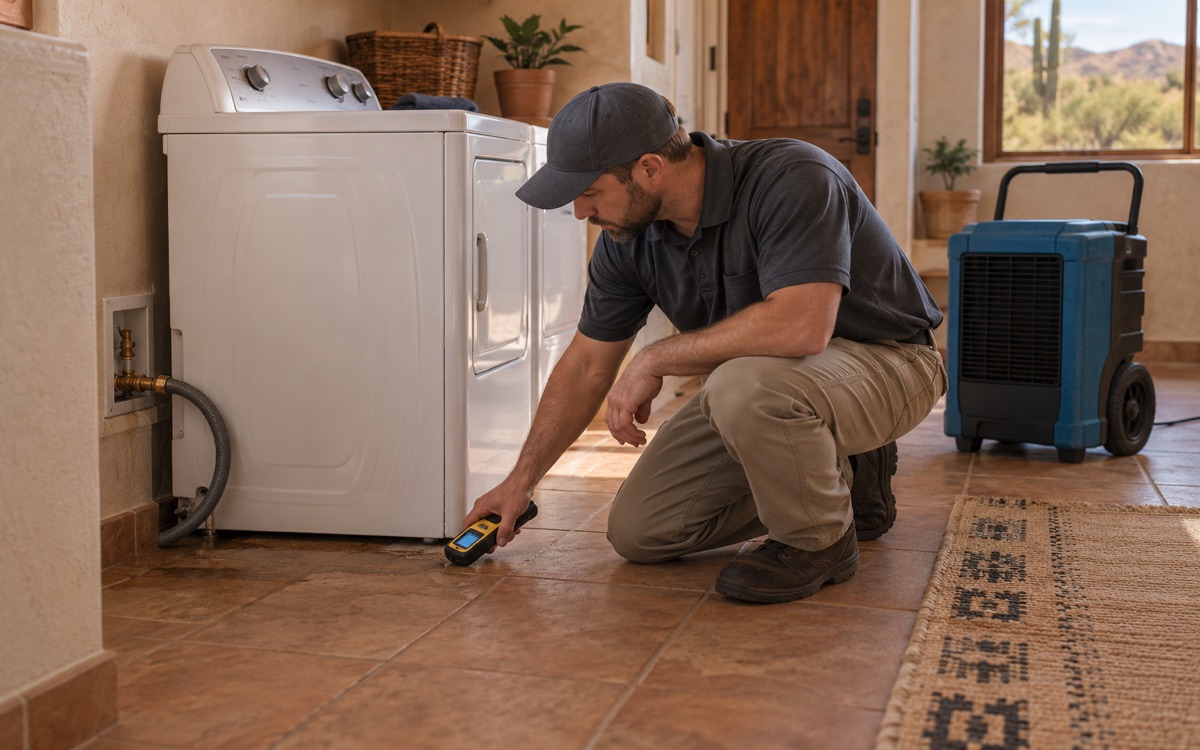
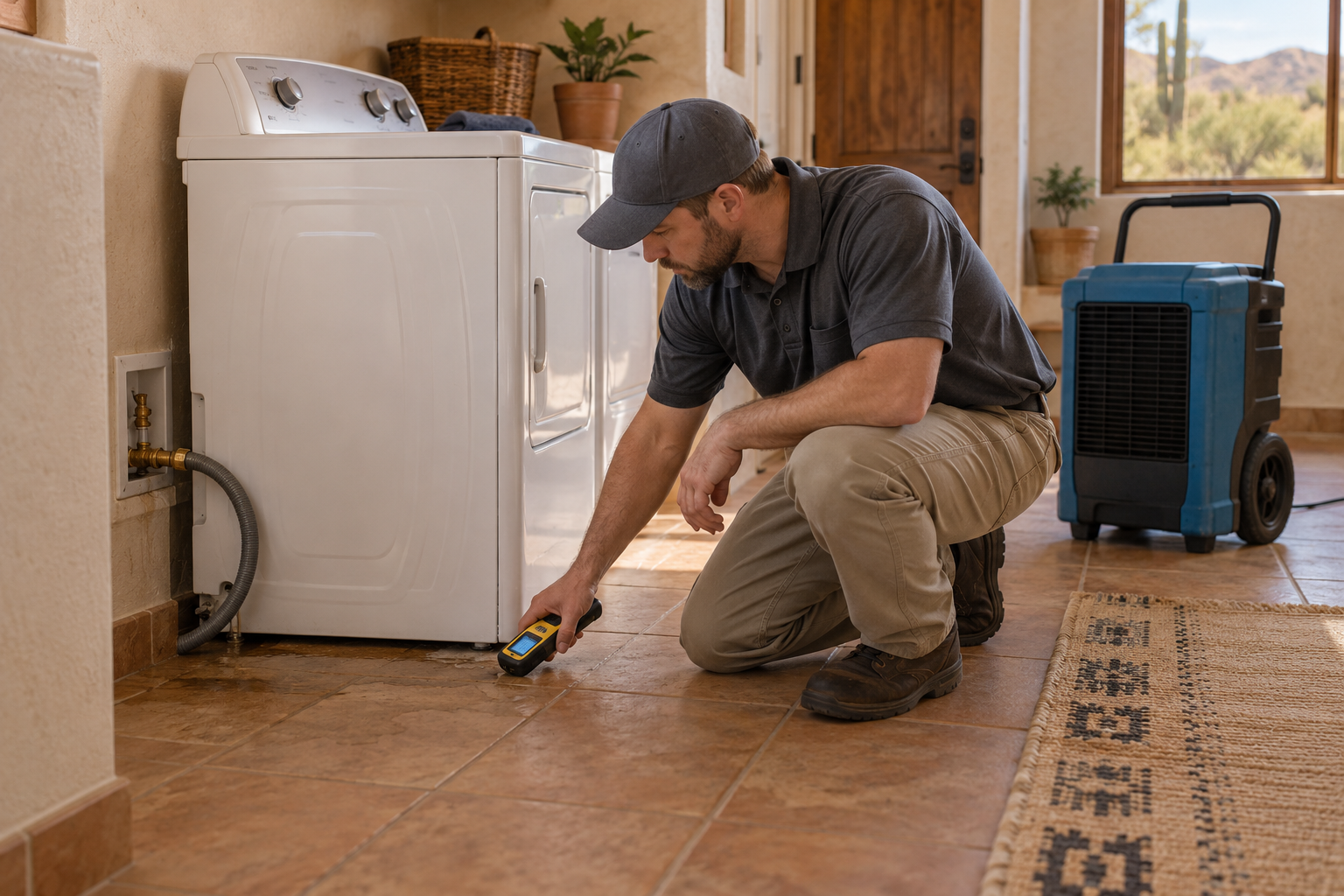
The crew needs to understand the source, affected materials, and safe work boundary before selecting equipment. Water near an exterior threshold may have followed a different path than the visible stain suggests. A known leak may also have reached adjoining flooring or a wall cavity. Initial moisture checks help establish that extent.
Ask which findings are confirmed and which still need investigation. If a plumber, electrician, roofer, or other specialist is needed, clarify how that work relates to cleanup. Restoration removes and addresses damage; it does not automatically include every repair required to stop the original source.
Urgent work should have an explained scope
Bulk-water removal, affected-content handling, cleaning, and selective material removal may be part of stabilization. Not every material requires the same treatment. Source, exposure, condition, and access all affect the plan. A useful explanation identifies the reason for each major action and how unaffected areas will be protected.
Before authorizing work, understand the scope, billing arrangement, and any limits on what is known. Emergency work and permanent reconstruction may be handled in separate stages. Insurance review is another separate process. Direct billing, if arranged, does not determine policy coverage or remove the need to understand the agreement.
Drying brings monitoring and follow-up decisions
After extraction and necessary cleaning, drying equipment may be installed according to the materials and conditions. The important next step is not simply leaving machines running. Progress should be checked and documented, with adjustments when readings or material conditions call for them. Ask how visits and updates will be scheduled.
The EPA recommends prompt attention to wet materials, but completion is not established by a fixed number of days. Some assemblies need additional access or removal. Once drying and other prerequisites are addressed, the team can explain remaining repairs and the documentation available for the project record.
A clear handover at the end of each phase prevents misunderstandings. After extraction, the next update should identify retained wet materials and necessary cleaning. After drying, it should identify what measurements support completion and which repairs remain. If another contractor handles the source or rebuilding, the owner should know what information that contractor needs rather than assuming equipment removal means all work is finished.
Questions about the Phoenix restoration process
Will I receive a final price on the first phone call?
A reliable scope generally requires inspection. Phone information helps prioritize the response, but concealed moisture, material condition, and access can change what the work involves.
Does the crew start rebuilding immediately?
Not necessarily. Source control, extraction, cleaning, drying, and required approvals come before closing affected assemblies. Ask which phase is being authorized and what remains outside it.
What if more damage is found later?
The team should explain the new finding, document it, and discuss any scope change. A newly exposed wet layer is different from an unexplained change in the work.
Know the next step after your Phoenix flood call
Tell us what happened, when it was discovered, and who can provide safe access. We can organize the first assessment and explain how the restoration phases connect.
Emergency Flood Cleanup and Moisture Detection & Mapping connect the first cleanup phase with evidence for the next step. Request Service or call (602) 902-1375 to discuss the affected property.