
What Happens During a Flood Damage Assessment in Phoenix?
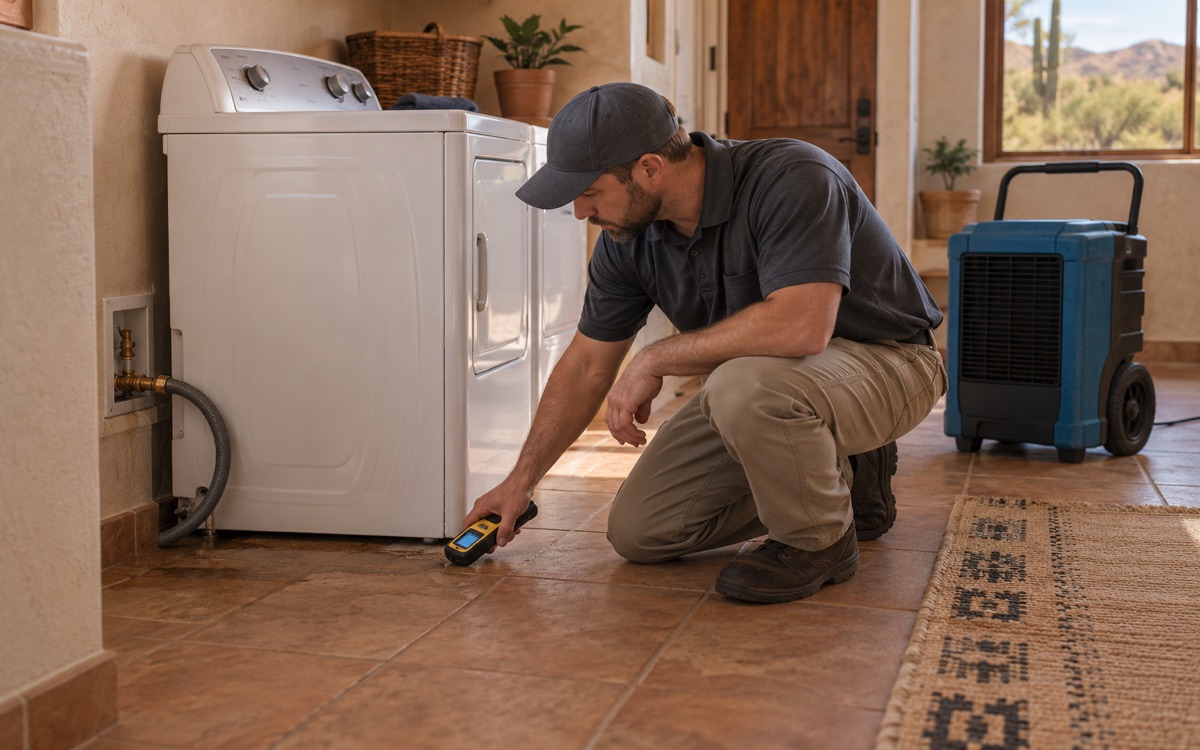
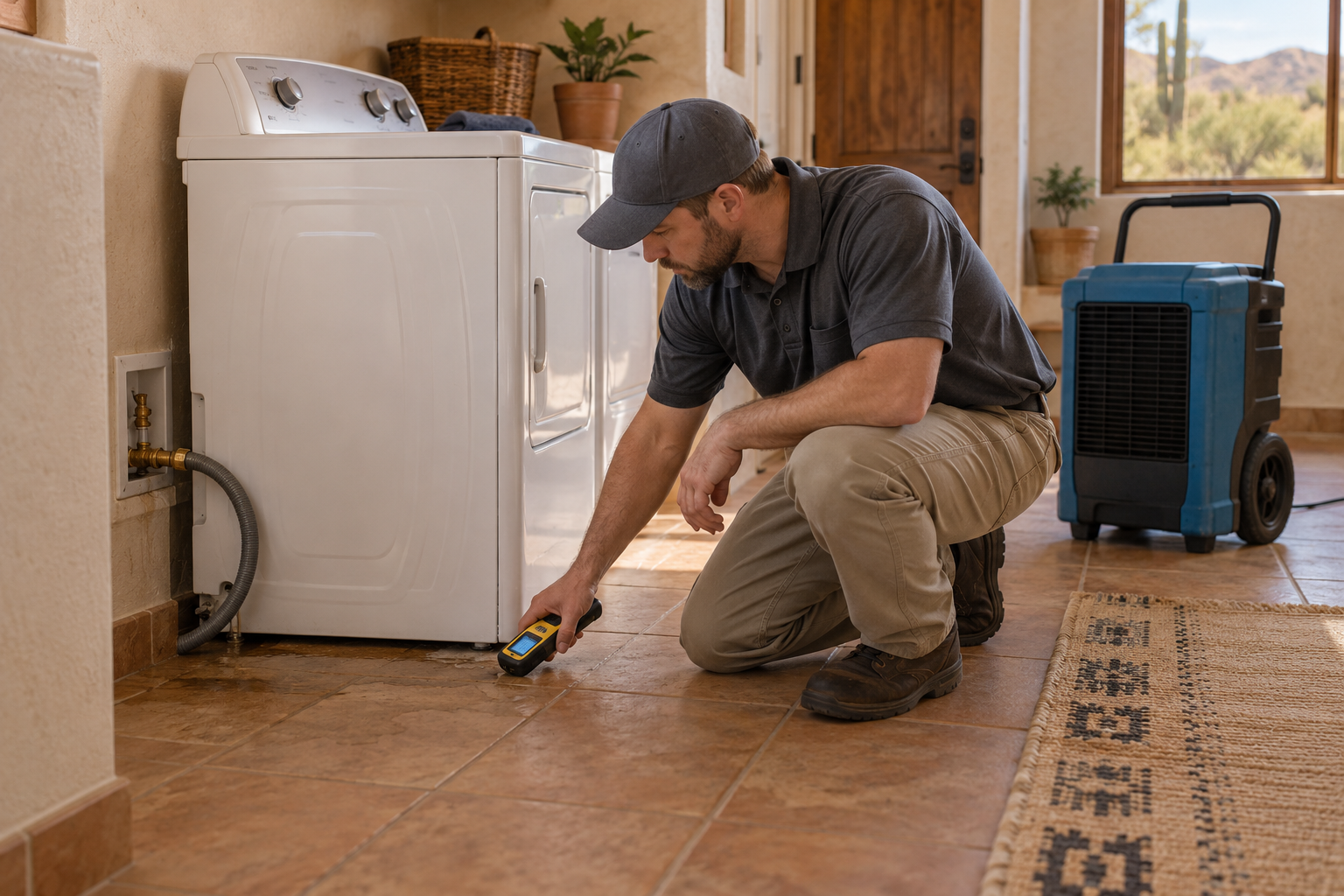
A flood damage assessment examines the water source, visible and concealed affected areas, material condition, contamination concerns, and safe access. The findings guide extraction, cleaning, drying, removal, and repair decisions. It is a documented investigation, not just a visual estimate of the puddle.
Two Phoenix properties with similar-looking water marks can need different work. One may have recent supply-water exposure; another may have monsoon runoff beneath several flooring layers. An assessment should explain those differences and identify what is known, what remains uncertain, and what needs immediate attention.
Establish the source and exposure history
The assessor asks when water was discovered, when the area was last dry, whether the source is still active, and what repairs or cleanup have already occurred. This history helps interpret the visible evidence. It does not replace inspection, but it can reveal why water may have traveled farther than expected.
An uncertain source should stay identified as uncertain until evidence supports a conclusion. Rain intrusion, surface runoff, plumbing leaks, and sewage require different coordination and handling. The CDC describes the hazards associated with floodwater; a clear appearance is not enough to classify water as sanitary.
Set the first work priorities and identify specialist needs
The initial assessment should identify what can safely proceed and what requires another professional first. Water near electrical components, a damaged ceiling, an active plumbing failure, or suspected structural damage can change the sequence. A restoration scope should state those dependencies rather than implying the cleanup crew has cleared every building system.
The assessor also considers access, contamination, and materials needing prompt attention. Moisture measurements support these decisions, but they are one input rather than the whole assessment. The practical result is a prioritized scope: what needs stabilization, what needs removal or cleaning, what can be monitored, and what remains unconfirmed until safe access or specialist evaluation is available.
Evaluate what can remain and what may need removal
Material decisions depend on contamination, physical damage, drying access, and the ability to clean the assembly. A finish that looks intact may cover a wet layer; a visibly damaged component may no longer perform as intended. Assessment should explain why preservation or removal is proposed for each significant item.
EPA's material-specific guidance distinguishes different clean-water material responses. It must not be applied automatically to sewage or outdoor flooding. Ask how the source and condition affected the recommendation rather than accepting a universal statement that every wet material is either salvageable or ruined.
Turn the findings into an understandable work plan
A useful assessment separates source correction, emergency mitigation, controlled drying, and reconstruction. It should identify specialist needs, access limits, and the next check or decision. Photographs, moisture records, and scope notes help make that plan traceable for the owner and, where relevant, the insurer.
The assessment does not decide insurance coverage or guarantee a final completion date before hidden conditions are understood. In Phoenix's dry climate, surface appearance can improve quickly without proving the underlying assembly is ready. Ask how drying completion will be verified and which prerequisites must be met before new finishes cover the affected area.
An assessment should end with decisions, not merely a list of wet readings. Useful outputs include the initial stabilization scope, materials proposed for retention or removal, specialist referrals, and any unresolved conditions that could change the estimate. Those decisions should identify the evidence behind them. A moisture map supports that assessment, but the overall assessment also considers contamination, safe access, source responsibility, and what the owner needs to authorize next.
Questions about Phoenix flood assessments
Is an assessment the same as an insurance inspection?
No. Restoration assessment determines physical conditions and proposed work. An insurer evaluates the claim under the policy; the two processes may use some of the same records.
Can the complete scope be known without opening anything?
Sometimes visible access is sufficient, but concealed layers may require further investigation. Ask what remains unconfirmed and how additional access would be authorized.
Will every wet material be removed?
Not automatically. Source, condition, cleanability, and drying feasibility drive the decision. A measured assessment supports selective decisions instead of blanket demolition or blanket salvage promises.
Get a clear assessment of your Phoenix flood damage
Describe the water source and visible damage so the assessment can focus on the affected materials, unknown areas, and urgent work.
Flood Damage Assessment and Moisture Detection & Mapping turn observed conditions into a defined recovery scope. Request Service or call (602) 902-1375 to discuss the affected property.