
What Happens When Floodwater Reaches Wall Cavities in Phoenix?
When floodwater reaches a wall cavity, the assessment must consider the concealed materials and systems as well as the visible finish. Insulation, framing, wallboard, and utilities may need different attention. The recovery plan may require controlled access, appropriate removal and cleanup, drying, and verification before the wall is closed. The necessary work depends on the actual findings.
A wall cavity contains more than drywall
The painted face gives limited information about the assembly behind it. Different materials can absorb or retain moisture differently, and an apparently improved surface may conceal another affected layer. The inspection should establish what construction is present and where water may have traveled.
The reported water source and timeline help guide the assessment. A new stain after equipment has been running may suggest a need to investigate fresh entry or a previously unrecognized area. It should not automatically be blamed on normal drying.
In Phoenix, wall recovery should follow the building evidence rather than an assumption that desert heat dries everything quickly. The relevant condition is inside the assembly, where access, airflow, and material construction may differ from the outdoor environment.
Controlled access answers specific questions
Opening a wall should have a clear purpose: reaching an affected material, investigating a concealed condition, addressing contamination, or enabling necessary work. The proposed opening should be connected to the assessment rather than described as a standard demolition pattern for every property.
Before disturbing finishes, the responsible professionals need to consider utilities and other hazards appropriate to the building. Do not cut into a wall independently to find out whether it is wet. If electrical components may have been exposed, qualified evaluation is a separate priority.
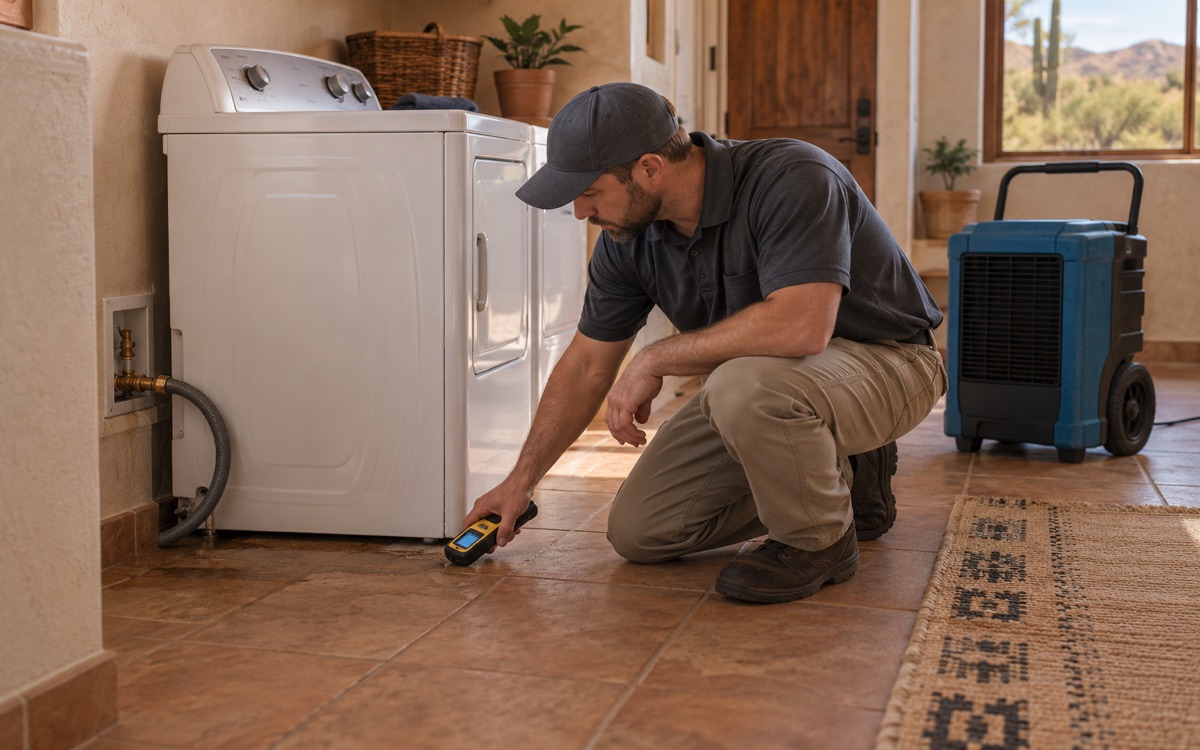
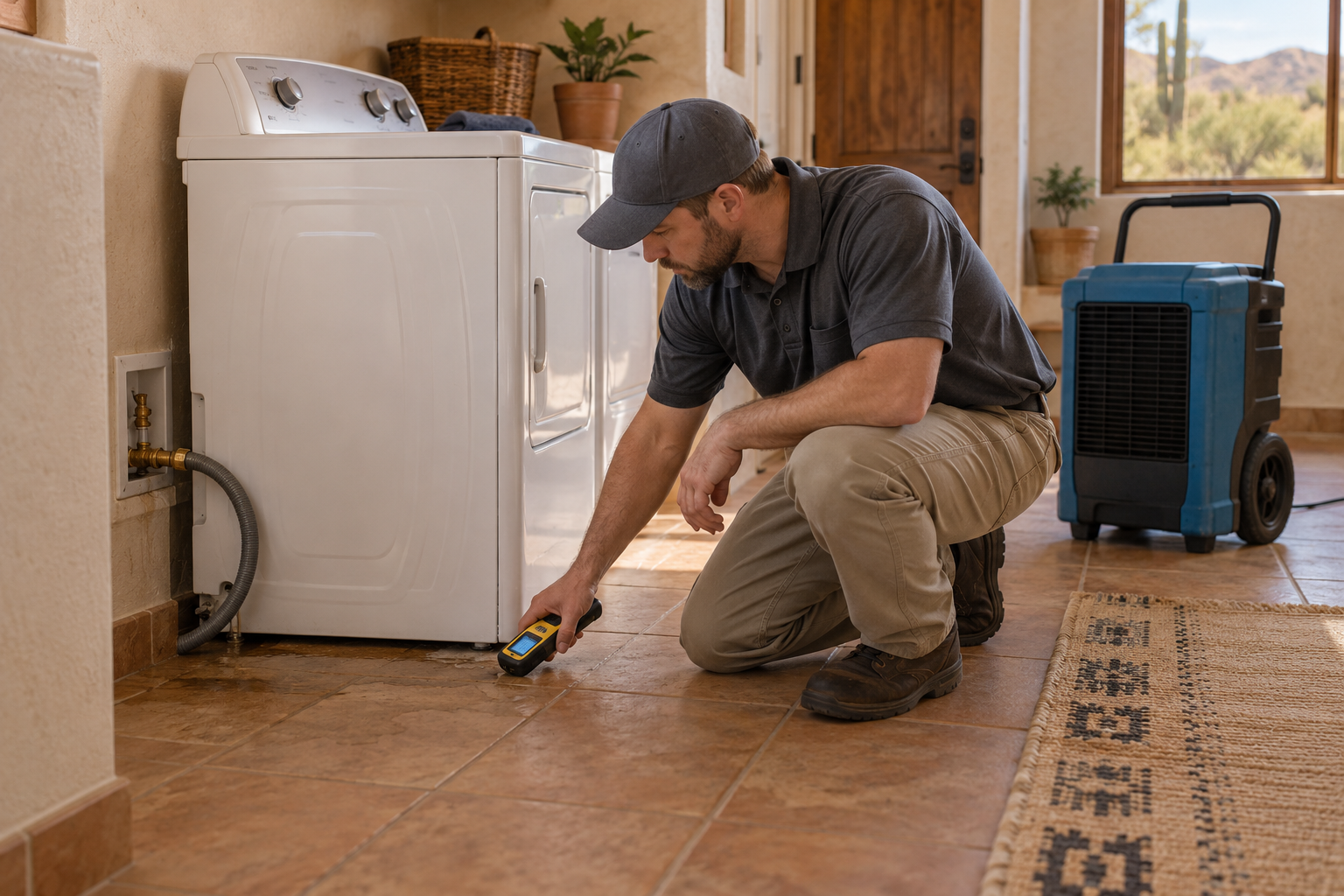
Moisture detection and mapping helps record where evidence supports further access and where uncertainty remains. Ask which parts have been directly checked, which conclusions are provisional, and how new findings will be communicated.
Removal, cleanup, and drying are different decisions
Some materials may need removal because of contamination or physical damage; others may remain and require drying. Keeping those decisions separate makes the scope easier to understand. Removing a visible damaged finish does not automatically complete work on the materials behind it.
EPA's material guidance distinguishes wallboard and insulation recommendations for clean-water losses and warns that contaminated-water situations need different precautions. A salvage rule for clean water should not be applied unchanged to monsoon runoff or sewage.
Flood damage remediation should explain the basis for material decisions. Ask what is being cleaned, what is being removed, and what evidence is needed before remaining materials are treated as ready for reconstruction.
Closing the wall should follow a documented handoff
Once access work is complete, the remaining assembly needs appropriate checks. That includes the condition of materials, completion of relevant utility work, correction of the water source, and any required approvals. A new finish should not become a way to hide an unresolved question.
Structural drying should provide the findings needed for that handoff. Ask for an explanation of the checked locations and any exception that remains. Completion of drying does not automatically mean a separate electrical or other trade issue has been resolved.
CDC's flooded-home guidance recommends qualified electrical checks after affected systems are exposed. Coordinate those responsibilities before replacement insulation or wallboard limits access again. Clear sequencing helps avoid reopening a finished repair.
Ask for any remaining access restriction to be explained in writing so that another contractor does not close an area that is still awaiting a decision.
Related questions
Can a wall dry without being opened?
Sometimes the assessed construction and condition may support that approach, but it is not a universal rule. Contamination, insulation, concealed moisture, and access needs can make opening necessary.
Will removing baseboards reveal everything inside the wall?
No. Limited access can answer some questions but may not describe the whole cavity. The assessor should explain what the inspection shows and what remains beyond its reach.
Can I close the opening when the framing feels dry?
Touch alone is insufficient. Confirm material findings, source correction, utility work, and any applicable repair requirements before the assembly is closed.
Resolve Phoenix wall-cavity damage before finish repairs
Phoenix Flood Restoration can assess affected wall assemblies and explain the access, material removal, and drying decisions. If water may be concealed behind a finished surface, request an assessment before covering the area or beginning demolition yourself.
Request Service or call (602) 902-1375.