
What Is the Difference Between Monsoon Flooding and a Plumbing Leak in Phoenix?
Monsoon flooding brings water from outside or through storm-related entry paths, while a plumbing leak begins with a building's water or drainage system. The source affects contamination assessment, source repair, documentation, and insurance questions. Neither loss should be judged solely by how clear the water looks or how small the visible area seems.
Two wet floors can require different recovery plans. A recently discovered supply leak is not the same event as runoff crossing a doorway, and a drain backup is not equivalent to either. A clear source description helps the restoration team select the right assessment and prevents broad labels from obscuring important conditions.
Distinguish supply water, drainage water, and outdoor runoff
A plumbing incident can involve a supply line or a waste system, which creates an important difference in handling. Monsoon-related water may arrive as surface runoff or as rain through a building opening. The entry route and contact history should be described as specifically as the evidence allows.
The CDC warns that outdoor floodwater may contain sewage, chemicals, and debris. A source initially associated with clean water can also become more complicated through contact and time. Do not classify the current condition from the original source alone or assume clear water is safe.
Source correction involves different specialists
A failed pipe may need a plumber; rain intrusion may need roofing or envelope work; runoff may raise drainage questions. Restoration addresses the materials affected by the water, but it does not automatically include every source repair. Ask who is responsible for stopping the input and confirming the relevant correction.
A temporary stop in visible water is not always a repaired source. Plumbing pressure may be off, or the rain may simply have ended. Record what action was taken and whether the source is confirmed. This keeps the drying team from assuming that a new wet reading is merely slow progress when fresh water may still be arriving.
Both losses can travel into hidden assemblies
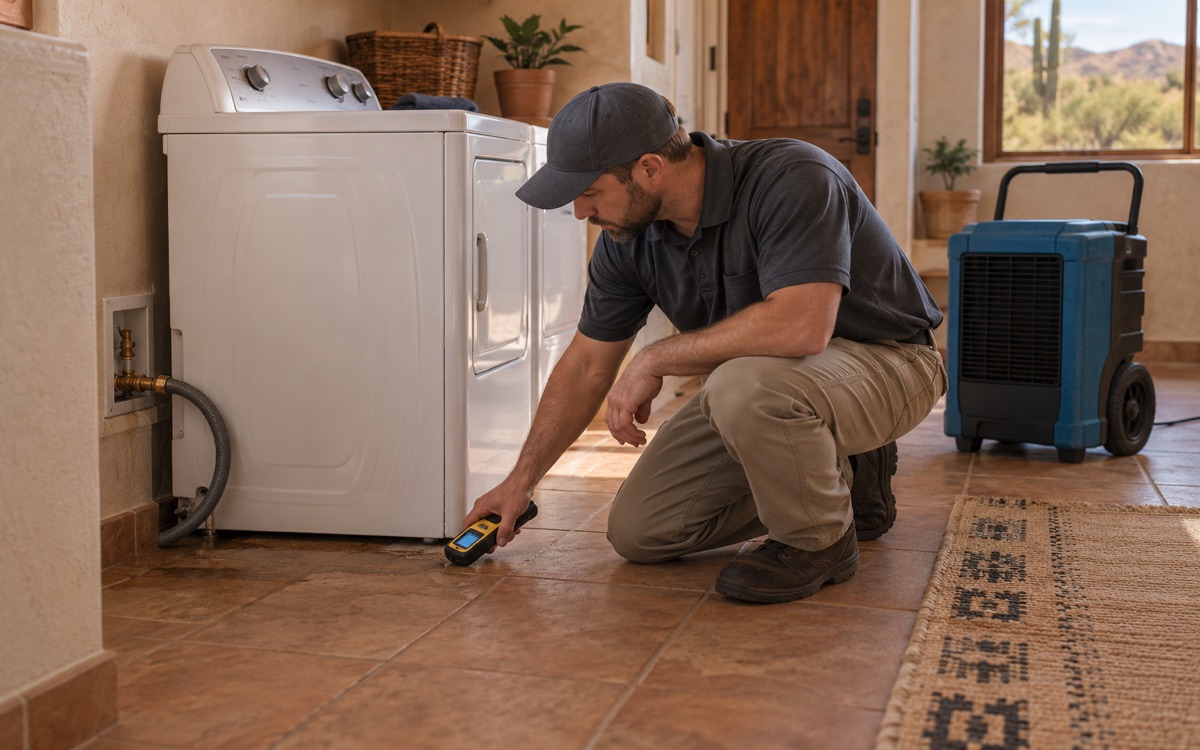
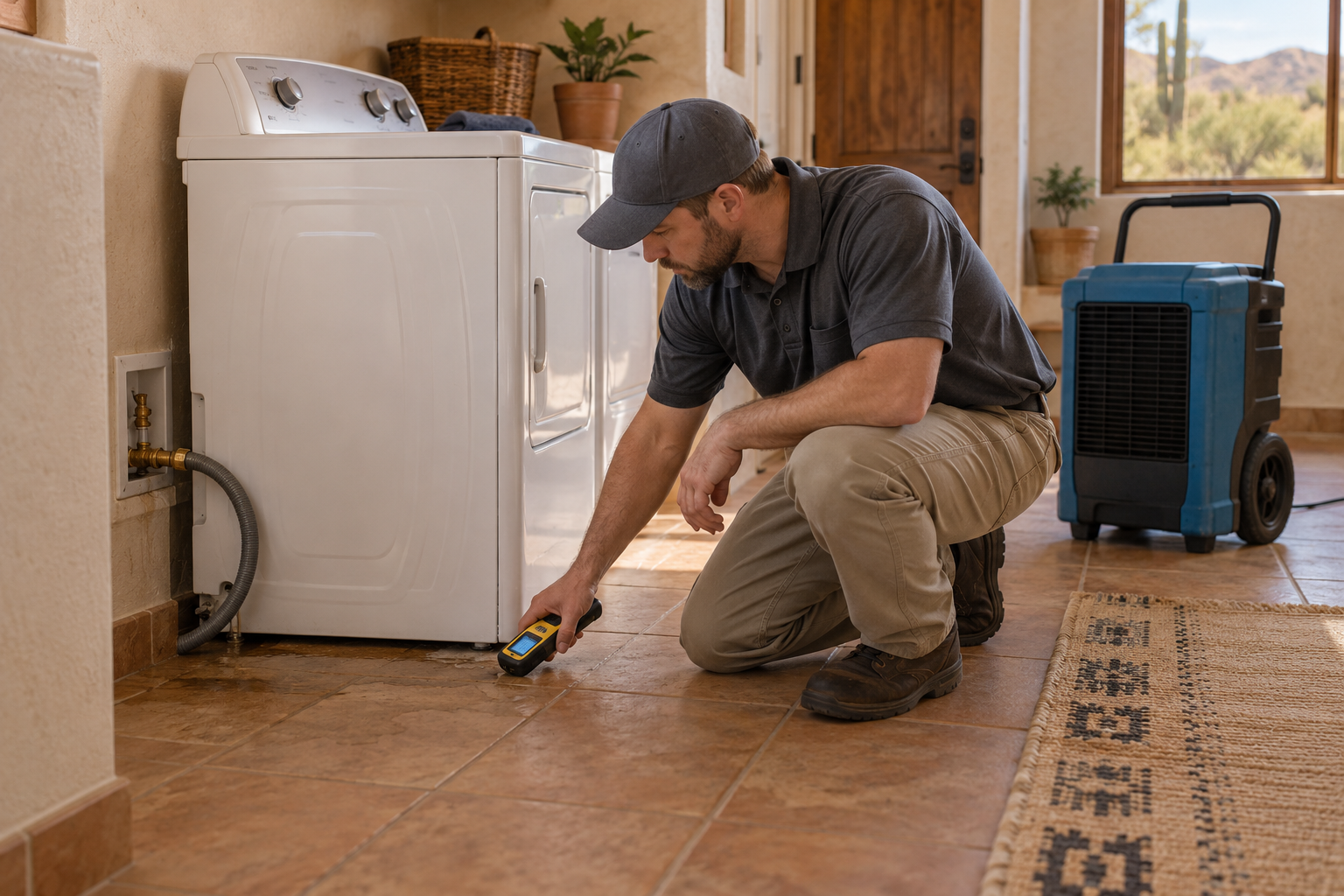
Water from either source can move beneath flooring, along wall bases, and into cavities. The visible puddle is therefore an incomplete guide to scope. Moisture mapping, material condition, and access determine how much of the building needs attention.
EPA's material-specific table addresses clean-water damage and should not be applied indiscriminately to contaminated incidents. Preservation decisions need to account for that distinction. Extraction may be followed by different cleaning or removal steps before drying can proceed, even where the affected square footage looks similar.
Insurance terminology should follow the facts
Property owners often use flood to describe any large amount of water, but policies may distinguish rising surface water from other damage. The NFIP explains that most standard property policies do not cover flood damage. That general distinction does not determine an individual claim.
Report the known source, discovery time, affected areas, and source-repair actions accurately. Do not choose a description because it sounds more likely to be covered. The insurer determines coverage under the policy, while the restoration team records physical conditions and proposed work. Keeping those roles separate supports a clearer claim and a clearer recovery plan.
A useful incident description avoids the single word 'flood' when more detail is known. State that outdoor runoff crossed a threshold, a supply line released water, or a drain backed up. If the route is uncertain, describe the evidence instead. This makes source repair and contamination questions clearer from the outset without trying to select a policy category or claim outcome on the insurer's behalf.
Questions about Phoenix flood and leak differences
Is a burst pipe automatically clean-water damage?
Do not assume the present condition from the source alone. Contact with materials, exposure time, and other conditions can influence assessment and handling.
Does rain entering through a roof count as the same thing as runoff?
Not necessarily. The physical route and insurance definitions can differ. Describe the facts and let the appropriate professionals assess repair needs and coverage questions.
Will both situations need drying equipment?
They may, depending on retained moisture and materials. Equipment selection follows the assessment, while contamination can change the cleaning and removal work required before drying.
Match your Phoenix cleanup plan to the actual water source
Explain whether the loss involved runoff, a building opening, a supply line, or a drain so the assessment starts with the right questions.
Flood Damage Assessment and Moisture Detection & Mapping match the recovery scope to the known source. Request Service or call (602) 902-1375 to discuss the affected property.