
What Should I Check Before Flood Restoration Is Finished in Phoenix?
Before flood restoration is finished, check that the water source has been addressed, drying results have been documented, the agreed repairs are complete, and any remaining issues are listed in writing. A clean-looking surface is useful, but it is not a substitute for the records and checks supporting the work.
The final walkthrough should help you understand what was restored and what still needs attention. It should not be a rushed signature while equipment is being loaded. Phoenix properties can have several contractors involved after a storm or plumbing failure, so clarify which company is responsible for each part of the closeout.
Review the Work Against the Agreed Scope
Bring the latest approved estimate and any changes, not just the first proposal. Compare the actual work with the specified materials, areas, and quantities. Confirm that authorized changes were recorded and that any work removed from the scope was explained.
Look at repaired finishes in ordinary lighting. Check agreed transitions, trim, fixtures, and access panels without dismantling anything. If the project included contents handling, reconcile the returned items against the inventory. Write a short list of unfinished or disputed details, identifying who will handle each one and how you will receive an update.
A flood reconstruction project may end later than the emergency cleanup phase. Equipment removal, cleaning completion, and final repair completion are separate milestones, and the paperwork should make that distinction clear.
Ask What the Drying Records Demonstrate
Drying documentation should explain the affected materials, the areas monitored, and the basis for stopping the drying work. Ask the team to describe the findings in plain language. A single reading without a location or material reference is difficult to interpret later.
The relevant question is not whether every surface feels dry. It is whether the assessed materials reached the project's drying goals and whether unresolved moisture remains. EPA's flooded-home guidance emphasizes prompt drying and attention to materials that cannot be cleaned and dried. It does not make appearance alone a completion test.
- Identify which materials were retained and dried.
- Confirm which damaged materials were removed.
- Ask whether concealed areas were assessed and how.
- Record any limitation where access or another issue prevented verification.
Confirm Source Repairs and Other Trade Work
Water extraction does not prove that a leaking pipe, roof opening, drainage problem, or failed pump has been corrected. Request the relevant source-repair information from the responsible contractor. After Phoenix monsoon intrusion, this might involve an exterior repair that is separate from interior restoration.
Do not test electrical equipment, HVAC components, or other flood-exposed systems yourself to complete a checklist. Qualified professionals should address those systems where needed. If inspections or approvals were part of the project, request their status and copies of the available records. Outstanding approvals should be described as outstanding rather than assumed complete.
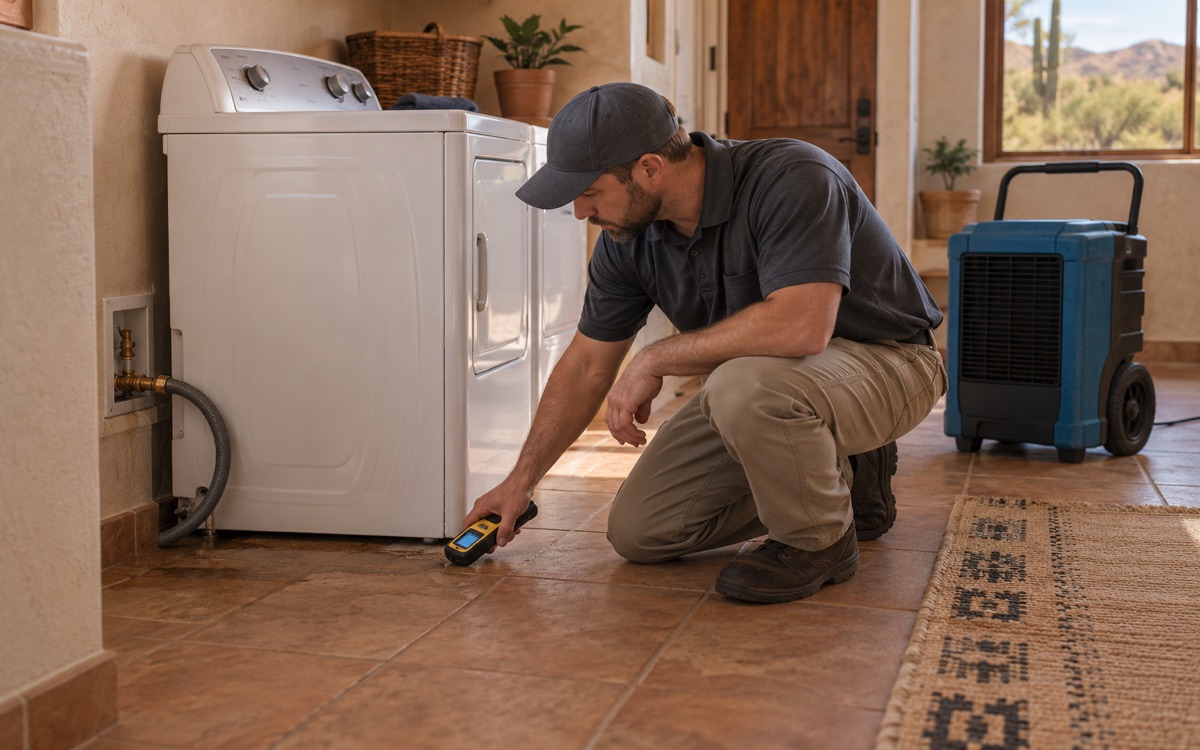
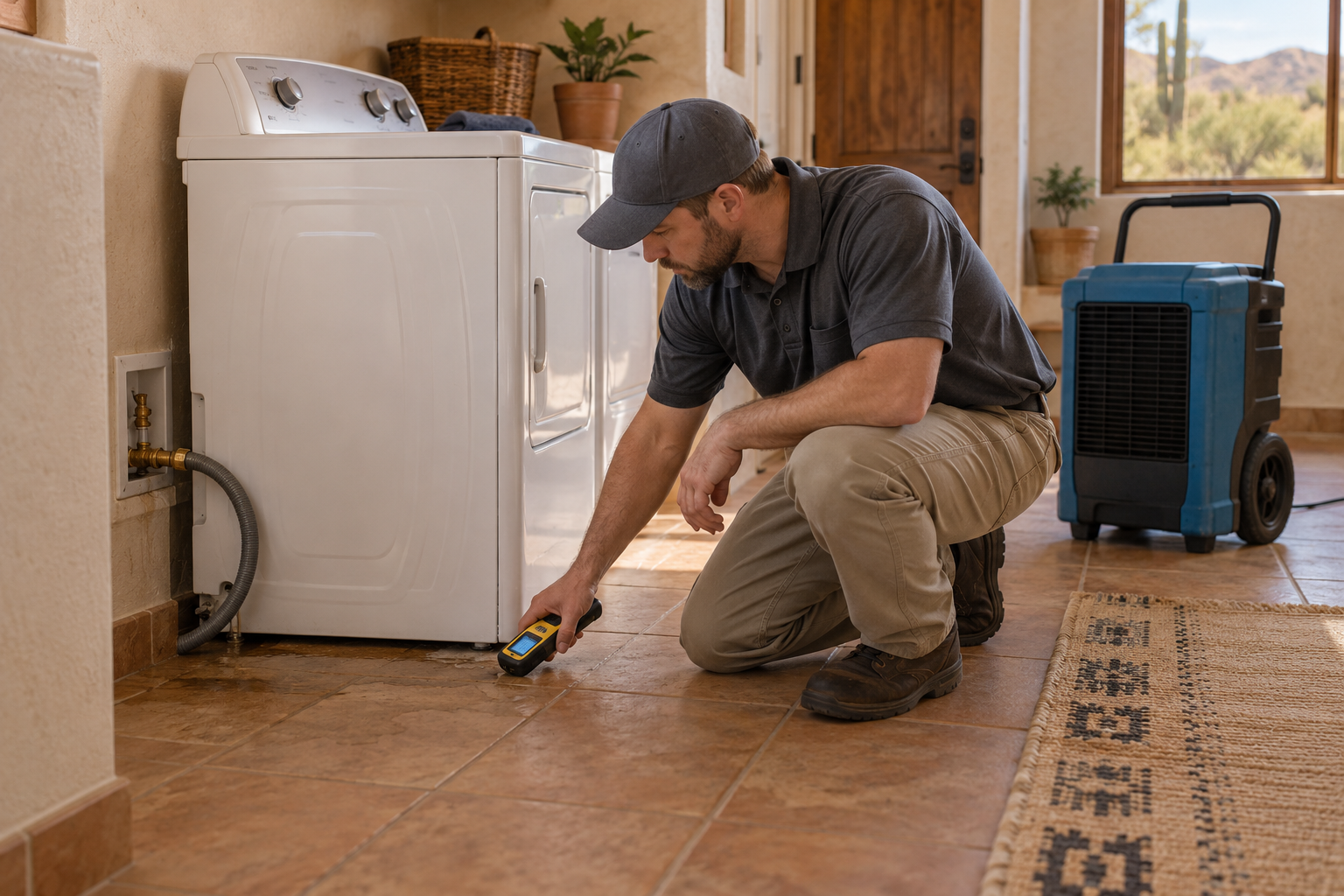
For persistent staining, odors, or a new damp area, ask for reassessment before accepting a cosmetic explanation. Moisture detection and mapping can help evaluate whether the condition relates to residual moisture, a new source, or an area outside the original scope.
Keep a Useful Project Record
Save the approved scope, change orders, final invoices, photographs, drying information, source-repair records, and warranty terms in one folder. Label documents by date and contractor. If an insurer is involved, keep claim communications with those records so that the reason for a change remains clear.
FloodSmart's claims guidance recommends preserving supporting loss documentation. A restoration completion document and an insurance claim settlement are not the same thing. Questions about payment, coverage, or an outstanding adjuster review belong with the insurer, even when the physical work is finished.
Ask who to contact if a repair concern appears after closeout and what information they need. Written warranty terms are more reliable than an informal promise that everything will be handled indefinitely.
Questions About Completing Restoration
Should I sign if a small repair is unfinished?
Read what the document actually confirms. Record the unfinished item and agreed follow-up before signing a statement that says all work is complete. Ask for clarification if the wording does not match the project status.
Does removing the drying equipment mean rebuilding is complete?
No. Drying, cleaning, and reconstruction may have different completion dates. Ask for the status of each phase and any remaining trade work.
What if water damage reappears after the walkthrough?
Report it promptly, document the visible condition from a safe location, and request an assessment. A recurrence needs investigation; it should not automatically be treated as either a warranty issue or a new loss.
Get a Clear Finish to Your Phoenix Restoration Project
For help assessing remaining flood damage or planning documented repairs, Request Service from Phoenix Flood Restoration or call (602) 902-1375. Explain what work has already been completed and what still concerns you.