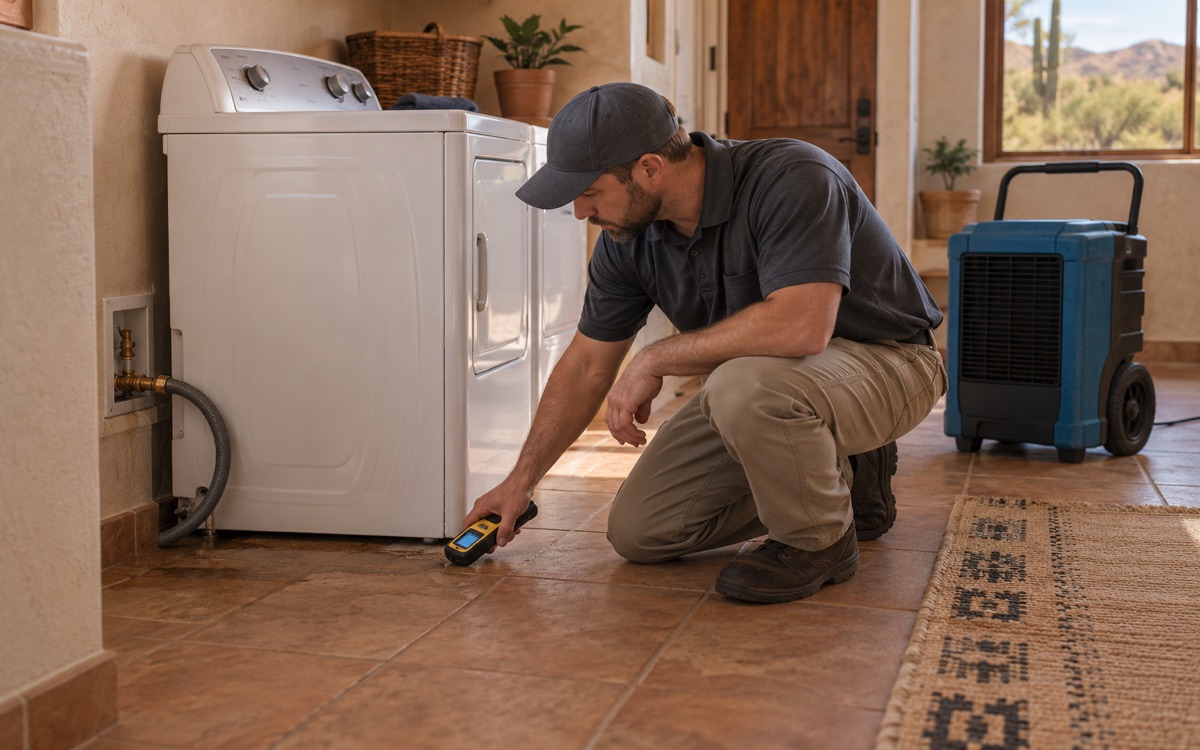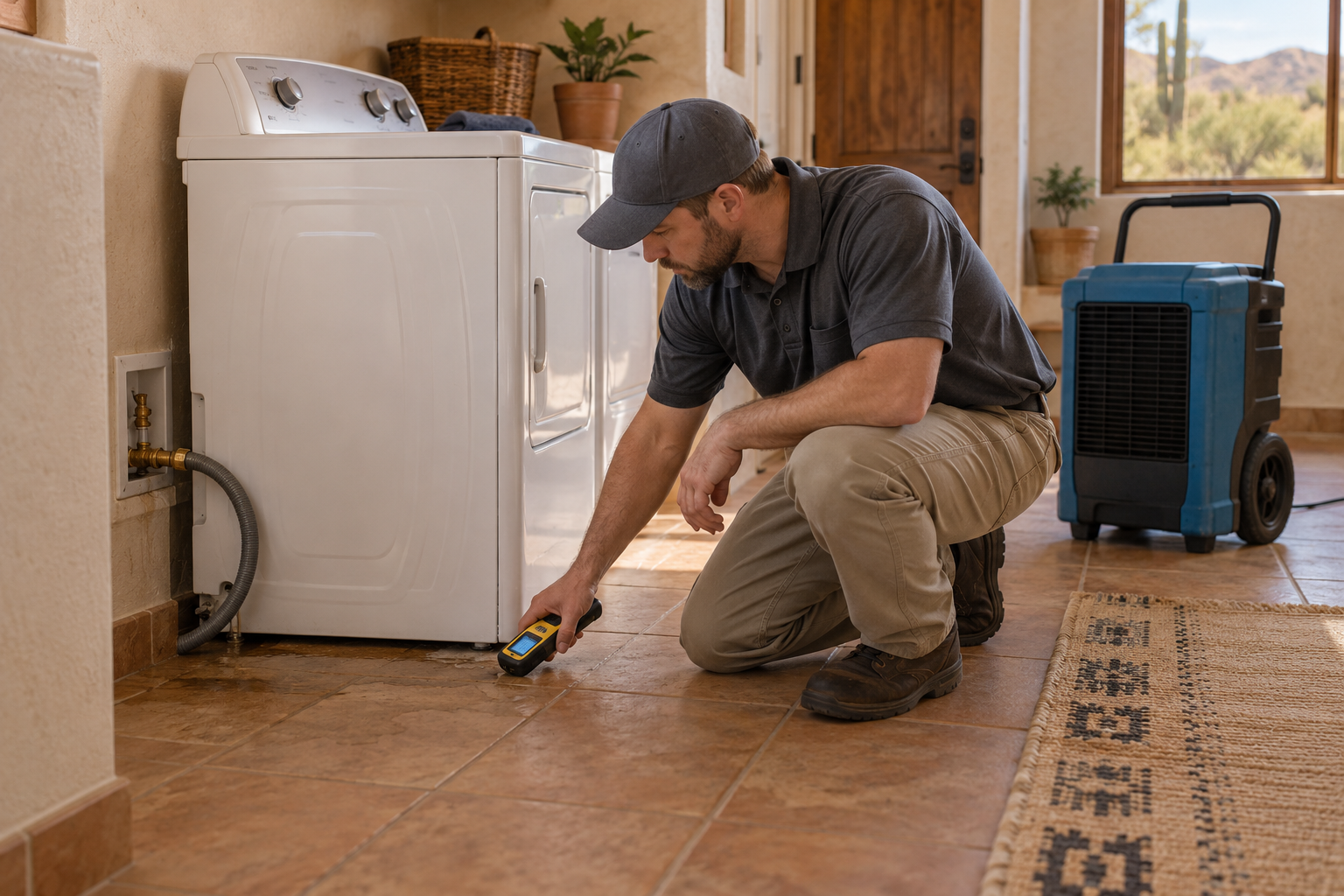

What Should I Do After Monsoon Water Enters My Phoenix House?
Stay out of incoming or standing stormwater, follow official access instructions, and arrange assessment once the property can be approached safely. Monsoon cleanup should consider outdoor contamination, sediment, hidden moisture, and the chance of additional rain. Do not treat it as a clean-water spill.
Water entering under a threshold can look limited while spreading beneath finishes. It may also keep arriving after the rainfall directly over your home has eased. In Phoenix, the first recovery plan should connect immediate cleanup with the remaining weather and access conditions, not assume the event is finished.
Wait for safe access rather than testing the water
Do not walk through runoff to reach a doorway, retrieve belongings, or check drainage. Follow official evacuation and road-closure guidance. The National Weather Service warns that washes and crossings can flood quickly, including from storms away from the property.
If the building can be viewed from a dry location, note where water is entering and whether its level is changing. Share that information with the dispatcher. A blocked street or flooded driveway can affect arrival. Emergency restoration is property recovery, not rescue; call 911 when people face immediate danger.
Treat deposited mud as part of the loss
Sediment at a door or across flooring shows that more than moisture entered. Outdoor water may carry pollutants, and clear-looking areas may have the same exposure as visibly muddy ones. The cleanup boundary should be based on the water path, not only where dirt is easy to see.
Avoid sweeping dry deposits through occupied areas or placing household fans over uncertain contamination. The CDC describes floodwater's potential contaminants. Professional assessment can determine how water, debris, contents, and affected materials should be separated and handled before controlled drying proceeds.
Document the intrusion route while evidence remains
When safe, photographs of exterior water marks, threshold deposits, and indoor spread help explain the event. Record when intrusion began and whether earlier repairs or drainage issues are known. Do not enter a hazardous area to improve the record; the restoration team can document accessible work areas during assessment.
This information also helps distinguish cleanup from permanent source correction. A roof leak, wall opening, and rising runoff at a doorway may require different specialists. Avoid assuming a quick seal at the visible stain resolves the cause. The repair plan should address the actual entry route and any approval requirements that apply.
Plan for the next storm as well as the current damage
Ask what temporary protection is appropriate while wet materials are being restored. The answer depends on the opening, site conditions, and safe access. Do not climb onto a wet roof or enter moving water to place barriers. Temporary measures need to be coordinated with qualified professionals and do not guarantee protection from another event.
Inside, extraction should be followed by material assessment, necessary cleaning, and monitored drying. Phoenix's hot weather does not prove that flooring layers or wall cavities have dried. If more rain occurs during the project, report any new entry promptly so the crew can distinguish fresh water from moisture already being tracked. That distinction helps keep the scope and drying record accurate.
Keep fresh intrusion separate from the original loss record. If a second storm occurs, note the new discovery time and location without overwriting the earlier photographs. A material that becomes wetter again may reflect new water rather than failed drying. That distinction matters when the team updates access, cleaning, and source-repair priorities, and when the owner explains the sequence to an insurer or another contractor.
Questions after monsoon water enters a Phoenix home
Can I use ordinary fans once the puddle disappears?
Not until electrical safety and contamination have been considered. A vanished puddle does not mean surfaces are sanitary or concealed materials are dry.
Should I wait until monsoon season ends to repair damage?
No. Wet materials need timely assessment. Temporary protection and permanent source repairs can be coordinated around conditions without leaving existing damage unaddressed.
Will cleanup stop water from entering again?
Cleanup addresses damage already inside. Preventing recurrence may require separate roof, envelope, plumbing, or drainage work based on the confirmed source.
Start a monsoon-specific cleanup plan for your Phoenix home
Tell us where stormwater entered, whether sediment is present, and whether access or additional rainfall remains a concern.
Monsoon Flood Restoration and Moisture Detection & Mapping follow the stormwater path beyond the visible deposits. Request Service or call (602) 902-1375 to discuss the affected property.