
What Should I Do First After Floodwater Enters My Phoenix Home?
Stay out of floodwater, move people away from immediate hazards, and call for emergency help if anyone is in danger. Once safe access is established, report the loss, arrange flood cleanup, and document visible damage without entering affected water.
The first priority is not saving a floor or finding a mop. It is deciding whether the property can be approached safely and whether water is still entering. Phoenix monsoon runoff can bring debris and pollutants indoors, while an apparent plumbing loss may spread into hidden assemblies. Those conditions require different cleanup decisions.
Separate a property emergency from a life-safety emergency
Do not enter standing water to reach a breaker, retrieve belongings, or find the source. Water can conceal sharp debris and electrical hazards. A sagging ceiling, damaged structure, gas concern, or trapped person calls for emergency services and appropriate utility or specialist assistance, not a restoration appointment alone. Keep children, pets, and other occupants away from the affected boundary.
The CDC explains why floodwater should be avoided, even when it looks shallow or clear. If a road or wash is flooded, do not cross it to reach the property. Tell the dispatcher that access may be restricted.
Describe the source without taking risks to investigate
If you already know a supply line failed or stormwater crossed a threshold, share that information. If the source is uncertain, say so. A useful initial report includes when water was noticed, whether it appears to be rising, which accessible areas are affected, and whether anyone has already shut off water from a safe location.
Do not climb onto a roof, open a wet electrical enclosure, or move into a flooded cavity to improve that report. The crew needs an honest account of what is known and unknown. Identifying and stopping the source may require a plumber, roofer, utility provider, or another qualified professional alongside restoration work.
Preserve evidence from a safe position
Photograph broad views of damage and closer views of water marks or affected belongings when you can do so without exposure. Save existing messages about the incident and note the approximate discovery time. Contact your insurer promptly to ask about reporting requirements. Documentation supports an assessment; it does not establish what a policy will pay.
Do not postpone hazard control solely to collect more photographs. Equally, avoid discarding everything before condition and identifying details are recorded. A restoration team can help document necessary material removal. Keep invoices and communications together so that decisions made during emergency work remain understandable later.
Make sure cleanup extends beyond the visible puddle
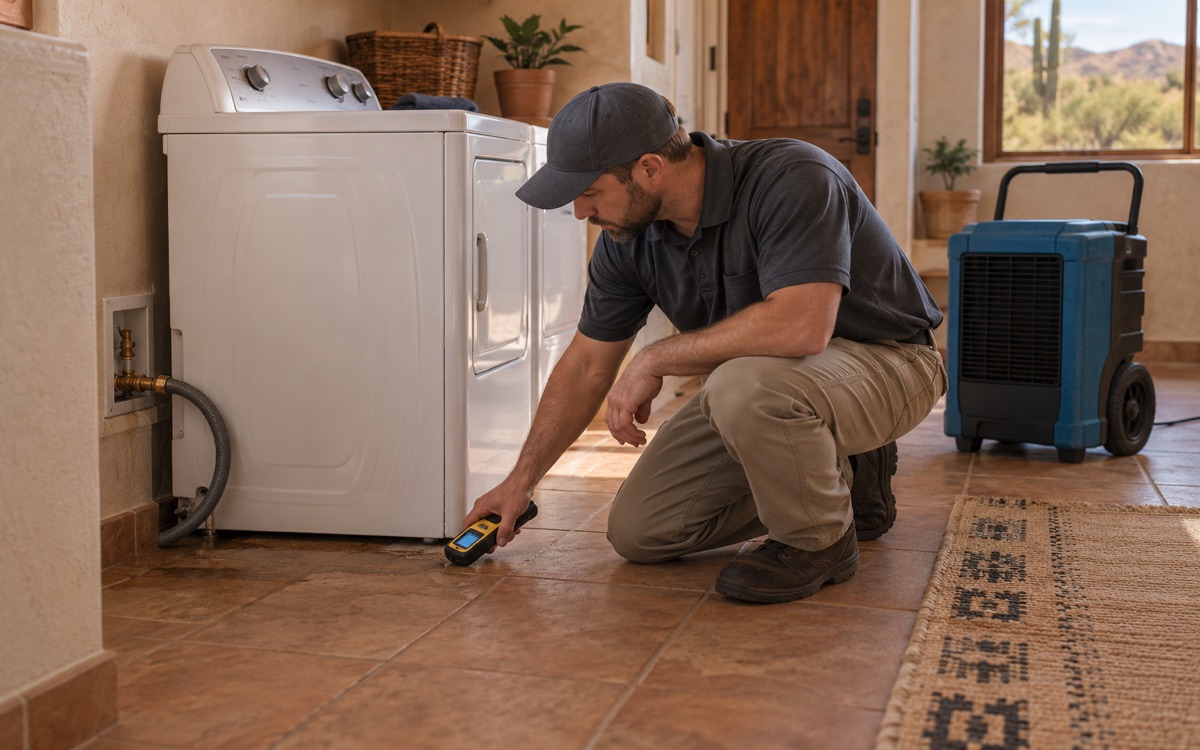
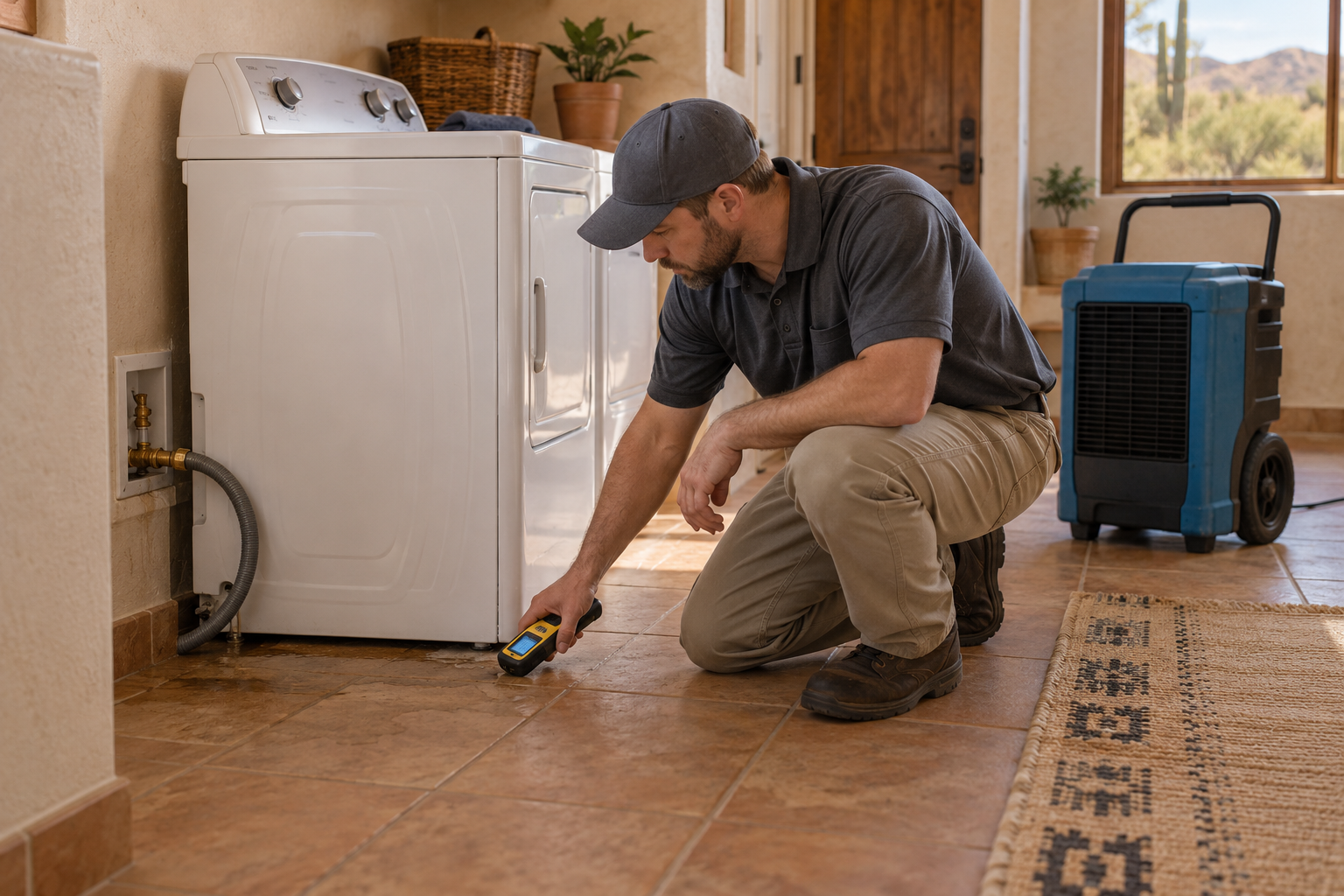
Extraction removes bulk water, but it does not prove that wall bases, flooring layers, or adjoining assemblies are dry. Ask how the crew will determine the affected boundary, evaluate contamination, and record moisture. Those findings help separate materials that may be recoverable from materials requiring removal.
Phoenix heat is not a substitute for indoor assessment. Moisture can remain beneath finishes after exposed surfaces look normal. The EPA recommends prompt drying of flooded materials, ideally within 24–48 hours, but that guidance is not a promised project duration or permission to work in unsafe conditions. Safe access and the actual material condition come first.
An initial loss record can be simple: when the property was last known dry, when water was discovered, whether it is still rising, and which entrance remains accessible. Unknown answers should remain unknown. This information helps separate a recent, controlled incident from an active one without requiring you to enter the damage. Keep any existing photographs in their original sequence so later changes can be understood.
Questions about the first hours after a Phoenix flood
Should I wait until morning if water has stopped entering?
Water can continue migrating after the source stops. Contact a restoration provider promptly, describe the situation, and keep away from affected areas until hazards are evaluated.
Should I switch on fans immediately?
Not before electrical safety and contamination are considered. Air movement across contaminated material can create additional exposure. Let the assessment determine the appropriate equipment and placement.
Do I need an exact damage estimate before calling?
No. Your address, discovery time, known source, visible extent, and access conditions are enough to start the conversation. A reliable scope follows inspection, not a guess over the phone.
Get the first response to your Phoenix flood organized
If water has entered your home, explain what is happening and where safe access is available. We can discuss the next restoration steps without asking you to enter the damage.
Emergency Flood Cleanup and Moisture Detection & Mapping help separate urgent cleanup from hidden spread. Request Service or call (602) 902-1375 to discuss the affected property.