
What Should Phoenix Landlords Document After a Rental Property Flood?
Phoenix landlords should keep dated records of the reported loss, observed damage, tenant communications, access arrangements, work authorizations, source repairs, drying findings, and completed repairs. Keep tenant belongings separate from the building inventory, and record unresolved issues instead of assuming that a contractor's visit closes the incident.
A flood project can involve an occupant, manager, insurer, plumber or roofer, restoration crew, and reconstruction contractor. A clear record reduces contradictory instructions and helps everyone understand which phase is complete. It does not replace lease obligations, applicable law, or professional advice about a dispute.
Build a Timeline From the First Report
Record when the tenant reported the problem, what they observed, and what instructions or assistance were provided. Preserve the original message where possible. Note when contractors were contacted, when safe access became available, and when the active water source was addressed.
Distinguish observations from conclusions. “Water visible at the exterior door after rain” is different from a confirmed drainage diagnosis. Phoenix monsoon losses can involve more than one entry pathway, and an inaccurate early label can confuse both the repair investigation and the insurance review.
Include the names and roles of people authorized to make decisions. If a property manager acts for the owner, make that relationship clear to contractors so work approvals and invoices are directed correctly.
Create a Building Condition Record
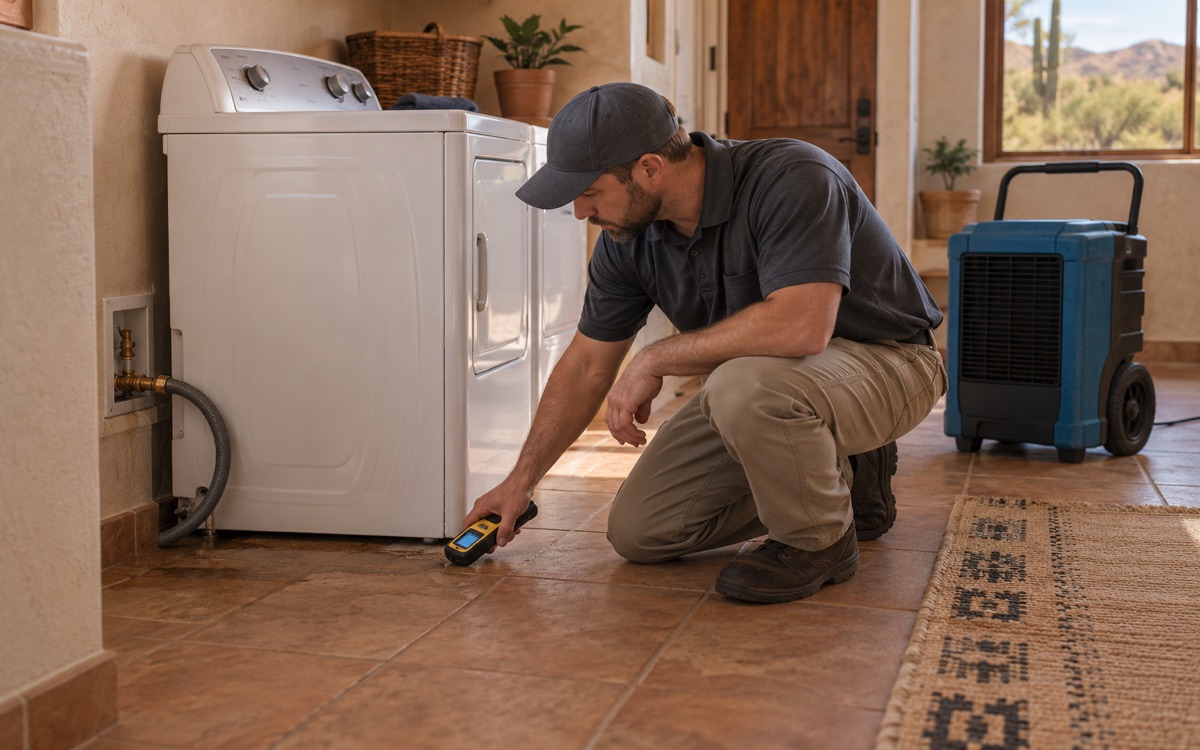
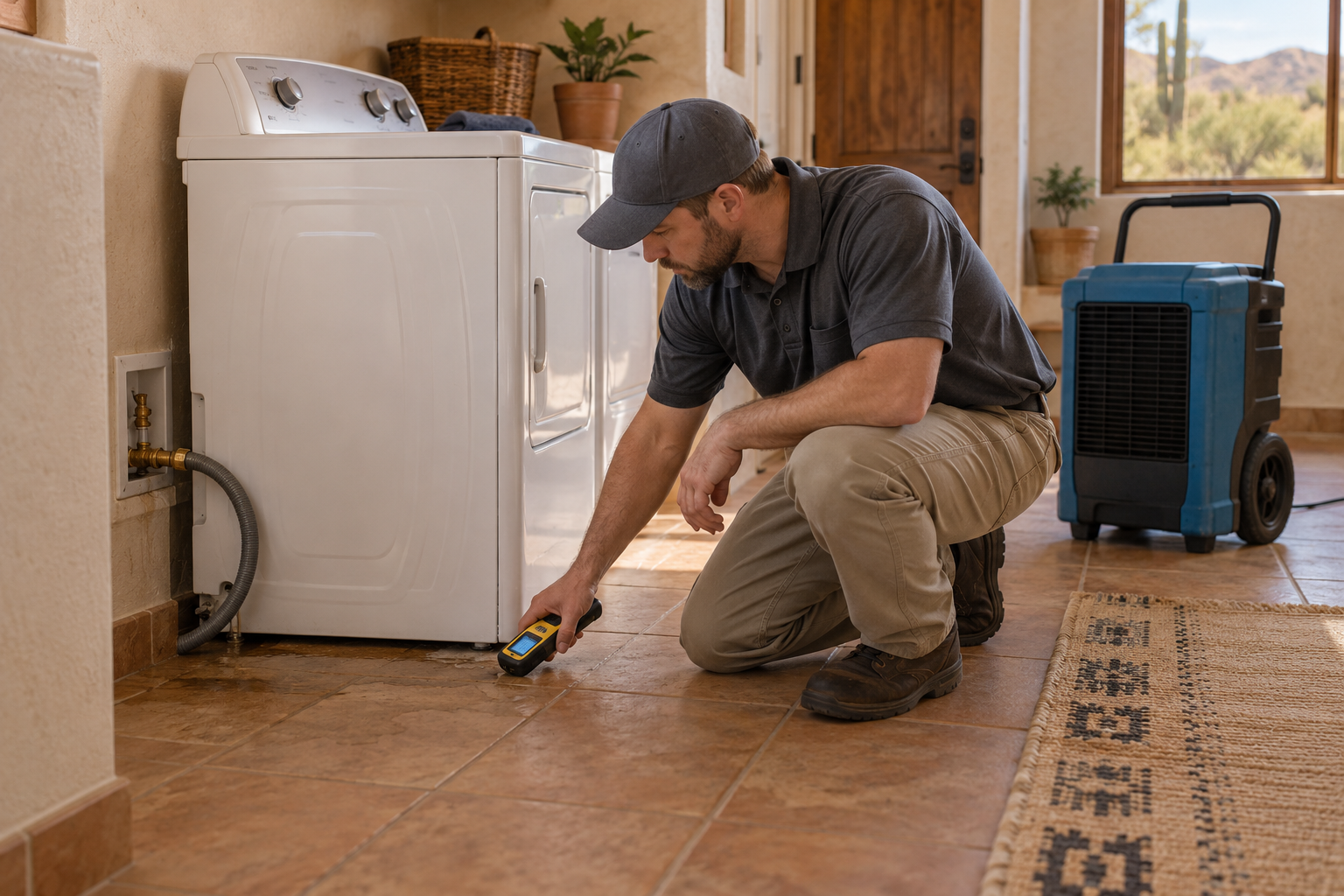
Where access is safe, collect wide photographs, detailed damage views, and an initial list of affected building materials. Existing move-in or maintenance records can provide context, but they should not be altered to imply a condition was inspected when it was not.
A flood damage assessment can document affected boundaries, material conditions, and areas that need further investigation. Ask the contractor to disclose access limitations, especially where concealed areas or occupied spaces could not yet be inspected.
- Label photographs by date and location.
- Record what was removed and why.
- Keep source-repair reports with the damage assessment.
- Preserve approved estimates and change orders.
- Track work that belongs to a separate contractor.
For claim documentation, FloodSmart recommends photographs, identifying details, and supporting records. Ask the insurer about its requirements, while allowing safe measures to address hazardous conditions.
Keep Tenant Communications Practical and Specific
Tell the occupant who is coordinating the work, what access is requested, which areas are restricted, and when the next update is expected. Record those communications and any agreed scheduling details. Avoid giving an unconfirmed completion date simply to fill an information gap.
Do not treat a restoration estimate as an occupancy determination. Electrical, structural, contamination, or other concerns may require qualified evaluation. If the tenant raises a new odor, damp area, or access concern, record it and route it to the appropriate professional.
Questions about accommodation, entry rights, rent, or responsibility for expenses need review under the relevant lease and requirements. This article is about organizing the restoration record, not assigning legal obligations between landlord and tenant.
Track Drying and Repair Milestones Separately
Emergency cleanup, material drying, and finish repairs may end on different dates. Ask for documentation that explains the status of each phase. EPA's flooded-home guidance emphasizes prompt drying and attention to materials that cannot be cleaned and dried; a neat surface alone is not the complete record.
The residential restoration file should show which materials were retained, what drying checks supported that decision, and what repairs were approved. Keep receipts and invoices itemized so source correction, mitigation, reconstruction, and optional improvements are distinguishable.
At completion, use a written walkthrough list. Record unfinished details, outstanding inspections where applicable, returned keys, and any follow-up appointments. Give the tenant a clear contact for new concerns without assuming that every later issue is related to the original loss.
Questions About Rental Flood Records
Should I include the tenant's belongings in my building claim list?
Keep a separate record where belongings affect access or handling, but do not assume your building policy covers them. The tenant should contact their own insurer about applicable contents protection.
What if the tenant first reported damage by phone?
Write a dated factual summary and follow up through the normal communication channel. Preserve what is known and identify uncertain timing rather than reconstructing an exact sequence without evidence.
Is a final invoice enough to close the project file?
No. It records charges, not every technical or administrative milestone. Keep the scope, source-repair information, drying records, photographs, and any outstanding items with it.
Keep Your Phoenix Rental Restoration Organized
For assessment and restoration coordination at a rental property, Request Service or call (602) 902-1375. Phoenix Flood Restoration can discuss access, affected materials, and the information needed to plan the work.