
When Can Reconstruction Start After Flood Damage in Phoenix?
Reconstruction can begin when the relevant hazards, contamination, moisture, and source issues have been addressed sufficiently for the planned repair, and any required approvals are in place. Planning and ordering may begin earlier, but closing an affected assembly should follow a clear readiness decision. Equipment removal alone does not prove that every repair prerequisite is complete.
Resolve the source before rebuilding over the damage
The cause of the water entry needs its own attention. A plumbing defect, drainage issue, or building-envelope problem may require a separate qualified professional. Replacing damaged finishes does not automatically prevent the same source from affecting them again.
Ask who is responsible for that work and what remains outstanding. If the cause has not been confirmed, the reconstruction plan should acknowledge the uncertainty instead of treating a temporary absence of water as proof of correction.
A flood damage assessment should distinguish the damage repair from the source repair. That is especially important after a Phoenix storm when multiple entry paths may need consideration.
Confirm the retained materials are ready to remain concealed
The materials that stay in place need appropriate cleanup and drying assessment. The question is not simply whether the exposed surface feels dry; it is whether the relevant assembly has been addressed and is suitable for the next stage.
EPA's material guidance identifies different responses for affected materials and notes the need to check underlying flooring. The same assembly-level thinking matters before a wall, floor, or cabinet installation limits access again.
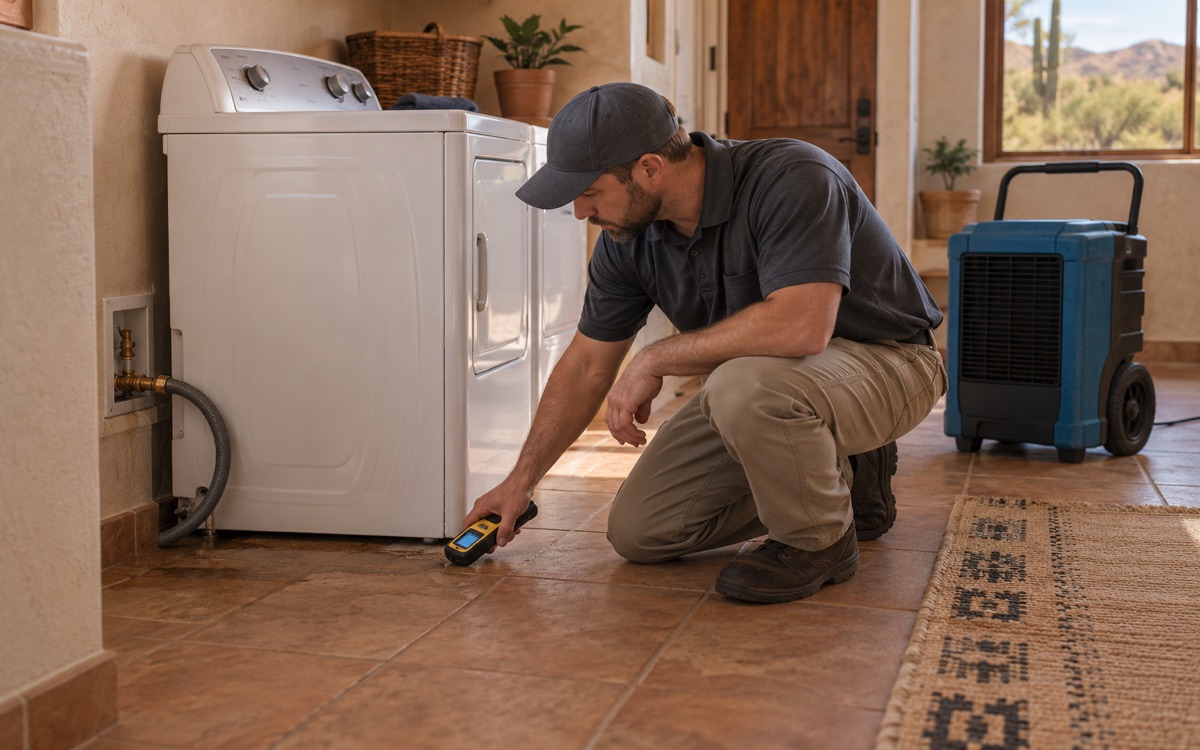
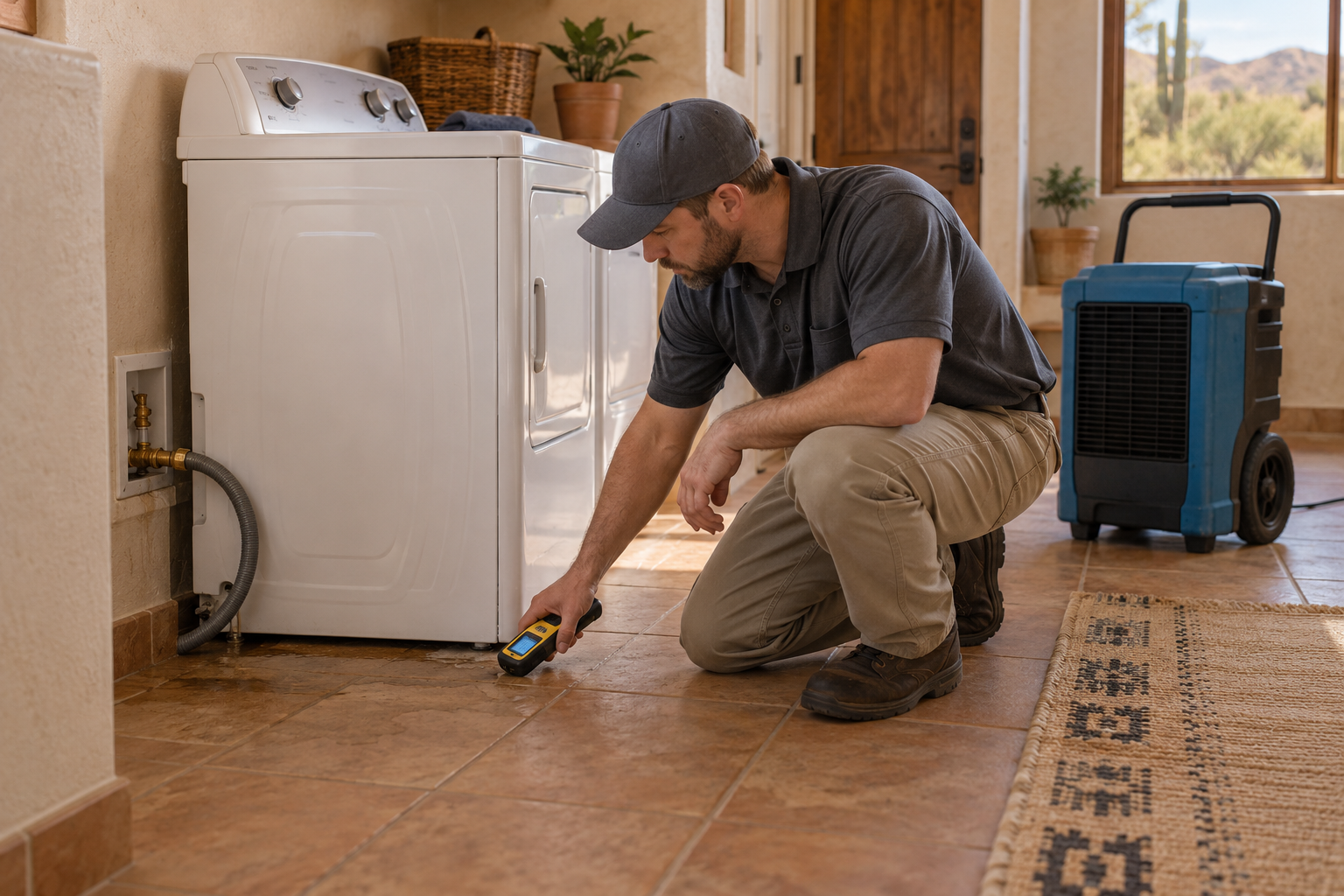
Structural drying should leave an understandable record of findings and exceptions. Ask which locations were checked, what supports completion, and whether the intended finish has additional requirements beyond the emergency drying work.
Coordinate trade work and required inspections
Electrical, plumbing, structural, or other repairs may need to occur before new finishes are installed. The responsible trade should confirm its work and any applicable inspection requirements. One contractor's completion does not automatically close another contractor's responsibility.
The City of Phoenix residential project guidance explains that many projects require permits and inspections. Requirements depend on the actual work; do not assume that calling it flood repair creates an exemption.
Ask who will confirm requirements, obtain necessary approvals, and schedule inspections. Those tasks should be accounted for before access is closed. This is project coordination, not a reason to delay immediate life-safety measures while paperwork is discussed.
Separate preparation from permission to cover the assembly
Measurements, product selection, and some scheduling can proceed while earlier stages are underway. That can help the project move efficiently without pretending the property is already ready for every physical repair.
The written reconstruction scope should identify dependencies: source correction, drying findings, material removal, trade completion, and approvals. If a dependency changes, the schedule should be updated with a reason rather than replaced by another unsupported completion date.
Before work begins, review replacement boundaries, matching limitations, and exclusions. At the start of each stage, ask what has been cleared and what remains restricted. A clear sequence helps prevent new finishes from hiding unfinished work and gives the owner a practical way to follow progress.
A written list of outstanding items can keep that transition practical. It should name the responsible party and the decision needed, so that ordering materials or booking a trade does not silently become authorization to cover unfinished work.
Related questions
Can materials be ordered while drying is underway?
Often planning can proceed, but confirm measurements, final scope, and product requirements before committing. New findings may change what is needed, so clarify the risk of ordering too early.
Does the insurer's approval mean the wall is ready to close?
No. Financial or claim approval and physical readiness are different decisions. The materials, relevant trades, and applicable inspection requirements still need to be addressed.
Can I paint while another area is still drying?
It depends on separation, the affected scope, and the repair requirements. Ask the responsible team whether that specific area is ready rather than assume all areas share the same condition.
Move from Phoenix flood cleanup to repairs with clarity
Phoenix Flood Restoration can explain what remains before your affected property is ready for reconstruction. Request a coordinated plan for drying findings, source correction, trade work, and the repair sequence before new finishes close the area.
Request Service or call (602) 902-1375.