
When Should I Call Emergency Flood Cleanup in Phoenix?
Call emergency flood cleanup when water is actively entering, has spread beyond a small accessible area, may be contaminated, or has reached building materials you cannot assess. Immediate threats to life, electricity, or structural safety require emergency services or the appropriate specialist first.
An emergency restoration call is about limiting further property damage once people are safe. You do not need to know the final repair cost or whether every affected surface can be saved. In Phoenix, an intense storm can create both access hazards outside and a growing cleanup problem inside.
Active water deserves an immediate response plan
A continuing leak or new runoff can increase the affected area while you wait. Tell the dispatcher whether water appears to be entering now, whether the level is changing, and whether the source is known. Do not attempt a shutoff that requires crossing water or reaching unsafe equipment.
Restoration and source repair are connected but not identical. A plumber may be needed for a failed line, while storm-related envelope damage may need roofing or building repairs. Cleanup can remove water already inside, but the plan also needs to account for whatever is still feeding the loss. Ask who is coordinating those separate responsibilities.
A small visible area can hide a larger wet assembly
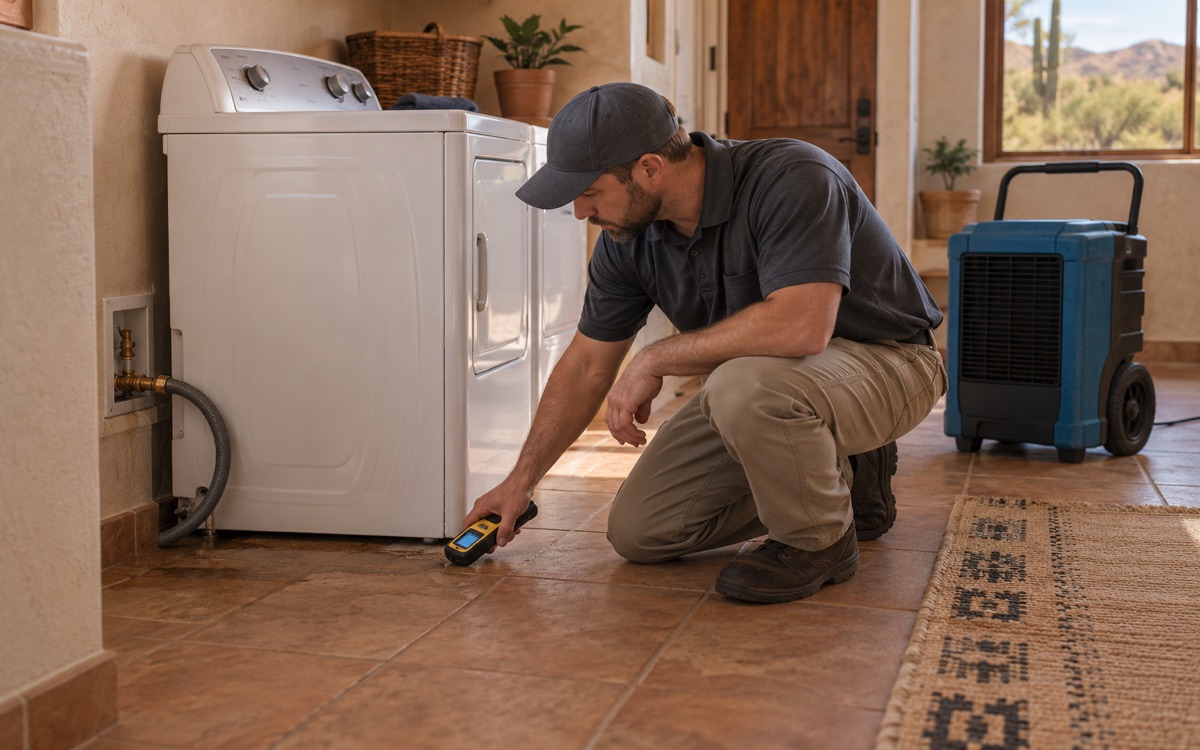
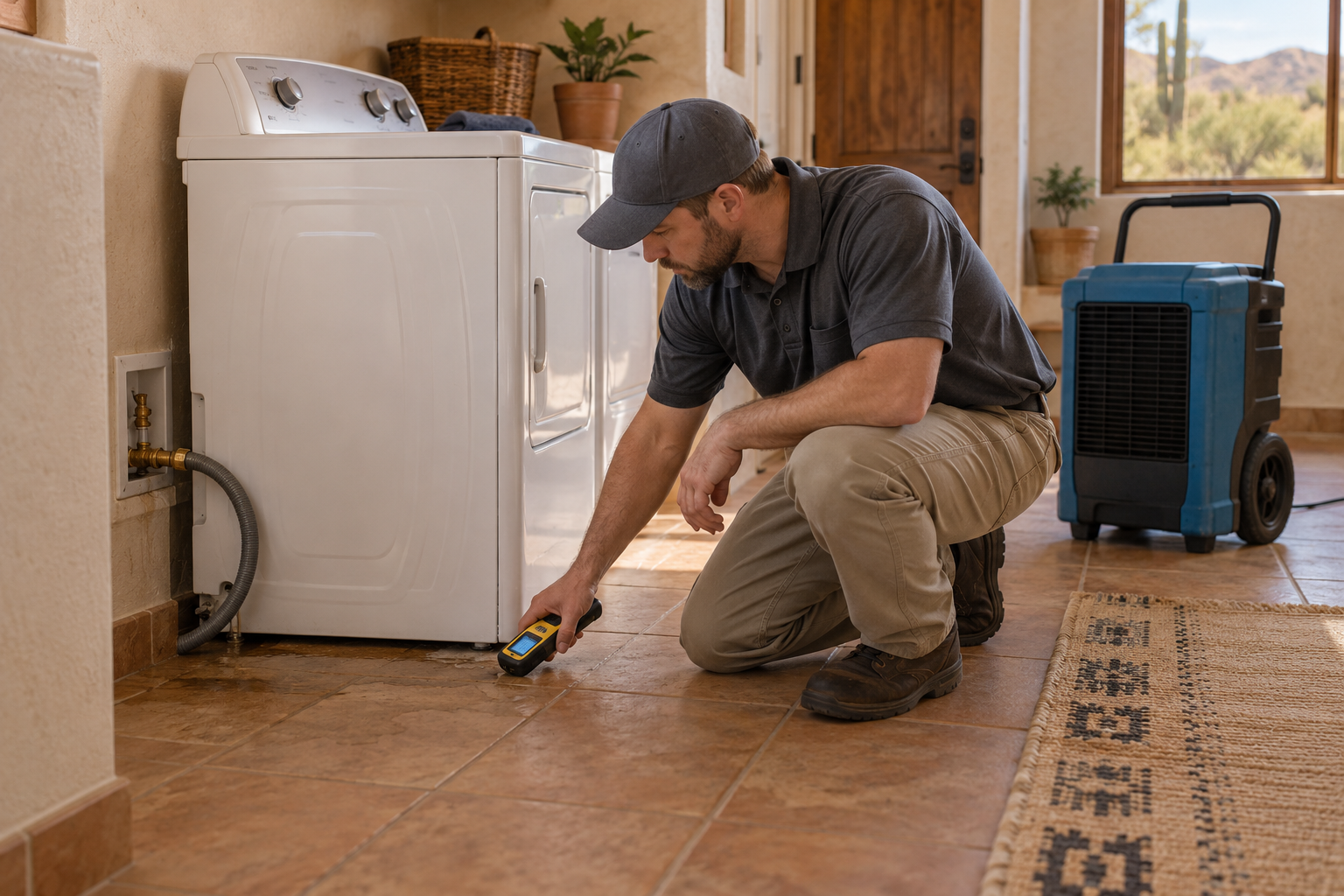
The puddle is not a dependable measure of the total loss. Water can move beneath floor finishes, along a wall base, or into insulation without leaving an obvious surface pool. Calling early allows the restoration assessment to identify where moisture has traveled rather than waiting for swelling or odors to make it apparent.
This is especially relevant when water has been present for an uncertain period. Explain when the property was last known to be dry. Do not assume that a dry-looking finish means the layers underneath are dry, or that running the air conditioner has resolved the problem. Measurement helps determine the actual work.
Possible contamination changes the urgency and precautions
Sewer backups and outdoor floodwater should not be treated like an ordinary spill. The CDC identifies sewage, chemicals, debris, and electrical hazards as possible floodwater risks. Keep people out of the affected area and report the suspected source when calling.
Clear water is not proof of sanitary conditions. Neither is the absence of a strong smell. Avoid moving affected belongings into clean areas or directing household fans across uncertain contamination. An emergency assessment should consider how to separate the work area, remove water safely, and decide which materials can be cleaned and dried.
Storm access can take priority over a response target
During a Phoenix monsoon, the shortest route to a property may be blocked by moving water or official closures. The National Weather Service advises against walking or driving through floodwater. A crew cannot safely override that guidance to meet an arrival target.
Give an accurate address and mention blocked streets, gates, or evacuation instructions. If the building cannot be entered safely, the immediate plan may be to wait for access clearance while documenting what is known. That is different from ignoring the loss. A useful response plan explains the safety barrier, the next contact, and what assessment will occur when access is possible.
Prompt action means starting the right response, not performing every task immediately. A safe telephone assessment can begin while access restrictions are still in place. A plumber may be needed for an active supply failure, while restoration planning addresses the wet materials. Recording those separate steps helps explain any unavoidable delay and prevents a response-time target from being confused with permission to enter an unsafe property.
Questions about urgent flood cleanup in Phoenix
Is flood cleanup an emergency if the leak has stopped?
It can be. Wet assemblies, contaminated water, and unknown moisture spread still need timely assessment. Stopping the source does not remove water already absorbed into materials.
Should I call my insurer or a restoration company first?
Notify the insurer promptly, but do not delay necessary hazard control while trying to settle coverage questions. Keep records of the damage and emergency work, and ask the insurer about its process.
Can a restoration crew rescue someone from floodwater?
Restoration is not emergency rescue. Call 911 for immediate danger and follow local instructions. Property cleanup starts only when the relevant safety conditions allow it.
Arrange urgent flood cleanup in Phoenix
Describe the source, visible damage, and any access restrictions so the first response can be planned around the actual conditions.
Emergency Flood Cleanup and Moisture Detection & Mapping connect early damage control with measured moisture checks. Request Service or call (602) 902-1375 to discuss the affected property.