Why Does Flooding Keep Returning to the Same Phoenix Property?
Flooding can return when the original source was not fully corrected, a different entry pathway exists, or conditions exceed what a previous repair addressed. Some apparent recurrences may also involve moisture left in concealed materials. The cause needs investigation rather than another automatic round of cosmetic repairs.
At a Phoenix property, repeated damage after rain can point toward a drainage or building-envelope concern, but it does not prove one particular defect. Water appearing during dry weather may suggest a different investigation. The timing and previous work record help the assessor distinguish these possibilities.
Build an Event History Before Choosing Another Fix
List the dates of known incidents, observed water locations, weather or plumbing activity, and any repairs performed. Include photographs and contractor reports where available. Note whether the same area became wet again or whether the new damage appeared elsewhere.
Separate what you observed from what someone suspected. If a prior invoice says a seal was replaced but no source report was provided, record that accurately. A completed repair is evidence that work occurred, not proof that the original diagnosis was correct.
A new damage assessment should consider the history without simply copying the old scope. Ask what information would help confirm or rule out the current suspected pathway.
Distinguish New Water From Residual Moisture
Fresh entry and incomplete drying require different follow-up, even though both can produce damp finishes or odors. The team may need to compare current moisture findings with the previous drying record and investigate whether the source is active.
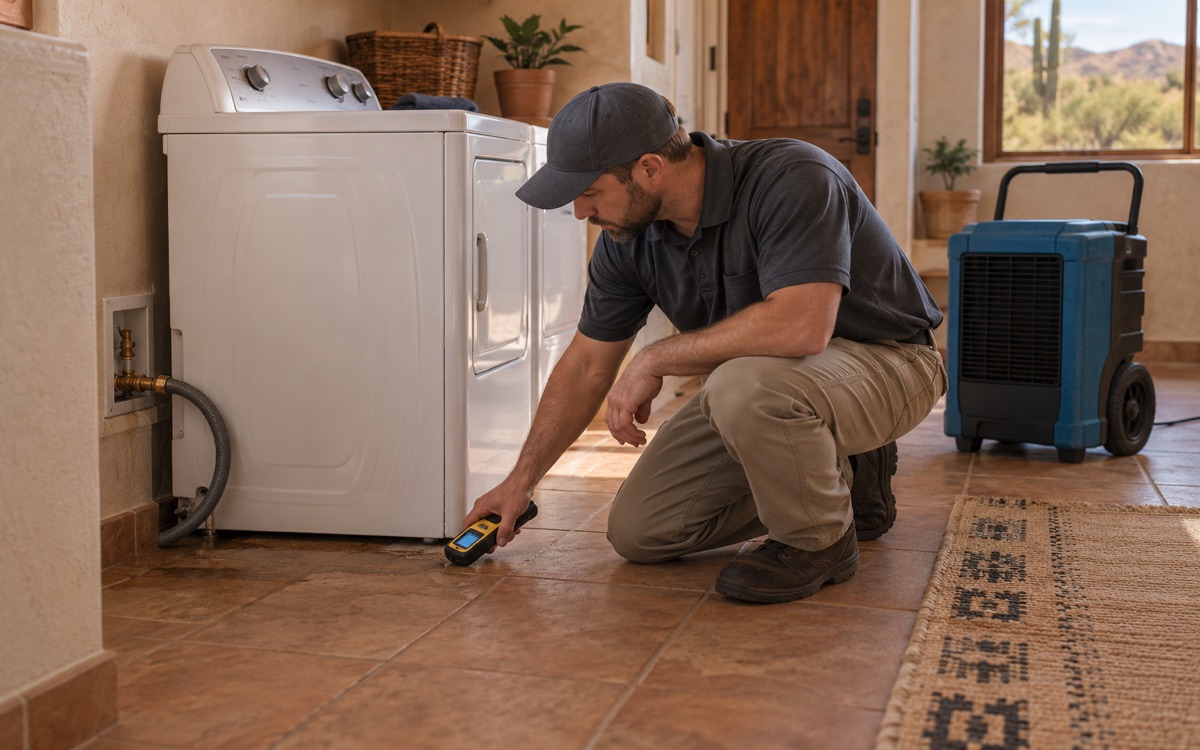
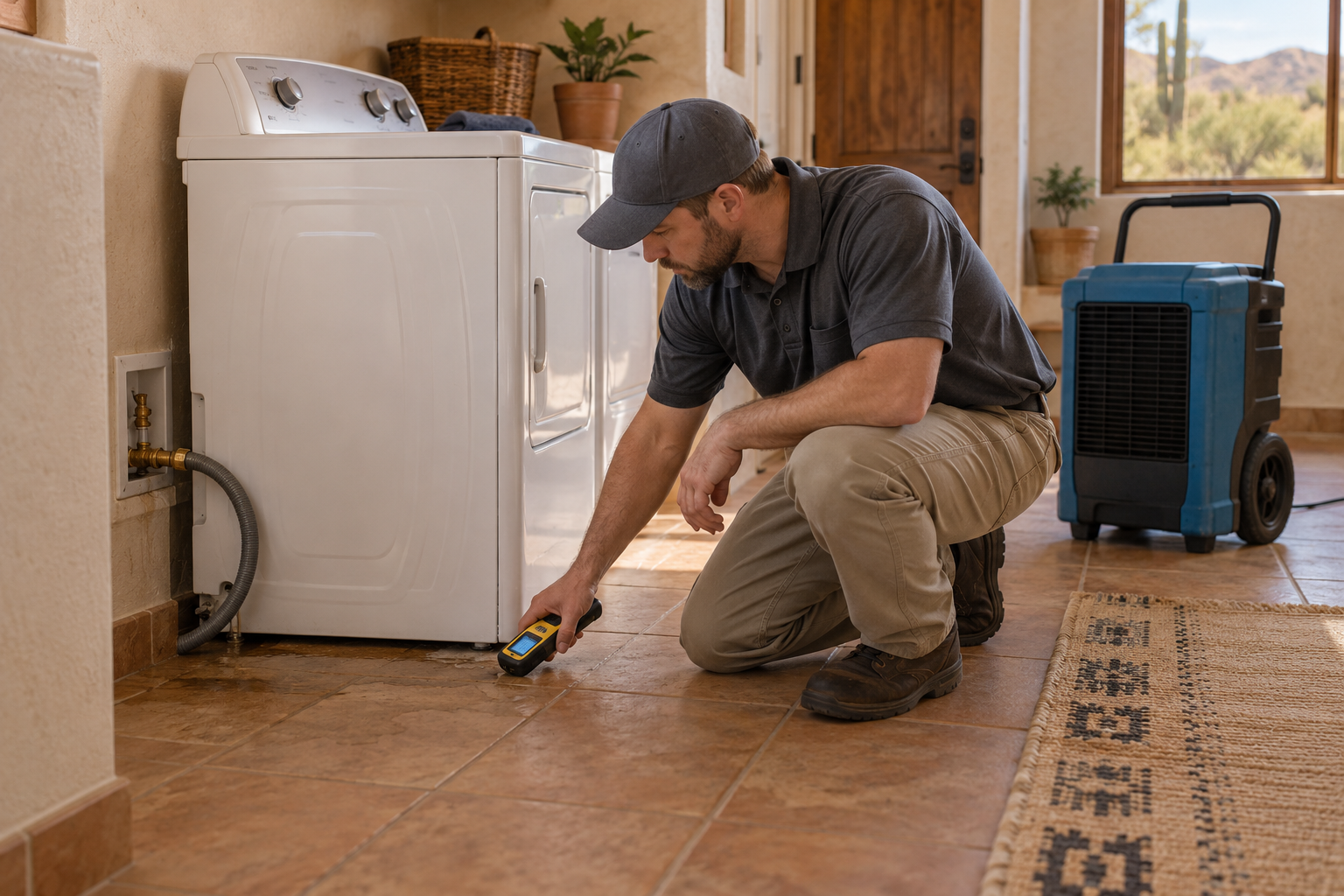
Moisture mapping can help identify the current affected boundaries. It does not identify every source by itself, so plumbing, envelope, or drainage evaluation may still be needed.
EPA's moisture guidance emphasizes correcting the water problem as well as addressing damaged materials. Repainting a stain or covering a wet assembly can make the condition less visible without resolving it.
- Compare current locations with previous findings.
- Check whether the original source repair was completed.
- Identify concealed areas not previously assessed.
- Record new conditions that differ from the earlier event.
- Keep uncertainty visible until the investigation resolves it.
Review Drainage and Envelope Work as Separate Systems
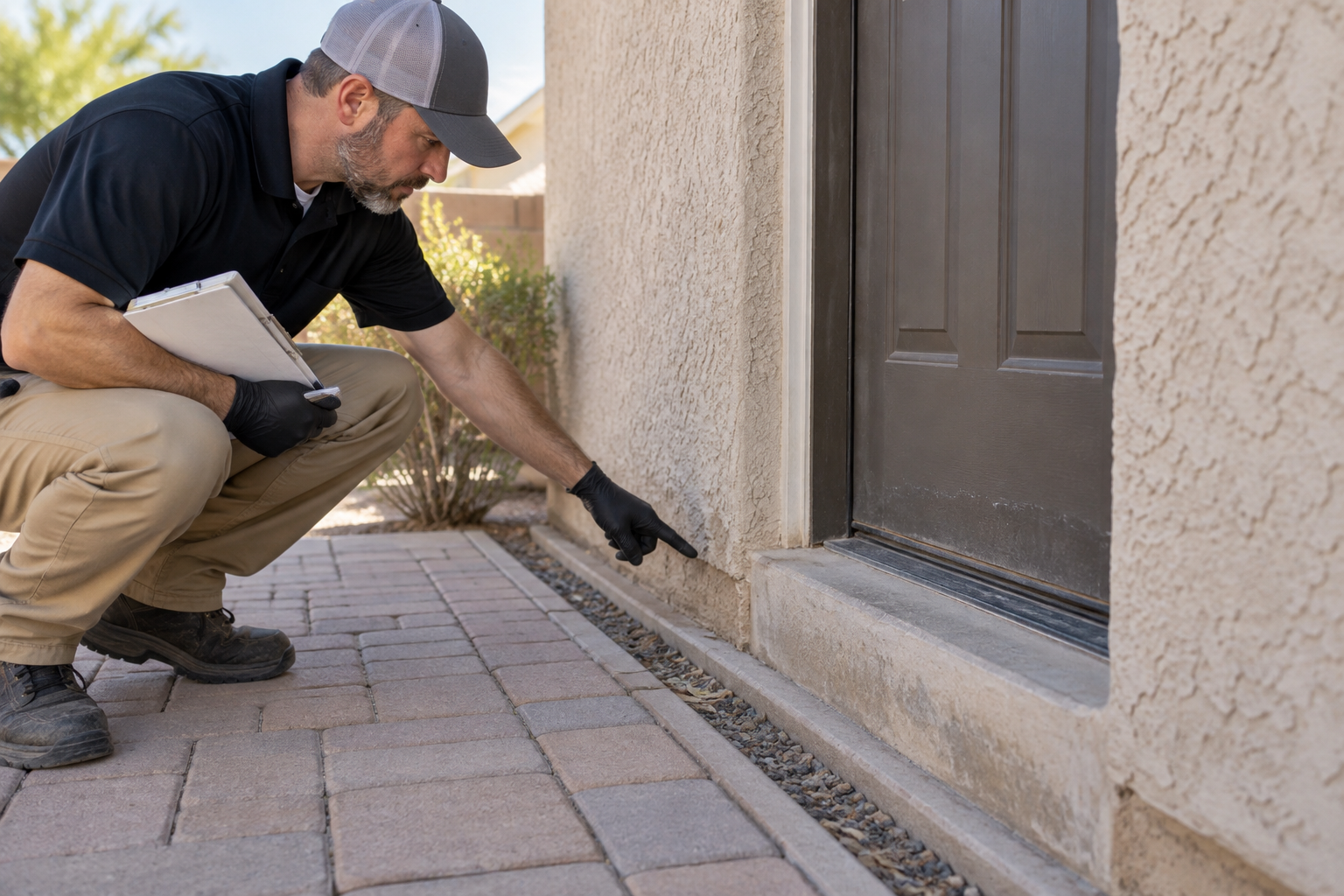
Exterior runoff, roof drainage, wall openings, and plumbing are different systems. A repair to one may not address another. Ask the appropriate specialist to explain how the proposed work relates to the observed water path rather than accepting a generic recommendation based only on the wet finish.
For Phoenix properties with drainage or floodplain questions, the city's floodplain management program can provide relevant property-specific information. Do not assume a mapped classification settles the cause of a recurring interior problem.
Significant grading or drainage changes should account for local requirements and neighboring flow. An improvised barrier may move the problem rather than solve it. Keep the design or repair rationale with the restoration file for future reference.
Make the Next Repair Plan Address the Uncertainty
Ask the team to separate confirmed work from investigation still needed. If the source only appears under certain conditions, discuss appropriate verification or follow-up with the responsible professional. Do not create an improvised water test that could damage the property again.
Before rebuilding, confirm the source-repair status, retained-material condition, and any unresolved access limitations. The proposal should identify who is responsible for each part. A drying contractor and a roofer may each complete their scope while a separate drainage issue remains unaddressed unless coordination is explicit.
For warranty or insurance questions, keep the facts and contracts organized. A recurrence is not automatically proof of failed workmanship, and it is not automatically a new insured event. Those questions need the relevant evidence and qualified review.
Questions About Repeated Phoenix Flooding
Does flooding in the same spot prove the previous repair failed?
Not by itself. The same location may receive water from more than one pathway, or concealed moisture may remain. Compare the current findings with the previous scope and source diagnosis.
Should I replace the finish again if it keeps staining?
Investigate the moisture condition first. Replacing a finish without understanding the source can conceal evidence and expose the new material to another loss.
Can Phoenix's dry weather rule out hidden moisture?
No. Concealed materials can retain moisture independently of outdoor conditions. An appropriate assessment is more informative than relying on the weather.
Investigate the Pattern Before Rebuilding Again
For recurring water damage in Phoenix, Request Service or call (602) 902-1375. Share the event history and previous repair records so Phoenix Flood Restoration can assess the current damage in context.