
Why Does My Phoenix Home Flood Even When It Is Not Raining Nearby?
A Phoenix property can be affected by runoff from rainfall elsewhere in the drainage area, even when little rain is falling directly overhead. Water also takes time to move through a landscape. Treat approaching runoff as a hazard, follow official information, and investigate property damage only when access is safe.
Clearer skies can create a misleading sense that the risk has passed. The route water follows is larger than the view from one driveway. That does not mean every unexplained puddle is a distant flash flood; it means the absence of local rainfall is not enough to rule out outdoor runoff.
Water follows a drainage area, not a street address
Rain falling upstream or on higher ground can move through washes, channels, streets, and other flow paths. The National Weather Service's Phoenix guidance specifically warns that runoff may come from storms far away. A property may therefore experience rising water after the most visible local weather has changed.
Do not approach a wash or low crossing to confirm the source. Observations from a safe location, official alerts, and later assessment are the appropriate starting points. The speed or timing at one location cannot be reliably predicted from a general article, and a previous uneventful storm does not establish safe access during the next one.
Do not use a lull as permission to cross water
A road or driveway can remain unsafe after rainfall stops. Water depth, current, debris, and surface condition may not be obvious. Follow barricades and official instructions rather than testing the route on foot or by vehicle. Restoration access must obey the same limits.
If your property is affected, tell the dispatcher that outside water is present even if the sky appears clear. Explain the known access route and any closures. The practical response may depend on authorities or utilities establishing safe conditions first. That is a safety requirement, not an indication that wet materials no longer need attention.
Keep an open mind about the actual source
Water noticed after a storm could also involve roof drainage, a plumbing failure, irrigation, or another local issue. Report when and where it first appeared, whether outdoor flow was visible, and whether neighboring surfaces show related water marks. Do not convert a possible explanation into a confirmed cause.
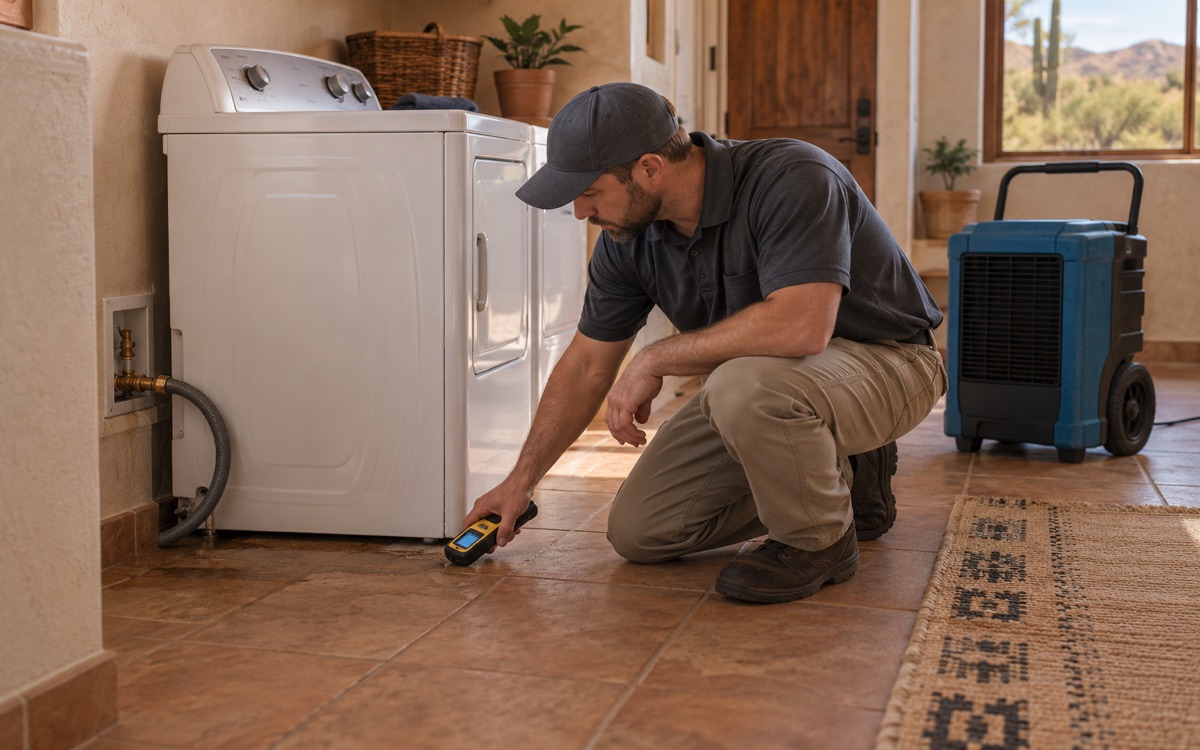
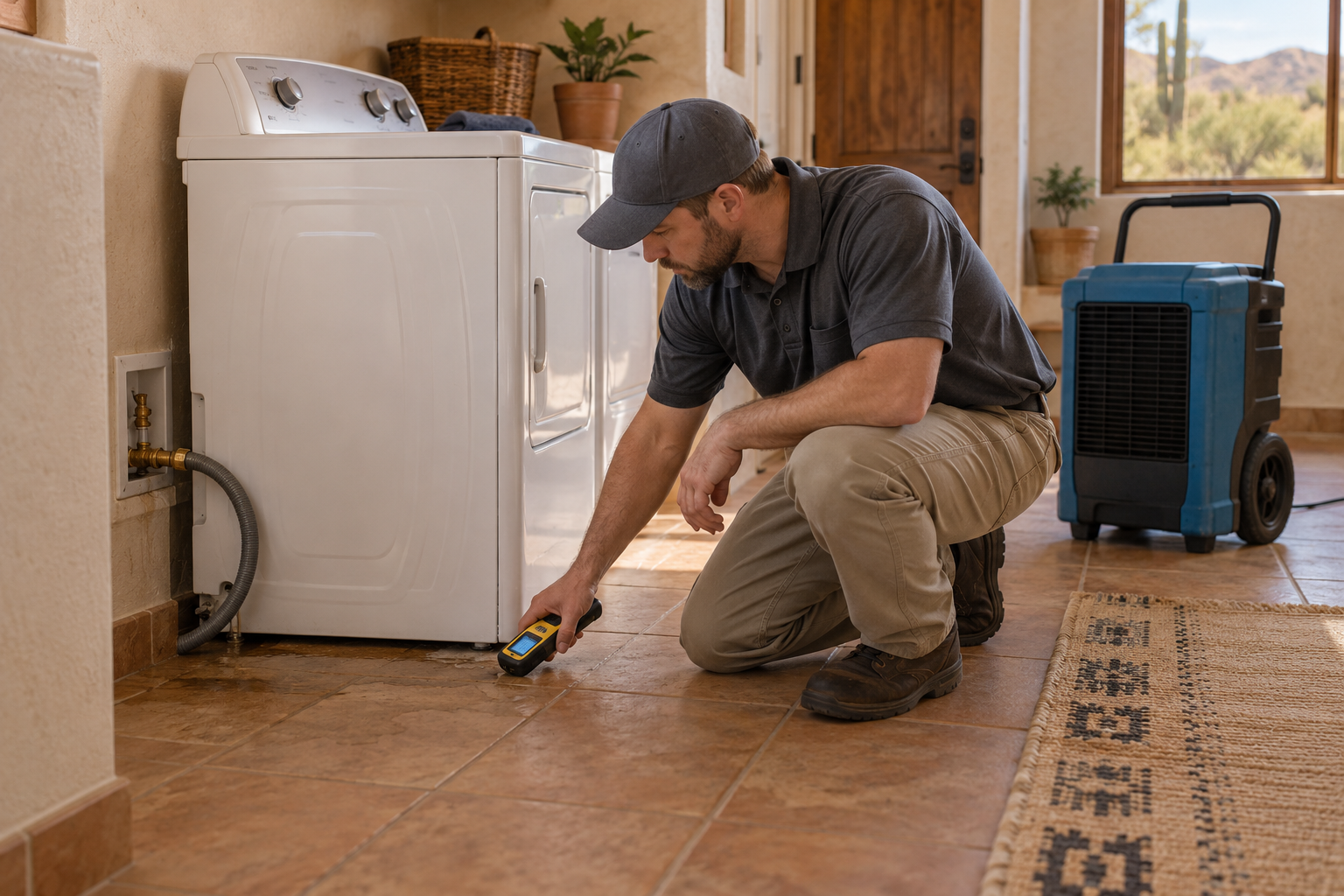
A restoration assessment focuses on affected materials and moisture extent while the source investigation may involve another specialist. The distinction matters because cleanup alone does not correct an active source. It also matters for documentation: a clear account of observations is more useful than a confident but unsupported description of the loss.
Assess the building once the outdoor hazard has passed
Outdoor water may carry contamination and leave moisture beneath apparently dry finishes. The CDC explains why floodwater should not be judged safe by appearance. Keep people away from the affected area until the conditions are evaluated.
The indoor plan should identify bulk water, sediment, affected contents, and concealed spread. Phoenix sunlight may dry exposed surfaces while underlayment or wall cavities remain wet. Ask how those layers will be checked and whether further rainfall could change the work. A measured plan connects immediate extraction with cleaning, drying, and the separate question of how water reached the building.
Flood alerts and property observations answer different questions. An alert describes a potential or developing hazard over an area; an indoor water mark describes what happened at a particular building. Neither replaces the other. Continue following official instructions while preserving safe observations of your own property. A restoration assessment can then address the damage without pretending to predict the upstream storm or certify the safety of a public route.
Questions about delayed runoff in Phoenix
Can a wash flood when it is sunny at my home?
Yes, runoff can come from rainfall elsewhere. Follow official flood information and stay out of washes and crossings rather than relying on the weather directly overhead.
Does water after a storm always count as surface flooding?
No. The source needs investigation. Roof intrusion, local drainage, and plumbing conditions can produce different loss circumstances and repair needs.
Should I wait for more rain before reporting indoor damage?
No. Existing water damage needs timely attention once safe access is possible. Waiting for another event can leave wet materials and an unresolved source unaddressed.
Get indoor flood damage assessed after runoff reaches Phoenix
Share the timing, visible flow path, and access conditions so the crew can plan the assessment without assuming the local weather tells the whole story.
Flash Flood Restoration and Moisture Detection & Mapping address the building damage after runoff access is safe. Request Service or call (602) 902-1375 to discuss the affected property.