
Why Does Water Enter My Phoenix Home Under an Exterior Door?
Water may enter under an exterior door when runoff reaches the threshold, weather barriers fail, or nearby drainage directs water toward the opening. The visible gap is not always the only cause. Assess the exterior pathway and the indoor moisture spread before choosing a repair or assuming the floor has dried.
A towel at the doorway may catch some water, but it does not establish why the intrusion occurred or where moisture has traveled. Phoenix monsoon rain can expose a vulnerable threshold quickly. The recovery plan needs to address the water already inside and the conditions that allowed it to cross the opening.
Look at the threshold as part of a larger pathway
A door assembly connects to the surrounding wall, floor, and exterior surface. Water collecting against that area may be influenced by roof runoff, paving, grading, or drainage limitations. A damaged seal can contribute, but it should not be declared the sole cause without considering those connections.
Record when water appeared and whether it followed heavy rain, wind, or visible pooling outside. Photographs taken safely after the event can preserve sediment lines and staining. Avoid opening a door into moving water or going outside to inspect an active runoff path. The immediate goal is a useful history, not a hazardous investigation.
Differentiate rising runoff from wind-driven leakage
Water pushed against an opening by wind may follow a different route from water accumulating above a low threshold. It may also travel through adjacent wall details before appearing at the floor. Those differences influence which professional should investigate the exterior assembly and what correction may be appropriate.
Do not solve the appearance of a leak by covering the interior edge alone. A seal applied at the wrong location can leave the original entry route unresolved. Ask the relevant building professional to explain the pathway and proposed correction. Restoration work can document the wet materials, but that documentation is not a substitute for an envelope or drainage diagnosis.
Check beneath the floor and along adjacent wall bases
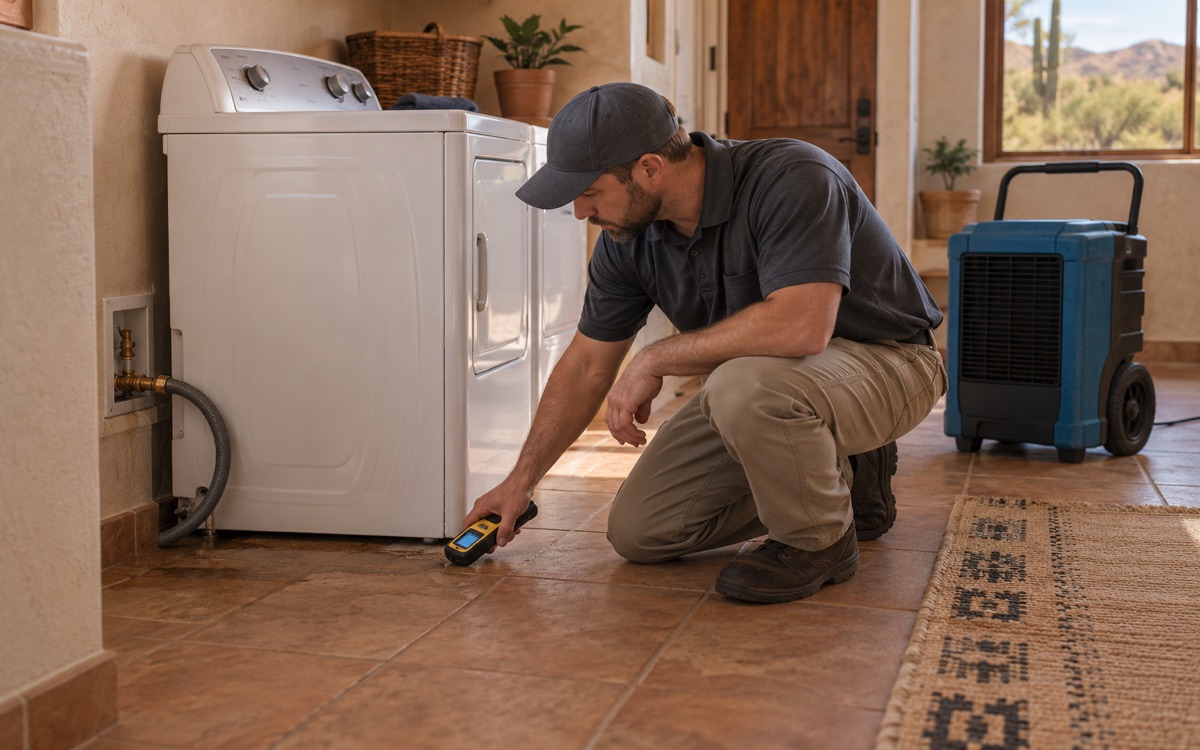
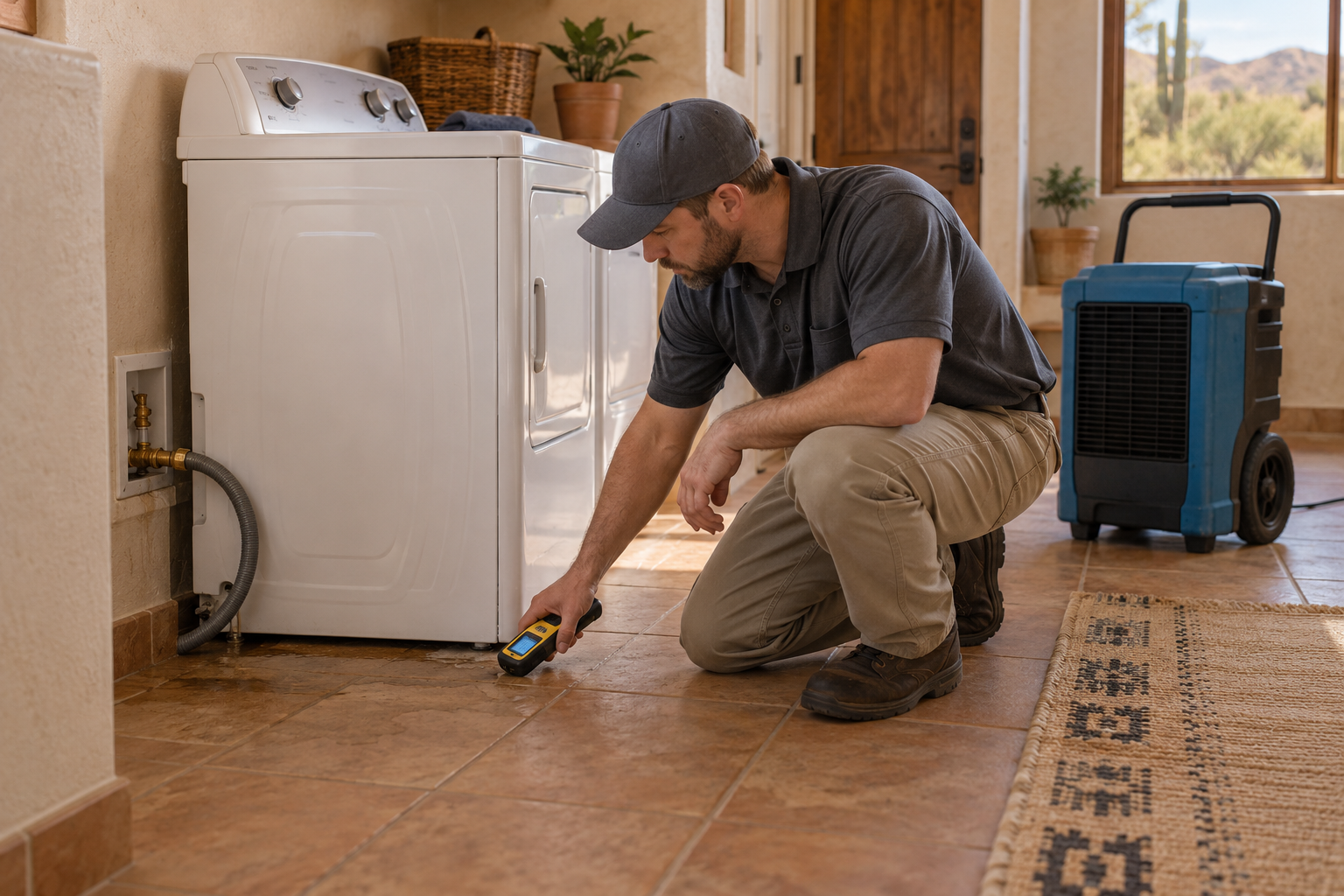
Water often spreads laterally once it is inside. Flooring edges, underlayment, trim, and adjoining wall cavities may be affected even when the visible puddle is confined to the entry. Moisture testing helps define the boundary and decide whether further access is needed.
EPA's water-damage material guidance notes the importance of underflooring assessment. Its clean-water recommendations cannot be assumed appropriate for outdoor runoff. The source and condition must guide whether materials can be cleaned and dried or require removal. Ask for that reasoning before approving replacement finishes.
Coordinate temporary protection with proper drying
If more rain is expected, discuss safe temporary protection with the appropriate professional. Do not enter floodwater or climb onto wet surfaces to improvise a barrier. The City of Phoenix's monsoon resources provide local safety context, but no temporary measure guarantees that water will stay out.
Inside, removal of bulk water should be followed by necessary cleaning and monitored drying. Replacing the threshold or flooring before the assembly is ready can conceal remaining moisture. Ask which work addresses the entry point and which work verifies the interior materials. Keeping those responsibilities clear reduces the chance of a cosmetic repair being mistaken for a complete solution.
Repeated intrusion deserves a comparison with the previous event. Note whether the same threshold leaked, whether the exterior pooling looked similar, and what repair was completed between storms. A repair invoice can clarify whether work addressed a seal, flashing, drainage, or only the interior finish. That history narrows the follow-up investigation without assuming the earlier contractor's work was either successful or responsible for the new damage.
Questions about Phoenix door-threshold water intrusion
Can a door leak damage flooring several feet away?
Yes, water can migrate beneath finishes and along adjoining materials. The visible entry location does not define the full affected boundary; moisture assessment does.
Should I caulk the inside edge immediately?
Do not assume that is the correct repair. The route and assembly details need evaluation, particularly if exterior pooling or wall intrusion is involved.
Is the water clean because it came through a doorway?
No. Outdoor runoff may carry contaminants before reaching the threshold. Its source and exposure, not the entry opening, determine cleanup precautions.
Find the extent of water damage beyond your Phoenix doorway
Describe when the threshold leaked and whether outside pooling was visible so the assessment can connect the entry path with the affected indoor materials.
Rainwater Intrusion Restoration and Moisture Detection & Mapping trace the damage beyond the threshold. Request Service or call (602) 902-1375 to discuss the affected property.