
Why Should Flooring Installation Wait Until a Phoenix Property Is Dry?
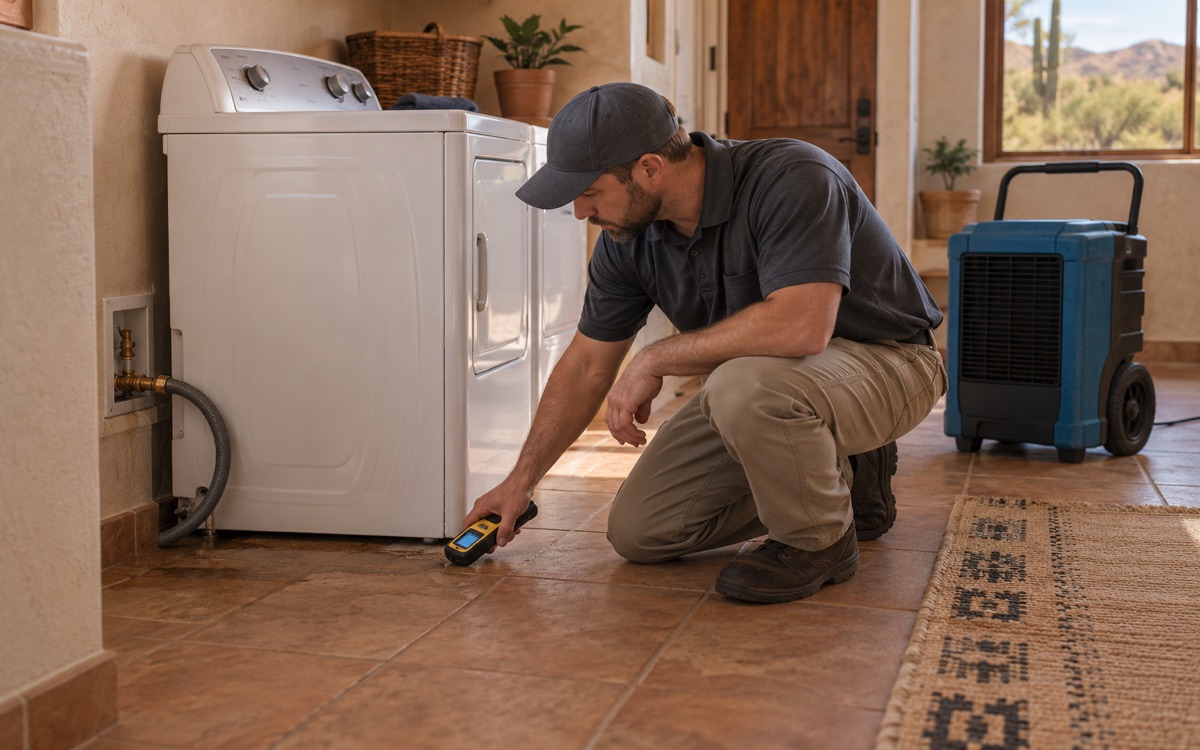
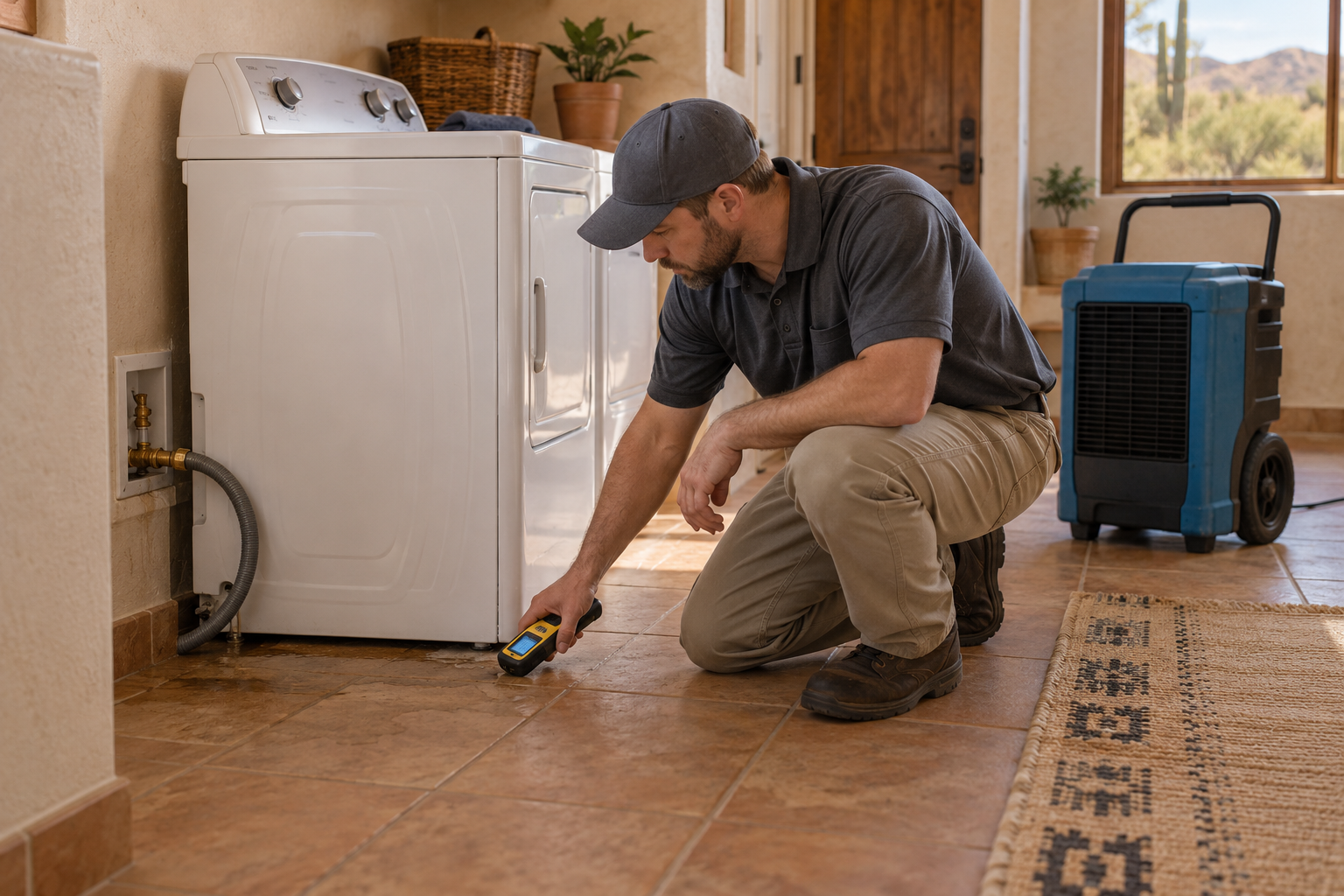
Flooring installation should wait until the affected assembly has been appropriately cleaned, dried, and assessed against the new product's requirements. Covering unresolved moisture can conceal damage and compromise the repair. The installer and restoration team should agree on the necessary checks rather than treating a dry-looking surface or a fixed number of days as proof of readiness.
The new floor can conceal the unresolved part of the loss
Flood damage can involve more than the covering that was removed. Underlayment, a wood substrate, concrete, adjoining trim, and nearby wall materials may need attention. Installing a new surface makes some of those locations harder to inspect and can leave the original question unanswered.
EPA's material guidance calls for checking and drying underflooring after water damage. The visible surface is therefore not the only relevant part of the installation.
In Phoenix, a dry afternoon or comfortable indoor air does not establish the condition below the floor. Ask which layers became wet and what evidence shows they are ready to cover. An answer tied to the actual assembly is more useful than an assurance that the property has aired out.
Drying completion and installation readiness may use different checks
A restoration crew monitors the affected materials to guide drying. A flooring manufacturer may require particular substrate tests or conditions for the selected product, adhesive, or coating. Those requirements should be identified before materials arrive.
A screening reading used during an initial assessment may not be the same as the test required for installation. Neither team should assume the other has completed a check that was never assigned. Moisture records can support the handoff, but the installer still needs to confirm the requirements relevant to the new system.
Ask who performs the final checks, what criteria apply, and how results will be recorded. If a result is not acceptable, the next step should be based on the finding rather than pressure to maintain an installation date.
Cleanup and source correction are prerequisites too
Dryness is not the only requirement after a flood. Contaminated residue, damaged materials, or an active source can make a floor unsuitable to cover even if a moisture reading appears favorable. Each issue needs its own resolution.
A Phoenix monsoon intrusion may require attention to an exterior entry path, while a plumbing loss may need a separate qualified repair. The flooring replacement does not itself correct either source. Confirm that the responsible professional has addressed the cause before treating reconstruction as the final stage.
Structural drying should sit within that broader recovery plan. Ask whether the remaining work includes cleanup, additional access, utility repairs, or source correction so that those tasks are not hidden by the new finish.
Use the written scope to manage the handoff
A clear reconstruction scope should identify the product, preparation, relevant tests, and adjoining repairs. It should also explain exclusions and what happens if the substrate requires additional work. That detail helps distinguish an installation quote from a complete recovery plan.
Keep drying findings, photos, and installation information together. If a schedule changes, ask which condition is holding up the work and when it will be reassessed. A measurable readiness decision is more useful than a promise that every flood-damaged floor will be ready after the same interval.
Discuss matching, transitions, and replacement boundaries before ordering. Waiting for the correct substrate condition does not remove the need to plan the visible finish. Both the concealed preparation and the finished result belong in a successful repair.
Related questions
Can I install waterproof flooring over a damp substrate?
Do not infer that from the product name. The substrate and installation system still have requirements. Ask the installer to confirm them and assess the actual condition before the floor is covered.
Does removing the dehumidifier mean installation can start?
Not automatically. Equipment removal can mark completion of a drying stage, while product-specific substrate testing or other preparation may remain. Confirm the handoff rather than assume it.
Will delaying installation always increase the total cost?
Not necessarily. The effect depends on the project, but covering an unresolved condition can create another repair. Ask for a clear explanation of the remaining work and schedule implications.
Rebuild your Phoenix floor on a sound starting condition
Phoenix Flood Restoration can assess affected materials and coordinate drying findings with the repair scope. Before new flooring covers the area, get clarity on the remaining cleanup, moisture checks, and installation requirements.
Request Service or call (602) 902-1375.