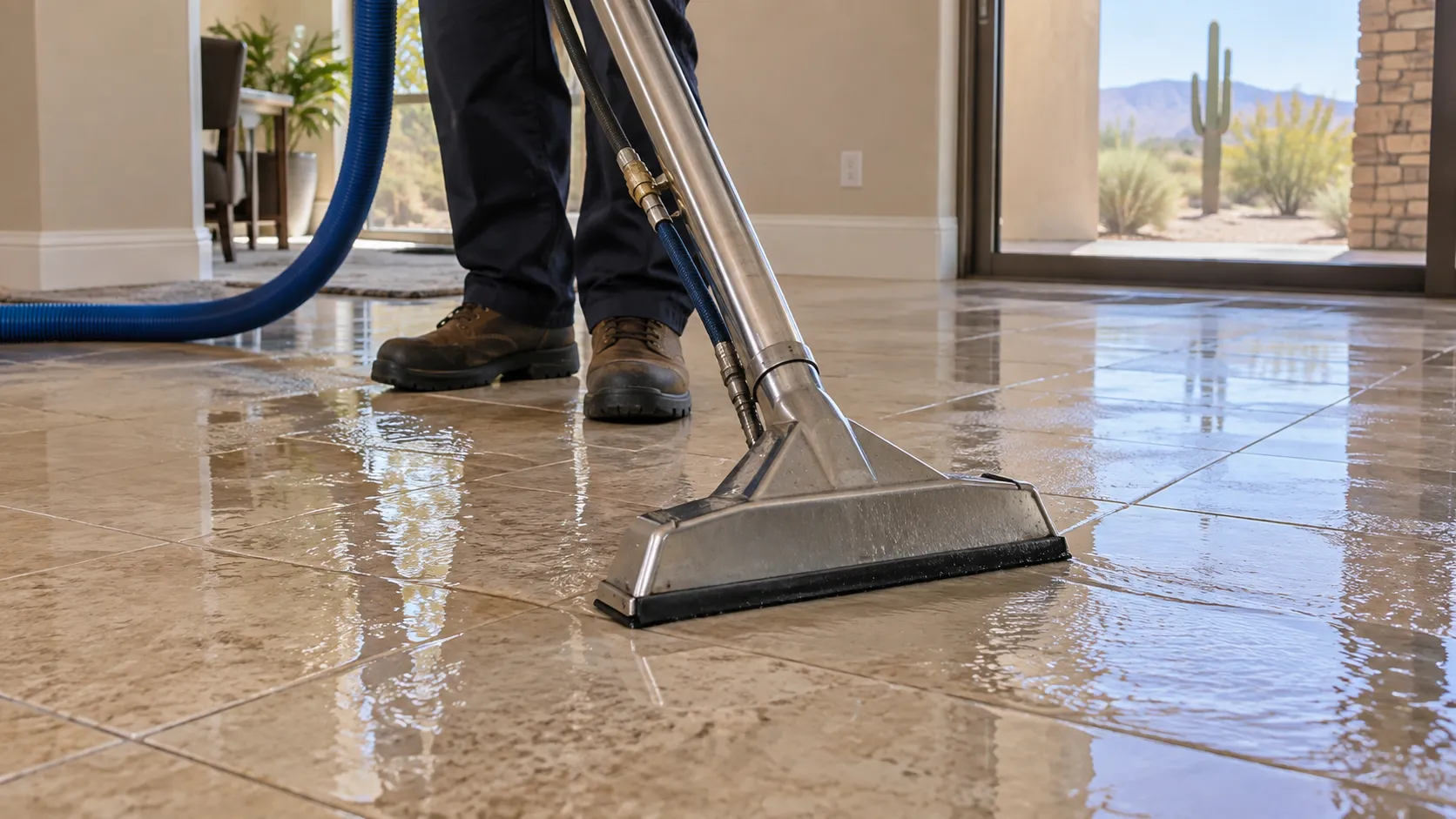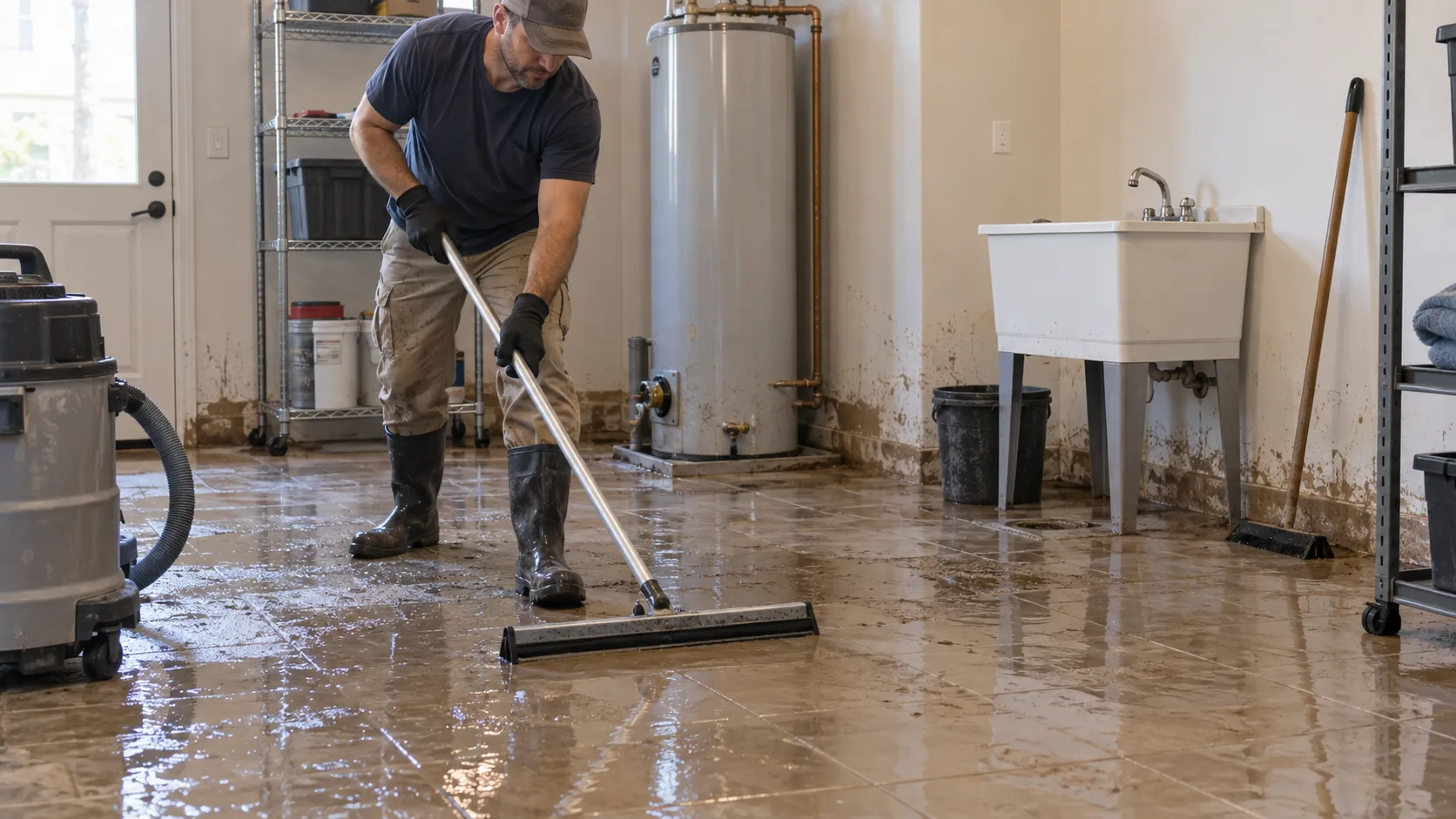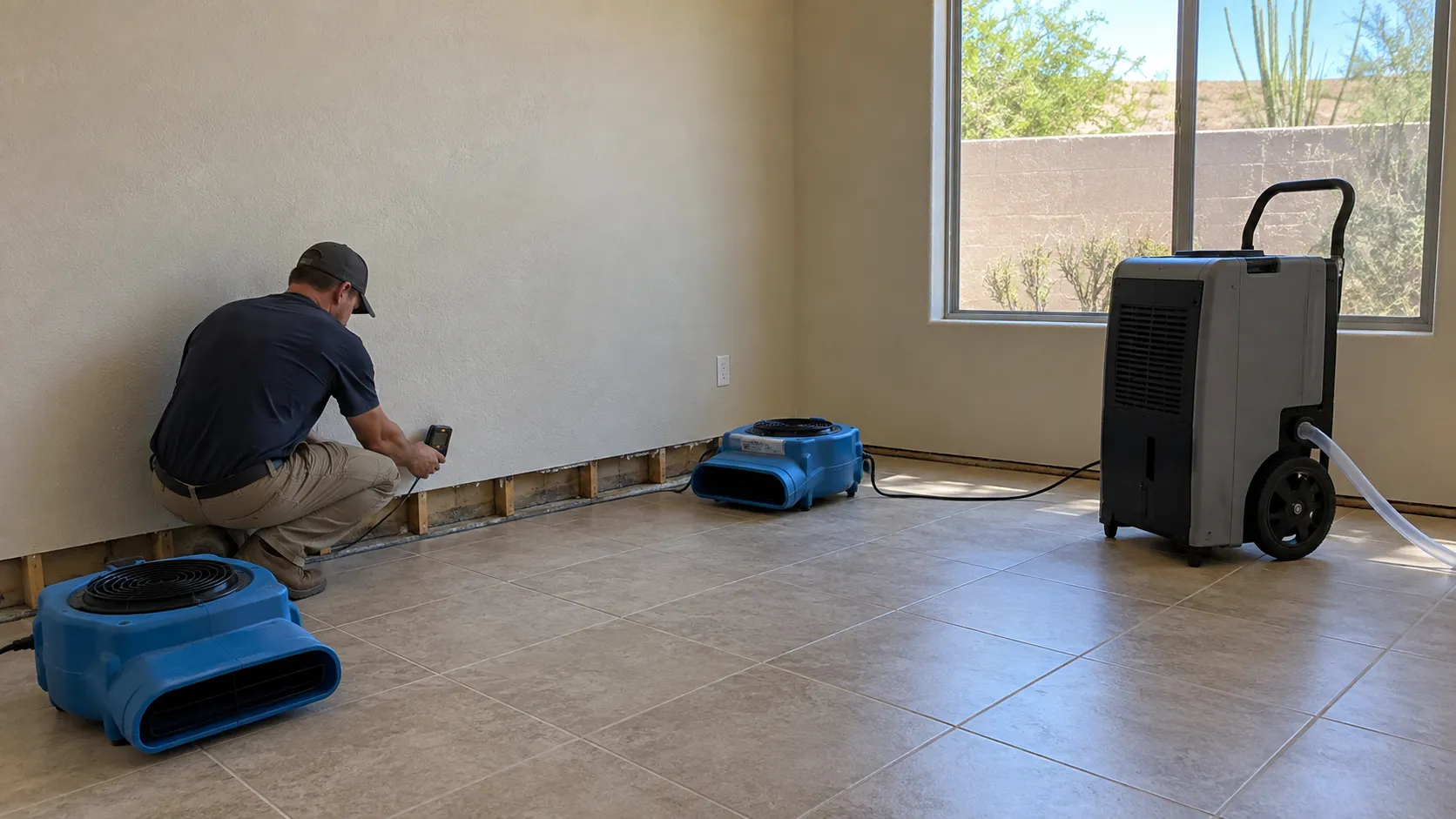
Standing water removal
Accumulated water continues to expose building materials. Extraction addresses accessible floodwater and prepares the affected area for cleanup and further assessment.
24/7 flood restoration in Goodyear
Get urgent cleanup for flood damage at your Goodyear property. Water removal and material assessment establish the immediate work, while continuing source issues and follow-on drying remain part of the recovery discussion.
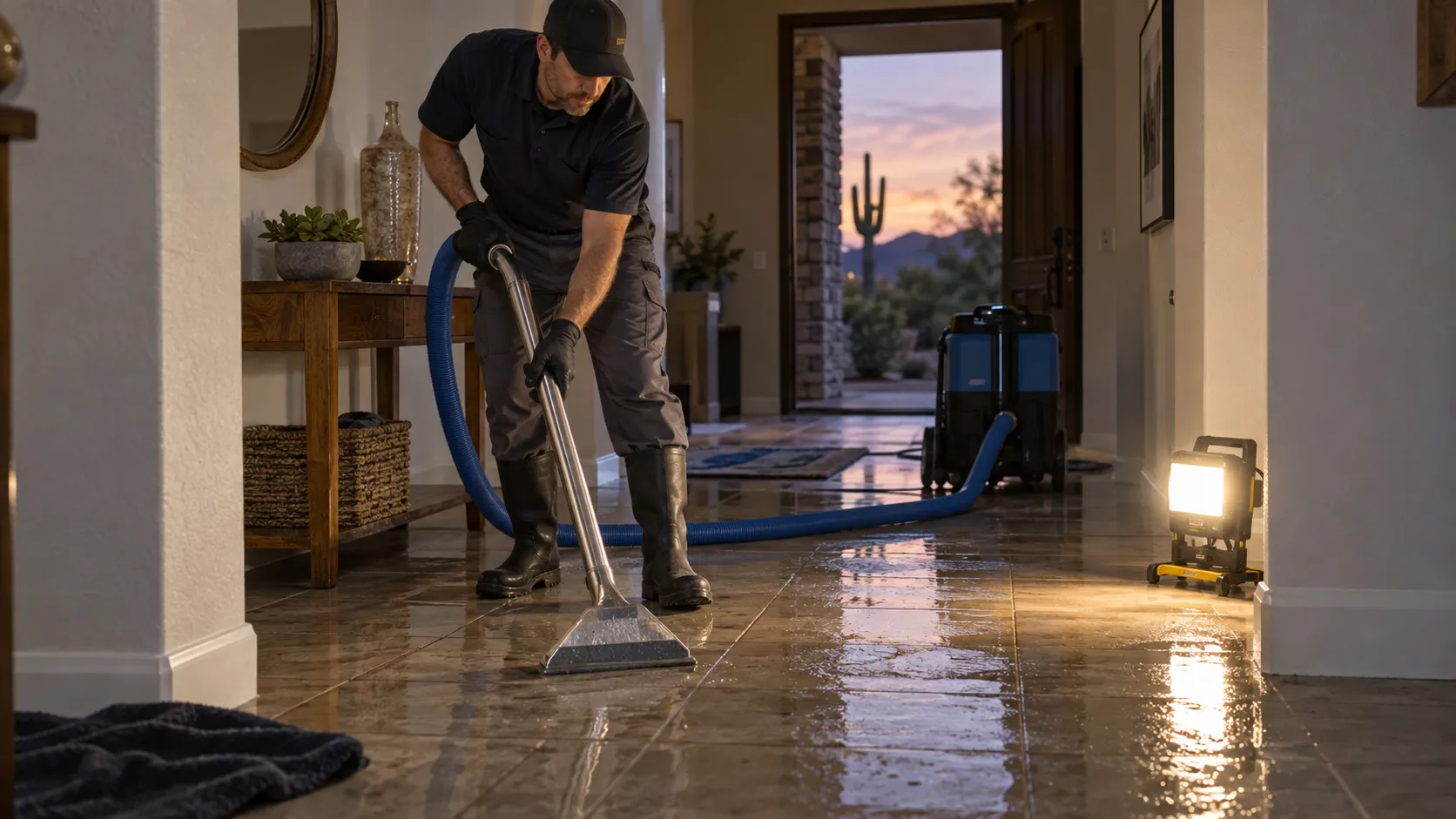
Active flooding, electrical hazards, and structural concerns can prevent cleanup. Work requires appropriate access; emergency authorities and official restrictions take priority.
Accumulated water continues to expose building materials. Extraction addresses accessible floodwater and prepares the affected area for cleanup and further assessment.
Water can leave sediment and other residue behind. Cleaning requirements depend on the water source and the surfaces exposed, not simply the amount of visible water.
Some materials cannot reasonably be cleaned or dried after flooding. Identifying them helps establish appropriate removal before further restoration work.
Emergency extraction does not dry every affected material. Moisture checks identify where follow-on drying is needed after the immediate water problem is addressed.
The first conversation covers your Goodyear location, water conditions, and affected property. Help is available 24/7 with a 25-minute on-site response.
The assessment checks accessible water, damage, and conditions affecting the work. It identifies whether extraction, contaminated-water cleanup, or other immediate attention is needed.
Pumping and extraction remove accumulated water where conditions allow. The equipment and approach depend on the amount present and the work area.
Cleanup removes flood residue from suitable surfaces. Exposure and physical condition guide any damaged-material removal needed before drying can proceed.
Remaining moisture and physical damage determine what follows. Drying checks or reconstruction may still be required after the emergency cleanup is complete.
The initial inspection establishes accessible damage and practical cleanup priorities. It also identifies limitations that need attention before work can proceed.
Standing water is removed from accessible affected areas. This reduces the immediate water accumulation without treating extraction as complete drying of the building.
Flood residue and suitable surfaces are addressed according to the water exposure. Contaminated materials can require different treatment or removal rather than ordinary surface cleaning.
Once the initial water and cleanup needs are addressed, retained wet materials are assessed for drying. Follow-on work targets the moisture that extraction leaves behind.
Initial findings describe accessible floodwater and damage. They provide a starting point for understanding the emergency cleanup and any limitations affecting the work.
A clear account identifies the extraction and cleanup performed. It keeps those tasks separate from drying or repairs that remain necessary.
Water removal can expose damage that was difficult to see initially. Those findings help explain additional cleaning, removal, or repair needs.
The next steps are based on remaining moisture and physical damage. This helps you understand why restoration may continue after the first emergency visit.
A continuing source can rewet materials during cleanup. Repairing the cause may require separate plumbing, roofing, or drainage work alongside the restoration.
Porous materials can remain wet after accumulated water is removed. Follow-on drying and measurements address that moisture before repairs conceal the affected materials.
Cleanup cannot reverse every physical change caused by flooding. Damaged finishes may require reconstruction once suitable retained materials have been cleaned and dried.
Goodyear monsoon conditions can include strong winds, heavy rain, and flooding. A water-entry problem may require separate repair, while the materials already affected need assessment for cleanup and drying.
Emergency Flood Cleanup is available throughout Goodyear, including Palm Valley and Estrella. Emergency service is available 24/7 with a 25-minute on-site response.
Serving Goodyear from our Phoenix office: 2840 S. 36th Street, Suite E-1, Phoenix, AZ 85034.
Emergency Flood Cleanup is available in these Goodyear-area ZIP codes. Postal areas can extend across municipal boundaries.
Phoenix Flood Restoration provides 24/7 service with a 25-minute on-site response in Goodyear. The on-site assessment establishes which cleanup tasks can begin under the conditions present.
We provide emergency flood cleanup in Goodyear, including Palm Valley and Estrella. Coverage includes 85338, 85340, and 85395. Service comes from our Phoenix office; postal areas can cross municipal boundaries.
Some work may be possible, but continued entry can limit progress and access. The source needs attention alongside water removal; repair of that source may require another specialist.
No. The timeframe refers to arrival. Water removal, cleaning, drying, and repairs take the time required by the affected materials and property conditions.
It can be. Residue, wet materials, and physical damage may remain. Assessment determines the cleaning and drying needed rather than assuming the absence of puddles means the loss is resolved.
No. Exposure, condition, and practical drying options determine what can remain. Removal is considered where materials are unsuitable for recovery, not simply because they became wet.
Yes. Emergency flood cleanup is available for homes and commercial properties. Access, construction, contents, and the type of water exposure determine the work required.
Remaining materials are assessed for drying, further cleanup, and repairs. The next work follows those findings; completing extraction does not automatically complete the property's restoration.
Get help removing water and addressing urgent cleanup needs at your property. Call 24/7 for a 25-minute on-site response, or request emergency service online.